
Table of Contents
The Victoria Falls are one of the greatest natural wonders of the world. If you’re planning a trip to Southern Africa, you simply have to witness this mile-long curtain of falling water. As the explorer David Livingstone remarked when he first saw them, “scenes so lovely must have been gazed upon by angels in their flight”.
This article offers basic information about the Victoria Falls; Tips on seeing the falls from Zambia and Zimbabwe; Activities; How to get there; Where to stay; recommended tours, and more.
Essential Victoria Falls Facts
The Victoria Falls lie between Zambia and Zimbabwe in Southern Africa. The falls are part of two national parks, Mosi-oa-Tunya National Park in Zambia and Victoria Falls National Park in Zimbabwe.
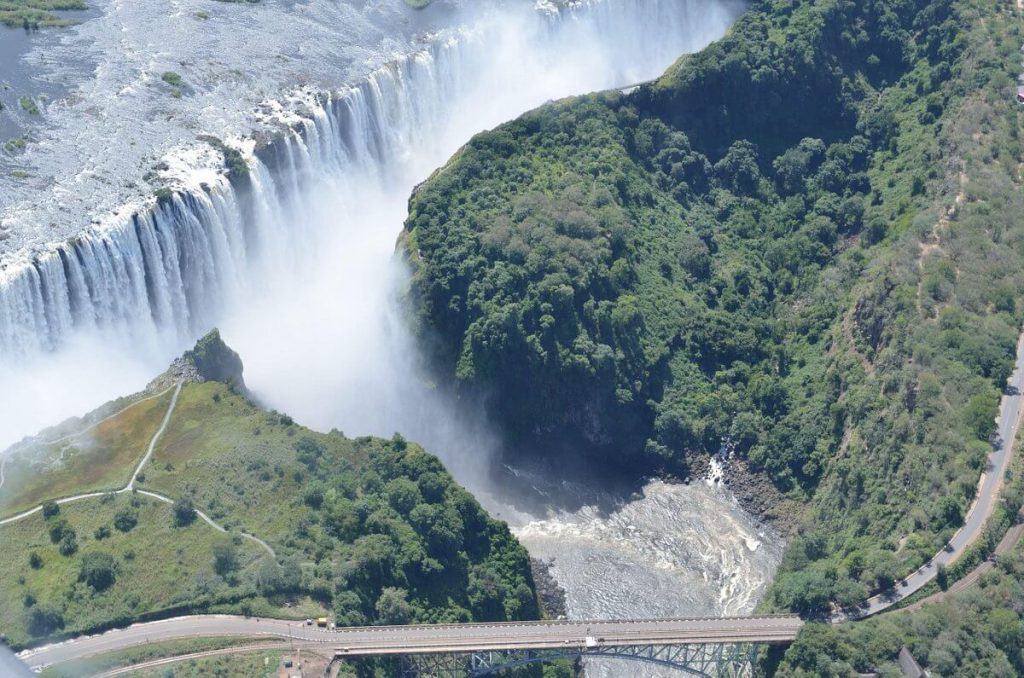
The Victoria Falls are just over 1 mile wide (1.7 km) and 355 feet (108 m) high. During the wet season, over 500 million litres (19 million cubic feet) of water plummets over the edge into the Zambezi River. This incredible amount of water generates a huge amount of spray, which shoots 1000 feet into the sky and can be seen 30 miles away, hence the name Mosi-oa-Tunya (Smoke that thunders).
The unique geography of the falls means you can watch them face-on and get to enjoy the full force of the spray, noise and spectacular rainbows that are always present. The best time to view the Victoria Falls is during the rainy season from March to May, when they are at their most impressive.
Zambia vs. Zimbabwe: Which Side is Better?
Deciding which country to visit depends largely on the time of year and your budget but up until about 10 years ago, Zimbabwe was by far the most popular country to visit the Victoria Falls from.
There are plenty of luxury hotels, and the infrastructure is good. You can walk to the falls from town along well-marked paths, and the view is certainly the best from this side because you can stand opposite the falls and see them head-on. But the political situation in Zimbabwe has meant that tourists are opting to visit the falls from the Zambian side. In 2006, hotel occupancy on the Zimbabwean side hovered at around 30%, while the Zambian side was at near-capacity. As of 2026, Zimbabwe’s lodges are filling up, running smoothly, the town is safe, and you get much better value on accommodation than on the Zambian side.
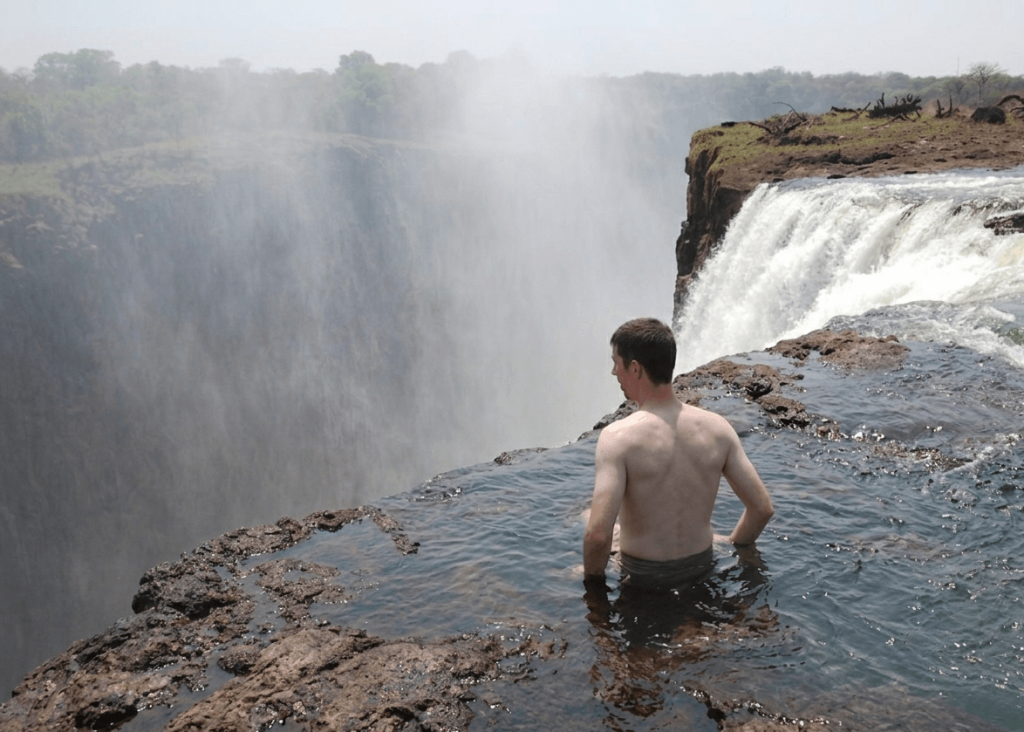
Visiting the falls from Zambia has some advantages, namely the tickets to enter the park are cheaper, and accommodation in the town of Livingstone, at least, is also traditionally less expensive. But note the town is about 10km from the Falls, so you have to get a ride down. You can see the falls from above as well as below in Zambia, and the surrounding forested areas are more pristine. At certain times of the year, you can even swim in the famous Devil’s Pool, which is a natural pool right before the edge of the upper falls. As a town, Livingstone is an interesting place. It used to be the capital of Northern Rhodesia (now Zambia) and its streets are still lined with Victorian-era colonial buildings.
I would recommend visiting from both sides. There is a border post you can cross quite easily, and a new KAZA UniVisa has been introduced that allows to cross the border easily and experience both sides. But as with all border formalities, check in advance since rules can change from day to day. The border is open from 8 am to 6 pm every day. Several hotels on either side offer packages that include a day pass to the other side as well as a night’s stay.
If you are at the falls during the dry season (September to December), you must go to the Zimbabwean side to see the Falls properly, since the Zambian side can be totally dried up to a trickle.
Top Activities & Adventures
Whether you want to be in the water, in the air, or on the edge of a gorge, here is the breakdown of what to expect.
Viewing the falls
Obviously, your main reason for visiting the area is to go and see the falls, and I would recommend going the minute you’ve checked your bags into a hotel. If you’re staying in Livingstone (Zambia) shared taxis and minibuses regularly ply the route to the falls. If you’re staying in Victoria Falls (Zimbabwe), just walk down to the park entrance from town. There are well-marked paths and many viewing points. You don’t need a guide or tour; just enjoy the spectacle at your own leisure and bring a raincoat for the spray.
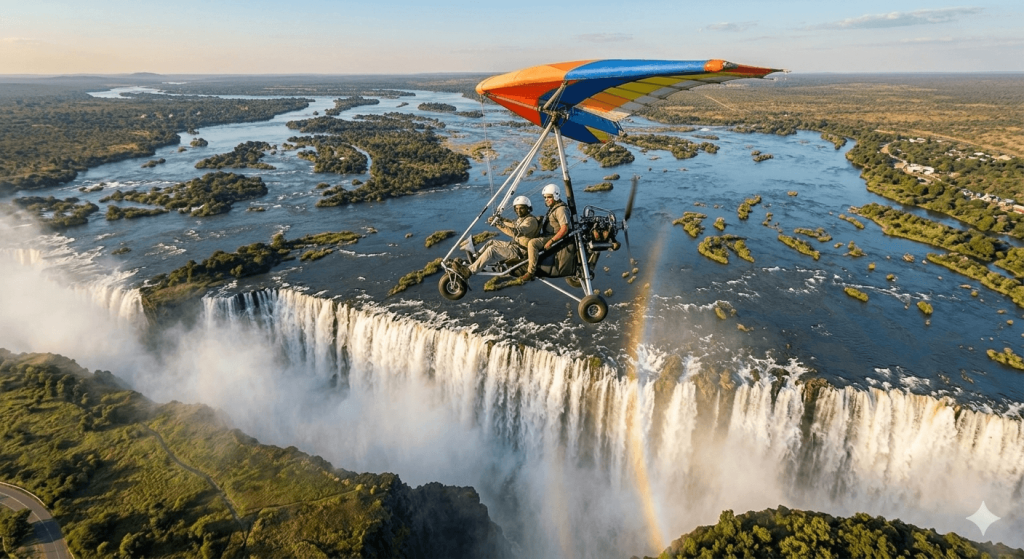
Flights over the Victoria Falls can also be booked at various hotels and local travel agencies. Getting a bird ‘s-eye view of the falls is certainly worth it if you have a bit of money to spare. The more adventurous can opt for a micro light flight.
Some of the best views of the Victoria Falls are from Livingstone Island on the Zambian side. This small island is owned by Tongabezi. A real thrill is to swim in a natural rock pool on the edge of the Falls – Devil’s Pool. You can only do this during the dry season. For more information, see “Devils’ Pool – A Leap of Faith“.
Water-Based Adventures
-
Devil’s Pool (Zambia side): This is a natural rock pool right on the lip of the falls. It is accessible only via Livingstone Island during the dry season and offers a “leap of faith” experience for swimmers.
-
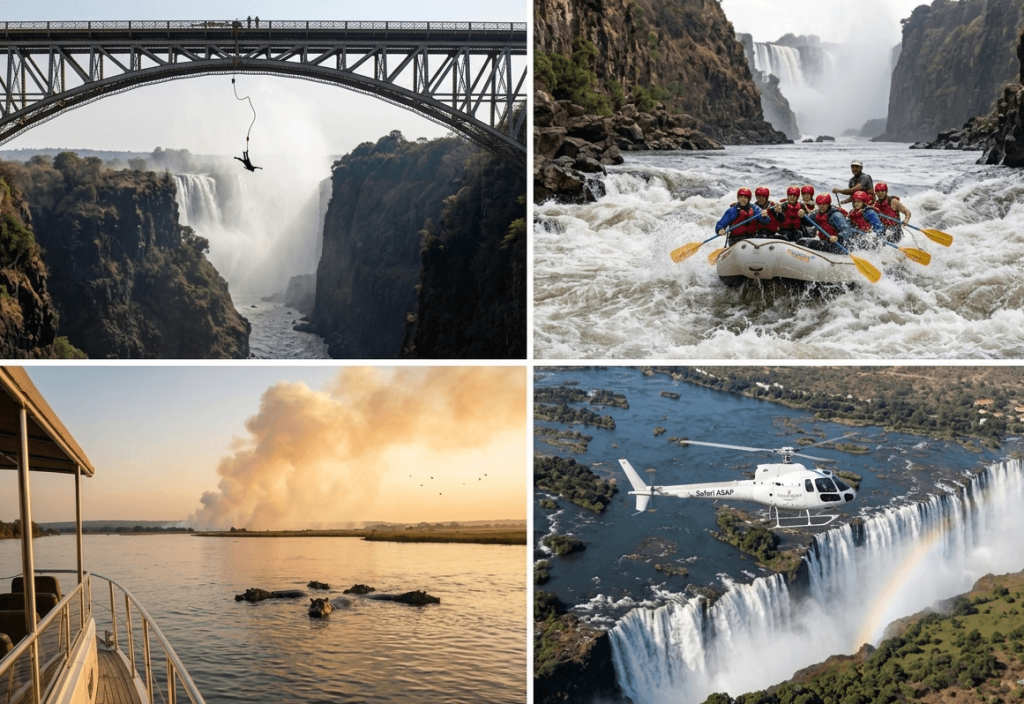
White-Water Rafting: Rafting down the rapids of the Zambezi River is an incredible adventure. These are Grade 5 rapids, not a leisurely float down the river, so be prepared to get wet and work hard at staying upright. Trips usually include lunch at a beautiful spot along the river and end with a cold beer once you’ve clambered back up the gorge. It is indeed an intense but very fun physical activity.
-
Jet Boating: A jet boat ride allows you to experience the Victoria Falls from below. For those who want speed without the rowing, a high-speed jet boat takes you into the “Boiling Pot” at the base of the falls, with some hair-raising turns en route. Regal Tours and Safaris run the fastest boat.
-
Sunset Cruises: A more relaxed “Sundowner” experience. Sunset cruises are a popular pastime in this part of the world, and there’s something extremely pleasant about enjoying a beverage while watching hippos cavort in the Zambezi under a spectacular sunset, often termed “booze cruises”. Cruises can be organized through the various travel agencies around town in both Livingstone and Victoria Falls. My favorite from the Zimbabwe side is Ilala Lodge’s Ra-Ikane, a lovely, intimate cruising experience with excellent food. On the Zambia side, I enjoyed the Lady Livingstone. For less of a sunset cruise, more of a booze cruise, opt for the cheaper, larger boats.
Aerial and High-Adrenaline
-
The “Flight of Angels”: Helicopter or micro-light flights over the falls. This is highly recommended for getting a full perspective of the mile-long curtain of water.
-
Bungee Jumping: Bungee jumping off the Victoria Falls Bridge is a highlight of many people’s visit to the falls. Jumps usually run just under $100 and can be arranged from most hotels in both Zimbabwe and Zambia, or at any travel agency in town.
-
Gorge Activities: For more extreme thrills, you can try gorge swings, abseiling, or river boarding.
Land and Wildlife
-
Self-Guided Walking Tours: You don’t need a guide to see the falls. Well-marked paths on both sides allow you to enjoy the views at your own pace—just remember to bring a raincoat for the spray.
-
Game Walks & Safaris: Mosi-oa-Tunya National Park (Zambia) offers the chance to see a surprising amount of wildlife just walking around the vicinity of the Victoria Falls on both sides. White rhinos, buffalo, elephants, baboons and warthogs are very common. Popular “walk with lions” or elephant safaris are also available for those wanting close animal encounters. Both offer less adrenaline-loving folks a chance at a little adventure, and many enjoy getting close to these great animals.
-
Livingstone Town Tour: Explore the streets of Livingstone to see Victorian-era colonial buildings from its time as a capital city.
Frequently Asked Questions
Which side of Victoria Falls has the best views?
The Zimbabwe side is usually considered better for views because it has the largest portion of the waterfall. From Zimbabwe, you get wide, uninterrupted panoramas and many viewpoints along the path. It’s the place where you can really take in the full scale and power of the falls. The views are especially impressive during high water season. For first time visitors, this side often feels more complete.
What makes the Zambia side unique?
The Zambia side offers a closer and more adventurous experience of the falls. From Zambia, you can get right up to the edge in certain areas. It’s also where you’ll find Devil’s Pool, a famous spot for swimming during low water levels. The atmosphere feels quieter and less crowded than Zimbabwe. It’s a great option if you enjoy something a bit more thrilling.
Does the time of year affect which side is better?
Yes, the season plays a big role in your experience. During high water months, Zimbabwe can be very misty, which sometimes blocks the view. In those moments, Zambia may actually give clearer sights of the falls. In the dry season, the Zambia side can have less water flowing, while Zimbabwe still offers strong views. So depending on when you go, one side may stand out more than the other.
Which side is better for activities and things to do?
Zambia is known for adventure activities like swimming, guided island visits, and closer interactions with the falls. Zimbabwe, on the other hand, is great for relaxed sightseeing, photography, and easy walking trails. The town near the falls in Zimbabwe is also more developed with more dining and accommodation options. Both sides offer guided tours and experiences, just in different styles. It really comes down to whether you want adventure or comfort.
So which one should you choose overall?
If you want the best overall views and a classic experience, Zimbabwe is often the top choice. If you’re after something more adventurous and less crowded, Zambia might suit you better. The good news is that the two sides are very close, and you can visit both if you have time. Each side gives you a different perspective of the same natural wonder. In the end, you can’t really go wrong with either option.
Still have questions?
Our local safari experts are happy to help you plan the perfect African safari.





