
Table of Contents
- 1. History
- 2. Early Settlement
- 3. Arab Traders & Slave Trade
- 4. British Influence
- 5. The German Colonial Era
- 6. The British Period
- 7. Tanzania Independence
- 8. Zanzibar Independence
- 9. Socialists in Tanzania
- 10. Geography
- 11. Getting there and Away
- 12. Visa requirements to enter Tanzania
- 13. Tanzania Visa Guide
- 14. Tanzania Food and Meals. What to Know?
- 15. Snacks
- 16. Main Dishes
- 17. Tanzania Fruits
- 18. Tanzania Tea & Coffee
- 19. Soft Drinks
- 20. Tanzania Alcohol and Beer
- 21. Things to Buy
- 22. Safety and Security while on Tanzania Holiday
- 23. Yellow fever requirement while go to Tanzania
- 24. Tanzania ultimate guide to weather and climate
- 25. Guide to money safety and bargaining Money Safety
- 26. Bargaining in Tanzania
- 27. When to go on a holiday in Tanzania?
- 28. Tanzania Malaria Guide. What to Know?
- 29. Tanzania Kiswahili Language Guide
- 30. Tanzania Religion Guide. What to Know?
- 31. Tanzania Kiswahili Language Guide
- 32. Personal Medical Kit Guide
- Tanzania Travel Immunization
- Frequently Asked Questions
Tanzania, with its magnificent wildlife reserves, is East Africa at its best. Famous parks such as the Serengeti or the wonderful crater of Ngorongoro offer some of the best safaris opportunities on the continent. While these two may be the best known of the country’s numerous parks and reserves, many others deserve a visit. These ranges from the tiny Gombe stream National park near the Burundi border to the huge and virtually untouched Selous Game Reserve in the south-east. Parks and wildlife are not all Tanzania has to offer.
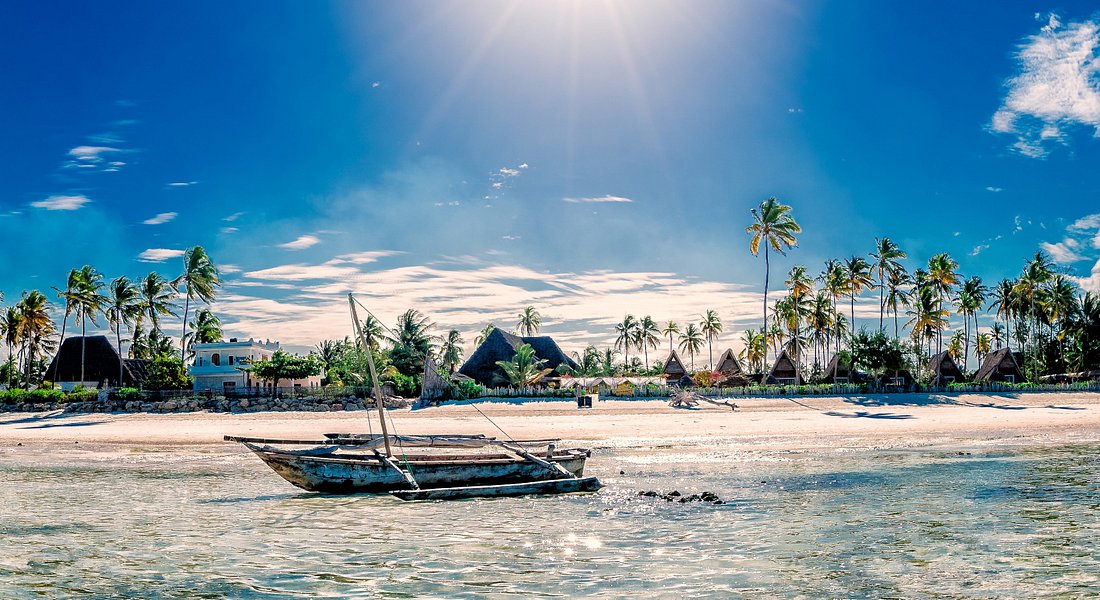
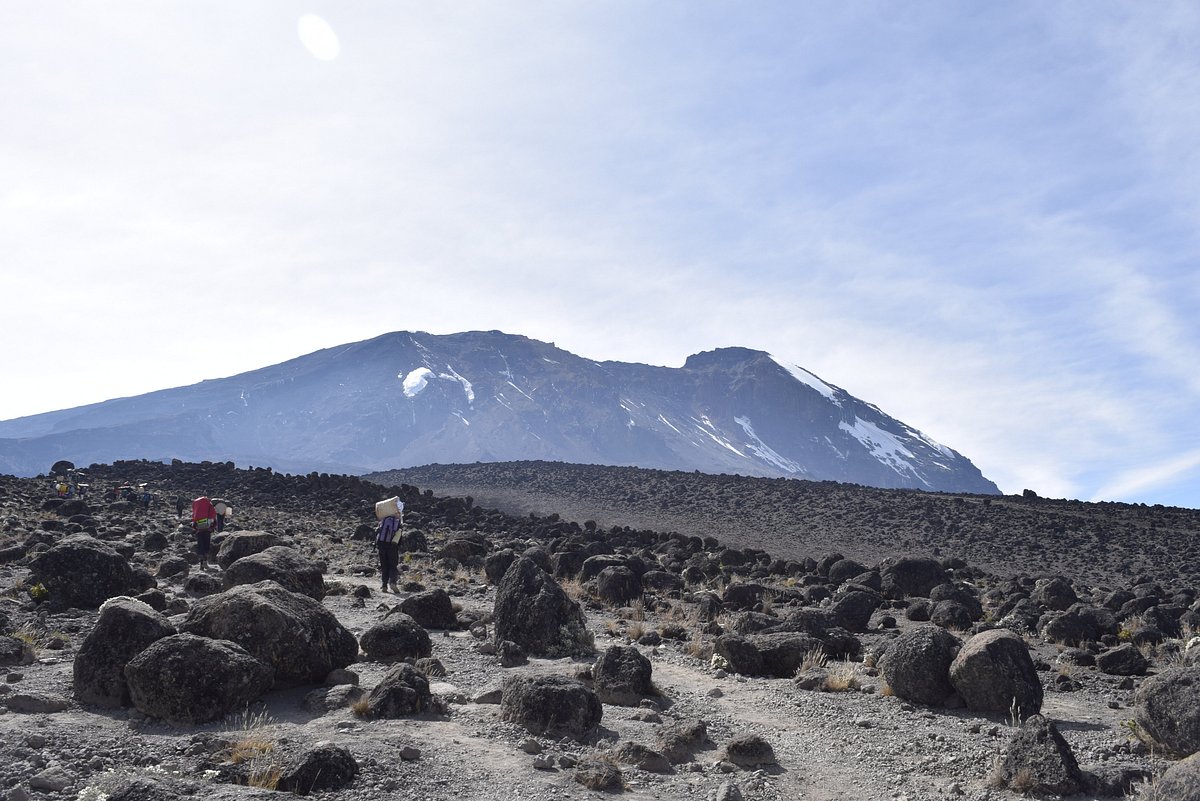
In the north in the Moshi town near Kenyan border is snow capped Mt Kilimanjaro, the highest mountain in Africa. Scaling with 5895-metre peak is the goal of many visitors and among the best hiking adventure in the world. Offshore in the Indian Ocean are several islands, including exotic Zanzibar, with its labyrinthine old Stone Town, ruined palaces and Persian baths, fort and other reminders of the Oman period, not to mention its beaches and coral reefs.
History
No other African country has been moulded so closely in the image of a former president known as Mwalimu (teacher) in his own country and often referred to as the conscience of Black Africa’ during his tenure, Tanzania’s first president, Julius Nyerere, is one of Africa’s elder states people. He ruled as president for more than 20 years, until he stepped down in 1995 to become the chairman of his party, Chama cha Mapinduzi (CCM or the Party of Revolution).
Like many other first presidents of postcolonial Africa, Nyerere was firmly committed to radical socialism and nonalignment. He was always at the forefront of African liberation struggles and Dar es Salaam has been home to many a political exile or guerrilla fighter. Since 1985, Ali Hassan Mwinyi has been the president followed by Benjamin Mkapa and then Jakaya Kikwete, out of respect to Nyerere, their photographs appear side by side in most offices, hotel, foyers, restaurants, etc.
Early Settlement
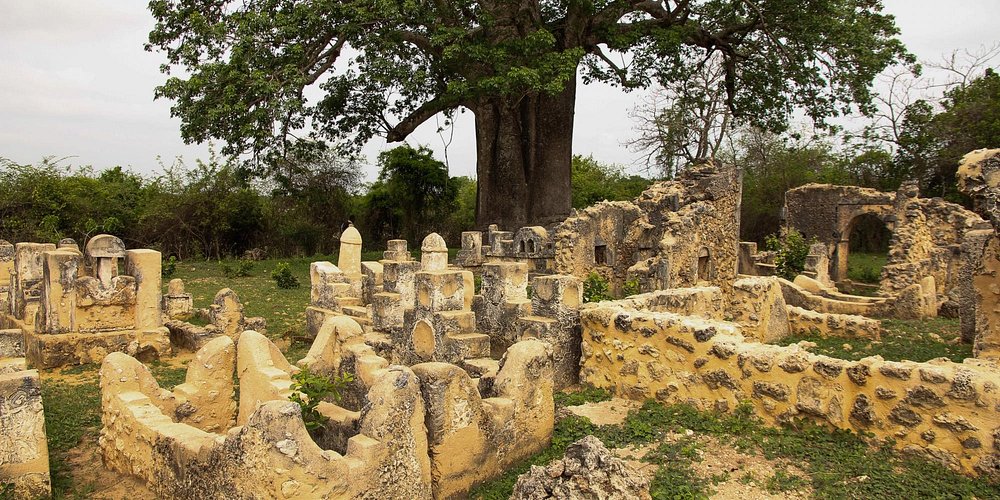
Not a great deal is known about the early history of the Tanzanian interior except that by 1800 CE, the Maasai, who in previous centuries had gazed their cattle in the Lake Turkana region of Kenya, had migrated down the Rift Valley as far as Dodoma. Their advance was only stopped by the Wagogo, who occupied an area west of the Rift Valley and the Hehe to the south of Dodoma. Because of their reputation as a warrior tribe, the Maasai were feared by the neighbouring Bantu tribes and avoided by the Arab traders, so the northern part of Tanzania was almost free from the depredations on the slave trade and the civil wars which destroyed many villages and settlements in other areas of the country.
Now the Maasai occupy only a fraction of their former grazing ground and have been advised to share it with some of Tanzania’s most famous national parks and game reserves. Although some of the southern clans have built permanent villages and planted crops, their northern cousins have retained their pastoral habits and are the least affected by, or interested in, the mainstream of modern Tanzania. Most of the other tribes of this country have more or less given up their traditional customs under the pressure of Nyerere’s drive to create a unified nation which cuts across the tribal division.
Arab Traders & Slave Trade
Through the coastal area had long been the scene of maritime rivalry, first between the Portuguese and Arab traders and later between the various European powers, it was Arab traders and slaves who first penetrated the interior as far as Lake Tanganyika in the middle of the 18th century. Their main depots were at Ujiji on the shores of Lake Tanganyika and at Tabora on the central plain. Their captives, generally acquired by commerce rather than force, were taken first to Bagamoyo then to Zanzibar, where they were either put to work on plantations or shipped to the Arabian Peninsula for sale as domestic servants.
It was, nevertheless, a sordid trade which devastated the tribes of the interior. The young and the strong were abducted, children and old people were left to die, and the few who resisted were eliminated. Mothers unable to carry both their babies and their ivory load were dispatched with a spear or machete. It is estimated that by the late 19th century, over half a million people had been transported to the coast and that 10 times that number had died along the caravan routes. Zanzibar had been ruled for decades from Oman at the mouth of the Persian Gulf.
By the first half of the 1880s, it had become so important as a slaving and spice enter port that the Omani Sultan, Seyyid Said, moved his capital there from Muscat in 1832. Though cloves had only been introduced to Zanzibar from the Moluccas in 1818, by the of Seyyid Said’s reign it was producing 75% of the world’s supply.
British Influence
Britain’s interest in this area stemmed from the beginning of the 19th century when a treaty had been signed with Seyyid Said’s predecessor to forestall possible Napoleonic French threats to British possessions in India. The British were only too pleased that a friendly Oriental power should extend its dominion down the East African coast rather than leave it open to the French.
When Seyyid Said moved to Zanzibar, the British set up their first consulate there. At that time, Britain was actively trying to suppress the slave trade, and various treaties limiting the trade were signed with the Omani sultans. But it was not until 1873, under the threat of a naval bombardment, that Sultan Barghash (Seyyid Said’s successor) signed a decree outlawing the slave trade. Though the decree abolished the seaborne trade, slavery continued on the mainland for many years, as it was an integral part of the search of ivory.
Indeed, slavery probably intensified the slaughter of elephants, since ivory was now one of the few exportable commodities which held its value, despite transport costs to the coast. Slaves were the means of transport. European explorers began arriving around the middle of the 19th century, the most famous being Stanley and Livingstone. Stanley’s famous phrase, “Dr Livingstone, I presume”, stems from their meeting at Ujiji on Lake Tanganyika. Other notable explores in this region include Burton and Speke, who were sent to Lake Tanganyika in 1858 by the Royal Geographical Society.
The German Colonial Era
A little later, the German explorer Carl Peters see about persuading unsuspecting and generally illiterate chiefs to sign so-called treaties of friendship. On the strength of these, the German East Africa Company was set up to exploit and colonise what was to become Tanganyika.
Though much of the coastal area was held by the Sultan of Zanzibar, German gunboats were used to ensure his compliance. The company’s sphere of influence was soon declared a protectorate of the German state after an agreement signed with Britain gave the Germans Tanganyika, Rwanda and Burundi while the British took Kenya and Uganda.
Like the British in Kenya, the Germans set about building railways and roads to open their colony to commerce, building hospitals and schools and encouraging the influx of Christian missionaries. However, unlike Kenya’s fertile and climatically suitable for European farmers to colonise, much of Tanganyika was unsuitable for agriculture, the tsetse fly made cattle grazing or dairying impossible. Most farming occurred along the coast and around Mt Kilimanjaro and Mt Meru. A few descendants of the original German settlers still live in these areas. The detachment of the sultan’s coastal mainland possessions didn’t go down too well with his subjects, and Bagamoyo, Pangani and Tanga rose in revolt.
These revolts were crushed, as were other anti-German revolts in 1889. The most serious revolt against German rule, however, was the Maji Maji uprising between 1905 and 1906, triggered by resentment over the cotton scheme. Believing themselves in invincible when anointed by the “holy water” (Maji is water in English) but inadequately equipped, some 75,000 to 120,000 Africans lost their lives before the revolt fizzled out in the face of superior German weaponry.
The German occupation continued until the end of WW1, after which the League of Nations mandate Tanganyika to the British and Rwanda and Burundi to the Belgians, but not before a long and hard campaign had been fought. The famous German cruiser Königsberg harassed and sank British ships along the East African coast, including the Pegasus in Zanzibar harbour before it was forced to take refuge in the Rufiji delta, where the British finally located it using aerial reconnaissance and sank it.
Inland, the fighting was equally protracted. While steamers exchange fire on Lake Victoria, the British were forced to transport gunboats all the way from South Africa to Lake Tanganyika to counter the German naval threat on that lake. On land, General Paul von Lettow Vorbeck led the British forces a withering cat-and-mouse game throughout the war, including beating them soundly at Tanga and holding them at bay in the south. The armistice in East Africa was only declared two weeks after the same was declared in Europe and with von Lettow Vorbeck still unbeaten.
The British Period
Because of the tsetse flies that made much of central and southern Tanzania unsuitable for agriculture and stock raising, the British tended to neglect the development of Tanganyika in favour of the more lucrative and fertile options available in Kenya and Uganda. Nevertheless, political consciousness gradually coalesced in the form of farmers unions and cooperatives through which popular demands were expressed. By the early 1950s, there were over 400 such cooperatives, which were shortly to amalgamate with the Tanganyika Africa Association (TAA), based in Dar es Salaam.
Tanzania Independence
In 1953, Julius Nyerere had gained the leadership of the TAA and quickly transformed it into an effective political organisation by amalgamating it with other political groups into the Tanganyika African National Union (TANU). which had its slogan, “Uhuru na Umoja” (Freedom and Unity). The British would have preferred to see a multiracial constitution adopted by the nationalists so as to protect the European and Asian minorities, but this was opposed by Nyerere. Sensibly, the last British governor, Sir Richard Turnbull, ditched the idea and Tanganyika attained independence in 1961 with Nyerere as the country’s first president. It was smooth, bloodless transition and TANU was fortunate in having no tribal conflicts, dominant tribe or linguistic divisions which could have torn it apart.
Zanzibar Independence
The island of Zanzibar had quite a different experience in its push for independence. It had been a British protectorate since 1980, as had a 16km wide strip of the entire Kenyan coastline which was considered to belong to the sultan. The main push for independence came from the Afro Shiraz Party (ASP), which was formed in 1957. It was opposed by two minority parties, the Zanzibar and Pemba People’s Party and the Arab Sultanate-oriented Nationalist Party, which were favoured by the British administration.
The British actively intervened on behalf of the two minority parties, denying the ASP power in three pre-independence elections so that, at independence in 1963, it was the two minorities parties which formed the first government. But it didn’t last long. Angered by continued victimisation, the ASP, led by Abeid Aman Karume and supported by TANU on the mainland, initiated a bloody revolution which quickly resulted in the toppling of the sultan and the massacre or expulsion of the bulk of the island’s Arab population.
The sultan was replaced by a revolutionary council formed by the AfroShiraz Party. A short time later, Zanzibar and the other offshore island of Pemba merged with the mainland of Tanganyika to form the United Republic of Tanzania. Later, in 1977, in order to promote unity and collective leadership, TANU and ASP merged to form the Chama cha Mapinduzi (CCM), which still rules today.
Socialists in Tanzania
Nyerere inherited a country which had been largely ignored by the British colonial authorities since it had a few exploitable resources and only one major export crop, sisal. Education had been neglected too so that at independence, there were only 120 university graduates in the whole country. It was an inauspicious beginning, and the problems it created eventually led to the Arusha Declaration of 1967. Based on the Chinese communist model, the cornerstone of this policy was the Ujamaa village – a collective agriculture venture run along traditional African lines. The village was intended to be socialist organisations, created by the people and governed by those who lived and worked in them. Self-reliance was the keyword in the hundreds of villages that were set up. Basic goods and tools were to be held in common and shared among members, whilst each individual was obligated to work on the land.
Nyerere’s proposals for education were seen as an essential part of this scheme and were designed to foster constructive altitudes to cooperative endeavour, stress the concept of social equality and responsibility and counter the tendency towards intellectual arrogance among the educated. At the same time, the economy was nationalised, as was a great deal of rented property. Taxes were increased in an attempt to redistribute people wealth. Nyerere also sought to ensure that those in political power do not develop into an exploitative class, by burning government ministers and party officials from holding shares or directorships in companies or from receiving more than one salary.
Geography
A land of plains, lakes and mountains with a narrow coastal belt, Tanzania is East Africa’s largest country. The bulk of its 945,087 sq km is Highland plateau, some of it semidesert and the rest savannah and scattered bush. The highest mountains – Kilimanjaro stands 5895 metres and second highest Mt Meru stands 4556 metres are in the northeast, along the border with Kenya and Lake Victoria which is situated in the North bordering with Uganda as well as Kenya. Along the coast is a narrow low-lying strip and offshore are the islands of Pemba, Zanzibar and Mafia. More than 53,000 sq km of the country is covered by inland lakes, most of them in the Rift valley. Along the south of the country, it is bordered with Mozambique and on the west part of the country, you will find Zambia, Congo, Burundi and Rwanda.
Getting there and Away
It is possible to enter Tanzania by air, road or rail. By air, you can use the international airlines serving Tanzania either through Kilimanjaro or Dar es Salaam international airport include, Turkish airlines, Ethiopian airline, Emirates flights, Qatar and KLM. Sometimes travellers use Nairobi as a gateway to East Africa though it is not a lot of difference between the fares to Nairobi and those to Dar es Salaam or Kilimanjaro and the cheapest regular options to fly between Tanzania and Kenya are the Kenyan Airways flight between Dar es Salaam and Kilimanjaro to Nairobi as well as Zanzibar to Mombasa.
And now Tanzania has revived its airline company Air Tanzania which have different routes between Tanzania and Zambia, Mozambique and Kilimanjaro and Zanzibar. By road, there are a number of buses companies such as Kilimanjaro Express buses from Dar es Salaam to Arusha and Moshi as well as Dar Lux buses which travel up to Nairobi and Kampala. The rail access is only from Zambia even though the Tanzania railway management is building a new advanced and modern electric train system which will cross the country from Dar es Salaam to Dodoma and end in Kigoma which almost half to end now.
Visa requirements to enter Tanzania
Visas are required by all visitors to Tanzania, except Botswana, Burundi, Cape Verde, Comoros, DRC, Djibouti, Gambia, Guinea, Guinea Bissau, Kenya, Lesotho, Madagascar, Malawi, Mali, Mauritius, Mozambique, Namibia, Rwanda, South Africa, Swaziland, Uganda, Zambia, Zimbabwe, Antigua & Barbuda, Bahamas, Barbados, Belize, British Virgin Islands, Cayman Islands, Dominica, Ecuador, Grenada, Haiti, Jamaica, Montserrat, Saint Lucia, Bangladesh, Cambodia, Hong Kong, Indonesia, Macau, Malaysia, Philippines, Singapore, Georgia, Cook Islands, Federated states of Micronesia, Niue, Palau, Samoa, Tuvalu, Wallis and Futuna. For these nationalities, a free visitor’s pass, valid for one to three months, is obtainable at the border (you’ll be asked how long you want to stay — three months is no problem).
For other nationalities, visa costs vary. The cost of the visa range from USD $ 100 for a multiple entry to USD $ 50 for a single entry (90 Days). Others fall in between these two figures. Valid Passport is required and visas are generally issued in few hours while at the airport. Now you can get Tanzania visa via different online platforms. You generally get what you ask for, up to three months.
In the past, around borders there were bad reputations for hassling travellers but this was connected either with currency or with suspected visits to South Africa.
But now that problem is finished. You will have to declare to the officers if you have foreign currency of more than $ 10,000 at the time of entrance or exit. If you take a car across the border into Kenya from Tanzania, you will have to buy a 90-day road permit for USD $ 100.
Tanzania Visa Guide
Visas are obtained from the embassy or consulate of the appropriate country either before you set off or along the way. It’s best to get them along the way, especially if your travel plans are not fixed, but keep your ear to the ground regarding the best places to get them.
Two different consulates of the same country may have completely different requirements; the fee may be different, one consulate might want to see how much money you have whereas another won ‘t, one might demand an onward ticket while another won’t even mention it, one might issue visas while you wait and another might insist on referring the application back to the capital (which can take weeks).
Whatever you do, don ‘t turn up at a border without a visa unless you’re absolutely sure visas aren’t necessary or you can get one at the arrival. If you get this wrong you’ll find yourself tramping back to the nearest consulate, and in some countries, this can be a long way. Consular officials sometimes refuse point-blank to stamp a visa on anything other than a completely blank page, so make sure your passport has plenty of them.
Some countries demand you have a ticket out of the country before they will issue you with a visa or let you into the country. So long as you intend to leave from the same place you arrived, there is no problem, but if you want to enter at one point and leave from another, this can sometimes be a headache.
The essential documents are a passport and an International Vaccination Card. If you already have a passport, make sure it’s valid for a reasonably long period of time and has plenty of blank pages on which stamp-happy immigration officials can do their stuff. If it’s more than half full and you’re going to need a lot of visas, get a new one before you set off.
Tanzania Food and Meals. What to Know?
The most basic local eateries (often known as hoteli) hardly warrant being called restaurants. These places usually have a limited menu and are open only for lunch — the main meal of the day. If you’re on a tight budget you’ll find yourself eating in these places most of the time. However, if you have the resources, even in the smaller towns it’s usually possible to find a restaurant that offers more variety and better food at a higher price.
Often these places are connected with the mid-range and top-end hotels. Preparing your own food is a viable option if you are camping and carrying cooking gear. Every town has a market and there’s usually an excellent range of fresh produce available. Fast food has taken off in a big way and virtually every town has a place which serves food that rates high in grease and low in price. Fried chips with lashings of lurid tomato sauce are a basic filler, but sausages, eggs, fish and chicken are also popular.
In Arusha, there are literally dozens of these places, and they can be handy places to pick up a snack. The only place where any sort of distinctive African cuisine (other than nyama choma or barbecued goat’s meat) has developed is on the coast where the Swahili dishes reflect the history of contact with the Arabs and other Indian Ocean traders — coconut and spices are used heavily and the results are generally excellent.
As might be expected with a large number of Asians in Tanzania, there are also large numbers of Indian restaurants. In addition, many hotels are owned by Indians and the choice of food available on their menus reflects this.
If you like this cuisine, you’ll have no problems even in the smaller towns though most of these restaurants are confined to Arusha and Dar es Salaam as well as Mwanza. Vegetarians are not well catered for.
Away from the two main cities, there are virtually no vegetarian dishes to accompany the starch. Beans are going to figure prominently in any vegetarian’s culinary encounters in Tanzania! Buying fresh fruit and vegetables in the market can help relieve the tedium.
Snacks
Sambusas are probably the most common snack and are obvious descendants of the Indian samosa. They are deep-fried pastry triangles stuffed with spiced mince meat. Occasionally you come across sambusas with vegetable fillings, but this is usually only in the Indian restaurants. If you can find them freshly made and still warm, sambusas can be excellent.
However, more often by the time you get them they are at least several hours old, are cold and have gone limp and greasy from the oil saturation. Another item that fits into the pure starch category is that curious beast known as the mandazi. It is a semisweet, flat doughnut and, once again, when they are fresh they can be very good. They are usually cooked and eaten at breakfast time — often dunked in tea. Should you decide to eat one later in the day, chances are it will be stale and hard.
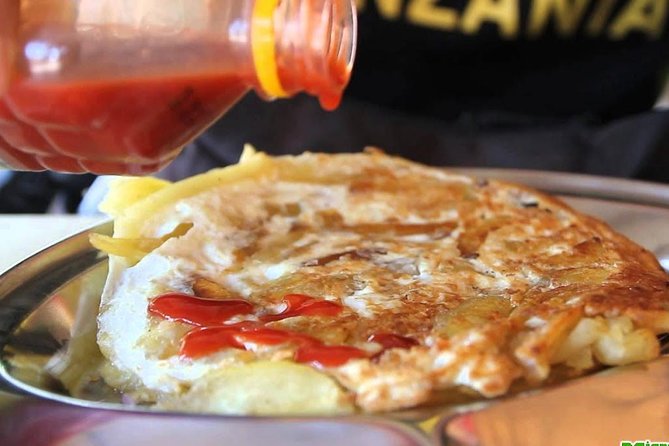
Something that you don’t come across very often but which makes an excellent snack meal is mkate mayai . (literally ‘breadeggs’). This was originally an Arab dish and is now found in countries as far ranging as Tanzania and Singapore.
Basically it’s a wheat dough which is spread into a thin pancake, filled with minced meat and raw egg and then folded into a neat parcel and fried on a hotplate. The Naazi Hotel in Arusha is a good place to try this snack.
Seemingly on every second street corner, someone is trying to make a few bob selling corn cobs roasted on a wire grill over a bed of hot coals. You pay only a couple of shillings for these. Another street-corner snack is deep-fried yams, eaten hot with a squeeze of lemon juice and a sprinkling of chilli powder.
Main Dishes
Basically, it’s meat, meat and more meat, accompanied by the starch of some sort. The meat is usually in a stew with perhaps some potato or other vegetables thrown in and is often as tough as an old boot. Beef, goat and mutton are the most commonly eaten meats.
The starch comes in three major forms: potatoes, rice and ugali. The last of these is maize meal which is cooked up into a thick porridge until it sets hard. It’s then served up in flat bricks. It’s incredibly stodgy, almost totally devoid of any flavour and tends to sit on the stomach like a royal corgi, but most Tanzanian swear by it. It’s certainly the equivalent of mashed potato for the Poms or sticky rice for the Chinese and Koreans but it certainly isn’t a culinary orgasm.
Freshly cooked it’s palatable; when stale, just about inedible. Naturally, you must try it at least once and some travellers actually get to like it, but don’t hold your breath! The only thing it has going for it is that it’s cheap. Roast chicken and steak are popular dishes in the more up-market restaurants of the bigger towns. Food in this sort of place differs little from what you might get at home. Cooked red kidney beans are always an alternative to meat and are widely available in local eateries.
Menus, where they exist in the cheaper places, are usually just a chalked list on a board on the wall. In better restaurants, they are usually just in English. The following food list gives some of the main words you are likely to come across when trying to decipher Swahili menus or buy food in the market.
Useful Swahili Food Words
- boiled – chemka
- bread – mkate
- butter – siagi
- cup – kikombe
- curry – mchuzi
- egg(s) – yai (mayai)
- food – chakula
- fork – uma
- fried – kaanga
- glass – glasi
- hot/cold – moto/baridi
- hot (spicy) – pilipili
- Indian bread/pancake – chapati
- knife – kisu
- napkin – kitambaa
- pepper – pilipili manga
- plate – sahani
- raw – mbichi
- ripe – mbivu
- roast – choma
- table – meza
- teaspoon – kijiko cha chai
- salt – chumvi
- sauce – mchuzi
- soup – supu
- sugar – sukari
- sweet – tamu
- yoghurt – maziwa mgando
- Vegetables & Grains
- aubergine – biringanya
- cabbage – kabichi
- capsicum – pilipili ya kupika
- carrots – karoti
- cassava – muhogo
- garlic – vitunguu Saumu
- kidney beans – maharagwe
- lettuce – saladi
- maize-meal porridge mashed plantains & maize – ugali
- onions – vitunguu
- banana – ndzi
- potatoes – viazi
- rice – wali
- spinach – Mboga za majani
- tomatoes – nyanya
- vegetables – mboga za majani
- vegetable stew – mboga
- Meat & Fish
- beef – nyama ya ng’ombe
- kebabs – kabab
- meat – nyama
- meat stew – mboga ya nyama
- goat – nyama ya mbuzi
- pork – nyama ya nguruwe
- steak – steki
- crab – kaa
- fish – samaki
- lobster – kamba
- squid – ngisi
Tanzania Fruits
This is where Tanzania really excels. Because of the country’s varied climate, there’s an excellent array of fruits. The tropical ones are especially good. Depending on the place and the season you can buy mangoes, papaya, pineapple, watermelon, oranges, guavas, custard apples, bananas (many varieties) and coconuts. Prices are cheap and the quality very high.
Tanzania Tea & Coffee
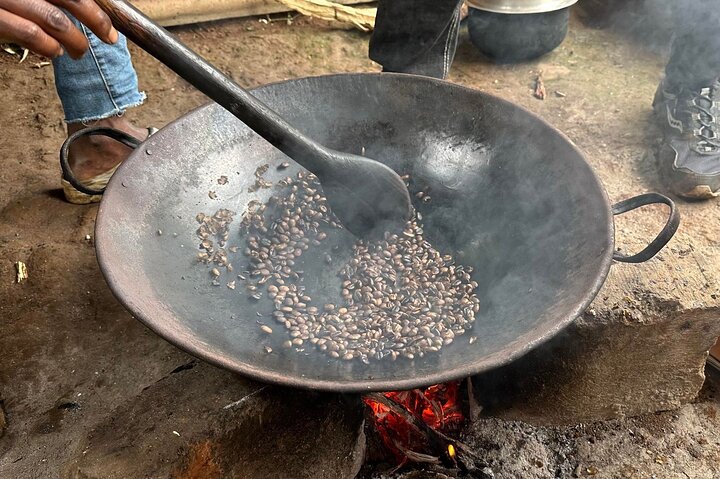
Despite the fact that Tanzania grows some of the finest tea and coffee in the world, getting a decent cup of either can be difficult. Tea (chai) is a national obsession and is drunk in large quantities. It bears little resemblance to what you might be used to but as long as you look on it as just a different hot drink and not actually tea it can be quite good.
Be warned that it is generally very milky and horrendously sweet. Chai is made the same way in Tanzania as it is in India: all the ingredients (tea, milk and masses of sugar) are put into cold water and the whole lot is brought to the boil and stewed.
Finding a good honest cup of tea is virtually impossible outside the fancy restaurants. For tea without milk ask for chai kavu. Coffee is similarly disappointing. Instant coffee is generally used, and in small quantities, so, once again, you’re looking at a sweet milky concoction. However, as each cup is individually made it’s somewhat easier to order one tailored to your own liking.
Soft Drinks
All the old favourites are here, including Coke, Pepsi and Fanta, and they go under the generic term of soda. As with beer, prices vary depending on where you buy. In most places, you pay around US$1 per bottle but in the more exclusive places you can pay up to US$3. There are no such predictable prices for freshly squeezed fruit juices which range from US$0.50 to US$2 per glass.
Tanzania Alcohol and Beer
Tanzania has a thriving local brewing industry and formidable quantities of beer are consumed. It’s probably true to say that beer is the most widely available manufactured product in the country. Go to just a tiny group of Duka (local stores) by the side of the road somewhere and chances are one of them will either be a bar, or it will stock beer. Sure, it won’t be cold, but then even in the most up-market places beer is available both chilled and warm.
‘Why warm?’ you might ask as your face wrinkles in horror! The answer is because most Africans appear to prefer it that way. You will hardly see them drink cold Beer though you’ll Occasionally see a Tanzanian drinking cold Safari Larger or Serengeti beer. The beer names are Safari, Tusker and Kilimanjaro and Serengeti (all manufactured by Tanzania Breweries Ltd) and they’re sold in 500 ml bottles. They are basically the same product With different labels (though there is a discernible difference in taste) but most people end up sticking to just one brand. The same company manufactures export-quality 300 beers — Export and Premium respectively and these are slightly stronger and more expensive.
Guinness is also available but tastes and looks nothing like the genuine Irish article as well as other imported beers like Heineken, Castle larger and Windhoek beer from Namibia. Lastly, Serengeti Breweries has also brought out a light version of Serengeti which is very good and available in many places, Check the price before ordering — in some places it’s cheaper than the bottled variety; in others, it costs more (sometimes considerably more). Beers are cheapest bought from a supermarket where a 500 ml bottle will cost you around US$0.50.
Bought from a normal bar, you are looking at US$1 to US$3. Bought at a bar in a five-star hotel it can cost you up to US$3. This would be exceptional but, as there are no price controls on beer — bars and hotels can charge what they like.
Wine
Tanzania has a fledgeling wine industry and the Dodoma wines are said to be quite good. This is something that cannot be said about the most commonly encountered Tanzanian wine. It tastes fragrant and even the smell is bearable. On the other hand, you can get cheap imported European and even Australian wine by the glass for around US$5 in Arusha restaurants. This is expensive when compared to the price of beer but is actually not too bad.
Local Brews
Although it is strictly illegal to brew or distil liquor this doesn’t stop it going on. Pombe is the local beer and is usually a fermented brew made with bananas or millet and sugar. You may get the chance to sample it here and there and it shouldn’t do you any harm. The same cannot be said for the distilled drinks, known locally as Gongo, as these are often very effective poisons — inefficient/amateur distilling techniques ensure various percentages of methyl alcohol creep into the brew. They’ll blind you if you’re lucky; kill you if you’re not. Leave it alone!
Things to Buy
Tanzania is an excellent place for souvenirs, although much of the cheap stuff available is just pure junk mass-produced by hand for the tourist trade. Look carefully at what’s available before parting with your money. Arusha and Mto Wa Mbu are the main centres but many of the items come from the various regions, so it’s often possible to pick up the same at source, although you then have the problem of transporting it.
The best buys include Makonde carvings, sometimes made from ebony (but often softer woods stained with boot polish), kikapu (woven sisal baskets), jewellery and tribal souvenirs, including colourful Maasai beaded jewellery, the decorated calabash (dried gourds) and spears and shields.
There are also batiks, local sarongs (kangas and kikois), soapstone carvings from Kigoma in the west of Tanzania, and paintings. It’s possible to pick up something which will look good in your living room back home without spending a fortune but, these days, something of genuine quality and artistry is going to cost real money because there are many skilful artists around who produce works of genuine art (as opposed to tourist tat) and know that there are quite a few tourists around who are very discerning and will pay big bucks for quality.
This particularly applies to Makonde carvings, jewellery and paintings. In some cases, you can be talking about thousands of US dollars. If you’re interested in quality artwork, spend time doing the rounds of the shops and galleries which deal in it.
Safety and Security while on Tanzania Holiday
Tanzania with no doubt a safe country to visit and even more safe when you travel with reputable and registered Tour company. Millions of travellers visit Tanzania each year and there are very rare incidents. At Safari ASAP, all our clients travelling are covered by AMREF Flying Doctors which makes them safe and secure during all the time of safari.
When you are alone and wish to walk around, make sure you do not go to isolated areas or beaches also we are strongly encouraged to use registered taxis with a label or hired drivers from the hotel or other reputable sources for town transportation
Yellow fever requirement while go to Tanzania
You should consult your doctor for a few months in advance as you may need a series of vaccinations. For complete advice on vaccines and medications, do not forget to tell your doctor that you are travelling to Tanzania and participating in an Adventure trip (Safaris or Kilimanjaro Climb).
Tanzania only calls yellow fever vaccine for travellers from countries that are infected with yellow fever, such as Kenya, Uganda, Rwanda and Ethiopia. It may be necessary for you to present a yellow fever vaccination certificate, which must be kept at all times. However, if there is a health officer present at the passport control for Tanzania (sometimes they are not present), they will ask for your vaccination record and if you do not have it, they will administer it locally. If you come from Dubai, Nairobi and Ethiopia, definitely there will be a health representative there.
Therefore, it is important that you have a yellow fever vaccine. No further vaccinations are required to enter Tanzania at present. Malaria is endemic in many parts of Tanzania. While high altitude malaria is not common, malaria medication is strongly recommended for all visitors to East Africa. You should discuss this with your doctor before travelling
Tanzania ultimate guide to weather and climate
The average Tanzania weather day temperature is 30C with a possible maximum of 32C, except in the highlands, where the day range is 14C to 10C. There are four discernible seasons: the long rains from mid-March to mid-May, the long dry from mid-May to mid-October, the short rains from mid-October to mid-December and the short dry from mid-December to mid-March. During the wet seasons, the average rainfall is 175 mm per month. Humidity is generally low outside the wet seasons.
It rains more frequently and heavily in the southern, where is covered by rainforest, the bulk of the country enjoys the same tropical climate, with temperatures averaging about 26C during the day and 16C at night. The hottest months are from December to February, when the daytime range is 21C to 31C. The summit of Mt Kilimanjaro (5895 metres) and Mt Meru (4565 metres), the highest of these mountains is often covered with sleet or snow.
The coastal strip along the Indian Ocean and the offshore islands of Pemba, Zanzibar and Mafia have a hot, humid, tropical climate, tempered by sea breezes. The high mountains are in the north-east, Arusha and Kilimanjaro regions, along the Kenyan border, and this area enjoys an almost temperate climate for most of the year. The long rainy season is from April to May when it rains virtually every day. The short rains fall during November and December, though it frequently rains in January, too
The undulating plateau of central Tanzania is generally hot and fairly humid with rainfall spread throughout the year though most of it falls in the evenings. The highest falls are usually during April when a maximum of 200 mm may be recorded, whilst the lowest falls are in January with an average of 40 mm. Temperatures range from a minimum of 14 or 18 C in the part of the southern highlands of the country to a maximum of 30 to 34C on the coast of Tanzania.
The central highlands and northern part enjoy perhaps the most agreeable climate in the country though there’s quite a variation between the hot and relatively dry floor of the central and north and the snow-covered peaks of Mt Kilimanjaro. Rainfall varies from a minimum of 20 mm in November to 200 mm in April and falls essentially in two seasons – March to May (the ‘long rains’) and October to December (the ‘short rains’).
The Kilimanjaro Mountain and Udzungwa Mountain are the country’s main water-catchment areas and falls of up to 3000 mm per year are often recorded. Average temperatures vary from a minimum of 10 or 14C to a maximum of 22 to 26 C.
The vast semiarid bushlands of western Tanzania are where the most extreme variations of temperature are to be found, ranging from up to 40C during the day in the deserts down to 20C or less at night. Rainfall in this area is sparse and when it does fall it often comes in the form of violent storms. July is generally the driest month and November the wettest. The average annual fall varies between 250 and 500 mm.
The other climatic zone is the coastal belt which is hot and humid all year round though tempered by coastal sea breezes. Rainfall ranges from a minimum of 20 mm in February to a maximum of 300 mm in May. The average annual fall is between 1000 mm and 1250 mm. Average temperatures vary little throughout the year ranging from a minimum of 220C to a maximum of 300C.
Tanzania’s widely varying geography accounts for its variety of climate conditions. Much of the country is a high plateau, where the altitude considerably tempers what would otherwise be a tropical climate. In many places, it can be quite cool at night.
Guide to money safety and bargaining Money Safety
There is no ‘safe’ way to keep your money while you’re travelling in Tanzania, but the best place is in contact with your skin where, hopefully, you’ll be aware of a bad guy hand before your money disappears. One method is to wear a leather pouch hung around your neck and kept under a shirt or dress. If you do this, incorporate a length of old guitar string into the thong which goes around your neck (the D string should be thick enough). Another method is to sew an invisible pocket inside the front of your trousers.
Many travellers prefer a money belt, though I’ve never been able to understand the rationale for this. First and foremost, it’s obvious where your money is. Secondly, it labels you as a tourist and, therefore, someone who doesn’t know too much about the place. This is the balm to the eyes of a thief or a mugger. So why make it easy? Not only that but in order to pay for something, you have to open it up and display the bulk of your wealth. You can be sure someone will be watching. A sillier invention you will come across.
All to say is that if you do wear one, keep some small change distributed around various other pockets to pay for things like buses, newspapers, beers, souvenirs etc. Ideally, your passport should be in the same place that you keep your money, but this isn’t always possible, as some are either too thick or too stiff, Wherever you decide to put your money, it’s a good idea to enclose it in a plastic bag.
Under a hot sun, that pouch or pocket will get soaked with sweat — repeatedly — and your cash or cheques will end up looking like they’ve been through the laundry. And one last thought: do you know where Tanzania taxi drivers keep their money? All over their body! Shoes, pockets, underpants — you name it so there you go.
Bargaining in Tanzania
Many purchases involve some degree of bargaining. This is always the case with things bought from a market, street stall or craft shop. Bargaining may also be necessary for hotels and transport in some places, though these are often fairly standard and you won’t be paying any more than the local people. Food and drink bought at restaurants don’t usually involve any bargaining the prices will be written on the menu.
Where bargaining is the name of the game, commodities are looked on as being worth what their owners can get for them. The concept of a fixed price is also there. If you cop out and pay the first price asked, you’ll not only be considered a rich person but you’ll be doing your fellow travellers a disservice since this will create the impression that all travellers are rich and are willing to pay outrageous prices. You are expected to bargain – it’s part of the fun of going to Africa. All the same, no matter how good you are at it, you’ll never get things as cheaply as local people do. To traders and hotel and café owners, you represent wealth – whatever your appearance.
In most cases, bargaining is conducted in a friendly, sometimes exaggeratedly extroverted manner, though there are occasions when it degenerates into a bleak exchange of numbers and leaden handshakes. Decide what you want to pay or what others have told you they’ve paid, and start off at a price at least 50% lower than this. The seller will inevitably start off at a higher price, sometimes up to 100% higher, than they are prepared to accept. This way you can both end up appearing to be generous.
There will be times when you simply cannot get a shopkeeper to lower the prices to anywhere near what you know the product should be selling for. This probably means that a lot of tourists are passing through and if you don’t pay those outrageous prices, some mug will. Don’t lose your temper bargaining. There’s no need to. You can always walk away and come back another day or go to a different shop. It’s just theatre.
When to go on a holiday in Tanzania?
There are a number of factors to take into account when considering what time of year to visit Tanzania even though all year around is possible to visit the country since most of the roads are all weathered and especially the one coming up from Ngorongoro Crater.
The main tourist season starts from June to October, as the weather at this time of year is generally considered to be the best — hot and dry. It’s also when you’ll find the largest concentrations of birdlife on the Rift Valley lakes – Lake Manyara and Lake Natron and the animals in the game parks in Ngorongoro and Tarangire tend to congregate more around the watercourses as other sources dry up, making them easier to spot. This time of the year when you will witness the Great Serengeti Migration.
Nowhere else will you see wildebeest, gazelle, zebra and antelope in such concentrations. The wildebeest, of which there are up to two million, is the chief herbivore of the Serengeti and also the main prey of the large carnivores such as lions and hyenas. The wildebeest are well known for the annual migration which they undertake- a trek with many hazards, not least of which is the crossing of large rivers, which can leave hundreds drowned, maimed or taken by a crocodile.
During the long rains (from March to May) and the short rains (from October to December) things are much quieter — places tend to be less full and accommodation prices come down. The rains generally don’t affect your ability to get around and see things and this could be the best time for budget travellers to visit the country. It is just that you may well get rained on, and this will happen especially in the late afternoon or early morning.
Contact us for more details on when to go on a Safari to Tanzania or trek Kilimanjaro.
Tanzania Malaria Guide. What to Know?
Malaria is caused by a blood parasite which is spread by certain species of night-flying mosquito (anopheles). Only the female insects spread the disease but you can contract it through a single bite from an insect carrying the parasite. Start on a course of antimalarial drugs before you set off and keep it up as you travel.
The drugs are fairly cheap in some places but horrendously expensive in others — the USA and Scandinavia in particular. There are basically two types: proguanil (brand name Paludrine in the USA) which you take daily, and chloroquine (brand name Aralen in the USA) which you take once or twice per week (depending on its strength). Both are marketed under various trade names.
In Tanzania, the parasite is beginning to acquire immunity to some of the drugs so you will need to take Maloprim in addition to chloroquine, or mefloquine (brand name Larium in the USA). You would be very unlucky to contract malaria if you are taking one or more of these drugs but they are not a 100% guarantee.
Having said that, it’s fair to say that many expatriates working in East Africa for long periods of the time prefer not to take prophylactics but to treat the disease if and when it occurs. The reasoning behind this is that the prophylactic drugs can have serious side effects, specifically to the liver and eyes, when taken continuously over a long period of time.
These people prefer insect repellants, mosquito nets and screening and didn’t get malaria. If you do develop malaria symptoms — high fever, severe headaches, shivering, liver pains and aching joints — and are not within reach of medical advice, the treatment is one single dose of four tablets (600 mg) of chloroquine followed by two tablets (300 mg) six hours later and two tablets on each following day.
As an alternative (or in chloroquine-resistant areas) take a single dose of three tablets of Fansidar, or two tablets of Larium followed by two more 12 hours later.
Other than the malaria hazard, mosquito bites can be troublesome and although it’s probably useless to say this, don’t scratch the bites. If you do, and they don’t heal quickly, there’s a chance of them becoming infected with something else. You’ll come across people in Africa pockmarked with angry sores which started out as insignificant mosquito bites — the owners couldn’t resist the urge to scratch them. Don’t join them. Willpower works wonders, as does antihistamine cream.
To keep the mosquitoes off at night, use an insect repellent or sleep under a fan. Mosquitoes don’t like swift-moving currents of air and will stay on the walls of the room in these circumstances. There is not yet a vaccination against malaria, so take those pills.
Tanzania Religion Guide. What to Know?
It’s probably true to say that most Tanzanians outside the coastal and eastern provinces are Christians of one sort or another whilst most of those on the coast and in the eastern part of the country are Muslim. Muslims make up some 30% of the population. In the more remote tribal areas, you’ll find a mixture of Muslims, Christians who make 35% and those who follow their ancestral tribal beliefs who prefer to worship the ancient spirit of their choice and they make 35% of the population. Principal amongst them are the Maasai, who place their faith in the god Engai and his Messiah, Kindong’oi, from whom their priests are descended. Worship is conducted under special fig trees or at Ol Doinyo Lengai, the mountain of God.
As a result of intense missionary activity from colonial times to the present, just about every Christian sect is represented in Tanzania, from Lutherans to Catholics to Seventh Day Adventists and Orthodox and Anglican. The success which all these sects have enjoyed would be quite mind-boggling if it were not for the fact that they have always judiciously combined Jesus with education and medicine — two commodities in short supply until recently in Tanzania. Indeed, there are still many remote areas of Tanzania where the only place you can get an education or medical help is at a mission station and there’s no doubt that those who volunteer to staff them are dedicated people.
On the other hand, the situation is often not as simple as it might at first appear. As with Catholicism in Central and South America which found it necessary to incorporate native deities and saints into the Roman Catholic pantheon in order to placate local sensibilities, African Christianity is frequently syncretic. This is especially so where a tribe has strong ancestral beliefs. There are also many pure home-grown African Christian sects which owe no allegiance to any of the major Western cults. The only thing they have in common is the Bible though their interpretation of it is often radically different. It’s worth checking out a few churches whilst you’re in Tanzania if only to get an understanding of where the religion is headed and even if you can’t understand the language which is being used, you’ll certainly be captivated by what only Africans can do with such beauty and precision — unaccompanied choral singing.
The upsurge of home-grown Christian sects has much to do with the cultural resurgence, the continuing struggle against neocolonialism, and the alienation brought about by migration to urban centres far from tribal homelands in search of work. Some of these sects are distinctly radical and viewed with alarm by the government.
It isn’t just the radical sects which worry the government, however. During the agitation for the introduction of a multiparty political system, even mainstream church leaders took to criticising the government from the relative safety of their pulpits. Many were denounced and some came so close to the bone that they were accused of treason and there were calls for their arrest, although none were actually arrested.
As far as Islam is concerned, most Muslims belong to the Sunni branch of the faith and, as a result, the Sunni communities have been able to attract substantial Saudi Arabian funding for schools and hospitals along the coast and elsewhere.
Only a small minority belong to the Shia branch of Islam and most are to be found among the Asian community. On the other hand, Shiites have been coming to East Africa from all over the eastern Islamic world for centuries, partially to escape persecution but mainly for trading purposes. They didn’t come here to convert souls, and there was a high degree of cooperation between the schismatic sects and the Sunnis which is why there’s a total absence of Shiite customs in Swahili culture today.
Among the Asian community, there are representatives of virtually all Shiite sects but the most influential are the Ismailis — followers of the Aga Khan. As with all Ismailis, they represent a very liberal version of Islam and are perhaps the only branch of the faith which is strongly committed to the education of women at all levels and their participation in commerce and business. It’s obvious that the sect has prospered well in Tanzania, going by all the schools and hospitals dedicated to the Aga Khan which you will come across in most urban centres.
Hinduism, as is the case in India, remains a self-contained religion which concerns only those born into it. You’ll come across a considerable number of temples in the larger urban areas where most of those of Indian origin live. There are literally scores of different sects of Hinduism to be found in Tanzania which are too numerous to mention here but many are economically quite influential.
In Tanzania, as in many African countries, religion plays an important part in the availability of educational and medical facilities, as is obvious from the number of schools, clinics and hospitals attached to mosques and churches. However there is no religious bias exists in the country’s political and civil administration.
Tanzania Kiswahili Language Guide
Kiswahili language (correctly known as Kiswahili) is the official language and is taught in schools throughout Tanzania, but there are many other major tribal languages which include Chagga, Meru, Maasai, Sukuma, Hehe, Zaramo any many other minor tribal languages. Most urban Tanzania and even tribal people involved in the tourist industry speak English so you shouldn’t experience too many problems making yourself understood. French, Spanish and German are also spoken by many Tanzanian but usually only among those associated with the tourist trade on the coast.
It’s extremely useful, however, to have a working knowledge of Kiswahili, especially outside of urban areas and in remote parts of the country since this will open doors and enable you to communicate with people who don’t speak English. It’s also the most common language which speakers of different tribal languages use to communicate with each other. Even tribespeople who haven’t been to school will usually be able to speak some Kiswahili.
If you’re planning on visiting many parts of Tanzania then you’ll find it extremely useful as it’s the official language (though English is still used extensively). Unless you can speak reasonable Kiswahili, you probably won’t realise it’s being spoken since it does sound quite similar to Kiswahili.
One of the keys to knowing that it’s being spoken is in the initial greeting between friends. The greeting will be, ‘Mambo!’ The response to this can be, ‘Poa’ (pronounced almost like ‘poor’). There is then an option to continue in Kiswahili or any other mutually intelligible language.
Kiswahili Pronunciation Kiswahili vowels are pronounced as follows:
a – as the ‘a’ in ‘father’ e – as the ‘e’ in ‘better’ i – as the ‘ee’ sound in ‘bee’ o – as the ‘a’ in ‘law’ u – as the ’00’ in ‘too’ Double vowels, or any two vowels together, are pronounced as two separate syllables. Thus saa (time/hour) is pronounced ‘sa-a’, and yai (egg) is pronounced ‘ya-i’. There are no diphthongs as in English. * There is also a respectful greeting used for elders: shikamoo. The reply is marahaba.
General Rules
Kiswahili relies heavily on prefixes; adjectives change prefix according to the number and class of the noun. Thus mzuri, wazuri, vizuri and kizuri are different forms of the word good
Some Useful Words & Phrases:
- Hello – Mambo
- Welcome – Karibu
- How are you? – Habari Yako
- I’m fine thanks – Nzuri, Ahsante
- Goodbye – Kwaheri
- Yes – Ndio
- No – Hapana
- Thank You – Ahsante
- Where – Wapi?
- Money – pesa
- Today – leo
- Tomorrow – kesho
- Gues thouse – nyumba ya wageni
- Toilet – choo
- Eat – kula
- Sleep – lala
- Want – taka
- Come from – Kutokea
- There is – kuna
- There isn’t – hakuna
- White people – wazungu
- What’s your name? – Unaitwa nani ?
- My Name is – Ninaitwa
- How was the journey? – Habari ya safari?
- How much/how many? – Shilingi Ngapi? Ngapi?
Kiswahili (Kiswahili) is the official language but English remains widely spoken and is the principal language of commerce. There are also many local African languages, reflecting the tribal diversity of the country, Outside the cities and towns, far fewer local people speak English.
Travel Insurance before going to Tanzania
Get some! You may never need it, but if you do you will be very glad to have it. Medical treatment in East Africa is not free and public hospitals often very crowded. Don’t expect the same quality of medical treatment in an East African public hospital as you get back home either.
There are many different travel insurance policies available and any travel agency will be able to recommend one. Before you choose one collect several different policies and read through them for an hour or two, as the cost of a policy and the sort of coverage offered can vary considerably.
Many policies are pitched at the family package-tour market and are not really appropriate for a long spell in Africa under your own steam. Usually, medical insurance comes in a package which includes baggage insurance and life insurance, etc.
You need to read through the baggage section carefully as many policies put a ceiling on how much they are prepared to pay for individual items which are lost or stolen.
Some policies specifically exclude ‘dangerous activities’ which can include scuba diving, motorcycling, even trekking. If such activities are on your agenda you don’t want that sort of policy.
You may prefer a policy which pays doctors or hospitals directly rather than you having to pay on the spot and claim later. If you have to claim later make sure you keep all documentation. Some policies ask you to call back (reverse charges) to a centre in your home country where an immediate assessment of your problem is made.
Check if the policy covers ambulances or an emergency flight to the hospitals. If you have to stretch out you will need two seats and somebody has to pay for them.
Personal Medical Kit Guide
A small, straightforward medical kit is a wise thing to carry. A possible kit list includes:
- Aspirin or Panadol – for pain or fever
- Antihistamine (such as Benadryl) – useful as a decongestant for colds, allergies, to ease the itch from insects bites or stings or to help prevent motion sickness
- Antibiotics – useful if you are travelling well off the beaten track, but they must be prescribed and you should carry the prescription with you.
- Kaolin preparation (Pepto-Bismol), Imodium or Lomotil — for stomach upsets
- Dehydration mixture — for treatment of severe diarrhoea, this is particularly important if travelling with children
- Antiseptic, mercurochrome and antibiotic powder or similar ‘dry’ spray — for cuts and grazes
- Calamine lotion — to ease irritation from bites or stings
- Bandages and Band-aids — for minor injuries
- Scissors, tweezers and a thermometer (note that mercury thermometers are prohibited by airlines)
- Insect repellent, sunscreen, suntan lotion, chapstick and water-purification tablets
Ideally, antibiotics should be administered only under medical supervision and should never be taken indiscriminately. Overuse of antibiotics can weaken your body’s ability to deal with infections naturally and can reduce the drug’s efficacy on a future occasion.
Take only the recommended dose at the prescribed intervals and continue using the antibiotic for the prescribed period, even if the illness seems to be cured earlier. Antibiotics are quite specific to the infections they can treat; stop immediately if there are any serious reactions and don’t use it at all if you are unsure if you have the correct one.
Tanzania Travel Immunization
Before you’re allowed to enter most African countries you must have a valid International Vaccination Card as proof that you’re not the carrier of some new and exotic plague. The essential vaccinations are yellow fever (valid for 10 years) and cholera (valid for six months). While it is generally agreed that cholera vaccinations are not considered in many African countries (including Tanzania).
In addition, you’re strongly advised to be vaccinated against typhoid (valid for three years), tetanus (valid for 10 years), tuberculosis (valid for life) and polio (valid for 10 years). Gamma globulin shots are also available for protection against infectious hepatitis (type A) but they are ineffective against serum hepatitis (type B). Protection lasts three to six months. There is also a vaccine for type A which provides 100% protection for 12 months (a course of two injections) or for 10 years (with a third, booster, injection), though it is quite expensive.
There is a vaccine available for type B but it’s only recommended for individuals at high risk. It’s also expensive, and the series of three injections take six months to complete. You need to plan ahead for these vaccinations, as they cannot all be given at once and typhoid requires a second injection about two or three weeks after the first. Cholera and typhoid jabs usually leave you with a stiff and sore arm for two days afterwards.
The other injections generally don’t have any effect. If your vaccination card expires whilst you’re away, there are a number of medical centres in Tanzania where you can have booster vaccinations. There’s usually a small fee for these but sometimes they are free. Avoid turning up at borders with expired vaccination cards, as officials may insist on your having the relevant injection before they will let you in. Your local physician can arrange a course of injections for you, or in most large cities there are vaccination centres.
Frequently Asked Questions
What makes Tanzania a unique travel destination?
Tanzania is one of the most diverse and exciting travel destinations in Africa. It offers everything from incredible wildlife safaris to beautiful tropical beaches and rich cultural experiences. Visitors can explore famous national parks like the Serengeti, witness the Great Migration, or relax on the white sandy beaches of Zanzibar. The country is also home to Mount Kilimanjaro, Africa’s highest mountain, which attracts climbers from around the world. With its welcoming people, stunning landscapes, and unforgettable wildlife encounters, Tanzania truly offers something for every type of traveler.
When is the best time to visit Tanzania?
The best time to visit Tanzania largely depends on what you want to experience during your trip. The dry season, which runs from June to October, is usually considered the best time for wildlife safaris because animals gather around water sources, making them easier to spot. This is also a great time to witness parts of the Great Migration in the Serengeti. However, the green season from November to May has its own charm, with lush landscapes and fewer tourists. Bird watchers especially enjoy this time because migratory birds arrive and the scenery becomes incredibly vibrant.
Do I need a visa to travel to Tanzania?
Most travelers need a visa to enter Tanzania, but the process is generally simple and straightforward. Many visitors can apply for an e, visa online before traveling, which helps save time when arriving at the airport. Some nationalities can also obtain a visa on arrival at major entry points such as Dar es Salaam, Kilimanjaro, or Zanzibar airports. It’s always a good idea to check the latest visa requirements based on your nationality before your trip. Having a passport valid for at least six months and a return ticket will also help ensure a smooth entry process.
Is Tanzania safe for tourists?
Tanzania is generally considered a safe destination for tourists, especially when visiting well, known parks, cities, and tourist areas. Like any destination, travelers should take normal precautions such as keeping valuables secure and being aware of their surroundings. Safari lodges, national parks, and guided tours are usually very well organized and safe for visitors. Many travelers explore the country with experienced local guides who help ensure a comfortable and secure experience. With proper planning and common sense, most visitors enjoy a safe and memorable trip.
What should I pack for a trip to Tanzania?
Packing for Tanzania depends on the activities you plan to do, but a few essentials will make your trip much easier. Lightweight and breathable clothing is ideal for the warm climate, while neutral colors are best for safaris. Comfortable walking shoes, sunscreen, a hat, and insect repellent are also highly recommended. If you plan to go on a safari, bringing binoculars and a good camera will help you capture the amazing wildlife. A light jacket can also be useful because early morning game drives can sometimes be cool.
Still have questions?
Our local safari experts are happy to help you plan the perfect African safari.





