
Table of Contents
What Is Ebola?
Ebola, or Ebola virus disease (EVD), is a disease caused by a virus. Humans contract Ebola either from wild animals or from human-to-human contact. You need to come into contact with body fluids, such as mucus, blood, or semen, or body organs of infected persons or animals, to contract Ebola.
According to the Centers for Disease Control and Prevention, Ebola symptoms include fever, vomiting, diarrhea, muscle pain, headache, bleeding, and/or abdominal pain. There is no vaccine for Ebola, and treatment consists of rehydration, rest, and isolation.
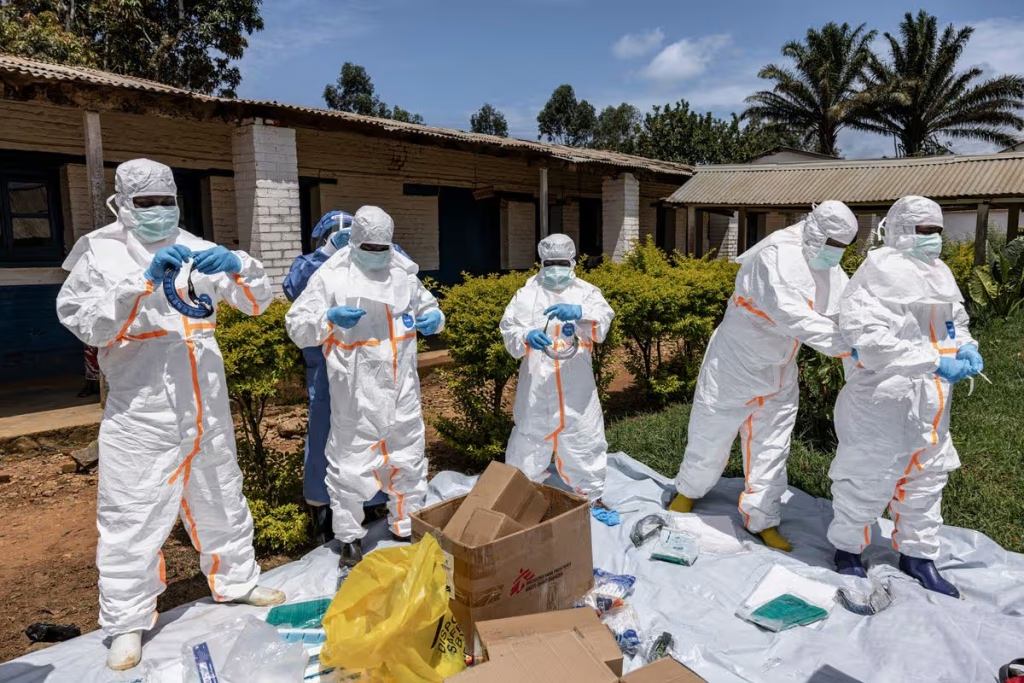
In May 2026, the World Health Organization (WHO) declared the Ebola outbreak caused by the Bundibugyo virus in the Democratic Republic of the Congo a Public Health Emergency of International Concern. This declaration urges countries where Ebola is present to restrict the travel of Ebola patients and conduct exit screenings at transportation terminals and border crossings, but does not recommend general restrictions on international travel.
Is Ebola Contagious?
Yes. If you come into contact with an infected person’s body fluids, whether that person is alive or dead, you could catch Ebola. You can also catch Ebola by eating the flesh of an infected animal, such as a fruit bat or monkey, or by handling live animals known to carry the Ebola virus, such as monkeys, rodents, or bats.
Countries With Ebola Outbreaks
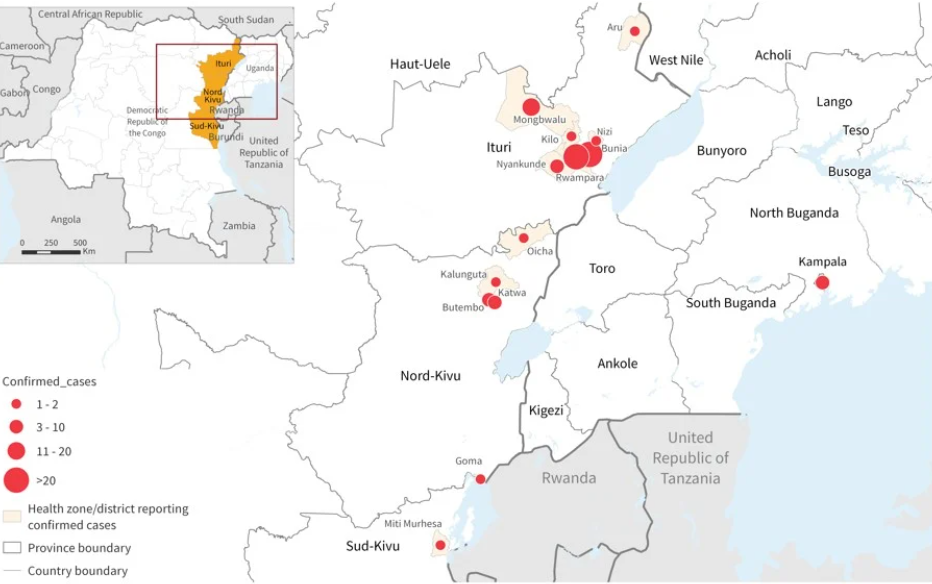
As of this writing, Congo and Uganda are treating hundreds of Ebola patients. An American doctor diagnosed with Ebola and tested positive for the rare Bundibugyo ebolavirus in the Democratic Republic of the Congo (DRC) was flown out of Congo to Germany.
Should I Avoid Travel to East Africa?
The Centers for Disease Control and Prevention (CDC) issued a Level 3 Travel Warning for the Democratic Republic of the Congo, Uganda, and South Sudan on May 17, 2026. This Travel Warning encourages travelers to defer non-essential trips to these countries. Australia’s Department of Foreign Affairs has issued a similar travel warning for Australian citizens, and the Public Health Agency of Canada and the US have advised Canadian and US citizens to avoid travel to Uganda.
The UK’s National Travel Health Network and Centre’s advisory stated that travelers’ risk of contracting Ebola is low if they follow basic precautions, such as washing hands, avoiding consumption of bush meat (wild game, such as monkey), avoiding contact with people who have Ebola and people who are currently caring for Ebola patients, practicing safe sex, and washing vegetables and fruits.
Can I Buy Travel Insurance That Covers Me for Ebola?
If you are planning a trip and want to be sure you can be treated for Ebola while you are traveling or be evacuated back to your home if you develop Ebola, yes, you can still purchase travel insurance.
Trip cancellation coverage may allow you to call off your trip if you, your travel partner, or a family member develops Ebola, but this coverage will not help you if you want to cancel your trip because you are worried about contracting Ebola during your travels.
Cancel For Any Reason (CFAR) coverage will allow you to recoup most of the prepaid costs associated with your vacation if you decide that you do not want to travel because of the risk of contracting Ebola. You must cancel 48 to 72 hours before your trip begins, depending on your insurer’s requirements, and you will only get back 75 to 80 percent of your trip costs, but you will not lose all of the money you have spent on your vacation.
What Should I Do if I Develop Ebola Symptoms?
If you are traveling and develop Ebola symptoms, go to the nearest hospital and tell emergency medical personnel about your health concerns. Once you return home, monitor your health for at least 21 days and contact your doctor by telephone if you believe your symptoms match those of Ebola. A lab test can determine whether or not you have Ebola; your doctor will tell you where to go to have the lab tests done and how to obtain appropriate medical treatment, which will include isolation until the test results are known.
Frequently Asked Questions
Is Ebola common in all African countries?
No, Ebola is not common across all of Africa. Outbreaks usually happen in a few specific areas. Many popular safari countries never have Ebola cases. Countries like Tanzania, Kenya, and Botswana are major tourist destinations with normal travel activities. Health authorities also monitor outbreaks very closely. Most travelers visit Africa safely every year without any Ebola concerns.
How does Ebola spread?
Ebola spreads through direct contact with infected body fluids. It does not spread through normal sightseeing or being on a safari. You cannot get Ebola from seeing wild animals from a distance. The virus mainly spreads in areas with active outbreaks and close human contact. Good hygiene and careful travel habits help lower the risk even more.
Should travelers cancel their trip because of Ebola?
Most travelers do not need to cancel their trip. It depends on where the outbreak is happening. Africa is a very large continent, and outbreaks are often far from tourist areas. Travelers should check official travel advice before flying. Travel companies also follow health updates carefully to keep guests safe.
What safety tips should travelers follow?
Wash your hands often during your trip. Avoid touching sick people or body fluids. Eat food from clean and trusted places. Follow advice from local guides and health officials. Travel insurance and basic medical preparation are also helpful for peace of mind.
What should I do if I feel sick after traveling?
See a doctor quickly if you feel unwell after your trip. Tell the doctor where you traveled and what symptoms you have. Fever, weakness, and vomiting should not be ignored. Most illnesses after travel are not Ebola, but it is always good to check early. Quick medical care helps protect both you and others.
Still have questions?
Our local safari experts are happy to help you plan the perfect African safari.





