
The disease is caused by infection with the Ebola virus, named after a river in the Democratic Republic of the Congo in Africa, where it was first recognized in 1976. Since then, Ebola hemorrhagic fever – a severe, often-fatal disease in humans and nonhuman primates – has appeared sporadically. Here is information on Ebola from the U.S. Centers for Disease Control and Prevention and the World Health Organization
Confirmed cases of Ebola have been reported in the Democratic Republic of the Congo, South Sudan, and Uganda. Ebola Fever typically appears in sporadic outbreaks, usually spread within a health-care setting (a situation known as amplification). It is likely that sporadic, isolated cases occur as well, but go unrecognized.
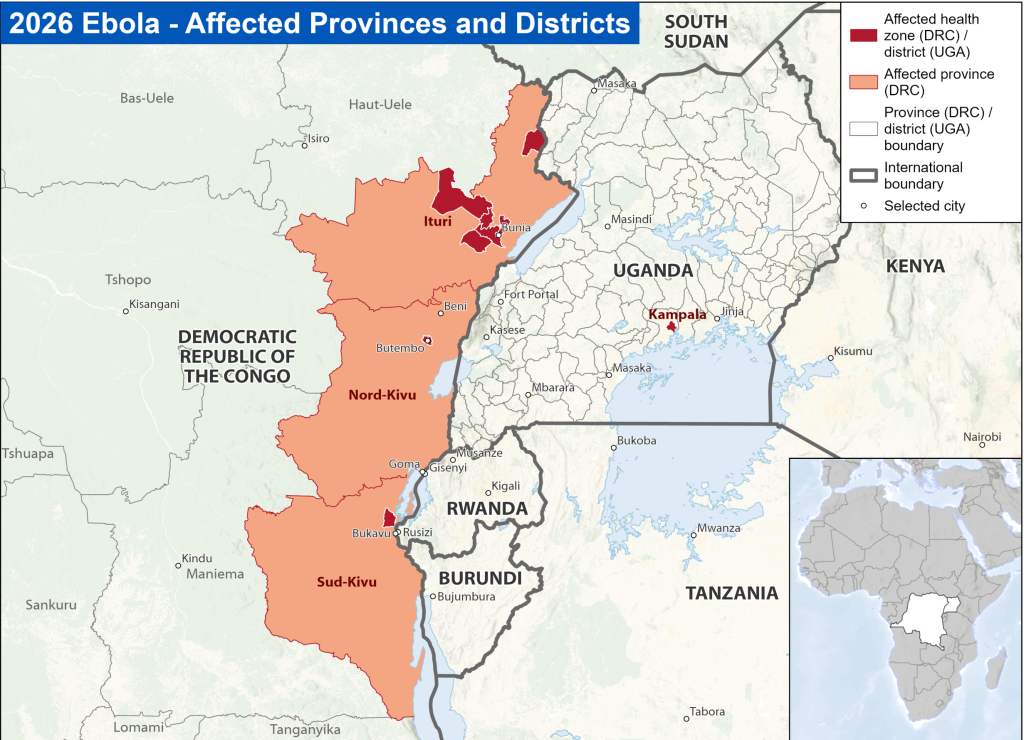
The Ebola virus belongs to the Filoviridae family (filovirus) and is comprised of five distinct species: Zaïre, Sudan, Côte d’Ivoire, Bundibugyo, and Reston. Zaïre, Sudan, and Bundibugyo species have been associated with large Ebola haemorrhagic fever (EHF) outbreaks in Africa with a high case fatality ratio (25–90%) while Côte d’Ivoire and Reston have not.
Human infection with the Ebola Reston subtype, found in the Western Pacific, has only caused asymptomatic illness. The natural reservoir of the Ebola virus seems to reside in the rainforests of the African continent and in areas of the Western Pacific. There is evidence that bats are involved, but much work remains to be done to definitively describe the natural transmission cycle.
Researchers have hypothesized that the first patient became infected through contact with an infected animal. After the first case-patient in an outbreak setting is infected, the virus can be transmitted in several ways. People can be exposed to the Ebola virus from direct contact with the blood and/or secretions of an infected person. Thus, the virus is often spread through families and friends because they come in close contact with such secretions when caring for infected persons.
People can also be exposed to the Ebola virus through contact with objects, such as needles, that have been contaminated with infected secretions. Burial ceremonies where mourners have direct contact with the body of the deceased person can play a significant role in the transmission of Ebola. Nosocomial transmission refers to the spread of a disease within a health-care setting, such as a clinic or hospital. It occurs frequently during Ebola HF outbreaks. The incubation period for Ebola HF ranges from 2 to 21 days.
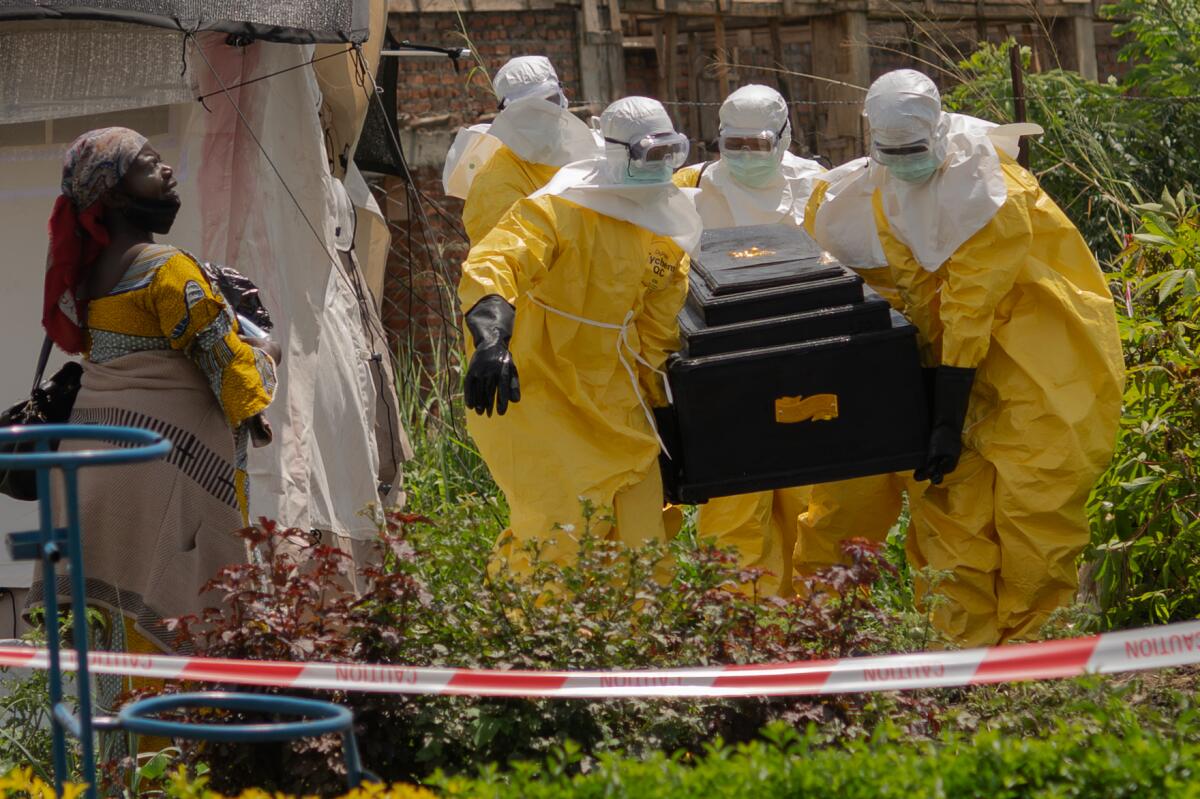
Ebola is characterized by the sudden onset of fever, intense weakness, muscle pain, headache, and sore throat. This is often followed by vomiting, diarrhoea, rash, impaired kidney and liver function, and in some cases, both internal and external bleeding. Some patients develop hiccups.
Laboratory findings show low counts of white blood cells and platelets, as well as elevated liver enzymes. Diagnosing Ebola HF in an individual who has been infected for only a few days is difficult because early symptoms, such as red eyes and a skin rash, are nonspecific to the virus and are seen in other patients with diseases that occur much more frequently.
Severe cases require intensive supportive care, as patients are frequently dehydrated and in need of intravenous fluids or oral rehydration with solutions containing electrolytes. No specific treatment or vaccine is yet available for Ebola haemorrhagic fever. Several potential vaccines are being tested, but it could be several years before any is available.
A new drug therapy has shown some promise in laboratory studies and is currently being evaluated. There are a few established primary prevention measures. About 1,850 cases with more than 1,200 deaths have been documented since the Ebola virus was discovered.
Frequently Asked Questions
What is the Ebola virus?
Ebola is a serious virus that can make people very sick. It spreads through contact with body fluids from an infected person or animal. The illness was first discovered in Africa. Symptoms often start with fever and weakness. Quick medical care is very important.
What are the common symptoms of Ebola?
People with Ebola may get fever, headache, and body pain. Some also feel very tired and weak. Vomiting and diarrhea can happen after a few days. In serious cases, bleeding may occur. Symptoms can look like other illnesses at first.
How does Ebola spread?
Ebola does not spread through the air like a cold. It spreads by touching infected blood or body fluids. Caring for a sick person without protection is risky. Unsafe burial practices can also spread the virus. Washing hands often helps lower the risk.
Can Ebola be treated?
There is no simple home cure for Ebola. Patients need care in a hospital or treatment center. Doctors give fluids, medicine, and close monitoring. Early treatment improves survival chances. Vaccines are also helping prevent outbreaks in some areas.
Should travelers worry about Ebola in Africa?
Most travelers in Africa are very safe. Ebola outbreaks usually happen in limited areas. Travelers should follow local health advice and avoid contact with sick people. Good hygiene is always important during travel. Learning basic health information before a trip can help people feel prepared.
Still have questions?
Our local safari experts are happy to help you plan the perfect African safari.





