
A great Tanzania travel agency is the single most vital factor for your safari or hiking trip, and it is worth investing time in thoroughly researching the agencies you are considering. If you are planning a Kilimanjaro hike in Tanzania, look for tour operators that have their own mountain-trekking permits (as opposed to the tour operator permits required for safaris) and those who organize the hikes themselves, rather than subcontracting them to other agencies. Below are details of suggested companies, although the list is by no means exclusive.
Guide for choosing a tour operator for your safari or trek in Tanzania.
Keep the following things in mind when choosing a safari or trekking tour operator in Tanzania, particularly if you’re planning to book a budget safari upon arrival in Tanzania
Get personal recommendations, and talk to as many people as you can who have recently returned from a safari or trek and have used the company you are considering.
Be sceptical of quotes that sound too good to be true, and don’t rush into any deals, no matter how good they sound.
Don’t fall for it if a tout tries to convince you that a safari or trek is leaving ‘tomorrow’ and that you can be the final person in the group. Take the time to shop around with reliable outfits to get a feel for what’s on offer and, if others have supposedly registered, ask to speak with them.
Check the blacklist at the Tanzania Tourist Board’s Tourist Information Centre in Arusha. Both the TTB and the Tanzanian Association of Tour Operators (TATO) maintain lists of licensed operators. While TATO isn’t the most powerful of entities, going on safari with one of its members will at least give you some recourse to appeal in case of problems.
Don’t give money to anyone who doesn’t operate out of an office, and don’t arrange any safari deals at the bus stand or with touts who follow you to your hotel room.
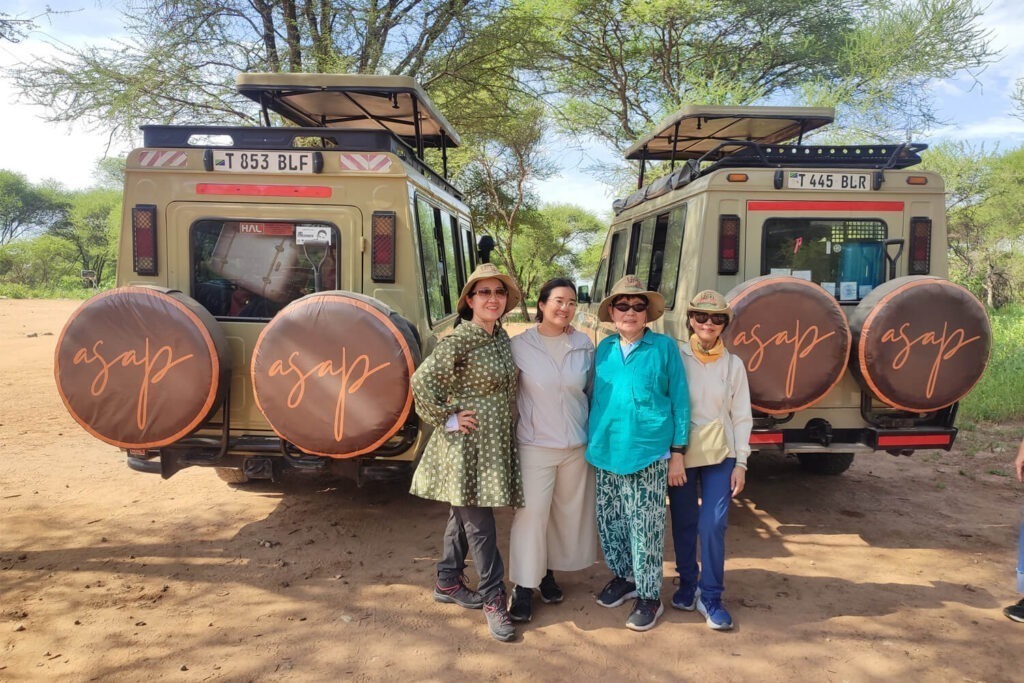
Go with a company that has its own vehicles and equipment. If you have any doubts, don’t pay a deposit until you’ve seen the vehicle you’ll be using, and be aware that it’s not unknown for an operator to show you one vehicle but then arrive in a far inferior one on the actual safari day.
Unless you speak Swahili, be sure your driver can speak English. Safari ASAP has professional and experienced guides who speak different languages.
Go through the itinerary in detail and confirm what is expected and planned for each stage of the trip. Check that the number of wildlife drives per day and all other specifics appear in the contract, as well as the starting and ending dates and approximate times, and keep in mind that while two competing safari company itineraries may look the same, the service can be very different. Normally, major problems such as vehicle breakdowns are compensated for by adding additional time to your safari. If this isn’t possible (e.g., if you have an onward flight), reliable operators may compensate you for a portion of the time lost. However, don’t expect a refund for ‘minor’ problems such as punctured tyres and so on. Also note that park fees are non-refundable.
If you have any doubts about an operator, only organise local bookings with them. For example, don’t book a Kilimanjaro trek from Dar es Salaam or Zanzibar; if something goes wrong, you’ll be far away and without recourse.
Get to know common Safari scams and schemes
When it comes to booking safaris and treks, especially at the budget level, the need for caution can’t be overemphasised. If you stick with reliable safari or trekking operators, including Safari ASAP you shouldn’t have major problems. Most difficulties arise when trying to book budget safaris on arrival.
Remember that once your money is paid, it’s as good as gone, and watch out for the following when planning your holiday to Tanzania:
Touts or safari brokers who promise you a bargain safari or trek deal, but in order to seal it, payment must be made on the spot—of course, with a receipt.
The next day, the promised transport doesn’t show up, the receipt turns out to be for a bogus company, and the tout/broker is never seen again.
Don’t let business cards fool you when walking around the street, especially in Arusha or Moshi; they’re easy to print up and are no proof of legitimacy.
Questionable ethics on the part of disreputable operators, especially on Kilimanjaro treks. One of the most common problems is overloading porters. (The competition to be a porter on Kilimanjaro is so fierce that some porters may agree to heavy loads just to get employment.)
Just as bad are companies that don’t ensure that their porters and guides have suitable gear for cold-weather treks, or ones that underpay. But at Safari ASAP we treat all the porters with fair wages and required weigh load that they should carry which is 15kg maximum.
If you do get taken for a ride, the main thing to do is to file a complaint with TATO. The police will be of little help, and it’s unlikely that you will see your money again.
Lastly if your budget is tight, here are some ways to get at least fleeting glimpse of the wildlife:
Take the train (Tazara) from Dar-es-salaam towards Kidatu, crossing the northern border of Nyerere national park. Take a bus along the Tanzania highway through the centre of Mikumi National park to Iringa or Morogoro. Last option you can take a bus through the Serengeti corridor, en route from Mwanza to Arusha, or camp near the start of the Serengeti western corridor. Contact us for more help when planning your Safari holiday to Tanzania.
Frequently Asked Questions
How do I know if a Tanzania tour operator is trustworthy?
A trustworthy tour operator should have good reviews from past travelers. Look for recent feedback on trusted travel websites. Check if the company is licensed and has experience organizing safaris in Tanzania. A reliable operator will answer your questions clearly and honestly. They should also provide detailed itineraries and clear pricing before you book.
Should I choose a local or international tour operator?
Both options can offer great experiences, but local operators often know Tanzania better. They have strong connections with guides, lodges, and national parks. Booking with a local company can also help support local communities and conservation efforts. International companies may provide extra support before your trip. Choose the one that makes you feel confident and comfortable.
What questions should I ask before booking a safari?
Ask what is included in the tour price. Find out about park fees, accommodation, meals, and transportation. You should also ask about the type of safari vehicle and the experience of the guide. It is helpful to know the cancellation policy and payment terms. Good operators will answer every question without hesitation.
Why are experienced safari guides so important?
A great guide can make your holiday much more enjoyable. Experienced guides know where to find wildlife and how to keep guests safe. They also share interesting facts about animals, nature, and local culture. Their knowledge helps you understand the places you visit. A friendly guide often becomes one of the best memories of the trip.
Is the cheapest tour operator always the best choice?
Not always. A very low price may mean fewer services or hidden costs later. Compare what each package includes instead of looking only at the price. A slightly higher price may offer better accommodation, experienced guides, and reliable vehicles. Choosing good value over the cheapest option often leads to a smoother and more enjoyable holiday.
Still have questions?
Our local safari experts are happy to help you plan the perfect African safari.





