
Table of Contents
Safari ASAP presents you with another special destination for wildlife lovers. Do you want to feel like an explorer in the most fascinating desert on the African continent? We are sure that Namibia’s orange savannahs, seascapes, national parks, forests and animal fauna will fascinate you. No matter more time, read here everything you need to know to prepare for your next trip.
Geographical location of Namibia
Namibia is an African republic that was formerly called South West Africa because of its geographical location. This country is a neighbour of Angola to the north, Zambia to the northeast, bordered by the Atlantic Ocean to the west, Botswana to the east and South Africa to the south. As we have already said, it is a desert area as its territory is crossed by the Namib savannah. However, it has one of the largest national parks in the world where you can find a lot of vegetation and fauna. The capital of the country is the city of Windhoek.
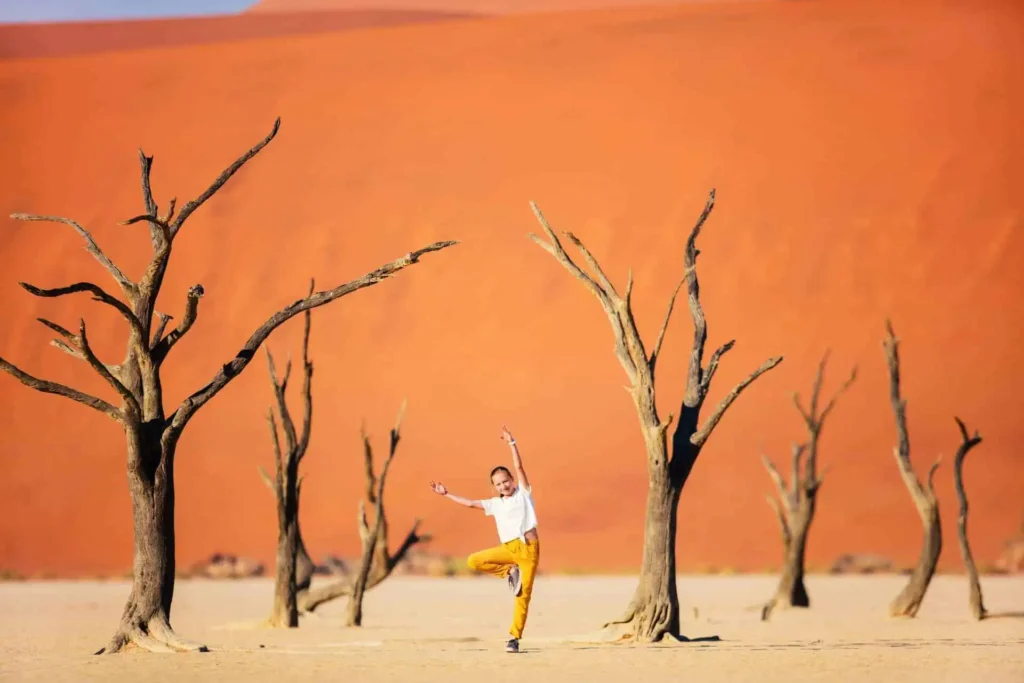
Travel Safe to Namibia
When you start our trip to Namibia you are not required to have any particular vaccine. However, it is advisable to follow a malaria treatment if you are heading to the country during the rainy season. If you’re heading north of the territory, don’t even think about taking a dip in the rivers and lakes, as they are home to the insects that transmit the disease. Another fact to keep in mind is that Namibia is one of the four countries with the most people infected with HIV, so take precautions!
You can travel through the territory of Namibia without any problem, however we recommend that you hire a guide to go to the Caprivi strip, the Kavango region and the Ohangwena area as it can be challenge to navigate around. If you go on safari be careful with animals, remember that they are in their natural habitat and are wild beasts and not domestic animals. Needless to say, don’t even think about touching them. Better safe than sorry!
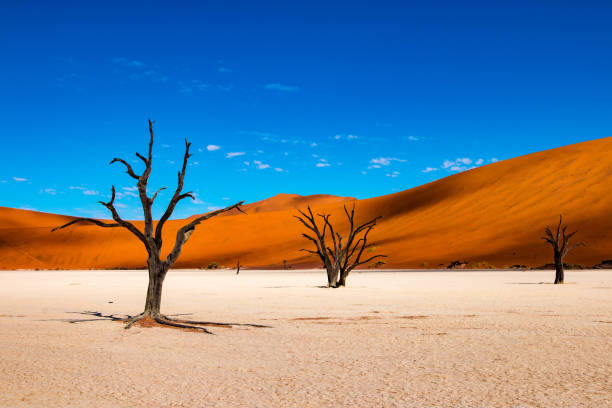
Climate. When is the best time for a trip to Namibia?
Namibia is located in a desert territory, so it maintains a dry climate with sunshine throughout the year. As you may know, in the desert the days are very hot (they can reach 50 degrees Celsius in summer) but at night the temperature drops terribly. You must be prepared and bring fresh clothes for the day and a coat for the night.
During the season from October to April, the rainy season is present, as it is the time of the austral summer. In the course of October to November, rainfall is heavier. Between May and September, the austral winter remains and the temperature ranges between 25 and 0 degrees Celsius. Definitely, if you don’t want to die of suffocation in the heat, it’s better to travel during the winter.
Why is it interesting to visit?
-
Main historical facts
Did you know that the country’s history goes back to the origin of mankind? Yes, Namibia was home to the first hominids four million years ago. Over the years, different hunter-gatherer tribes developed throughout the territory, such as the Bushman people.
The first European expedition arrived in Namibia in 1486 by the Portuguese navigator Bartolomé Díaz. The aridity of the territory did not motivate immediate colonization, but over the years Namibia was an important point for the exchange of spices.
In 1793, Walvis Bay or “Whale Bay” is claimed by the Dutch. As early as the 19th century, a tribe called Orlam Nama arrived in the territory after crossing the Orange River. In 1870 the Baster, an ethnic group that was the product of the mixture of Dutch and African women, also settled in the area. In 1878, Great Britain annexed the colony of Cape of Good Hope, which until then had been a Dutch colony.
In 1840, Germany adopted a protectorate for the area and German colonies of businessmen and merchants were established. Namibia is renamed German South-West Africa. The Germans adopted a strategy of repression, which resulted in tribal wars. Precisely in 1893, the leader of the Witbooi Namqua Chief, Hendrik Witbooi, was the one who resisted the German advances to gain colonial control over Namibia and thus began the attacks against foreigners, but the Germans ended up winning the battle. In 1904 Maherero, the leader of the Herero tribe, carried out another uprising against the German forces, however the inhabitants of Namibia were again defeated with a terrible genocide: approximately 80,000 people died between 1904 and 1907.
After World War I. Germany loses control of the area and it is administered by South Africa. The native tribes of Namibia rejected the new occupation and Mandue, the leader of the Bondelswart, waged a new war.
In 1948 Namibia began to suffer the phenomenon of segregation of Apartheid, where houses were separated by race, in such a way that Europeans were located on large farms and Namibian settlers were forcibly displaced to the poorest areas of the country.
After several years of injustices, South Africa decided to leave the territory and in 1989 Namibia managed to elect its first president Sam Nujoma, the leader of the Swapo tribe who ruled again in the period from 1994 to 1999 and from 1999 to 2004. From then on, another representative of the Swapo tribe ruled the country: Hifikepunye Pohamba until 2015 when Hage Geingob got in power up to now.
-
Main destinations and monuments
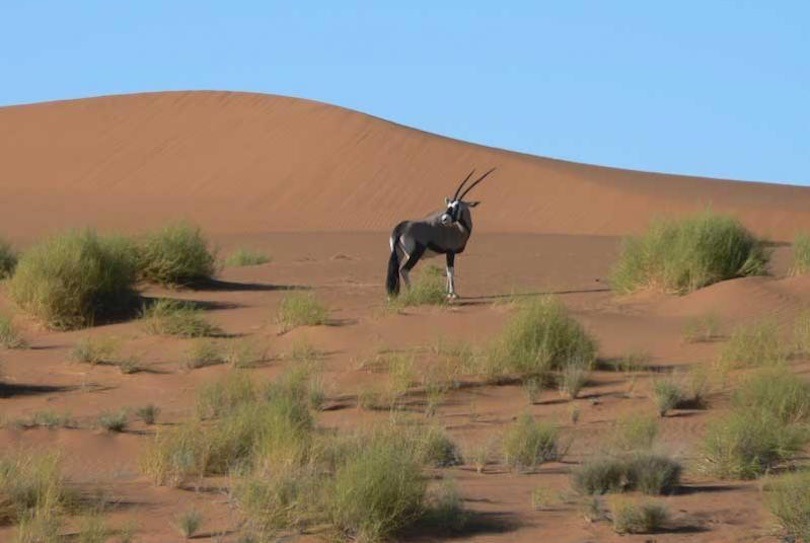
Namibia has a lot to offer for the adventurous: The highest dunes in the world, the second largest canyon on the planet, breathtaking deserts, parks and nature reserves, animals in their natural habitat, coastlines infested with sea lions, and much more. In this country you can go hiking as well as climb mountains, take relaxing walks along the rivers or ride horseback through its beautiful natural landscapes.
-
Culture, Religion and Society
Namibia has only 2,555,080 inhabitants, but it is still home to a wide variety of tribes. The Ovambos are the largest ethnic group, but there are many others such as the Hereros, the Himbas, the San and the Baster to name a few. There are also mestizos, Afrikaans (descendants of Germans) and Europeans.
In terms of religion, 90% of the population practices Christianity, many of them follow Lutheran doctrine and many others Catholic, Anglican and Methodist. The remaining 10% is divided between Jews, Muslims, and animists. However, those belonging to different tribes continue to practice their particular cults and ceremonies.
Some additional facts you should know about the traditional culture is that you can haggle in the markets, you should tip your guide at the end of the safari as a gesture of appreciation.
Currency, budget, language, and more
To enter Namibia you do not need a visa if you are going to stay in the territory for less than 3 months, you just need to have your passport updated.
The official language of the country is English, so you won’t have any communication problems. German is also spoken, but they still have and many of them speak dialects such as Bantu.
Frequently Asked Questions
Why should I visit Namibia?
Namibia is a land of dramatic landscapes, from the towering dunes of Sossusvlei to the rugged Skeleton Coast. It offers a mix of adventure, wildlife, and cultural experiences that are hard to find anywhere else. Visitors can enjoy safaris, desert adventures, and encounters with local communities in one trip. Namibia is also known for being safe and well, organized for self, drive and guided tours. Whether you’re chasing wildlife, photographing landscapes, or seeking a quiet escape, Namibia has something unforgettable for everyone.
When is the best time to visit Namibia?
The best time to visit Namibia is during the dry season, from May to October. During these months, wildlife congregates around waterholes, making game viewing easier and more exciting. The weather is generally mild, with clear skies perfect for photography and outdoor activities. The wet season, from November to April, is greener and less crowded but may make some roads challenging to navigate. Choosing your travel time depends on whether you prefer wildlife spotting, fewer crowds, or lush landscapes.
What are the must, see destinations in Namibia?
Namibia’s top attractions include the red sand dunes of Sossusvlei, the wildlife, rich Etosha National Park, and the haunting Skeleton Coast. You can explore the Fish River Canyon, the second, largest canyon in the world, or visit the coastal town of Swakopmund for adventure sports. The Himba villages in the north offer cultural immersion and insight into traditional Namibian life. Each region has its own unique charm, making Namibia a country that’s perfect for a road trip or guided tour.
How should I get around Namibia?
Many travelers explore Namibia by self, drive, as the roads are well, maintained and the country is sparsely populated. Renting a 4×4 vehicle is ideal for reaching remote desert areas and national parks. Guided tours are also available for those who prefer expert insight and stress, free navigation. Domestic flights can save time when traveling between distant regions. No matter how you travel, planning ahead is key, especially in remote areas with limited fuel and amenities.
What should I pack for a Namibia trip?
Packing for Namibia requires preparation for both desert heat and cooler nights. Essentials include sun protection, a wide, brimmed hat, comfortable walking shoes, and layers for early mornings and evenings. A good camera or binoculars is a must for capturing wildlife and landscapes. Don’t forget basic medical supplies and enough water for long drives in remote areas. Being well, prepared ensures you can fully enjoy Namibia’s stunning scenery and adventure activities safely.
Still have questions?
Our local safari experts are happy to help you plan the perfect African safari.





