Safari Accommodation in Tanzania
Camping out in the bush is, of course, the authentic way of experiencing an African safari. There’s nothing quite like having just a sheet of canvas between you and what you would normally see only on the residents’ side of a zoo. Full-on contact with the bush along with its potential dangers and rewards is surely what you are looking for. Anything more luxurious than this is going to dilute the experience and remove the immediacy of it all.
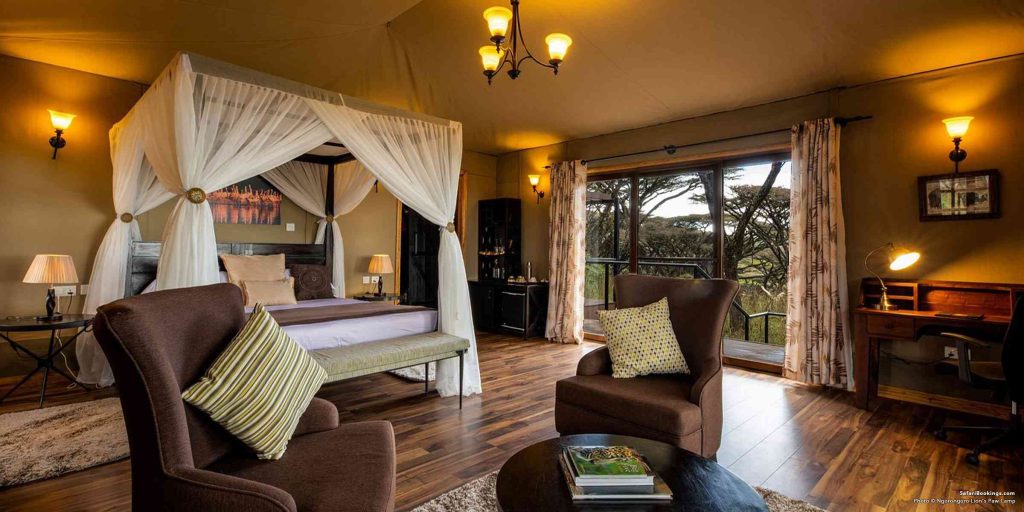
It’s true there are some beautifully conceived and constructed game lodges and, if you have the money, it’s probably worth spending a night or two at one or another of them though it’s probably true to say they are mainly for those who prefer to keep the bush at arm’s length and a glass of ice-cold beer within arm’s reach. Or for those who are simply on a package tour or short holiday and prefer creature comforts and predictability to the rigours of camping
Tipping Culture Guide in Tanzania
Regardless of whether you go on a camping safari or a lodge safari, the driver/guide and the cook (where provided) will expect a reasonable tip at the end of the journey. Be generous, you may think you have paid a lot of money for your safari but most of it will have gone to national parks, transport and accommodation. The wages of the driver and cooks will have been minimal hence most of them will highly depend on gratuities. Most of the guides will receive USD $ 15 and cooks USD $ 10 per day per group during a safari and it is always appreciated to give more to anyone who made your safari trip more exceptional and with the best experience
Wildlife Safari Jeep, What to Know
Our Safari Fleet are modified Landcruiser 4WD and well designed to give the best safari experience. The fleet (safari jeep) have the pop-up roof, big windows, a cooler box for keeping your cold drinks and 220 Volt electric sockets for battery chargers that will ensure your phones and camera are in full charge during all the safari trip and hence never miss a moment. All our fleet vehicles are always going a routine service after every safari which makes them durable and safe. Safety and comfort are of the utmost importance for u
Safety and Security while on Tanzania Holiday
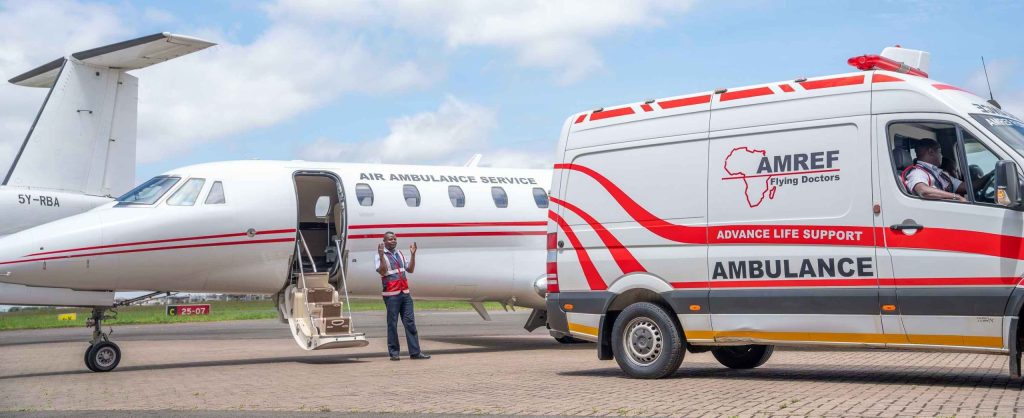
Tanzania with no doubt a safe country to visit and even more safe when you travel with reputable and registered Tour company. Millions of travellers visit Tanzania each year and there are very rare incidents. At Safari ASAP all our clients travelling are covered by AMREF Flying Doctors which makes them safe and secure during all the time of safari.
When you are alone and wish to walk around, make sure you do not go to isolated areas or beaches also we are strongly encouraged to use registered taxis with a label or hired drivers from the hotel or other reputable sources for town transportation
Visa Requirement while going to Tanzania
Visitors entering Tanzania will require to have a Visa either for single-entry which cost $ 50 and valid for three months or multiple entries for $100 which also last for three months. The following citizens have no visa requirement to enter Tanzania: Botswana
Gambia Ghana Hong Kong Kenya Leshoto Malawi Malaysia Mozambique Namibia Swaziland Uganda Zambia and Zimbabwe. As long as you have the cash you can always purchase a Visa at a mentioned price above when entering Tanzania. A visitor will suppose to declare any international currency value more than $ 10000 when entering or exit from Tanzania
Yellow fever requirement while go to Tanzania
You should consult your doctor for a few months in advance as you may need a series of vaccinations. For complete advice on vaccines and medications, do not forget to tell your doctor that you are travelling to Tanzania and participating in an Adventure trip (Safaris or Kilimanjaro Climb).
Tanzania only calls yellow fever vaccine for travellers from countries that are infected with yellow fever, such as Kenya, Uganda, Rwanda and Ethiopia. It may be necessary for you to present a yellow fever vaccination certificate, which must be kept at all times. However, if there is a health officer present at the passport control for Tanzania (sometimes they are not present), they will ask for your vaccination record and if you do not have it, they will administer it locally. If you come from Dubai, Nairobi and Ethiopia, definitely there will be a health representative there.
Therefore, it is important that you have a yellow fever vaccine. No further vaccinations are required to enter Tanzania at present. Malaria is endemic in many parts of Tanzania. While high altitude malaria is not common, malaria medication is strongly recommended for all visitors to East Africa. You should discuss this with your doctor before travelling
What to expect on typically day safari in Tanzania
Every day before going to bed you will have a discussion with our guide on how the day went and how to go about the next day. You can always decide what you wished to experience or see and our guide will give you the best advice on that. At Safari ASAP we do not restrict our customers mileage or distance to be covered, you will have the freedom to choose according to your itinerary.
You can start a day early in the morning for the early game drive and your guide will be pointing animals while teaching and explain to you about their behaviour and nature around them. At 10 am you can go back to the camp or lodge for the brunch and after that, you can opt to take a rest in the lodge or continue for a game drive until noon where you will have your lunch box if you are far from the lodge/camp and continue with a game drive until evening where you will get back to your accommodation ready for the dinner and around 9:30 pm is the perfect time for getting to bed which is after a briefing for the next day by your guide
Meals and Food while on wildlife safari in Tanzania
We know that food is paramount during your safari in Tanzania and add good experience.
During your safari, you should expect breakfasts usually with buffet “British” breakfasts, which most of the time served with a different type of an omelette, potatoes, bacon or sausage toast and cereals.
For Lunch, you will have a hot meal or if you are still on a game drive and it is not relevant to go back to the lodge then you will have your lunch box meal which usually contains cold chicken, yoghurt, juice, hard-boiled eggs, raw veggies and baked cake.
During dinner, you can have different taste of cuisine with meat, potatoes or pasta, sometimes you can also have a local Swahili dishes which can be a good experience for you to have a local meal. Since all Chefs and lodges are taking consideration of all intolerances, allergies and if you follow a special diet then you can communicate this with us before starting your safari trip
When to go on a safari holiday in Tanzania?
There are a number of factors to take into account when considering what time of year to visit Tanzania even though all year around is possible to visit the country since most of the roads are all weathered and especially the one coming up from Ngorongoro Crater.
The main tourist season starts from June to October, as the weather at this time of year is generally considered to be the best — hot and dry. It’s also when you’ll find the largest concentrations of birdlife on the Rift Valley lakes – Lake Manyara and Lake Natron and the animals in the game parks in Ngorongoro and Tarangire tend to congregate more around the watercourses as other sources dry up, making them easier to spot. This time of the year when you will witness the Great Serengeti Migration.

Nowhere else will you see wildebeest, gazelle, zebra and antelope in such concentrations. The wildebeest, of which there are up to two million, is the chief herbivore of the Serengeti and also the main prey of the large carnivores such as lions and hyenas. The wildebeest are well known for the annual migration which they undertake- a trek with many hazards, not least of which is the crossing of large rivers, which can leave hundreds drowned, maimed or taken by a crocodile.
During the long rains (from March to May) and the short rains (from October to December) things are much quieter — places tend to be less full and accommodation prices come down. The rains generally don’t affect your ability to get around and see things and this could be the best time for budget travellers to visit the country. It is just that you may well get rained on, and this will happen especially in the late afternoon or early morning.
Contact us for more details on when to go on a Safari to Tanzania or Trekking Kilimanjaro.
Tanzania Malaria Guide. What to Know?
Malaria is caused by a blood parasite which is spread by certain species of night-flying mosquito (anopheles). Only the female insects spread the disease but you can contract it through a single bite from an insect carrying the parasite. Start on a course of antimalarial drugs before you set off and keep it up as you travel.
The drugs are fairly cheap in some places but horrendously expensive in others — the USA and Scandinavia in particular. There are basically two types: proguanil (brand name Paludrine in the USA) which you take daily, and chloroquine (brand name Aralen in the USA) which you take once or twice per week (depending on its strength). Both are marketed under various trade names.
In Tanzania, the parasite is beginning to acquire immunity to some of the drugs so you will need to take Maloprim in addition to chloroquine, or mefloquine (brand name Larium in the USA). You would be very unlucky to contract malaria if you are taking one or more of these drugs but they are not a 100% guarantee.
Having said that, it’s fair to say that many expatriates working in East Africa for long periods of the time prefer not to take prophylactics but to treat the disease if and when it occurs. The reasoning behind this is that the prophylactic drugs can have serious side effects, specifically to the liver and eyes, when taken continuously over a long period of time.
These people prefer insect repellants, mosquito nets and screening and didn’t get malaria. If you do develop malaria symptoms — high fever, severe headaches, shivering, liver pains and aching joints — and are not within reach of medical advice, the treatment is one single dose of four tablets (600 mg) of chloroquine followed by two tablets (300 mg) six hours later and two tablets on each following day.
As an alternative (or in chloroquine-resistant areas) take a single dose of three tablets of Fansidar, or two tablets of Larium followed by two more 12 hours later.
Other than the malaria hazard, mosquito bites can be troublesome and although it’s probably useless to say this, don’t scratch the bites. If you do, and they don’t heal quickly, there’s a chance of them becoming infected with something else. You’ll come across people in Africa pockmarked with angry sores which started out as insignificant mosquito bites — the owners couldn’t resist the urge to scratch them. Don’t join them. Willpower works wonders, as does antihistamine cream.
To keep the mosquitoes off at night, use an insect repellent or sleep under a fan. Mosquitoes don’t like swift-moving currents of air and will stay on the walls of the room in these circumstances. There is not yet a vaccination against malaria, so take those pills.
Tanzania flying Safaris. Sky Safari
These safaris essentially cater only for the luxury travellers and those interested in big-game fishing. Safari ASAP arrange flying safaris for you whereby a light aircraft will collect you from your nearest strip in the early morning and fly to any of the national parks depend on your itinerary.
The advantage of flying safari is saving the time and hassle that you could use on the roads from one destination to another. Unless you are travelling on a budget, flying is just about the only and the most convenient way to getting around the national parks in Tanzania
Tanzania Baloon Safari
Viewing a game park from the vantage point of a hot-air balloon is a magnificent experience which you won’t ever forget – but it is expensive! The experience floating silently above the plains with a 360-degree view of everything beneath you, without safari buses competing for the photo opportunity, is incomparable.
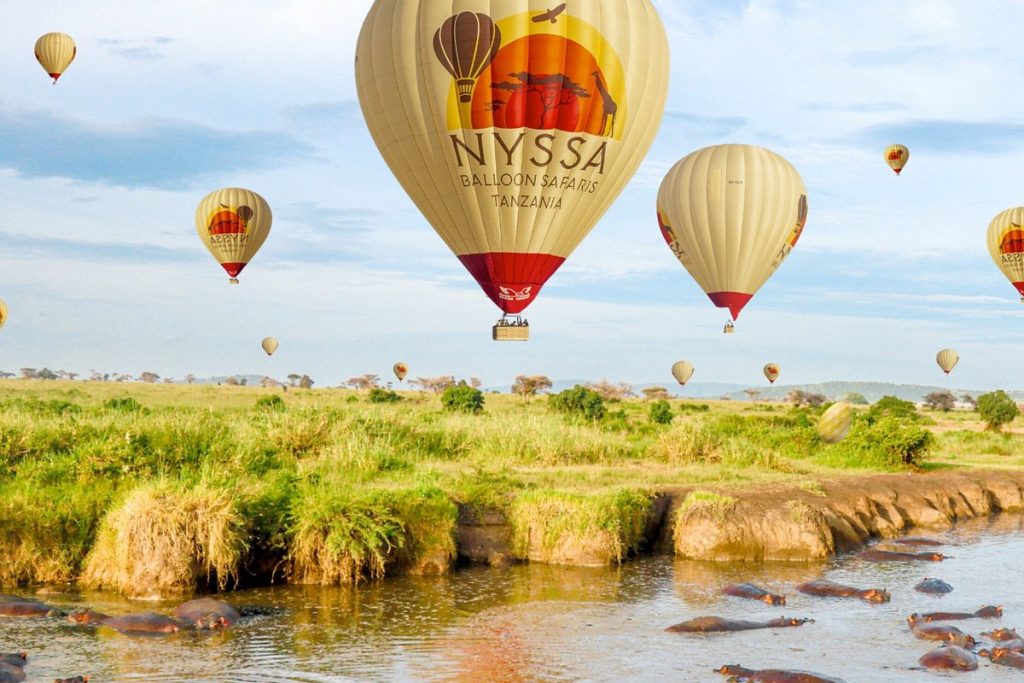
It is definitely worth saving up for! The flights typically set off at dawn and go for about 1 and a half hours after which they put down and you tuck into a champagne breakfast. After that, you will be taken on a game drive in a support vehicle and returned to your lodge.
At present, these flights are available in Serengeti Ndutu in the south, Serengeti Seronera in the central and Serengeti Kogatende in the north part of the park and they depart daily. Balloon safaris in the game park are an absolutely superb way of seeing the savannah plains and of course the animals but without the intrusion of vehicles and dozens of other tourist doing the same thing. Contact us today and we can assist you to book your best balloon safari over the Serengeti National Park
Travel Insurance before going to Tanzania
Get some! You may never need it, but if you do you will be very glad to have it. Medical treatment in East Africa is not free and public hospitals often very crowded. Don’t expect the same quality of medical treatment in an East African public hospital as you get back home either.
There are many different travel insurance policies available and any travel agency will be able to recommend one. Before you choose one collect several different policies and read through them for an hour or two, as the cost of a policy and the sort of coverage offered can vary considerably.
Many policies are pitched at the family package-tour market and are not really appropriate for a long spell in Africa under your own steam. Usually, medical insurance comes in a package which includes baggage insurance and life insurance, etc.
You need to read through the baggage section carefully as many policies put a ceiling on how much they are prepared to pay for individual items which are lost or stolen.
- Some policies specifically exclude ‘dangerous activities’ which can include scuba diving, motorcycling, even trekking. If such activities are on your agenda you don’t want that sort of policy.
-
- You may prefer a policy which pays doctors or hospitals directly rather than you having to pay on the spot and claim later. If you have to claim later make sure you keep all documentation. Some policies ask you to call back (reverse charges) to a centre in your home country where an immediate assessment of your problem is made.
- Check if the policy covers ambulances or an emergency flight to the hospitals. If you have to stretch out you will need two seats and somebody has to pay for them.
Personal Medical Kit Guide
A small, straightforward medical kit is a wise thing to carry. A possible kit list includes:
-
-
- Aspirin or Panadol – for pain or fever
- Antihistamine (such as Benadryl) – useful as a decongestant for colds, allergies, to ease the itch from insects bites or stings or to help prevent motion sickness
- Antibiotics – useful if you are travelling well off the beaten track, but they must be prescribed and you should carry the prescription with you.
- Kaolin preparation (Pepto-Bismol), Imodium or Lomotil — for stomach upsets
- Dehydration mixture — for treatment of severe diarrhoea, this is particularly important if travelling with children
- Antiseptic, mercurochrome and antibiotic powder or similar ‘dry’ spray — for cuts and grazes
- Calamine lotion — to ease irritation from bites or stings
- Bandages and Band-aids — for minor injuries
- Scissors, tweezers and a thermometer (note that mercury thermometers are prohibited by airlines)
- Insect repellent, sunscreen, suntan lotion, chapstick and water-purification tablets
-
Ideally, antibiotics should be administered only under medical supervision and should never be taken indiscriminately. Overuse of antibiotics can weaken your body’s ability to deal with infections naturally and can reduce the drug’s efficacy on a future occasion.
Take only the recommended dose at the prescribed intervals and continue using the antibiotic for the prescribed period, even if the illness seems to be cured earlier. Antibiotics are quite specific to the infections they can treat; stop immediately if there are any serious reactions and don’t use it at all if you are unsure if you have the correct one.
Tanzania Travel Immunisation
Before you’re allowed to enter most African countries you must have a valid International Vaccination Card as proof that you’re not the carrier of some new and exotic plague. The essential vaccinations are yellow fever (valid for 10 years) and cholera (valid for six months). While it is generally agreed that cholera vaccinations are not considered in many African countries (including Tanzania).
In addition, you’re strongly advised to be vaccinated against typhoid (valid for three years), tetanus (valid for 10 years), tuberculosis (valid for life) and polio (valid for 10 years). Gamma globulin shots are also available for protection against infectious hepatitis (type A) but they are ineffective against serum hepatitis (type B). Protection lasts three to six months. There is also a vaccine for type A which provides 100% protection for 12 months (a course of two injections) or for 10 years (with a third, booster, injection), though it is quite expensive.
There is a vaccine available for type B but it’s only recommended for individuals at high risk. It’s also expensive, and the series of three injections take six months to complete. You need to plan ahead for these vaccinations, as they cannot all be given at once and typhoid requires a second injection about two or three weeks after the first. Cholera and typhoid jabs usually leave you with a stiff and sore arm for two days afterwards.
The other injections generally don’t have any effect. If your vaccination card expires whilst you’re away, there are a number of medical centres in Tanzania where you can have booster vaccinations. There’s usually a small fee for these but sometimes they are free. Avoid turning up at borders with expired vaccination cards, as officials may insist on your having the relevant injection before they will let you in. Your local physician can arrange a course of injections for you, or in most large cities there are vaccination centres.
Tanzania Camping Safari Guide
There are essentially two types of organised safaris – those where you camp at night (Tanzania camping safaris) and those where you stay in game lodges or luxury tented camps at night (Tanzania Lodge Safaris).
Whichever you choose, safaris typically start and end in either Arusha though there are a number of exceptions to this. Apart from the transfer to and from Arusha and driving from one park to another, once you’re in a park you’ll be taken on a number of game drives — usually two and sometimes three per day. Each drive typically lasts two to 2 and a half hours and the best (in terms of sighting animals) are those in the early morning and late afternoon when the animals are at their most active.
The vehicles used for these drives are six to seven-seater 4WD Safari jeep with roof hatches, Land Rovers, or open-sided trucks. As a general rule, you’ll be left to your own devices between late morning and around 3 pm (except for lunch) though, if you’re on a camping safari, you may well be taken care with a driver and safari cook who will prepare all the meals for you 3 times per day throughout your safari trip.
Tanzania Camping Safaris
Tanzania Camping safaris cater for budget travellers, for the young (or young at heart) and for those who are prepared to put up with discomfort. They are no-frills safaris, with none of life’s little luxuries such as flush toilets, running water or iced drinks. Such safaris can be quite demanding depending on where you go, and you’ll be expected to lend a hand. You’ll end up sweaty and dusty and there may well be showers available but cold ones.
On the other hand, you’re in for an authentic adventure in the African bush with nothing between you and the animals at night except a sheet of canvas and the embers of a dying fire. It’s not at all unusual for elephants or hippos to trundle through the camp at night or even the occasional lion, and so far no-one has been eaten or trampled on. Another plus for these safaris is that you’ll probably find yourself with travellers from the four corners of the earth. Truck safaris may have as many as half a dozen people of different nationalities on board.
The price of your safari will include three meals a day cooked by the camp cook(s) though on some safaris you’ll be expected to lend a hand in the preparation and clean up. Food is of the ‘plain but plenty’ variety. The price will also include all the necessary camping gear except a sleeping bag which you must provide or hire locally.
The tents provided sleep two people as a rule and at Safari ASAP the camp is taken on ahead of you and the tents erected by the staff. Tents are invariable of the type which sleep two people and, if you’re a single traveller, you’ll be expected to share with someone else. If you don’t want to do that then you’ll be up for a ‘single supplement’ of between 20 to 25% on the price of the safari which will allow you to have a tent of your own. Mosquito nets are generally not provided so you’ll have to bring along insect repellent either in the form of coils or skin cream.
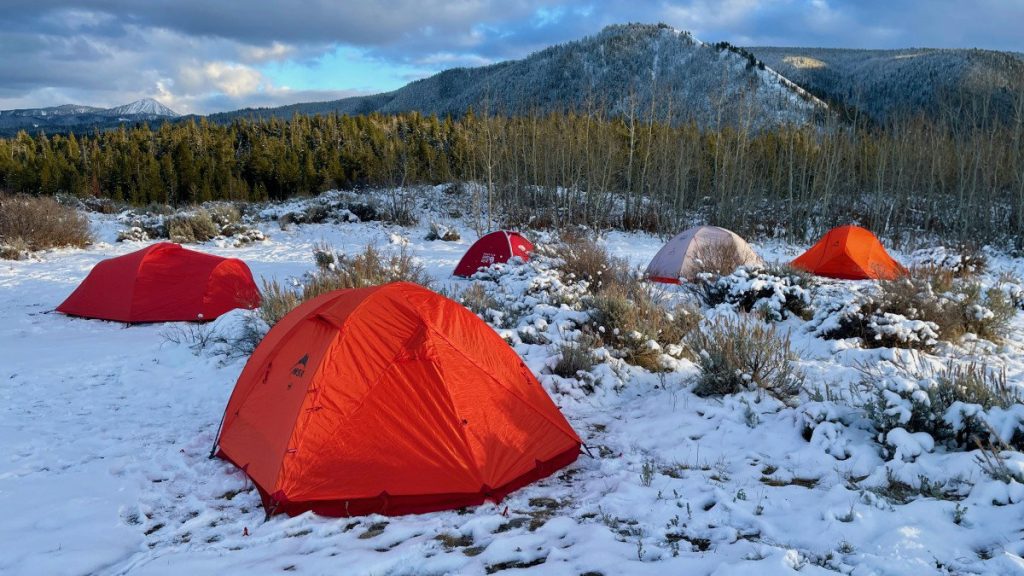
You’ll need to bring clothing and footwear sufficient to cover you for hot days and cold nights but the amount of baggage which you’ll be allowed to bring is limited. Excess gear can usually be stored at the safari company’s offices. Don’t forget to bring along a torch (flashlight) and pocket-knife. There are also a number of somewhat more expensive camping safaris available which utilise permanent campsites with pre-erected tents fitted with mosquito nets, beds and sheets and which have showers (though there’s sometimes not enough water for everyone to have a shower).
Remember that at the end of one of these safaris your driver/guide and the cooks will expect a reasonable tip. This is only fair since wages are low and these people will have made a lot of effort to make your trip a memorable one. Be generous here. Other travellers are going to follow you and the last thing anyone wants to find themselves closeted with is a disgruntled driver/guide who couldn’t care less whether you see game or not.
Tanzania Lodge Safari Guide
There are essentially two types of organised safaris – those where you camp at night (Tanzania camping safaris) and those where you stay in game lodges or luxury tented camps at night (Tanzania Lodge Safaris).
Whichever you choose, safaris typically start and end in either Arusha though there are a number of exceptions to this. Apart from the transfer to and from Arusha and driving from one park to another, once you’re in a park you’ll be taken on a number of game drives — usually two and sometimes three per day. Each drive typically lasts two to 2 and a half hours and the best (in terms of sighting animals) are those in the early morning and late afternoon when the animals are at their most active.
The vehicles used for these drives are six to seven-seater 4WD Safari jeep with roof hatches, Land Rovers, or open-sided trucks. As a general rule, you’ll be left to your own devices between late morning and around 3 pm (except for lunch) though, if you’re on a camping safari, you may well be taken care with a driver and safari cook who will prepare all the meals for you 3 times per day throughout your safari trip.
Tanzania Lodge Safaris
Tanzania lodge safari are for those who want luxury at night and in between game drives. On these, the accommodation is in game lodges or luxury tented camps. There is plenty of beautifully conceived and superbly sited lodges in the main national parks where you can expect a fully self-contained room or cottage, the cuisine of an international standard, a terrace bar with ice-cold drinks, a swimming pool and videos and plenty of staff to cater for all your requirements.
Many of these lodges overlook a watering hole or salt lick so you can sit on the viewing terrace and watch the animals from there. The watering hole or salt lick will usually be floodlit at night. Some of the lodges encourage certain animals to visit, it usually guarantees you a sighting of animals which you’d be very lucky to see otherwise.
There’s obviously a considerable difference in price for these safaris as opposed to camping and most of the people who go on them are package tourists with expectations and attitudes of mind quite dissimilar to those who opt for a camping safari. For them, it’s essentially a holiday rather than in-depth involvement in Africa, its people and wildlife. It’s the African bush at arm’s length. On the other hand, if you have the money, it’s worth staying at the occasional lodge just for the contrast.
Lodge safaris will cost you at least four times what a camping safari costs — and often considerably more. Luxury tented camps are no less expensive than lodges and the more exclusive ones cost up to four times the price of a lodge. They’re for people to whom money is no object and who want to experience what it must have been like in the days of the big-game hunters, except that they’ll be stalking with cameras rather than guns. Having trouble in selecting your type of Accommodation? Contact us for more details.
Tanzania Safari Routes/ National Parks
Whether you take a camping safari or a lodge safari, there are a whole plethora of Tanzania safari routes available ranging from two days to 15 days and sometimes 25 days. If possible, it’s best to go on a safari which lasts at least five days and preferably longer since otherwise a good deal of your time will be taken up driving to and from the national parks and Arusha or Dar es Salaam.
You’ll also see a great deal more on a longer safari and have a much better chance of catching sight of all the major animals. Remember that sightings of any particular animal cannot be guaranteed but the longer you spend looking, the better your chances are. A longer safari will also give you the opportunity of having some involvement with the local tribespeople.
A three-day safari typically takes you either to Tarangire or Lake Manyara and Ngorongoro Crater. A four-day safari would take you to Tarangire National Park, Lake Manyara and Arusha National Park and Ngorongoro Crater. A five-day safari would take you to Serengeti National Park, Lake Manyara and Tarangire as well as Ngorongoro Crater; whereas a six-day safari would take you to Tarangire, Lake Manyara or Arusha National Park and Ngorongoro Crater as well as Serengeti Plains.
On a seven-day safari, you could expect to visit at least 3 days in Serengeti national park as well as Ngorongoro Crater and Tarangire national and Lake Manyara national park and Arusha National park, whereas on an 11-day safari you would take in one or more of Serengeti national park, Tarangire and Lake Manyara; or Mt Kilimanjaro, Selous Game Reserves, Mikumi National park or Ruaha National park.
Most of the safari companies cover the above standard routes but some also specialise in different routings designed to take you off the beaten track. There are, for instance, safaris which take in Katavi National park, Gombe stream and Mahale National park and others which take in Mt Meru, Udzungwa mountains and Ruaha National park where you’ll hardly see another vehicle.
The shorter trips take one or other of the standard routes — Tarangire national park, Lake Manyara national park, Usambara mountains, Arusha national park and Ngorongoro Crater. The longer trips detour from this route and take you to either or both the Ngorongoro Crater and Tarangire or Lake Manyara. A full description of the options available can be found in our Safari Tours section or you can Contact us for more details.
What to bring on a Tanzania Safari tour?
Bring the minimum. One thing that many travellers in Tanzania find once they actually get there is that they have far too much gear. This is not only an uncomfortable inconvenience, but it also means that instead of taking back some special reminders of Tanzania you’ll be taking back the same extra pullover and jeans that you set off with. Unless it’s absolutely essential, leave it at home!
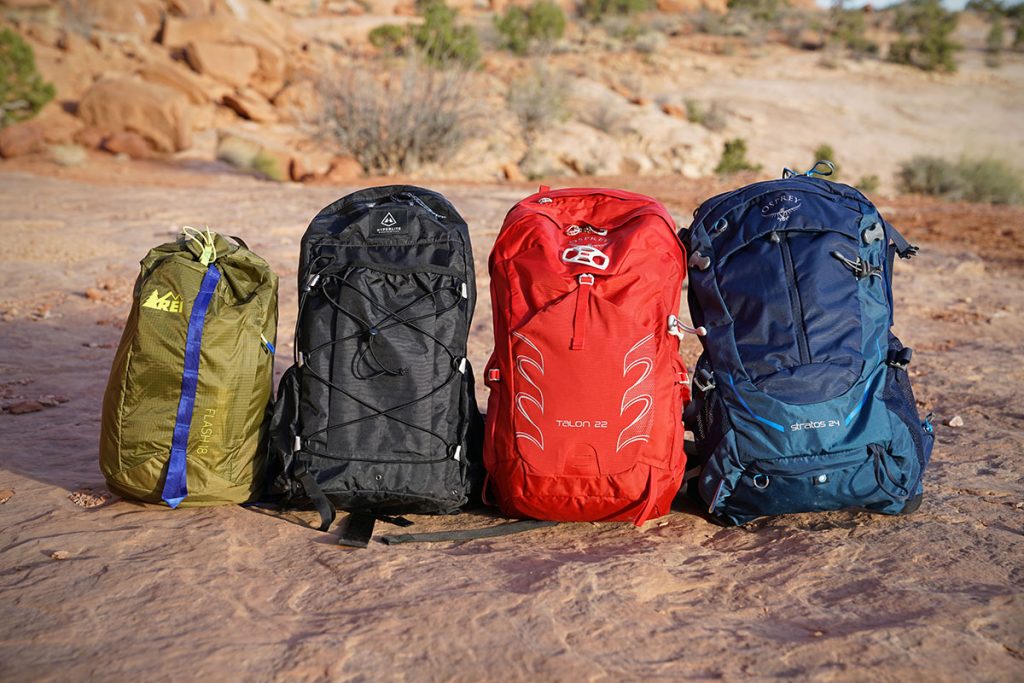
A rucksack (backpack) is far more practical than an overnight bag and is essential if you plan to climb Mount Kilimanjaro or do any amount of walking. It is worth buying a good quality bag right at the start.
What type of pack you buy is largely a matter of personal preference. I find that the travel packs with the straps which zip into a compartment in the back are excellent. Although expensive, they are a compromise solution to a number of different problems; however, they are not really suited for specialised activities such as climbing or serious walking. Of the other types of packs, internal frame ones seem to be the best as they have fewer protuberances and straps to catch on things.
A day pack is a worthwhile item, if only for keeping your camera dry and out of the incredible dust which seems to permeate every crack and crevice when you’re on safari. For those reasons and for security, it needs to be one which zips shut. Quite a few travellers use the local kiondos (woven baskets) which are fine if they suit your purpose.
A sleeping bag is more or less essential if you are travelling overland beyond Tanzania or planning to climb mountains or camp on safari, but in the country itself, there are enough hotels for you not to need one. On the other hand, carrying a sleeping bag and closed-cell foam mat does give you a greater degree of flexibility and means that if you take a safari y you’ll have adequate gear. Sleeping bags are the one thing which all camping safari companies require you to provide but for us is included in the cost.
There’s always much discussion about the pros and cons of carrying a tent, and basically, it boils down to what sort of travelling you want to do, and how much weight you’re prepared to carry. As with a sleeping bag, a tent is not necessary if you’re just travelling from town to town, but carrying your own portable shelter opens up a whole stack of exciting possibilities. The same applies to carry a cooking gear, so give some careful thought as to what you want to do, and how. On the other hand, the full range of camping equipment can be hired from various places in Arusha and Moshi.
Quite a few travellers carry a mosquito net, and with the risk of malaria, there is no doubt that this is not a bad idea. Personally, I have found that with judicious use of insect repellent and mosquito coils, I was never unduly discomfited. On the topic of insect repellent, bring a good supply and make sure that whatever you bring has as the active ingredient NN-diethyl-m-toluamide, commonly known as DEET. This has been found to be the most effective against mosquitoes. Brands which have this include Mijex and Rid. Mosquito coils are what the locals use (when they use anything at all, that is) to keep the mozzies at bay, and local brands such as Doom are available in even the smallest stores.
Clothes need to be both practical and take into account local sensibilities. Although Tanzania straddles the equator, the large variations in altitude lead to equally large variations in climate. The coast is hot and steamy year-round, while Arusha and the western highlands get decidedly cool in the evenings in July and August, so you need to carry one decent warm pullover as well as warm-weather gear.
A windproof and waterproof jacket also comes in handy, particularly during the rainy seasons. Most travellers seem to get around in T-shirts and shorts which is fine in most areas, but you should be more circumspect on the Muslim-dominated coast, particularly in Zanzibar, Pemba and Mafia. Here women should wear tops that keep the shoulders covered and skirts or pants which reach at least to the knees. Shorts on men are likewise not particularly appreciated. Civil servants and embassy staff, likewise, do not appreciate scantily dressed travellers and will treat you with disdain.
Overlooked by many people but absolutely indispensable is a good pair of sunglasses. The amount of glare you experience in the bright tropical light is not only uncomfortable but can damage your eyes. A hat which shades your face and neck is also well worth considering. A water bottle is well worth any slight inconvenience it may cause. It needs to be unbreakable, has a good seal, and hold at least one litre.
Also important are little things which can make life just that little bit more comfortable: a Swiss Army knife, a small sewing kit (including a few metres of fishing line and a large needle for emergency rucksack surgery), a 10-metre length of light nylon cord for a washing line along with a handful of clothes pegs, and half a tennis ball makes a good fits-all washbasin plug.
Most toiletries — soap, shaving cream, shampoo, toothpaste, toilet paper, tampons — are available throughout the country but also you can bring from home.
The one thing that you’re really going to appreciate in Tanzania is a pair of binoculars, whether they be pocket ones or larger field binoculars. When out in the game parks you can put them to constant use and they are essential for identifying the dozens of species of mammals and birds that you’ll come across. If you don’t plan on going to the game parks they are are still handy just for the scenery.
Lastly, Choose a pack which will take some rough handling — overland travel destroys packs rapidly. Make sure the straps and buckles are well sewn on and strengthened if necessary before you set off. Whether you take a pack with or without a frame is up to you, but there are some excellent packs on the market with internal frames (eg Berghaus, Karrimor). Take a strong plastic bag with you that will completely enclose the pack. Use it on dusty journeys, whether your pack is in the luggage compartment of a bus or strapped onto the roof. If you don’t, you’ll be shaking the dust out of your pack for the next week.
Tanzania walking safari guide. What to know
With the expansion of the safari business in Arusha in recent years, more and more companies are beginning to offer unusual safaris which don’t just involve driving around the game parks in vehicles but demand more effort from you. These include walking safaris (usually outside the national parks), cities and in the small villages as well as attractions out of town. Tanzania provides some excellent walking opportunities and brilliant scenery – and hair-raising roads.
The more accessible walking trip is the Lake Manyara and Arusha National Park which attract literally hundreds of bird and mammal species – they’re a naturalist’s dream and a visit to at least one of them is a must. Walking activity is usually an accompaniment to the mountain, and Tanzania has both Mt Kilimanjaro and Mt Meru. Kilimanjaro at 5895 m is accessible, easy to climb and certainly the most dominant feature of the landscape as you enter the Moshi town from Nairobi or Arusha. Mt Meru, at 4562 metres, is a challenging climb, although can be reached without specialist equipment. Further north-west is the Mt Oldoinyo Lengai, “The Mountain of God” stands at 3188 m home of the Maasai, and also home to a profusion of wildlife that you ‘re not likely to come across anywhere else in the world – a walking safari area not to be missed.
Lake Natron Walking Tours
We recently set up walking safaris which are gets featured in our Safari itineraries. Sometimes our walking Tour specialises in part walking/part-driving safaris especially around Lake Natron in the Engaresero village. Walking safaris offered by us around Engaresero village which is located 220 km north-west of Arusha and close to Lake Natron which its water of this soda lakes may feel a little strange to the touch (it’s soapy) and often doesn’t smell too pleasant (though this is mostly due to the bird shit).
However, the abundant insects and fish are heaven to many species of waterbird and they flock here in their millions — it’s a twitcher’s paradise. Foremost among the birds is the deep-pink lesser flamingo (Phoenicopterus minor), which feeds on the blue-green algae, and the pale-pink greater flamingo (Phoenicopterus ruber), which feeds on the tiny crustaceans and insect larvae. Also numerous are various species of duck, pelican, cormorant and stork. The highest concentrations of these birds are found where food is most abundant and this can vary from year to year and lake to lake. The walking safaris along this awe-inspiring place are indeed the great way to see nature up close and personal.
Mt. Oldoinyo Lengai
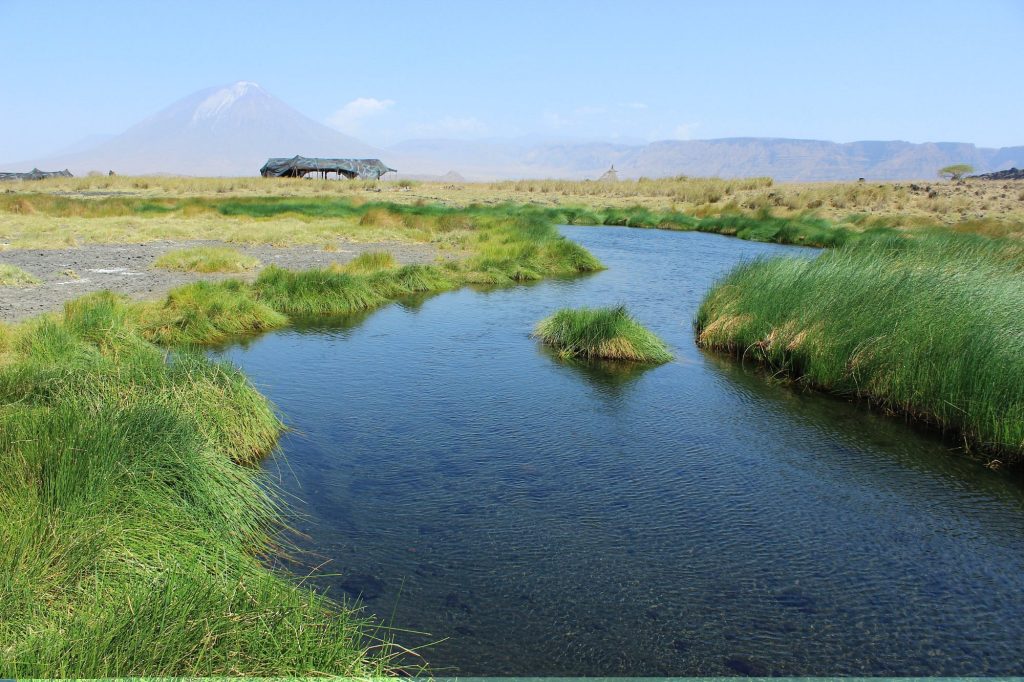
Mt Oldoinyo Lengai is directly in front of Lake Natron while the plains of the Maasai sweep away to the south. Mt. Oldoinyo Lengai famous known as the Mountain of God. Its location makes it a far less popular goal. The mountain is an extinct volcano located in the Maasai community. A volcanic active mountain with breathtaking views reward once reach at the top 3888 m after going through steep hiking.
Other activities around the area include walking down to the valley where you can find the old colonial trail. You will also have a chance to walk on the Maasai village and experience the livestock grazing and wildlife viewing, Hike to the rift valley escarpment and have the great view of Embalulu Crater, Oldonyo Lengai and Gelal mountain beneath you. Many people prefer to visit here coming from Serengeti National park or Ngorongoro Crater after long hours of sitting in the safari jeep.
Day Trip – Walking Tours
Apart from walking safaris featured on our safaris tours, we also have different day trips walking tours that can be arranged from Arusha (before or after your safari trip) and visit Lake Duluti, which is famous for its amazing forest walk along the lake shore just outside the Arusha town with great view of Mt Meru and creatures from the lake as well as numerous birdlife around the forest. The walk will last for 2 hours and afterwards, you can opt to take a Canoeing tour which can last for another 1 hour or so.
From Moshi (before or after Kilimanjaro climb) where you can visit the Materuni waterfall plummet over 72 metres into a ravine and resulting spray bathes the dense forest below in a perpetual mist, the surrounding is intensively cultivated with maize, beans and banana tree and well forested. The excellent road from Moshi which snakes up and down through farmlands and forests and offer spectacular views over the Moshi town, many use this tour as a pre-Kilimanjaro climb activity. You will be also accompanied by one of our guide who will explain and teach you all the necessary information that you will come across during the walk and in addition to that, you will also learn and experience the traditional coffee making and take what they call “coffee shots” afterwards, a very great local experience.
Maasai Village Walk
A knowledgeable and experienced Maasai guide will take you around the Maasai villages community where you will have a chance to learn about the traditional medicine and herbs that can cure common diseases in Africa like Malaria, you will also be able to interact with the Maasai people and learn more about their interesting and strong cultures especially how they interact with their cattle as well as their daily life. Maasai tribe is one among the must-see culture tour in Tanzania offered by Safari ASAP.
The main aim for our tours is to introduce overseas visitors to rural life off the well-trodden tourist circuits, using selected local camping for overnight stops. You will see some wildlife on some of the walks but the emphasis is on meeting local people, introducing you to their customs, visiting farms and climbing mountains in the area. The man who started this venture, Mr Joas Mahembe, is keen to see the concept catch on, so if you’re interested, write us a message for more information.
Kenya and Tanzania Combo Safari Tour
With the expansion of the safari business in Arusha in recent years, more and more companies are beginning to offer unusual safaris which don’t just involve driving around the Tanzania game parks. These include safaris to Kenya and Rwanda as well as Uganda.
A few companies in Arusha offer safaris to the Kenyan game parks of Maasai Mara, Amboseli, Tsavo and Lake Naivasha and Nakuru but most of them are just agencies for Kenyan safari companies based in Arusha so you might as well go there yourself and organise things from there. It would certainly cost less than doing it in Tanzania since you won’t be paying the agency’s commission.
If your time and budget is limited, however, and you want to take in all or most of the major sights of Tanzania (Serengeti, Ngorongoro Crater, Lake Manyara), Rwanda (Volcano National Park), Kenya (Maasai Mara, Amboseli, Tsavo and Lake Naivasha and Nakuru) and Uganda (Queen Elizabeth National Park, and the chimpanzees of the Kitale Forest), then it’s worth thinking about booking an extended safari with one of the companies which offers these kind of safaris in Arusha.
It would certainly save on the time and expense of having to do all the legwork and organisation yourself plus the uncertainties of knowing whether you’ll be able to join a gorilla or chimpanzee-viewing walk the day after you turn up (this cannot be guaranteed without prior booking).
Safari ASAP and other several reliable companies are offering such safaris ranging from 10 to 25 days. Please contact us for more details on organizing combined safaris.
Guide to Self-drive safari in Tanzania
This is a viable proposition in Tanzania if you can get a group together to share the costs since you will have to rent a vehicle and camping equipment. The costs of renting a suitable vehicle will depend on where you want to go and for how long. Doing it yourself has several advantages over organised safaris. The main one is flexibility – you can go where you want, stop whenever you like and stay as long as you like. You don’t have to follow the standard tourist routes.
Another is that you can choose your travelling companions. The main disadvantage is the extra effort you have to put in to organise the safari — hiring equipment, buying food and drink, cooking and agreeing among yourselves where you want to go and which route to take. It can also be a worry if none of you have mechanical skills and/or no tools and the vehicle breaks down. There’s also the security of the vehicle and contents to think about if you want to leave it somewhere and go off walking. If you do this then you’ll have to pay someone to guard it.
Lastly, there’ s the question of maps especially if you intend to get right off the beaten track. Reasonably good large-scale maps are available in Arusha but the detailed ones are unavailable without going through a great deal of red tape. This means you could find yourself out in the middle of nowhere with not a clue where you’re going and have to backtrack. As far as costs go, it’s probably true to say that organising your own safari is going to cost at least as much and usually more than going on a company organised safari. By how much more depends on a lot of factors but mainly the cost of hiring a vehicle and buying fuel. You’ll have to sit down and work this out yourself otherwise you can reach us for help.
Car & 4WD Rental
Hiring a vehicle to tour Tanzania (or at least the national parks) is a relatively expensive way of seeing the country but it does give you freedom of movement and is sometimes the only way of getting to the more remote parts of the country. On the other hand, if you’re sharing costs, it’s quite a feasible option.
There are a number of factors to take into consideration before deciding what type of vehicle to take and which company to go through, and there’s no real substitute for sitting down with pen and paper and working out as near as possible what the total cost will be. To do this you’ll need as many hire charge leaflets as you can get hold of and a distances table. The other major consideration is what type of vehicle is going to be suitable to enable you to get where you want to go.
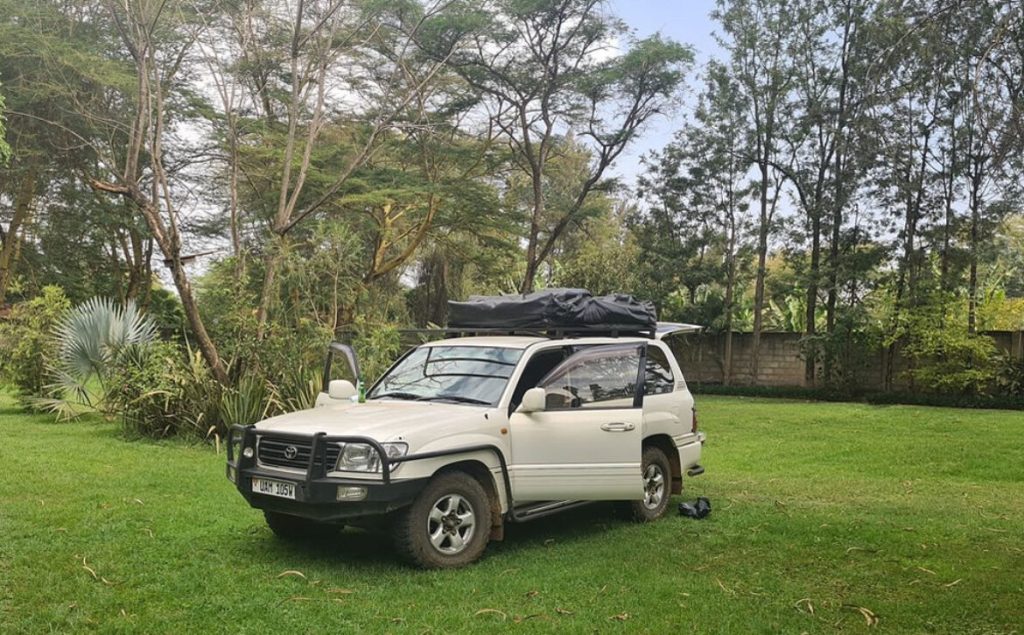
At times other than the rainy season, a 2WD vehicle may be perfectly adequate in some parts of the country including Serengeti Plains, Tarangire and Lake Manyara national parks (at least on the main access routes of the latter), but it won’t get you to the Crater of Ngorongoro . Most companies also have a policy of insisting that you take a 4WD vehicle if you’re going upcountry and off the beaten track.
Rental Costs
This is something of a minefield since the daily/weekly base rates vary quite a lot as do the km (mileage) charges. What initially looks cheap often works out just as expensive as anything else. Contact us for more details.
Minimum Mileage Conditions
Some of the so-called ‘unlimited’ km rates are not quite that. Some have a ceiling of 1200 to 1400 km per week free after which you pay the excess at the normal km rate. Some companies also offer the option of 500 km or 1200 to 1400 km per week free of charge with corresponding lower or higher base rates. If you are renting on a daily basis, some companies have a 100-km minimum charge, regardless of whether you travel this far or not. If you’re not planning on going too far then it may be more economical to opt for the lower free km rate.
Deposits
There’s a wide variation in the deposits charged on hired vehicles. It’s usually the estimated total hire charges (base rate and km) plus whatever the excess on the insurance. No deposit is necessary if you are paying by credit card.
Drivers’ Licences & Minimum Age
An international driver’s licence or your own national driving licence is standard. Some companies stipulate a minimum age of 23 years but with others, it is 25. There are occasionally stipulations about endorsements on licences (clean licences preferred) and that you must have been driving for at least two years.
Maintenance
Although it’s not always the case, it’s probably true to say that the more you pay for a vehicle, the better condition it will be in. It’s worth paying attention to this, thing) in the event of a major breakdown The major companies may deliver you a replacement vehicle and make arrangements for recovery of the other vehicle, but with most companies, you’ll be entirely responsible for getting the vehicle fixed and back on the road. Only when you return it will you be refunded and you’ll need receipts to prove what you spent.
Equipment
Some companies provide you with adequate tools to tackle breakdowns others with just sufficient to change a tyre. If you have mechanical skills, it’s worth enquiring about what tools are provided. There are companies which include a full complement of camping equipment in their 4WD hire charges. With other companies, you’ll have to hire this separately.
One-Way Rates
If you want to hire a vehicle in one place and drop it off in another there will be additional charges to pay. These vary depending on the vehicle, the company and the pick-up and drop-off locations.
Tanzania Safari Cost
The cost of a safari depends on two main factors: whether you camp for the night or stay in a lodge or permanent tented camp, and how many people are on safari. The two factors are closely linked, but a camping safari is obviously cheaper than on which uses lodges for overnight accommodation. The exact cost depends partly on how long you want to go. In general, it is true to say that the longer you go for and more people, there are in your group, the less, proportionally, it will cost you per day. At Safari ASAP all of our prices are all inclusive and we have selected the best accommodation options that will result in the best safari experience. Our prices are affordable and reflects betters services and facilities.
There’s a lot of competition for the tourist visiting Tanzania among the safari companies and prices for the same tour are very similar. The trouble is, there are now so many safaris to choose from which offer similar itineraries and options that it’s not that easy to compare prices. It depends what you want, though it’s still generally true that the longer you go for, the less it costs per day.
Camping Safari Prices
For camping safaris with no frills, you are looking at an all-inclusive price of around US$230 to US$250 per day on a reducing scale up to 10 days (plus or minus 15%). The price includes transport, food (three meals per day), park entry and camping fees, tents and sleeping equipment and the wages of the guides and cooks. In other words, more or less everything except a few drinks and tips. The price per day for safaris over 9 days tends to rise somewhat since there’s a lot more organisation involved and you’ll be going to remote areas where there are no services available so everything has to be trucked in.
How Much does it Cost
The prices for safaris which involve staying in lodges or tented camps are considerably higher. Here you’re looking at a minimum of US$ 420 to US$ 600 per person per night in the lodges and up to US$900 in the luxury tented camps. The above prices are based on the assumption that you will share accommodation (a tent or lodge room) with one other person. If you don’t want to do this then you’ll have to pay what’s called a ‘single room supplement’. This is generally around 20 to 25% extra.
Unfortunately, the situation is not as simple as the above suggests. While it may be OK to use the above figure as a benchmark, prices vary widely. A three-day lodge safari to Tarangire and Lake Manyara or Arusha National park varies from US$480 to US$600 per day. A five-day lodge safari to Tarangire and Lake Manyara or to the Ngorongoro Crater and Serengeti varies from US$400 to US$550 per day; and a seven-day lodge safari to Arusha National Park, Lake Manyara and Tarangire national park and the Ngorongoro Crater and Serengeti plains or to Selous, Ruaha and Mikumi national park varies from US$300 to US$500 per day. In other words, you must do some legwork.
Collect as many company leaflets as you can, decide where you want to go, compare prices, work out what’s included and what isn’t, and then make your choice. Remember that, generally, what you pay for is what you get. A high degree of personal involvement in camp chores and a willingness to eschew creature comforts usually guarantees a low price.
If you want the opposite, it will cost you more. The cost of budget accommodation in Tanzania is very reasonable so long as you’re happy with everything. Clean sheets are invariably provided and sometimes you’ll also get soap and a towel. For this, you’re looking at USD $80 a single and USD $140 as a double and up. It can be slightly cheaper on the coast, especially at Zanzibar. If you want a suite room, costs rise to from around USD $180 a single and USD 240$ double. Again, it can be slightly cheaper o the coast but more expensive in Arusha or Dar es Salaam.
Restaurant and Drinks Prices
There are plenty of small cafés in ever town, usually concentrated in a certain area. They cater to local people and you can get a traditional meal for around USD $ 4 to USD $6. Often, the food isn’t up to much but sometimes it can be excellent.
For just a little bit more, the Indian restaurants are a great value. Some offer all-you-can-eat lunches for around US$10. The food is not only tasty but you won’t need to eat for the rest of the day either. A splurge at a better class restaurant is going to set you back between US$20 to US$30.
The price of beer and soft drinks depends entirely on where you buy them. They’re obviously cheapest bought from a supermarket (around US$1 for a beer assuming an exchange rate of US$ 1 = Tsh 2300). Using this as a benchmark figure, you would be paying around 60% more for them in a basic bar, slightly more than double in a better class bar or restaurant, and up to eight times as much in a five-star hotel!
Public Transport
Public transport is very reasonable and the upcoming electrical trains are of excellent value. To travel from one end of Tanzania to the other (Arusha to Dar es Salaam) in the semi-luxury bus is going to cost you about US$20. While a boat from Dar es Salaam to Zanzibar will cost you about USD $40 for a fast ferry which will take about 1 hour and 45 minutes.
Car Hire
Car hire is even more expensive and is probably out of reach of most budget travellers. A 4WD Safari Jeep costs from US$300 to $200 per day with unlimited mileage and petrol is extra. If you don’t want 4WD then a small car, such as Toyota Rav4 costs around Usd 170 to Usd 130 per day.
Tipping
With such an active tourist industry, Tanzania is a country where tipping is expected. Obviously, there’s no need to tip in the very basic African eateries or hotels, on local minibuses or when using other public transport. In better restaurants, 5 to 10% of the bill is the usual amount. If you take a safari then it’s also expected that you tip your driver, guide and cook.
The majority of employees in this industry earn low wages so it’s suggested you be as generous as you feel able to. Around USD $15 – 20 per day per guide per group and USD $10 -15 per cook per day per group and how much you give obviously depends on whether they have worked well to make your safari or trek enjoyable.
Prices in our website have been quoted in US dollars on the basis of USD $1 = TSH 2300 (the official exchange rate) but the international banks are trading at a much higher rate so, if you have hard currency, everything costs considerably less. Bear this in mind when considering costs. Having a problem planning your Safari or Kilimanjaro Holiday in Tanzania? Contact us and our expert will be ready to assist you.