
Table of Contents
Highlights
Day-by-Day Programme
This tour takes you through Ethiopia’s historical sites
Day 1: Addis Ababa
Upon arrival at Bole International Airport – Addis Ababa, you will be transferred to your hotel for an overnight stay. The city, which lies at the foot of Mount Entoto, boasts a rich culture, having been founded in 1886 by Emperor Menelik II. Addis Ababa is a metropolitan city with some 2.7 million inhabitants of different backgrounds – as many as 80 nationalities speaking 80 languages and religious communities including Christian, Muslim, and Jewish can be found here.
Overnight at Ghion Hotel.

Day 2: Addis Ababa – Axum
Fly North to the town of Axum, named after the ancient Kingdom of Aksum. On this day you will enjoy a sightseeing tour, with overnight accommodation at Remhai Hotel. Once the seat of the kingdom of Aksum, the town is now a tourist town and religious centre that features tall granite obelisks, which stand (or lie broken) in the central square. Some of the obelisks are nearly plain slabs, while others are intricately inscribed with door- and window-like shapes carved into some of the pillars, giving them the appearance of slender buildings. Evidence of the adoption of Christianity by a 4th-century king is found on the most recent of the obelisks.
The Kingdom is believed to have started its decline around the 7th century:reasons for this include contests over trade routes hence the kingdom was cut off from its key markets in Alexandria, Byzantium and Southern Europe and lost its trade share to Arab traders of the era. The fall can halos be attributed to religious quarrels with Islamic groups.
Overnight accommodation at Remhai Hotel.
Day 3: Yeha Temple
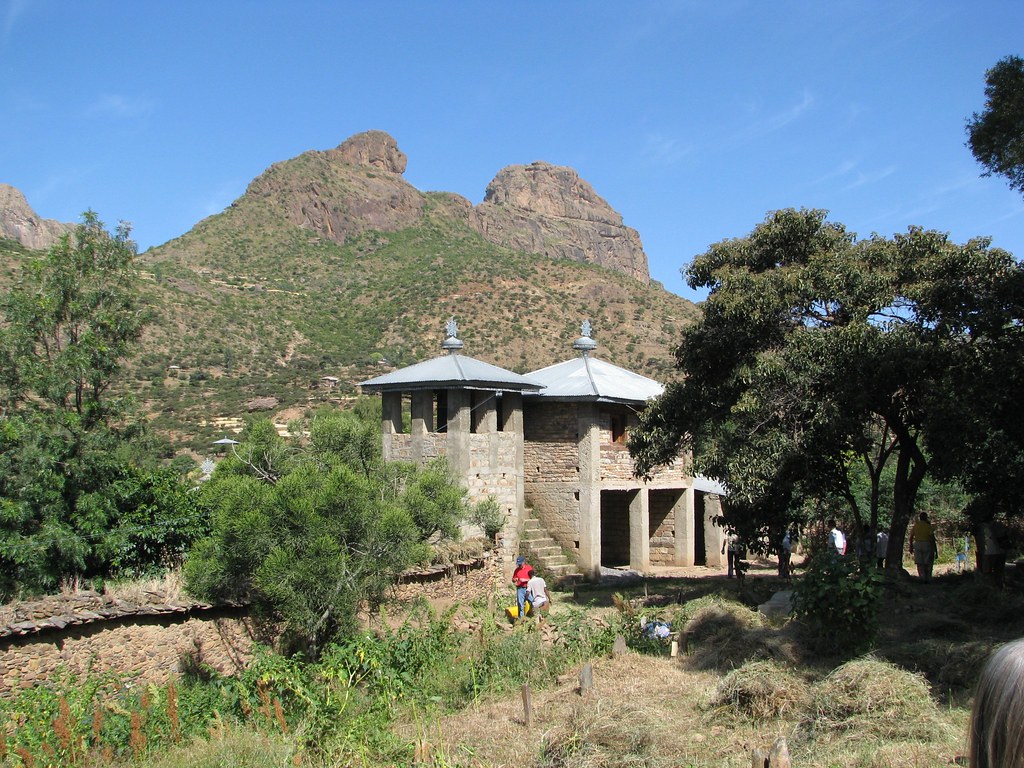
Drive to Yeha Temple, to is found in a remote part of the Tigray region. Yeha lies several hours’ drive from the more accessible city of Aksum. The temple is the oldest still-standing construction in Ethiopia, built 2,500 years ago! and is an imposing rectangular edifice. Though it has long since lost its roof and upper storeys, the ruins stand some twelve metres in height. Proceed to Debre Damo – a flat-topped mountain atop which lies a 6th-century monastery. A rope climb up a sheer rock wall will have you admiring the old monastery built of curved wood panels, painted ceilings and walls dedicated to the legend of Saint (Abune) Aregawi. The history of Debre Damo is centred on the “Nine Saints” who came to Ethiopia from Syria to spread Christianity in the Tigray region – one of whom was Saint Aregawi, who settled on the mountain of Debre Damo.
Overnight accommodation at Remhai Hotel.
Day 4: Axum – Lalibela
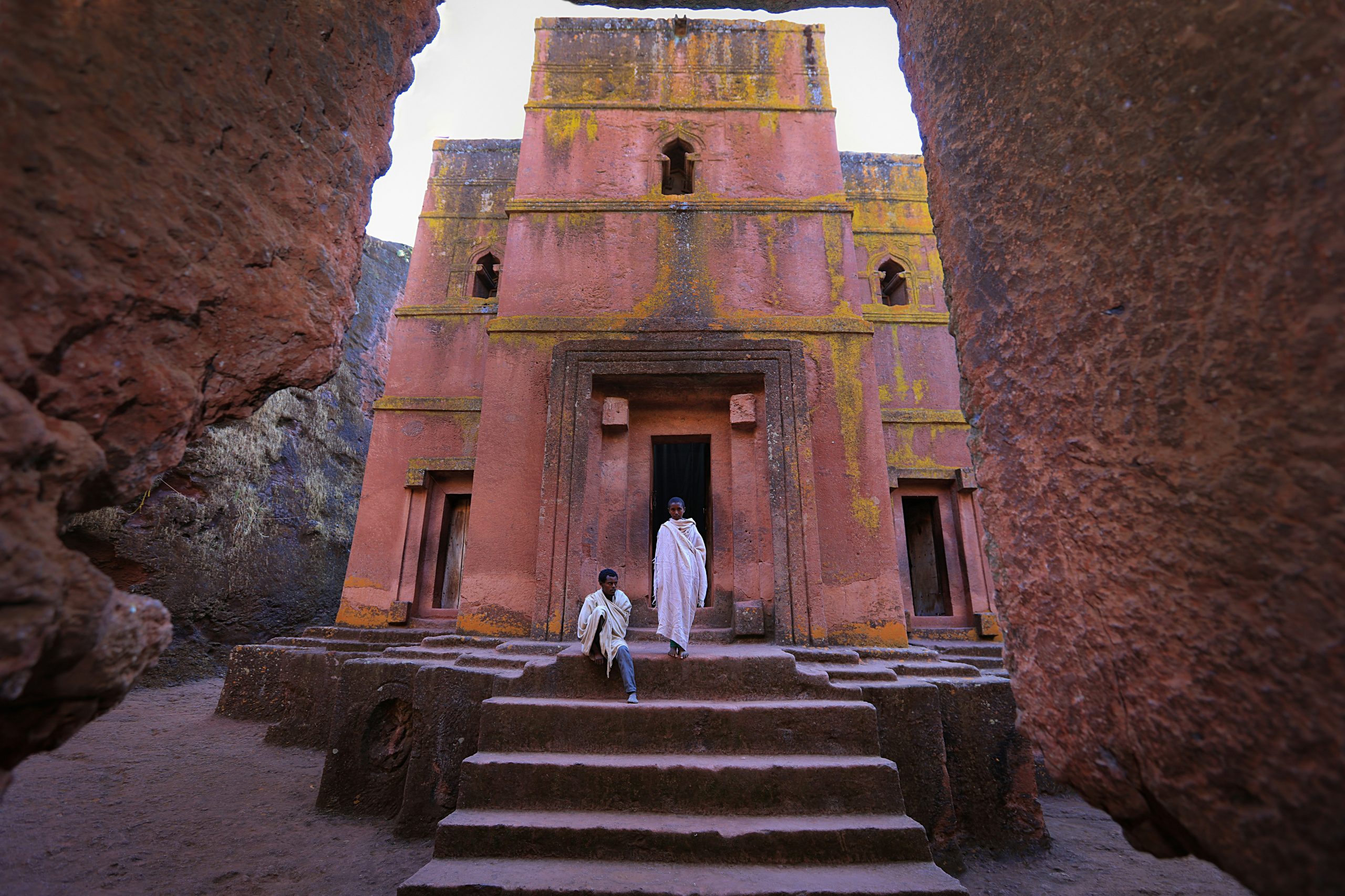
Fly to Lalibela – one of Ethiopia’s holiest cities, lying North of Ethiopia’s Lasta Mountains. Constructed in the 12th century by King Lalibela, the town attracts pilgrims from all over the world. The 12th-century king envisioned a second Jerusalem so that Ethiopian Christians would not have to brave the Nubian Desert and its Muslim armies, and he oversaw the construction of a dozen churches carved in the rocky soil. The masterpiece, however, is the monolithic King George’s – the most well-known and last built of the churches and has been referred to as the “Eighth Wonder of the World”.
Overnight at Jerusalem Hotel.
Day 5: Lalibela
On this day, enjoy a mule ride to the semi-monolithic Asheton Mariam rock-church, which lies on the top of a mountain. The Church itself is similar in style to other rock churches, but the panoramic view of the surroundings is spectacular from the mountaintop. Return to Lalibela later in the evening
Overnight at Jerusalem Hotel.
Day 6: Lalibela – Gondar
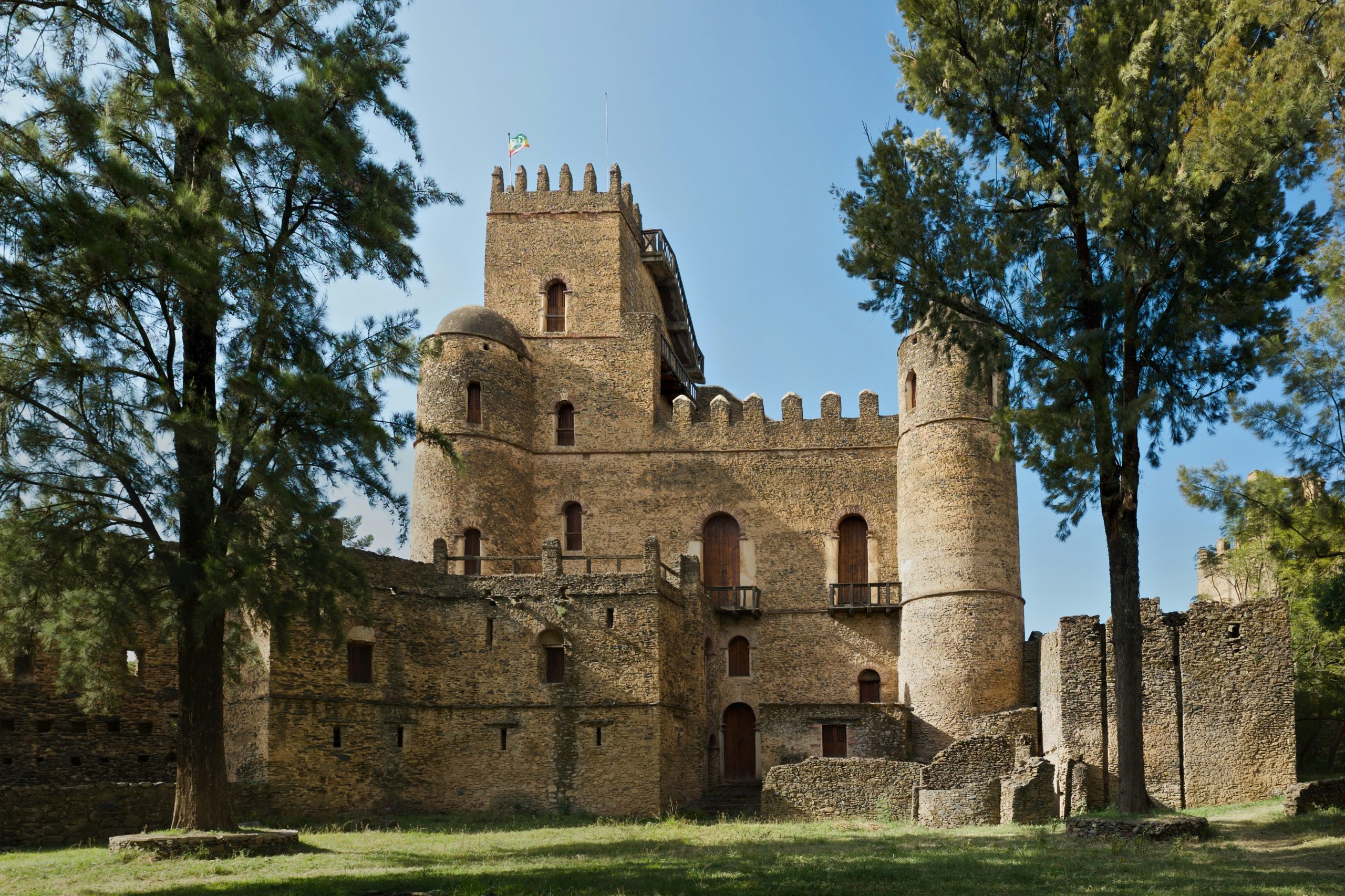
Fly from Lalibela to Gondar, where you will enjoy a sightseeing tour. The town has a rich history, having been founded in 1636 by Ethiopian emperor Fasiladas. With time, it was destroyed by Sudanese invaders and occupied by the armies of Italian dictator Benito Mussolini from 1936 to 1941. Gondar commands spectacular views over farmlands and the gleaming waters of Lake Tana to the south. Churches, several bridges, and a three-story stone pavilion next to a large rectangular sunken bathing place are just some of the attractions here.
Overnight accommodation at Goha Hotel.
Day 7: Gondar – Bahir Dar
Pick up in the morning and be driven to Bahir Dar. The main attraction here is the selection of Ethiopian Christian monasteries, which are found on many of Lake Tana’s 37 islands and will be visited by boat. The monasteries date back to the 16th and 17th centuries and have changed little since their founding. They are simple huts decorated with colourful scenes from the Bible and the lives of the saints. The monasteries include Ura Kidane Mihret, Dek Stephanos and Kebran Gabriel (closed to women).
Overnight at Tana Hotel.
Day 8: Blue Nile Falls
Enjoy a day trip to the Blue Nile Falls – Bahar Dar’s other star attraction, the Blue Nile Falls or Tis Isat (water that smokes), is about an hour’s ride out of town. Her,e the Blue Nile is 400m wide and plunges 45m down into a much narrower channel before continuing its journey.
Overnight at Papyrus Hotel.
Day 9: Bahir Dar – Addis
Fly back to Addis.
Overnight stay at Ghion Hotel.
Day 10: Departure
On this day, enjoy a sightseeing tour of Addis. In the evening, you will have a farewell dinner party, marking the end of your Ethiopian sojourn. Depart from Ethiopia.
~ End of Tour ~
Request Price

Includes
- Hotel accommodation based on a twin room sharing
- Domestic airfare with embarkation fees
- Breakfast only in Addis, but full board elsewhere
- All ground transportation with fuel with all insurance, and driver costs
- All transfers and visits everywhereare according to the itinerary
- Boat trip on Lake Tana
- All entrance fees
- Portage fees
- Professional Tour Guide accompanying throughout the trip with all his costs
- Government taxes
Excludes
- Lunch and dinner in Addis
- International flights and International Airport tax
- Any alcoholic drinks
- Tips
- Other expenses of personal nature like laundry, souvenirs, etc
- All what is not included in the list above
Frequently Asked Questions
What is the Ethiopia Historic Sites Safari Tour?
The Ethiopia Historic Sites Safari Tour is a cultural journey that takes travelers to some of the country’s most famous historical and religious landmarks. Instead of focusing only on wildlife, this safari explores ancient cities, churches, and archaeological sites that tell the story of Ethiopia’s long history. Many tours follow the well, known historic route that includes places like Lalibela, Gondar, and Aksum. Visitors can learn about ancient kingdoms, unique architecture, and traditions that have been preserved for centuries. It is a fascinating way to discover Ethiopia’s rich heritage and cultural identity.
Which historic places are included in this safari tour?
The Ethiopia Historic Sites Safari Tour usually includes several iconic destinations that are part of the country’s cultural heritage. One of the highlights is Lalibela Rock, Hewn Churches, famous for its incredible churches carved directly into rock. Another important stop is Aksum, which was once the center of a powerful ancient kingdom. Travelers also visit Fasil Ghebbi, a complex of historic castles built by Ethiopian emperors. These sites give visitors a deeper understanding of Ethiopia’s religious and royal history.
What activities can visitors enjoy during the tour?
During the Ethiopia Historic Sites Safari Tour, visitors can enjoy a range of cultural and educational activities. Guided tours allow travelers to explore ancient churches, palaces, and monuments while learning about their history. Many visitors also have the chance to watch traditional religious ceremonies that have been practiced for centuries. Local guides often share stories about Ethiopia’s ancient emperors, legends, and cultural traditions. These experiences make the journey both informative and deeply meaningful.
When is the best time to take this historic safari tour?
The best time to take the Ethiopia Historic Sites Safari Tour is usually during the dry season, which runs from October to March. During these months, the weather is generally pleasant and travel between historic sites is easier. Clear skies also make sightseeing and photography more enjoyable. Some travelers choose to visit during important religious festivals such as Timkat, when cultural celebrations are at their most vibrant. Visiting during these times adds a special atmosphere to the historic journey.
Why should travelers choose the Ethiopia Historic Sites Safari Tour?
Travelers choose the Ethiopia Historic Sites Safari Tour because it offers a rare chance to explore one of Africa’s oldest civilizations. Ethiopia has a unique history that includes ancient kingdoms, early Christianity, and remarkable architecture. The historic sites are not only beautiful but also deeply connected to the country’s cultural identity. Visitors often leave with a greater appreciation of Ethiopia’s traditions, history, and religious heritage. For anyone interested in culture and history, this tour provides a truly unforgettable travel experience.
Still have questions?
Our local safari experts are happy to help you plan the perfect African safari.


