Table of Contents
The Simien Mountains are, quite simply, Ethiopia’s crowning glory. Dramatic, expansive, and untouched, the Simiens are one of the country’s quintessential experiences. Snake along the ancient footpaths as you gradually ascend to the highest peak in the range, Ras Dashen. Keep your eyes open for the elusive Simien Wolf and the ingenious Gelada baboons, while birds of prey soar on the thermals above. A hike here is not to be missed!
The Spectacular Simien Mountains
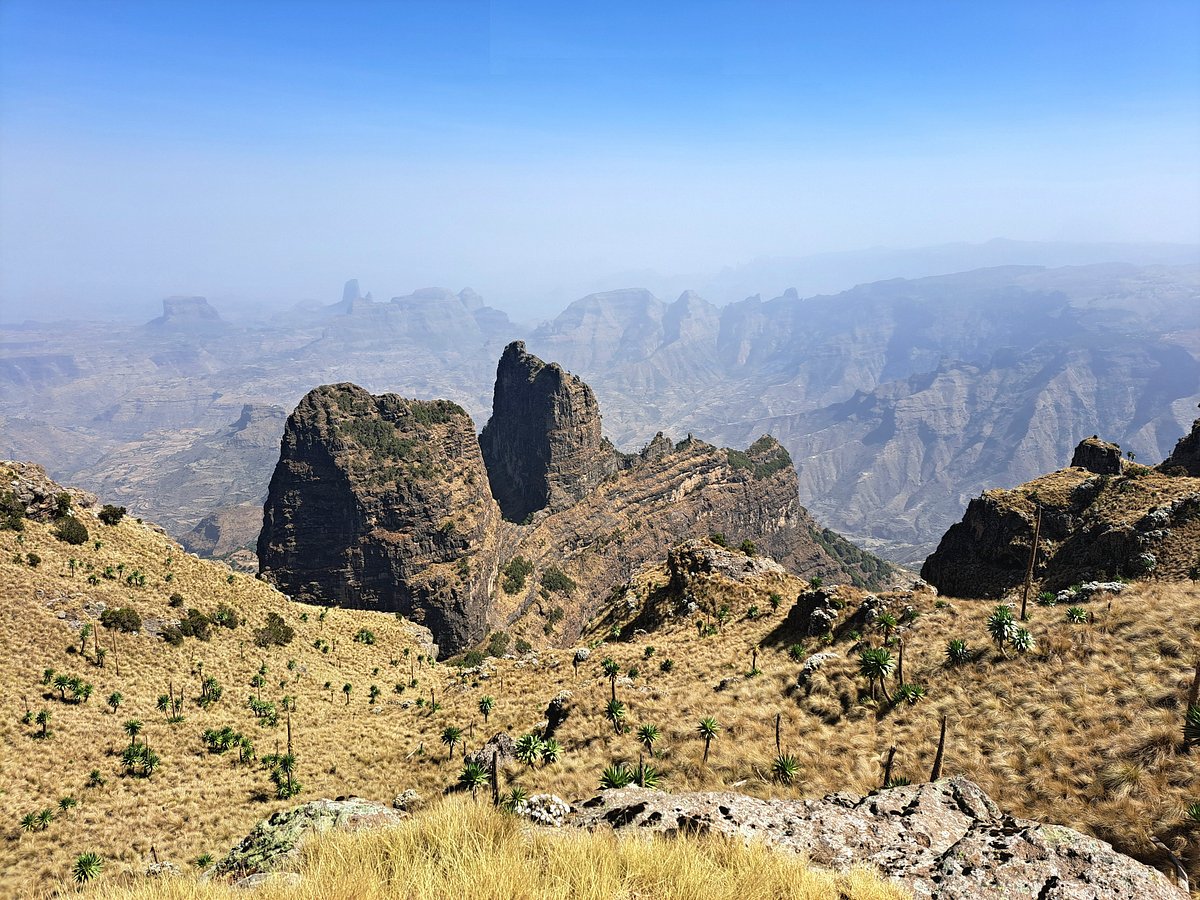
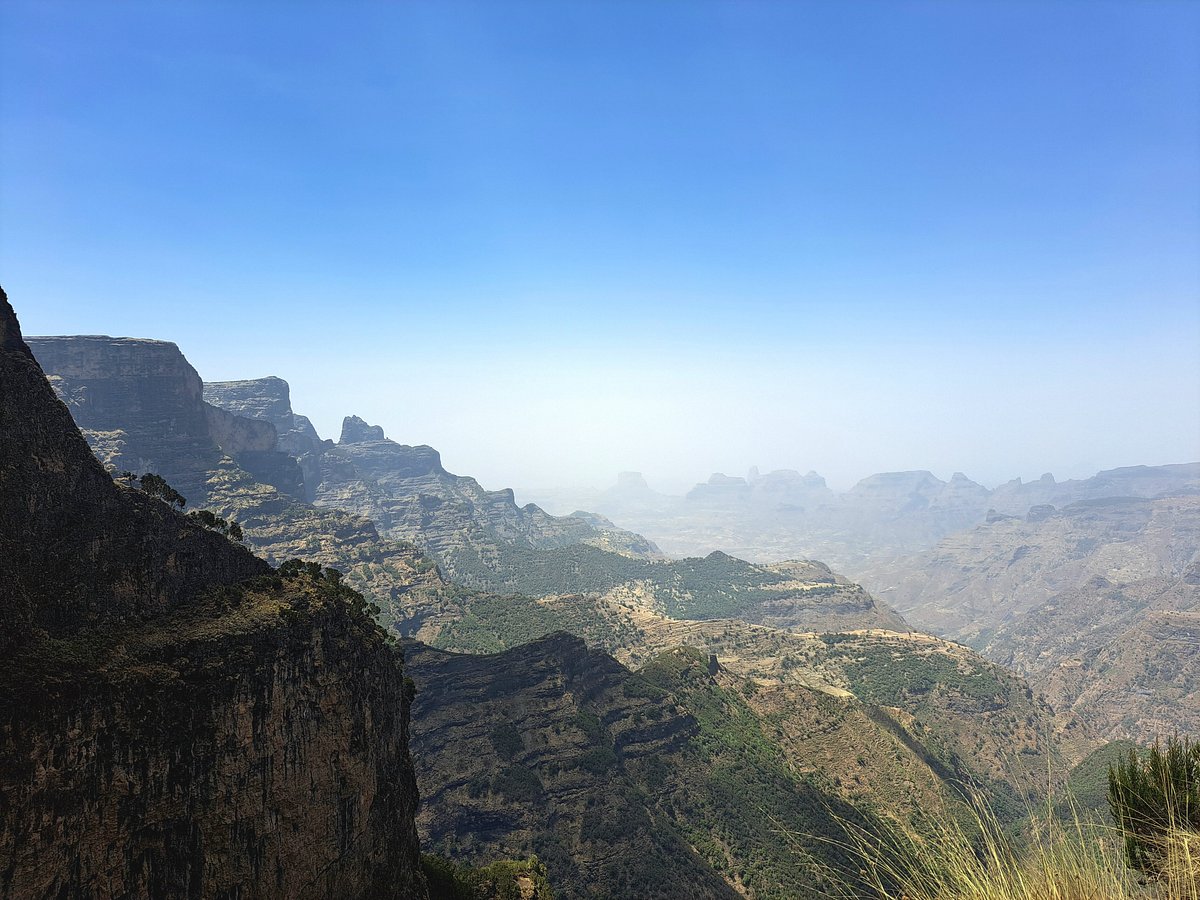
Deep canyons, sheer cliffs and sprawling plateaus starkly stand beside each other, creating the Simien Mountain range. If you’re a hiker, you cannot miss this park. This dramatic and unique basalt landscape is the remnants of volcanic eruption 20 – 30 million years ago. Today, it is both a national park and a UNESCO World Heritage Site due to its magnificent scenery and endangered wildlife.
The best way to experience the park is on foot, with the aid of a mule, ranger, porters and a chef. Scrambling along ancient foot trails carries you high into the mountains, passing through emerald coloured forests, jagged cliffs, sheer waterfalls and sprawling grassy plateaus. Whether you opt to summit Ras Dashen, the range’s highest peak, or simply sit amongst a harem of Gelada baboons on a sunny day, this hike is one not to be missed. Cultural tours and local guides further enhance the experience, highlighting both the synergies and challenges of this sparsely inhabited park during a traditional coffee ceremony.
Hiking the Simiens: Wildlife, Landscapes and Culture
The Trek
Over the course of 1 – 5 days, you can explore the wild and remote landscapes of this northern Ethiopian mountain range. Jagged peaks, steep escarpments and richly green landscapes characterize the landscape, and the region is best explored on foot following ancient village paths.
Trails begin in the foothills outside the town of Debark. As you ascend slowly towards the first camp, the landscape theatrically transforms from rolling farmlands to steep escarpments. Forests become lusher as cliffs become steeper – it takes little time before you are in total awe of the region. Bizarre and unique looking plants, including the Giant Heath, the Giant St John’s Wort and the Giant Lobelias, remind you of the range’s prehistoric roots, while the yellow Abyssinian wild rose, the golden globe thistle and the silver everlastings add splashes of vibrant colours to the region. As the days progress and you climb deeper into the park, you will weave past waterfalls and pause to soak your feet in a cool river. Pausing on top of the Imet Gogo plateau is always a highlight, as it affords some of the best views in the park while lammergeyers swoop overhead.
Whether embarking solely on a day hike from a lodge, or the full 5-night hike to the fifth highest peak in Africa and back, this adventure will both challenge and inspire all who attempt it.

Wildlife
As you wind along the plateaus and peaks, keep an eye out for the unique wildlife that inhabits this mountain range.
The intimidating-looking Gelada is a type of Old World monkey, endemic to the highlands in Ethiopia. Related to the baboon, these impressive creatures roam the grasslands in large harems, and often torment local villagers by raiding their crops. The males in the harem are by far the wildest looking. They average a weight of 18.5kg, and have heavy capes of hair running down their backs, contrasted with bright pink chests. The Gelada are extremely social and have an intricate society. Spend an hour observing them as they gain confidence and approach you. Though, be sure to keep an eye on your food as they descend around your campsite in the late afternoon!
The Walia Ibex is another great sighting in the region. This endangered ungulate lives in a herd of 5 – 20, and only an estimated 400 live in the Simiens in total. As you scramble up and down the rocky cliffs of the escarpments, keep an eye out for these agile climbers – this is their preferred habitat.
Most challenging to spot is the endangered Ethiopian wolf, also known as the Simien fox. As the rarest canid worldwide, and Africa’s most threatened carnivore, a sighting is a coveted moment on the hike. The wolf hunts independently on alpine rodents in the early morning and late afternoon, and can be seen as you traverse the grassland. Be sure to travel with binoculars since these wolves usually avoid humans.
Other Activities
A number of villages continue to exist within the national park. While their presence does threaten the sustainability of the region and resident wildlife, they do enrich the hike by providing cultural insight to those interested. As you pass through villages, it is possible to stop for a traditional Ethiopian coffee ceremony in one of the homes. It is customary to eat popcorn during the ceremony, and to drink at least three cups of the rich brew.
Other Activities
Accommodation in the Simien Mountains National Park
The trekking route through the Simiens carries hikers through a number of stunning campsites. There are 9 sites in total, though most treks lead hikers to three or four. Located with incredible views of the mountains, all sites are equipped with drop box toilets, cooking areas, running water and tent sites. Two of the campsites also have a few small rooms that can be rented for a small price, if looking for a break from the tent (or the wind).
There is also one high end lodge operating in the park, near the first campsite. This lodge can be used either as a base for day hikes, or as a first/final night on your trek.
How to Get There
The base for preparing to hike the Simien Mountains is the town of Gondar. 750km north of Addis, it takes over 10 hours to reach the city by vehicle. Most opt instead for the 1-hour flight with Ethiopian Airlines. From Gondar, hikers must drive a further 100km to the small town of Debark, where the park headquarters are located.
Some hikers opt to begin hiking directly from Debark, while others may prefer to drive through the foothills and begin hiking from the first campsite. A road does intersect the entire park, making it possible to drive right to the base of Ras Dashen.
Best Time to Visit the Simien Mountains National Park
The best trekking conditions occur during the months of April and May or October and November. Temperatures are moderate and the weather remains dry.
High levels of tourism are rarely a problem in these remote mountains, and temperatures remain fairly consistent year round. Temperatures can drop to below freezing at night in the higher altitudes, though days tend to warm up into the mid-teens. October and November are among the warmest months in the mountains.
Avoid the months between June and mid-September, as these tend to be the rainiest. Occasional rains occur between January and March
Frequently Asked Questions
Where is Simien Mountains National Park located?
Simien Mountains National Park is located in northern Ethiopia, in the Amhara region near the historic city of Gondar. The park sits high in the Ethiopian Highlands and is famous for its dramatic mountain landscapes. Deep valleys, sharp cliffs, and rugged peaks make it one of the most stunning natural areas in Africa. Because of its unique scenery and wildlife, it was listed as a UNESCO World Heritage Site. Many travelers visit the park to experience its breathtaking views and peaceful mountain atmosphere.
What wildlife can you see in Simien Mountains National Park?
The park is home to several rare animals that are found almost nowhere else in the world. One of the most famous residents is the Gelada, a unique monkey known for living in large groups on the mountain slopes. Visitors may also spot the endangered Ethiopian wolf, which is considered one of the rarest wolves on Earth. Another iconic animal is the Walia ibex, a wild goat that lives on steep cliffs. In addition to mammals, the park has many bird species, including large birds of prey that soar above the mountains. This variety of wildlife makes the park very special for nature lovers.
Why is Simien Mountains National Park famous?
Simien Mountains National Park is famous for its dramatic scenery and rare wildlife. The mountains are sometimes called the “Roof of Africa” because of their high peaks and sweeping views. One of the tallest peaks in the park is Ras Dashen, which is also the highest mountain in Ethiopia. The park’s cliffs and valleys were formed by volcanic activity millions of years ago. Because of this unique landscape and biodiversity, the park is considered one of Africa’s most remarkable natural wonders.
What activities can visitors do in Simien Mountains National Park?
The park is a popular destination for trekking and hiking adventures. Visitors can explore beautiful mountain trails that pass through valleys, cliffs, and small highland villages. Multi, day trekking trips are common, allowing travelers to fully experience the park’s landscapes and wildlife. Along the way, hikers often see geladas grazing and birds flying above the cliffs. Camping under the stars in the mountains is another memorable experience many travelers enjoy.
When is the best time to visit Simien Mountains National Park?
The best time to visit the park is during the dry season, usually from October to March. During this period the skies are clearer, and the hiking trails are easier to walk. Wildlife is also easier to spot because animals move around more in the open areas. The temperatures in the mountains are cooler than in many parts of Africa, which makes trekking comfortable. Visiting during these months gives travelers the best chance to enjoy the park’s incredible landscapes and wildlife.
Still have questions?
Our local safari experts are happy to help you plan the perfect African safari.