
Table of Contents
The great annual migration of millions of zebra, wildebeest (gnu) and other antelope in East Africa tops almost every list of safari experiences. When you plan your trip, you’ll need information about the annual migration, the best times to witness this wildlife spectacle, where to stay, and when to see it in Kenya and Tanzania.
The Migration
Each year, around 1.7 million wildebeest and 300,000 zebra (along with other antelope) gather up their young and start their long trek from Tanzania’s Serengeti Plains, further north to Kenya’s Masai Mara National Reserve. They go in search of food and water. Their journey runs in a clockwise circle, and the animals cover a distance of around 1800 miles. It’s a tough journey, and every year an estimated 250,000 wildebeest don’t make it. One of the most spectacular sights of the migration is when the herds gather to cross the Grumeti River (Tanzania) and the Mara River (Kenya) from July through September.
As the herds cross, crocodiles are lying in wait for any weak and feeble ungulates that can’t cope with the strong currents or lose their mothers. But the river crossings aren’t the only spectacle. Just witnessing hundreds of animals on the plains is a sight in itself. Particularly because they attract many of Africa’s impressive predators. Lions, leopards, hyenas and wild dogs follow the herds and give safari goers excellent chances of seeing a kill in action.
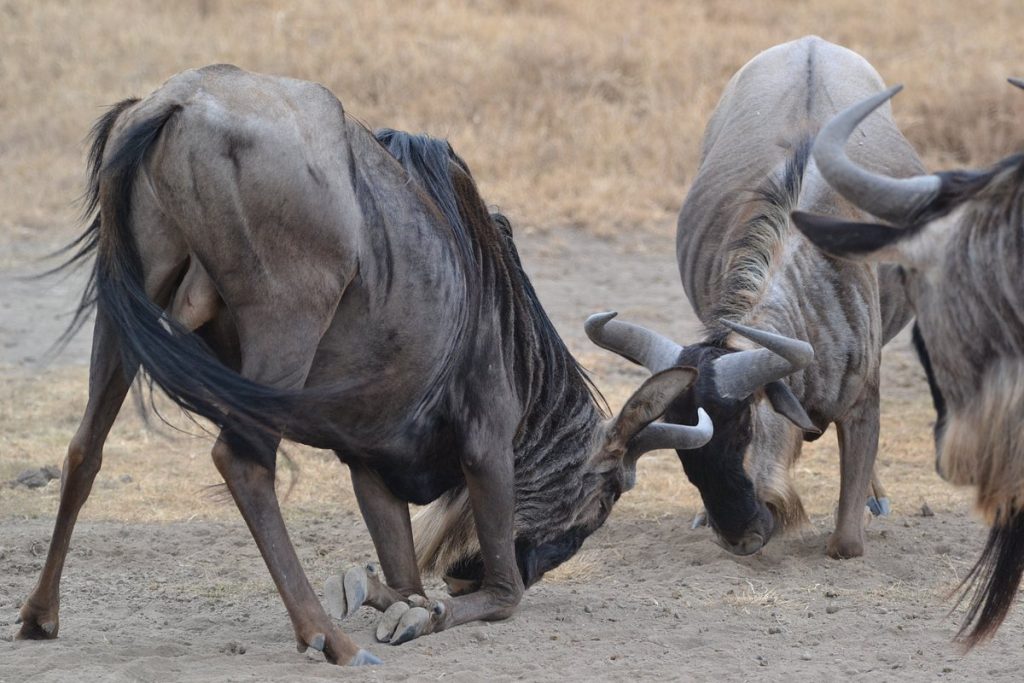
Being a natural event, the migration changes year to year in both timing and location. Use the information below as a general guideline.
The Migration in Tanzania
In December through March
The Serengeti plains and the Ngorongoro Conservation areas in northern Tanzania are home to giant herds of wildebeest, zebra and other ungulates. This is calving season. Most of the wildebeest calves are born in just a three week period, usually the beginning of February. Calves attract predators and this is an amazing time of year to watch impressive lion kills.
It’s also quite spectacular to see almost half a million little wildebeest being born and running alongside their mothers. The southern Ndutu and Salei plains are the best areas to see the large herds during this time of year. The best places to stay include Ndutu Safari Lodge, Kusini Camp, Lemala Ndutu Camp and any mobile tented camps in the area.
By April/May
The herds begin to migrate west and north to the grassier plains and woodland of the Serengeti’s western Corridor. The rain during this time of year makes it difficult to follow the herds during this stage of their migration. Many of Tanzania’s smaller camps, in fact, shut down due to impassable roads.
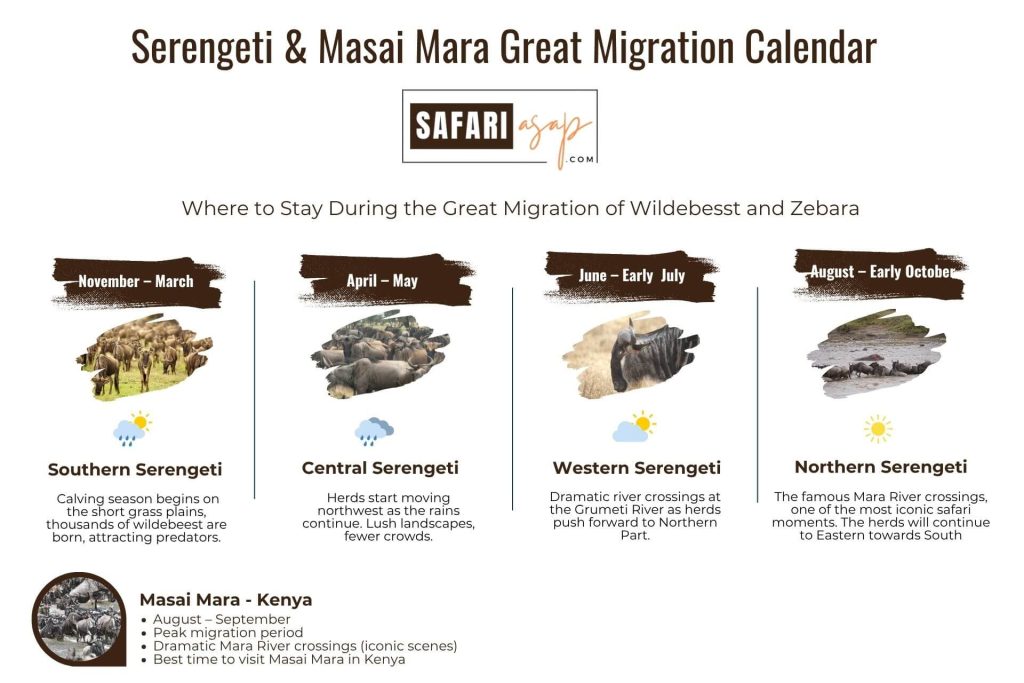
By the end of May
As the rains stop, the wildebeest and zebra gradually start moving north and individual groups begin to congregate and form much larger herds. This is also the time the wildebeest mate. Western Serengeti is the best place to watch the migration unfold.
By July
The herds reach their first big obstacle, the Grumeti River. The Grumeti river can get deep in places, especially if the rains have been good. This is the first of the spectacular river crossings you can witness. The depth of the river makes drowning a distinct possibility for many wildebeest and there are plenty of crocodiles to take advantage of their distress.
Camps along the river during this time make for an incredible safari experience. The best places to stay are The Serengeti Serena which is a central, easily accessible lodge for viewing the migration at this time. Grumeti River Camp, Migration Camp and Kirawira Camp are also options. Seronera and Moru area campsites are the best for those on a budget. Kleins Camp is also ideally situated.
The Migration in Kenya
By late July
The grasses of the western Serengeti are turning yellow, and the herds continue north. After crossing the Grumeti River in Tanzania the wildebeest and zebra head to Kenya’s Lamai Wedge and the Mara Triangle. Before they get to the lush plains of the Mara, they have to make another river crossing. This time it’s the Mara River and that too is filled with hungry crocodiles. The best places to stay to watch the migrating wildebeest tackle the Mara River include CC Africa’s Kichwa Tembo and Bataleur Camps, the Mara Serena Safari Lodge, and Sayari Mara Camp.
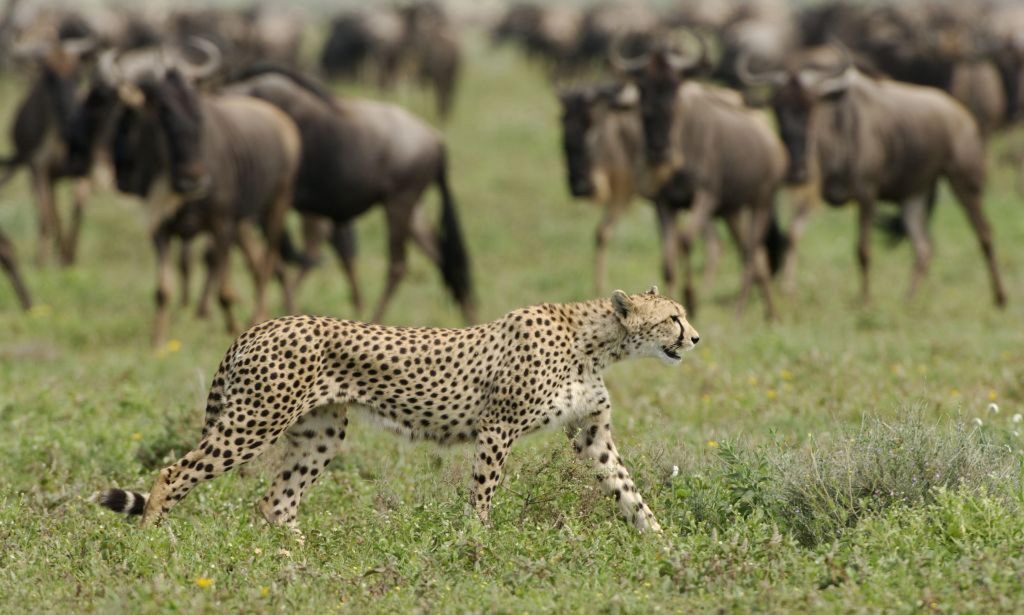
September through November, the Mara plains are filled to the brim with large herds of ungulates, naturally followed by predators. Best places to stay while the migration is in the Mara include the Governors camps and Mara Serena Safari Lodge. In Tanzania, the Kirawira camp, and Grumeti River Camp.
There are plenty more places to stay inside the Masai Mara Reserve and just outside the Reserve (equally good for wildlife spotting).
By November/December
The rains start in the south again and the herds begin their long trek back down to the Serengeti plains in Tanzania to have their young. During the short rains of November the wildebeest migration is best viewed from Klein’s Camp. Campsites in the Lobo area are also good.
Interesting Facts
- Wildebeest are also called Gnu because of the grunts they make which sound like “gnu” “gnu”.
- Wildebeest young are almost all born during a three week period (an estimated 400,000 each year). This overwhelming supply of potential food for predators means more of them survive.
- Wildebeest are born to run. They can run alongside their mothers just minutes after they are born.
- Zebra and wildebeest graze in harmony because each animal prefers a different part of the same grass.
- No two zebra look exactly the same.
- It is estimated that around 250,000 wildebeest die while on the migration circuit.
- The migration is a natural phenomenon that only started in the 1960’s.
Frequently Asked Questions
What is the Great Migration of Wildlife?
The Great Migration is one of nature’s most incredible events, where millions of animals move in a continuous cycle across East Africa. It mainly involves wildebeest, zebras, and gazelles traveling between Serengeti National Park and Maasai Mara National Reserve. These animals follow the rains in search of fresh grass and water. The movement happens all year round, forming a natural loop rather than a single journey. It’s often described as the largest land migration on Earth.
Which animals take part in the Great Migration?
The stars of the migration are over a million wildebeest, joined by hundreds of thousands of zebras and gazelles. Predators like lions, hyenas, and crocodiles also follow the herds, making it a dramatic survival story. The wildebeest lead the way because of their strong instinct to find rain fed grass. Zebras often travel alongside them, helping spot danger thanks to their sharp eyesight. Together, they create massive moving herds that stretch across the plains.
When does the Great Migration happen?
The migration is a year round event, but different highlights happen at different times. Calving season usually takes place in the southern Serengeti National Park around January to March. River crossings, which are the most dramatic moments, often happen between July and October. During this time, herds cross dangerous rivers like the Mara River. Timing can shift slightly depending on rainfall each year.
Why do animals migrate in the first place?
The main reason is survival, as animals move to find food and water throughout the year. Rainfall patterns in the region cause grass to grow in different areas at different times. The animals instinctively follow these changes to stay fed and hydrated. This movement also helps reduce overgrazing in one place. It’s a natural cycle that has been happening for thousands of years.
Is the Great Migration worth seeing?
Seeing the Great Migration is often considered a once in a lifetime experience. The sheer number of animals moving together is something you can’t fully understand until you witness it. Moments like river crossings or calving season are especially unforgettable. It also offers a chance to see predators and prey interacting in the wild. For anyone visiting Tanzania or Kenya, it’s one of the top safari highlights.
Still have questions?
Our local safari experts are happy to help you plan the perfect African safari.





