
Table of Contents
The best time to visit Tanzania is during the main dry season, from June to October. The rains make access to some of Tanzania’s parks and reserves difficult, and trekking also becomes a little more cumbersome. Scroll down for more detailed information about when to go on safari in Tanzania, when to visit Zanzibar, when to trek Kilimanjaro, and more detailed climate information.
Best Time to Go on Safari in Tanzania
If you want to see the Great Annual Migration of millions of zebra and wildebeest unfold, head to Tanzania’s northern parks – the Serengeti and Ngorongoro Conservation Areas. The best time to witness the migration is probably February – March when the wildebeest and zebra have their young.
Not only can you enjoy seeing baby animals, but the predators are at their highest numbers, too. Because the herds also concentrate in the south of the Serengeti, it’s easy to plan your wildlife viewing in that area and find a safari company that offers lodging there. The migration usually moves out of the Serengeti area by the end of August and doesn’t return until mid-September.
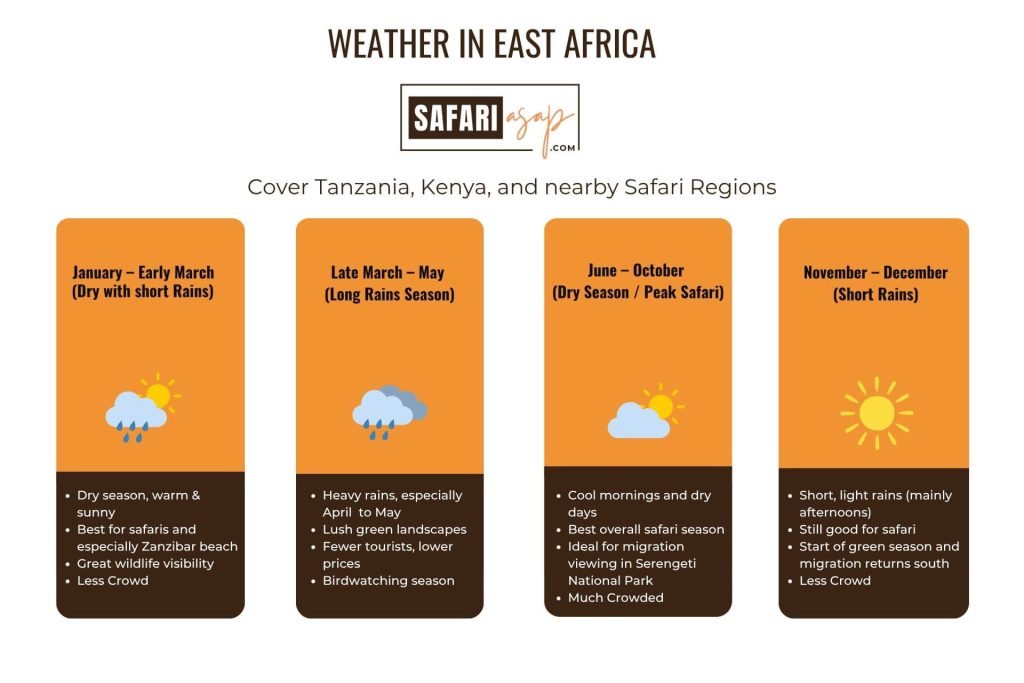
June to November is Tanzania’s dry season and is the best time to visit all the parks, especially Tanzania’s Southern Parks. They become more difficult to reach during the wet season and during the dry season, the animals tend to congregate around permanent water and it isn’t so hot and humid.
All of Tanzania’s parks suffer from the rains which generally fall from March to early May in the North, and from November to March in the South and West. Roads get washed out and given the sheer size of Tanzania’s parks, the animals tend to spread out, and this makes wildlife viewing less satisfying (if you’re looking for sheer numbers of animals).
December through March can get quite hot and humid, especially in Western and Southern Tanzania which makes it a little uncomfortable to spend a lot of time in the bush.
If you want to track chimps in Western Tanzania, the best time to go is the dry season, June – November for better access to the parks. However the wet-season (December to April) makes it a little easier to find the chimps since they don’t have to roam too far to get water.
Best Time to Trek Mount Kilimanjaro and Mount Meru
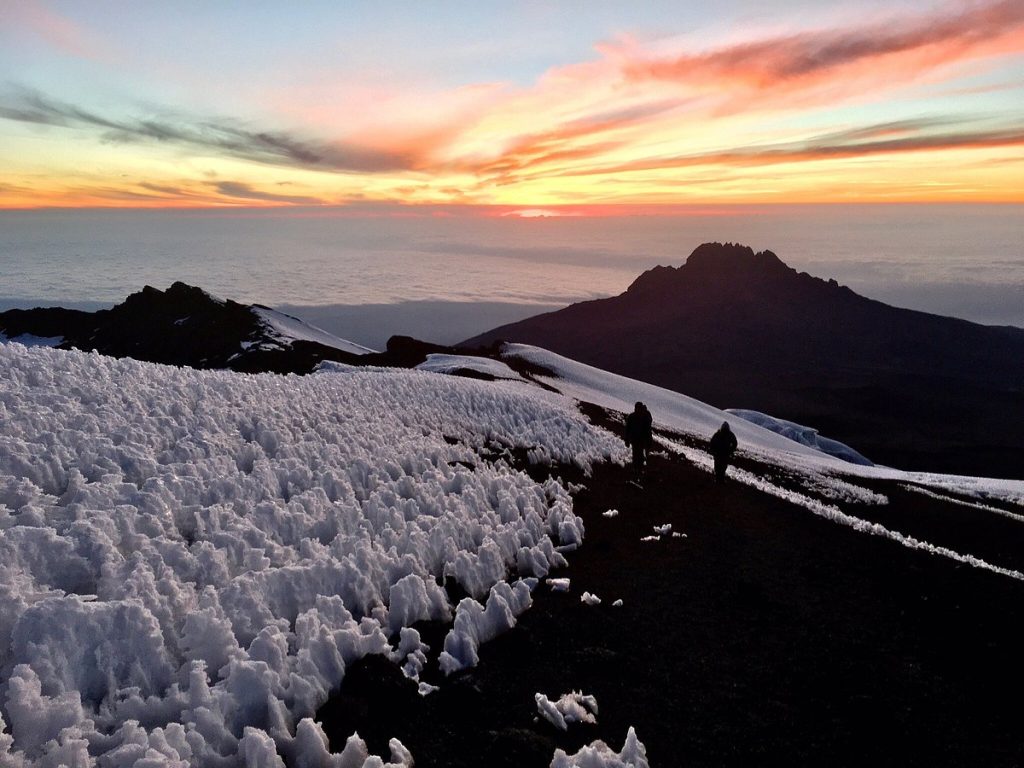
Mount Kilimanjaro and Mount Meru are a stone’s throw away from one another, so the trekking seasons are basically the same. The best time to trek is January – March and June- October.
Best Time to Enjoy a Beach Holiday in Zanzibar
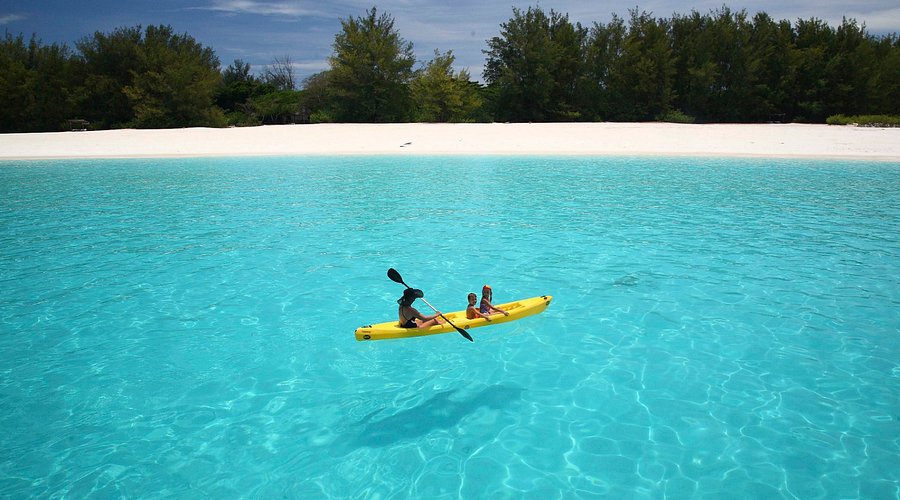
The coastal city of Dar es Salaam and the islands of Zanzibar stay warm and humid year-round, with some humidity offset by the Indian Ocean breeze. Rainfall can happen any month, but the heavy rains fall from mid-March to May and from November to January. One of the best times to travel to Zanzibar is during one of the cultural festivals that take place on the island: Sauti za Busara takes place in February, and the Zanzibar International Film Festival takes place in June.
Tanzania’s Climate and Average Temperatures
Tanzania lies just south of the equator and on the whole enjoys a tropical climate, except in the high mountains (like Mount Kilimanjaro and Mount Meru) where temperatures can get below freezing, especially at night. Along the coast, it stays quite hot and humid with heavy and reliable rainfall, especially during the rainy season.
Tanzania has two rainy seasons, generally the heaviest rains (called Masika) usually fall from mid-March to May and a shorter period of rain (called Vuli) from November to mid-January. The dry season, with cooler temperatures, lasts from May to October.
Frequently Asked Questions
What is the best overall time for a safari in Tanzania?
The dry season, from June to October, is generally considered the best time for a safari. During these months, wildlife is easier to spot because animals gather around rivers and waterholes. Vegetation is thinner, so visibility across parks like Serengeti National Park improves a lot. The weather is also more comfortable, with less humidity and almost no rain. It’s the peak safari season for a reason, as sightings are very consistent.
Is the Great Migration best seen at a specific time of year?
Yes, timing matters if you want to catch specific moments of the migration. River crossings usually happen between July and October in the northern Serengeti National Park near the Mara River. Calving season, on the other hand, takes place from January to March in the southern plains. Each phase offers a completely different experience, from dramatic crossings to newborn wildlife. So the “best” time really depends on what you want to see.
Can you go on safari during the rainy season?
Yes, and it can actually be a great experience if you don’t mind a bit of rain. The green season, from March to May and again in November, brings lush landscapes and fewer tourists. Parks like Ngorongoro Crater look especially beautiful during this time. Birdwatching is excellent, and you’ll often find better deals on lodges and tours. The trade, off is that some roads can get muddy and wildlife may be harder to spot.
What is the best time for fewer crowds and better prices?
If you prefer a quieter safari, consider traveling during the shoulder seasons like November or late March. These months fall between peak and heavy rains, offering a balance of good wildlife viewing and fewer visitors. You’ll likely find more availability in lodges around Tarangire National Park and other parks. Prices also tend to be lower compared to the high season. It’s a smart choice if you want a more relaxed and budget friendly trip.
Does the time of year affect which parks you should visit?
Absolutely, different parks shine at different times of the year. For example, Tarangire National Park is amazing in the dry season when elephants gather in large numbers. The Serengeti National Park is great year round but varies depending on the migration. Meanwhile, the Ngorongoro Crater offers reliable wildlife viewing almost any time. Choosing the right park for the season can really shape your overall safari experience.
Still have questions?
Our local safari experts are happy to help you plan the perfect African safari.





