
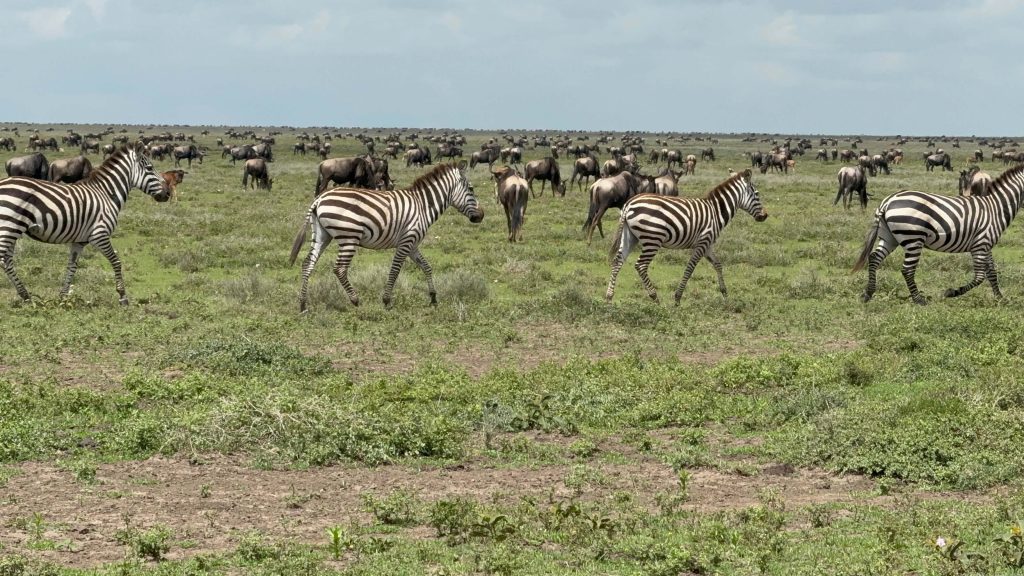
Last year, I managed to witness the great annual migration in the Serengeti. It was an unbelievable sight to come upon tens of thousands of zebras with their young, grazing, resting, and occasionally squabbling, on the central Serengeti plains. We watched a lion stalk a herd of zebra thousands strong; the noise and dust that was kicked up was incredibly impressive.
Tanzania’s Serengeti National Park is where the majority of the great annual migration takes place, and where you have a good chance of seeing over a million wildebeest, zebra and impala make their circular pilgrimage, in search of good grazing. But the area is vast Tanzania’s Serengeti takes up more than 5,700 sq miles, (14,763 sq km) and the animals are constantly on the move.
So you have to try and time your visit, and book with a company that specializes in safaris (contact me if you like) to be at the right place, at the right time.
When can you see the Great Migration in the Serengeti?
In December through March, the Serengeti plains and the Ngorongoro Conservation areas in northern Tanzania are just buzzing with life, this is calving season. Most of the wildebeest calves are born in just a three-week period, usually the beginning of February. Calves attract predators and this is an amazing time of year to watch impressive lion kills. It’s also quite spectacular to see almost half a million little wildebeest being born and running alongside their mothers.
The southern Ndutu and Sale plains are the best areas to see the large herds during this time of year. The best places to stay include Ndutu Safari Lodge, Kusini Camp, Lemala Ndutu Camp, Lake Masek Tented Camp, and any mobile tented camp in the area.
By April/May the herds begin to migrate west and north to the grassier plains and woodland of the Serengeti’s western Corridor. The rain during this time of year makes it difficult to follow the herds during this stage of their migration. Many of Tanzania’s smaller camps in fact shut down due to impassable roads.
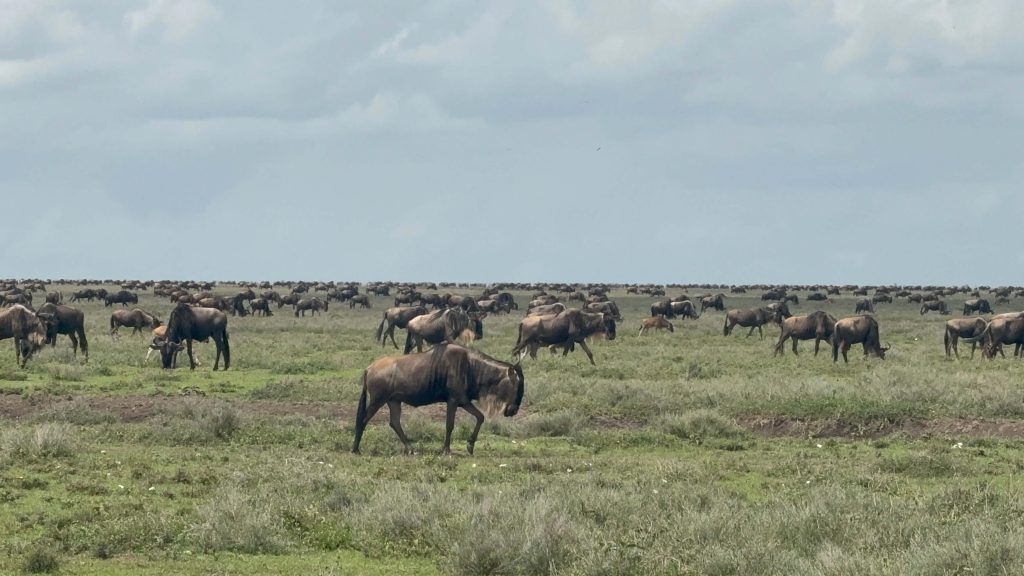
By the end of May, the wildebeest and zebra gradually start moving north and individual groups begin to congregate and form much larger herds. This is also the time the wildebeest mate. Western Serengeti is the best place to watch the migration unfold.
By July, the herds reach their first big obstacle, the Grumeti River. The Grumeti river can get deep in places, especially if the rains have been good. This is the first of the spectacular river crossings you can witness. Good options for camps in June through July are Nyumbani Collection, Singita Sabora, Land of Nature and any mobile camp.
Camps along the river during this time make for an incredible safari experience. The best places to stay include: Grumeti River Camp, and Kirawira Camp.
By November/December, the rains start, and the herds begin their long trek back from Kenya’s Masai Mara area, down to the Serengeti plains.
During the short rains of November, a stay at Klein’s Camp is highly recommended.
Frequently Asked Questions
What is the Great Migration and where does it happen in Tanzania
The Great Migration is a year round movement of millions of wildebeest, zebras, and gazelles across northern Tanzania. Most of this journey takes place within Serengeti National Park, one of Africa’s most famous safari destinations. The animals follow seasonal rains in search of fresh grazing and water. This creates a continuous loop rather than a single one time event. Different parts of the Serengeti host the herds at different times of the year.
When is the best time to see the migration in Tanzania?
You can see the migration all year, but the highlights change with the seasons. From January to March, the southern Serengeti is best for calving season. Between April and June, the herds move through the central and western corridors. From July to October, they head north toward the Mara River. Each period offers a different kind of experience, so the “best” time depends on what you want to witness.
Where can you see the calving season?
Calving season usually happens from January to March in the southern Serengeti and Ndutu region. This area lies within the greater Ngorongoro Conservation Area ecosystem. Thousands of wildebeest calves are born within a short period, attracting many predators. It’s a time full of action, with dramatic scenes of survival. The open plains also make wildlife viewing easier and more rewarding.
Where can you see the famous river crossings?
The most dramatic river crossings usually happen between July and October in the northern Serengeti. Here, the herds attempt to cross the Mara River, facing strong currents and lurking crocodiles. These crossings are unpredictable, which adds to the excitement. Some days you may wait, while others deliver unforgettable action. This is one of the most iconic safari moments in Africa.
Is it worth planning your trip around the Great Migration?
For many travelers, the migration is the highlight of visiting Tanzania. The sheer number of animals moving together is something you won’t see anywhere else. Whether it’s calving season or river crossings, each phase offers a unique experience. That said, the Serengeti has amazing wildlife year round, even outside peak migration moments. Planning around it can enhance your trip, but it’s not the only reason Tanzania is worth visiting.
Still have questions?
Our local safari experts are happy to help you plan the perfect African safari.





