
Table of Contents
This is a viable proposition in Tanzania if you can get a group together to share the costs, since you will have to rent a vehicle and camping equipment. The cost of renting a suitable vehicle will depend on where you want to go and for how long. Doing it yourself has several advantages over organised safaris. The main one is flexibility—you can go where you want, stop whenever you like, and stay as long as you like. You don’t have to follow the standard tourist routes.
Another is that you can choose your travelling companions. The main disadvantage is the extra effort you have to put in to organise the safari—hiring equipment, buying food and drink, cooking, and agreeing among yourselves where you want to go and which route to take. It can also be a worry if none of you have mechanical skills and/or no tools and the vehicle breaks down. There’s also the security of the vehicle and contents to think about if you want to leave it somewhere and go off walking. If you do this, then you’ll have to pay someone to guard it.
Lastly, there’s the question of maps, especially if you intend to get right off the beaten track. Reasonably good large-scale maps are available in Arusha, but the detailed ones are unavailable without going through a great deal of red tape. This means you could find yourself out in the middle of nowhere with not a clue where you’re going and have to backtrack. As far as costs go, it’s probably true to say that organising your own safari is going to cost at least as much, and usually more, than going on a company-organised safari. By how much more depends on a lot of factors, but mainly the cost of hiring a vehicle and buying fuel. You’ll have to sit down and work this out yourself; otherwise, you can reach us for help.
Car & 4WD Rental
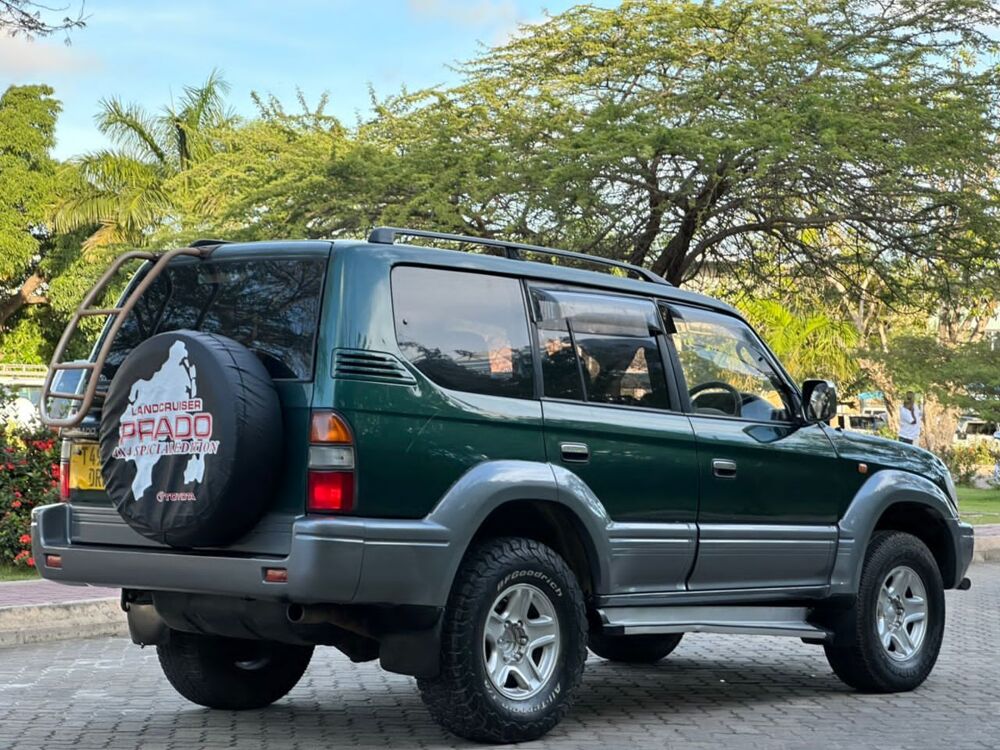
Hiring a vehicle to tour Tanzania (or at least the national parks) is a relatively expensive way of seeing the country, but it does give you freedom of movement and is sometimes the only way of getting to the more remote parts of the country. On the other hand, if you’re sharing costs, it’s quite a feasible option.
There are a number of factors to take into consideration before deciding what type of vehicle to take and which company to go through, and there’s no real substitute for sitting down with pen and paper and working out, as near as possible, what the total cost will be. To do this, you’ll need as many hire charge leaflets as you can get hold of and a distances table. The other major consideration is what type of vehicle is going to be suitable to enable you to get where you want to go.
At times other than the rainy season, a 2WD vehicle may be perfectly adequate in some parts of the country, including the Serengeti Plains, Tarangire and Lake Manyara national parks (at least on the main access routes of the latter), but it won’t get you to the Crater of Ngorongoro. Most companies also have a policy of insisting that you take a 4WD vehicle if you’re going upcountry and off the beaten track.
Rental Costs
This is something of a minefield, since the daily/weekly base rates vary quite a lot, as do the km (mileage) charges. What initially looks cheap often works out just as expensive as anything else. Contact us for more details.
Minimum Mileage Conditions
Some of the so-called ‘unlimited’ km rates are not quite that. Some have a ceiling of 1,200 to 1,400 km per week free, after which you pay the excess at the normal km rate. Some companies also offer the option of 500 km or 1,200 to 1,400 km per week free of charge, with corresponding lower or higher base rates. If you are renting on a daily basis, some companies have a 100-km minimum charge, regardless of whether you travel this far or not. If you’re not planning on going too far, then it may be more economical to opt for the lower free km rate.
Deposits
There’s a wide variation in the deposits charged on hired vehicles. It’s usually the estimated total hire charges (base rate and km) plus whatever the excess on the insurance. No deposit is necessary if you are paying by credit card.
Drivers’ Licences & Minimum Age
An international driver’s licence or your own national driving licence is standard. Some companies stipulate a minimum age of 23 years, but with others, it is 25. There are occasionally stipulations about endorsements on licences (clean licences preferred) and that you must have been driving for at least two years.
Maintenance
Although it’s not always the case, it’s probably true to say that the more you pay for a vehicle, the better condition it will be in. It’s worth paying attention to this, particularly in the event of a major breakdown. The major companies may deliver you a replacement vehicle and make arrangements for recovery of the other vehicle, but with most companies, you’ll be entirely responsible for getting the vehicle fixed and back on the road. Only when you return it will you be refunded, and you’ll need receipts to prove what you spent.
Equipment
Some companies provide you with adequate tools to tackle breakdowns, while others provide just enough to change a tyre. If you have mechanical skills, it’s worth enquiring about what tools are provided. There are companies which include a full complement of camping equipment in their 4WD hire charges. With other companies, you’ll have to hire this separately.
One-Way Rates
If you want to hire a vehicle in one place and drop it off in another, there will be additional charges to pay. These vary depending on the vehicle, the company, and the pick-up and drop-off locations. Contact us for more details.
Frequently Asked Questions
Is a self-drive safari in Tanzania a good idea?
A self-drive safari is a great choice if you enjoy adventure and freedom. You can travel at your own pace and stop whenever you like. It also gives you a more personal experience in nature. Good planning is very important before you start. Make sure you understand the park rules and road conditions.
Do I need a special vehicle for a self-drive safari?
Yes, a 4×4 vehicle is the best option for Tanzania. Many park roads are rough, especially during the rainy season. A reliable vehicle helps you travel safely. Most rental companies also provide a spare tire and recovery gear. Always check the vehicle before leaving.
Which national parks are best for a self-drive safari?
Serengeti, Tarangire, Lake Manyara, and Ngorongoro are popular choices. Each park offers different wildlife and beautiful scenery. Tarangire is famous for elephants and baobab trees. Serengeti is known for the Great Migration. Plan your route so you have enough time in each park.
Is it safe to drive yourself in Tanzania?
Yes, it is generally safe if you follow the rules. Drive slowly and stay on marked roads. Avoid driving after dark because animals may be on the road. Carry enough water, fuel, and a paper map. Let someone know your travel plans before you leave.
What should I pack for a self-drive safari?
Pack light but bring the essentials. Carry comfortable clothes, sunscreen, a hat, and insect repellent. Bring binoculars, a camera, and a first-aid kit. Keep snacks and drinking water in the vehicle for long drives. A power bank and offline maps are also very useful.
Still have questions?
Our local safari experts are happy to help you plan the perfect African safari.





