
Dar es Salaam, the ‘Haven of Peace’, started out as a humble fishing village in the mid-19th century, when the Sultan of Zanzibar decided to turn the inland creek, now the harbour, into a safe port and trading centre. It became the capital in 1891, when the German colonial authorities transferred their seat of government from Bagamoyo, whose port was unsuitable for steamships.
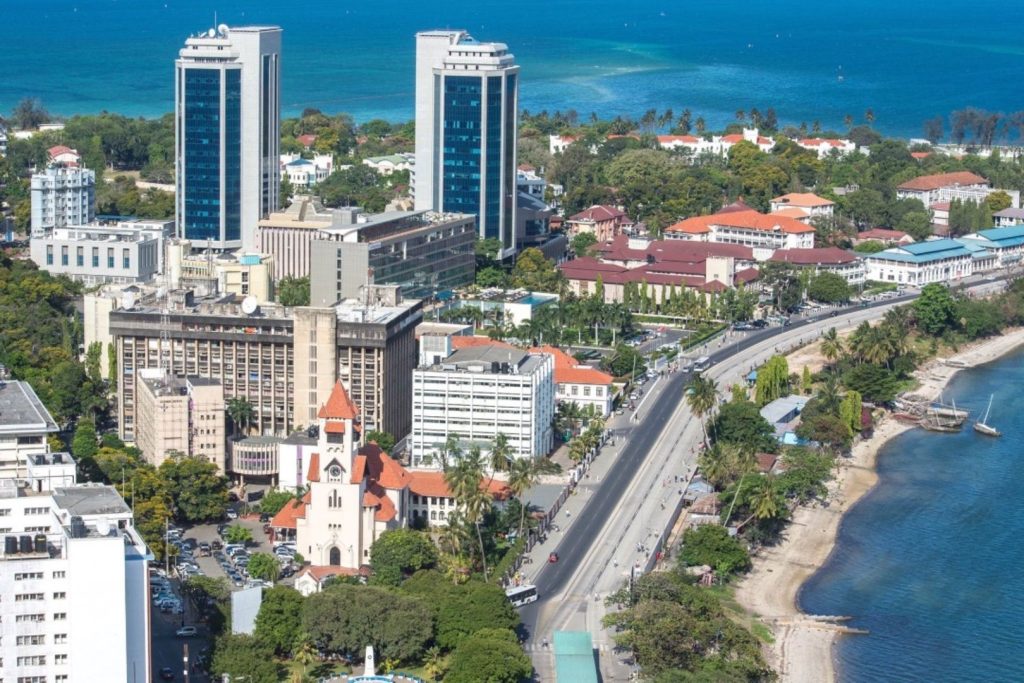
Since then, the city has continued to grow and now has a population of about 6 million. Although high-rise buildings have appeared in the centre and at various places in the suburbs, some areas remain substantially a low-rise city of red-tiled roofs, with its colonial character largely intact. The harbour is quite large, where Zanzibar boats mingle with huge ocean-going vessels.
Like all large African cities, there are substantial contrasts between the various parts of the city. However, you won’t find here the glaring disparity in living standards between the slums and the more salubrious suburbs that you would in Nairobi. The busy, sandy streets and concrete buildings around Kariakoo Market and the clock tower are certainly a world away from the wide, tree-lined boulevards of the government and diplomatic quarters, but there’s no way you would describe them as slums.
From being a relatively unrewarding place for nightlife in the mid to late 1980s, Dar es Salaam has considerably livened up, particularly if you’re willing to head towards the beach.
Mbudya is the nearest beach, six kilometres north of the city centre and on the fringes of where the affluent and foreign ambassadors have their residences. As you might expect, it’s a particularly beautiful stretch of tropical coastline, fringed with coconut palms. This beach is, after all, a major recreation area for the city.
There are other beaches a little further up the coast from here, but the major resort area is 25 km to 27 km north of the city, east of the Bagamoyo Road. Strung out along the coast here, from south to north, are the Kunduchi Beach Hotel, Silversands, Rungwe Oceanic Hotel and the Bahari Beach Hotel. It’s an idyllic mixture of sea, sand, sun and landscaped tropical extravagance. The only drawback, as with the Mombasa beaches, is the copious amount of seaweed, which makes swimming at high tide very unpleasant. When the tide goes out, however, the seaweed tends to stay on the beach, thus providing clear sea in which to enjoy yourself. There are also several wooded islands with good beaches offshore, to which the beach hotels run boats.
If you stay at any of these beach resorts, don’t walk from one to the other, either along the beach or along the connecting roads, unless you’re with a large group. Many people have been robbed, some violently. Always take a taxi or get a lift.
Boat trips to offshore islands such as Mbudya, where you can swim, snorkel or sunbathe, are available from the Kunduchi Beach Hotel, the Rungwe Oceanic Hotel and the Bahari Beach Hotel. There are usually several trips per day from Monday to Saturday, and more on Sundays and public holidays. You need a minimum of four people unless you’re willing to pay a surcharge. You can also go sailing from these places or rent a catamaran, but it won’t be a cheap day out.
Frequently Asked Questions
Why is Dar es Salaam called the “Haven of Peace”?
Dar es Salaam means “Haven of Peace” in Arabic. The city was given this name in the 19th century. Today, it is known for its friendly people and relaxed atmosphere. Visitors often enjoy the warm welcome from locals. It is a peaceful place to begin a Tanzanian adventure.
What are the top attractions to visit in Dar es Salaam?
Dar es Salaam has many interesting places to explore. You can visit the National Museum to learn about Tanzania’s history. Coco Beach is perfect for relaxing by the ocean. Kariakoo Market offers a lively shopping experience. You can also take a ferry to nearby islands for a quiet day trip.
What is the best time to visit Dar es Salaam?
You can visit Dar es Salaam at any time of the year. The dry seasons, from June to October and January to February, are especially pleasant. The weather is warm and sunny during these months. Rainy seasons are quieter and often have fewer tourists. No matter when you visit, there is always something to enjoy.
What food should I try in Dar es Salaam?
Dar es Salaam is famous for its delicious local food. Fresh seafood is available in many restaurants along the coast. You should also try chipsi mayai, nyama choma, and grilled fish. Street food is tasty and affordable. Don’t forget to enjoy fresh tropical fruits and local coffee.
Is Dar es Salaam a good starting point for a Tanzania safari?
Yes, Dar es Salaam is a great place to begin your journey. The city has an international airport with many flight connections. From here, you can travel to famous parks like Nyerere National Park, Mikumi National Park, and Ruaha National Park. It is also easy to continue to Zanzibar after your safari. Many travelers spend a day or two in the city before heading into the wild.
Still have questions?
Our local safari experts are happy to help you plan the perfect African safari.





