
Table of Contents
Located approximately 25 km northeast of Arusha and 58 km from Moshi, Arusha National Park is one of Tanzania’s smallest national parks, covering just 137 km². Although it is home to fewer large mammals than many of Tanzania’s other parks, it offers an exceptional combination of breathtaking scenery, diverse ecosystems, and excellent wildlife viewing.
The park is made up of three distinct areas: the lush Ngurdoto Crater with its steep forested walls, the Momella Lakes, a series of shallow alkaline lakes nestled among rolling hills, and the magnificent Mount Meru, an ancient dormant volcano that rises to 4,566 metres above sea level. The park’s elevation ranges from approximately 1,500 metres around the Momella area to the summit of Mount Meru, creating a variety of habitats and spectacular landscapes.
Arusha National Park is surrounded by cultivated farmland and plantations, with extensive pine forests to the south and southwest, while the natural forests continue up the fertile slopes of Mount Meru. More renowned for its stunning scenery than its abundance of wildlife, the park offers a peaceful safari experience with far fewer visitors than Tanzania’s more famous national parks, making it an ideal destination for travellers seeking tranquility, scenic beauty, and nature walks.
Little Facts About the Park:
Arusha National Park is an ideal destination for a day safari from Arusha. We recommend visiting the Ngurdoto Crater in the morning, exploring the Momella Lakes and the rest of the park during the afternoon, and finishing the day around the scenic slopes of Mount Meru in the late afternoon.
As with most national parks in Tanzania, a 4×4 safari vehicle is required to navigate the park’s tracks. Since there are no lions in Arusha National Park, guides may occasionally allow visitors to step out of the vehicle at designated locations, provided it is safe to do so. The park also offers several scenic viewpoints and beautiful picnic sites.
Visitors are not permitted to descend into the Ngurdoto Crater. Climbing Mount Meru is only allowed with an armed ranger, as buffaloes and other wildlife are commonly found on the mountain slopes.
The best time to visit Arusha National Park is between October and February, with December to February offering the most favorable conditions. During this period, the rains ease, the skies are generally clear, and the views of Mount Meru and Mount Kilimanjaro are at their best. During the dry season, however, heat haze can sometimes reduce visibility of the distant peaks.
What to See in Arusha National Park:
Wildlife Animals:
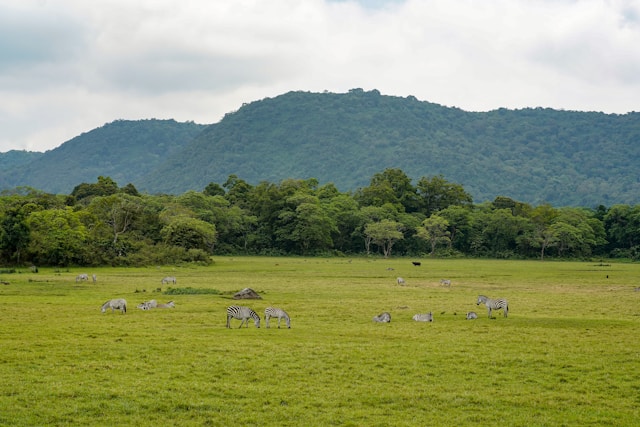
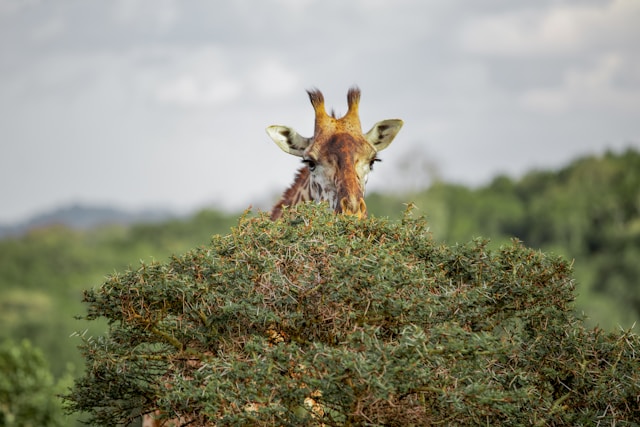
Arusha National Park is home to a wide variety of wildlife, although animal densities are lower than in some of Tanzania’s larger national parks. Visitors can expect to see Maasai giraffes, elephants (though not in large numbers), buffaloes, hippos, warthogs on the slopes of Mount Meru, several species of antelope, and an abundance of primates, including black-and-white colobus monkeys with their distinctive bushy tails, olive baboons, and blue monkeys.
Unlike many other Tanzanian parks, Arusha National Park is not home to lions, rhinos, or wildebeest, making it one of the few places where visitors can enjoy activities such as walking safaris in relative safety under the guidance of an armed ranger.
Birdlife is one of the park’s greatest attractions, with more than 400 bird species recorded around the Momella Lakes and the surrounding forests. Depending on the season, visitors may spot both greater and lesser flamingos, pelicans, ducks, geese, a variety of resident and migratory wading birds, and the striking silvery-cheeked hornbill, easily recognized by its large ivory-coloured casque and its distinctive call, which resembles an eerie laugh.
Ngurdoto crater:
From the park gate, tracks lead directly through a lush tropical forest inhabited by a variety of monkeys. One route follows the southern rim of the crater, while the other runs along the northern rim. The two tracks do not connect, so you will need to retrace your route after your game drive.
From every viewpoint, you will enjoy spectacular views overlooking the Ngurdoto Crater. Unlike the Ngorongoro Crater, visitors are not permitted to descend into the crater. This impressive volcanic crater measures approximately 3 km in diameter.
In total, seven observation points have been established along the northern and southern rims, each offering a different perspective of the crater below. The most rewarding viewpoints are The Rock and Buffalo Point, both situated at higher elevations, while the highest viewpoint of all is Leitong, located on the northern rim at an altitude of 1,850 metres.
The crater floor is home to a variety of wildlife, including large herds of buffaloes, making it one of the park’s most scenic and rewarding wildlife viewing areas.
The lakes of Momella:
The name Momella Lakes is used because the area consists of several lakes located close together, separated by small hills covered with natural vegetation. The safari tracks wind around the lakes, following the gentle contours of the landscape and offering beautiful views at every turn.
The first and largest is Big Momella Lake. As its name suggests, it is the largest of the group and, during certain times of the year, particularly around February, its shores attract impressive colonies of pink flamingos. Other beautiful lakes in the area include Small Momella, Lekandiro, Tulusia, and Rishateni, each with its own unique scenery and wildlife.
The lakes are alkaline in nature and contain algae that create beautiful shades of green, blue, and pink, depending on the species present and the light conditions. Fish are scarce in these waters, but the lakes provide an ideal habitat for an abundance of birdlife. Flamingos feed on algae and tiny crustaceans, while visitors can also spot ducks, sacred ibises, Egyptian geese, and many other waterbirds. A small population of hippos can also be found along the shores of Small Momella Lake.
Mount Meru Trekking:
The second highest peak in Tanzania after Mount Kilimanjaro, Mount Meru rises to 4,565 m and dominates the city of Arusha with its majestic silhouette. If Kilimanjaro has a table-shaped appearance, Mount Meru resembles a large, almost perfect cone, with a horseshoe-shaped crater surrounded by high, steep walls. Within the crater itself, another smaller peak can be clearly seen.
This peak is known as the Ash Cone and was formed as a result of more recent volcanic activity. Unlike the nearby Ngurdoto Crater, which belongs to an extinct volcano, Mount Meru is considered a dormant high volcano. Its last recorded eruption occurred at the end of the 11th century.
The formation of Mount Meru dates back approximately 20 million years. It is believed to have emerged from the earth at the same time as the formation of the Rift Valley. Its impressive crater was created by a gigantic volcanic explosion.
The Waarusha people (the local ethnic group from Arusha) consider Mount Meru a sacred mountain. Every year, animal sacrifices are carried out in its honor to encourage the arrival of rain. The first European to discover this volcano was the German explorer Karl Von der Decken in 1862.
The Austro-Hungarian Count Teleki Von Szek explored the region in 1876 but did not reach the summit. Later, Gustav Fischer and the English explorer Joseph Thomson visited the area in 1883. The first European ascent of Mount Meru took place in either 1901 or 1904.
During the early years of Tanzanian socialism, Mount Meru was officially renamed by the government as the “Socialist Peak” or “Socialist Mountain.” However, this name remained mainly an official and administrative term, as Tanzanians continued to use its traditional name, which remains far more meaningful and poetic.
The ascent of Mount Meru:
Mount Meru is less known among hikers than Mount Kilimanjaro, but many people prefer this trek because the preparation, training requirements, and effects of altitude are very similar for those taking on the climb.
It is important to bring warm clothing, as temperatures at the summit can drop below freezing during the night. The ascent can be completed comfortably in 4 days and 3 nights, although most hikes are usually done in 3 days and 2 nights. For those looking for a challenge, we strongly advise against attempting this trek in only two days, as it is too short and can be extremely exhausting. In all cases, it is recommended to trek with an experienced guide who is familiar with the route.
Rangers from Arusha National Park also accompany trekking groups. They are armed for safety purposes, especially in the unlikely event that wildlife such as a buffalo or elephant becomes aggressive.
Trekking reservations need to be arranged in advance, so please contact us for more information. The Safari ASAP team normally provides meals during the trek, and it is customary to remember your guide and support crew with a tip at the end of the hike.
Unlike Mount Kilimanjaro, porters are not usually necessary for reaching the summit of Mount Meru, unless you are travelling as a large group or carrying a significant amount of equipment.
The cost of the Mount Meru trek includes several important services and fees, including the park entrance fee, accommodation at mountain huts, guide services, rescue fees, meals (three meals per day), and the government park conservation fees.
The easiest way to arrange your trek is to contact us through our inquiry form. Our team will take care of the necessary arrangements and practical details, including accommodation reservations, supplies, guides, and required permits and fees. While organizing through us may cost slightly more, it allows you to enjoy the experience without the stress of handling all the logistics yourself.
Mount Meru Trekking itinerary:
First day:
The trek from the headquarters of Arusha National Park at Momella Gate to the Miriakamba Refuge (2,514 m) covers approximately 10 km and takes around 4 to 5 hours of walking.
During this first stage of the climb, you will cross the Ngare Nanyuki River and follow a trail that gradually ascends along the slopes of Mount Meru, passing through open grasslands and wet clearings. Along the way, you will walk beneath the impressive natural arch of an old fig tree, which is so large that a vehicle can pass underneath it.
The ascent continues through beautiful juniper and podocarpus forests, where you can hear and spot various bird species, including mountain pigeons, red-fronted parrots, and Hartlaub’s turacos moving among the trees.
The Miriakamba Camp consists of small mountain huts, each equipped with comfortable and clean beds. The camp has a kitchen area, although there is no cooking equipment available, as all supplies and equipment are carried by the porters. Clean toilet facilities and water are also available at the camp.
Second day:
The trek from Miriakamba Refuge to Saddle Refuge (Saddle Hut, 3,600 m) covers approximately 4 km and takes around 2 to 3 hours of walking, with an elevation gain of 1,050 m.
From Saddle Refuge, there is an optional but highly recommended side trip to the summit of Little Meru (3,820 m), which takes approximately 1.5 hours to climb. This short ascent offers beautiful views and provides excellent acclimatization before continuing towards the main summit.
Saddle Refuge is equipped with a fireplace, a water source, and toilet facilities. However, be prepared for cold temperatures, especially during the night, as conditions can become quite chilly at this altitude.
Third day:
The final stage of the Mount Meru trek covers approximately 5 km and takes around 4 to 5 hours of walking. This is the last section of the climb from Saddle Refuge to the summit of Mount Meru, which stands at 4,566 m. The elevation gain is approximately 1,000 m.
After reaching the summit, you will descend back to Saddle Refuge (5 km, around 2 to 3 hours), where you will enjoy a meal before continuing the descent to Momella Gate.
Return from Saddle Hut to Momella Gate:
The descent from Saddle Hut to Momella Gate covers approximately 9 km and takes between 3 and 5.5 hours, depending on your physical condition and the trail conditions. The total elevation loss is around 2,000 m.
For visitors looking for a day trip from Moshi or Arusha, the best option is to enjoy a picnic while exploring the park. Many travel agencies arrange accommodation for their guests in Arusha and organize day visits to the park. For those planning to trek Mount Meru, there are also camping areas available within the park, including two sites at the foot of Tululusia Hill, near Momella Lodge, and another close to the Ngurdoto Crater. These sites have access to water and toilet facilities.
Safari ASAP is a local Tanzanian travel company committed to providing unforgettable safari experiences while offering excellent value for money. Contact us today for a sample safari itinerary and let us help you plan your adventure in Tanzania.
Frequently Asked Questions
Why should I visit Arusha National Park and Mount Meru?
Arusha National Park is small but full of beauty. It has forests, lakes, waterfalls, and open grasslands. You can see giraffes, buffaloes, zebras, and monkeys. Mount Meru rises above the park with amazing views. It is a great place for both safari and hiking.
Is climbing Mount Meru worth it?
Yes, Mount Meru is a fantastic climb. The trail is quiet and less crowded than Kilimanjaro. It offers beautiful scenery and plenty of wildlife. The summit gives stunning sunrise views. It is also good for altitude training before climbing Kilimanjaro.
What types of coffee are grown in Tanzania?
Tanzania mainly grows Arabica and Robusta coffee. Arabica is the most popular and makes up most of the country’s coffee production. It is known for its smooth, rich, and aromatic flavor. Robusta is grown in smaller amounts, mainly around the Lake Victoria region. Both types are enjoyed locally and exported around the world.
What animals can I see in Arusha National Park?
There are many ways to explore the park. You can enjoy a game drive or a walking safari. Canoeing on Momella Lakes is another popular activity. Hiking Mount Meru is perfect for adventure lovers. Every activity offers beautiful views of nature.
When is the best time to visit Arusha National Park and Mount Meru?
The park can be visited throughout the year. June to October is best for wildlife viewing because the weather is dry. November to May brings green landscapes and excellent birdwatching. Climbers also enjoy the dry seasons for better trail conditions. Every season offers a different and memorable experience.
Still have questions?
Our local safari experts are happy to help you plan the perfect African safari.





