Table of Contents
Dramatic rock formations, ancient rock art, stunning sunsets, and space, peace, and solitude are just some of the features of Mount Spitzkoppe in Namibia. This colossal granite massif, which rises 700m above the flat and sparse gravel landscape that surrounds it, is one of the country’s most recognised landmarks. Come and walk in the footsteps of the ancient Bushmen who lived here and see their legacy in rock art.
Pitzkoppe Splendor
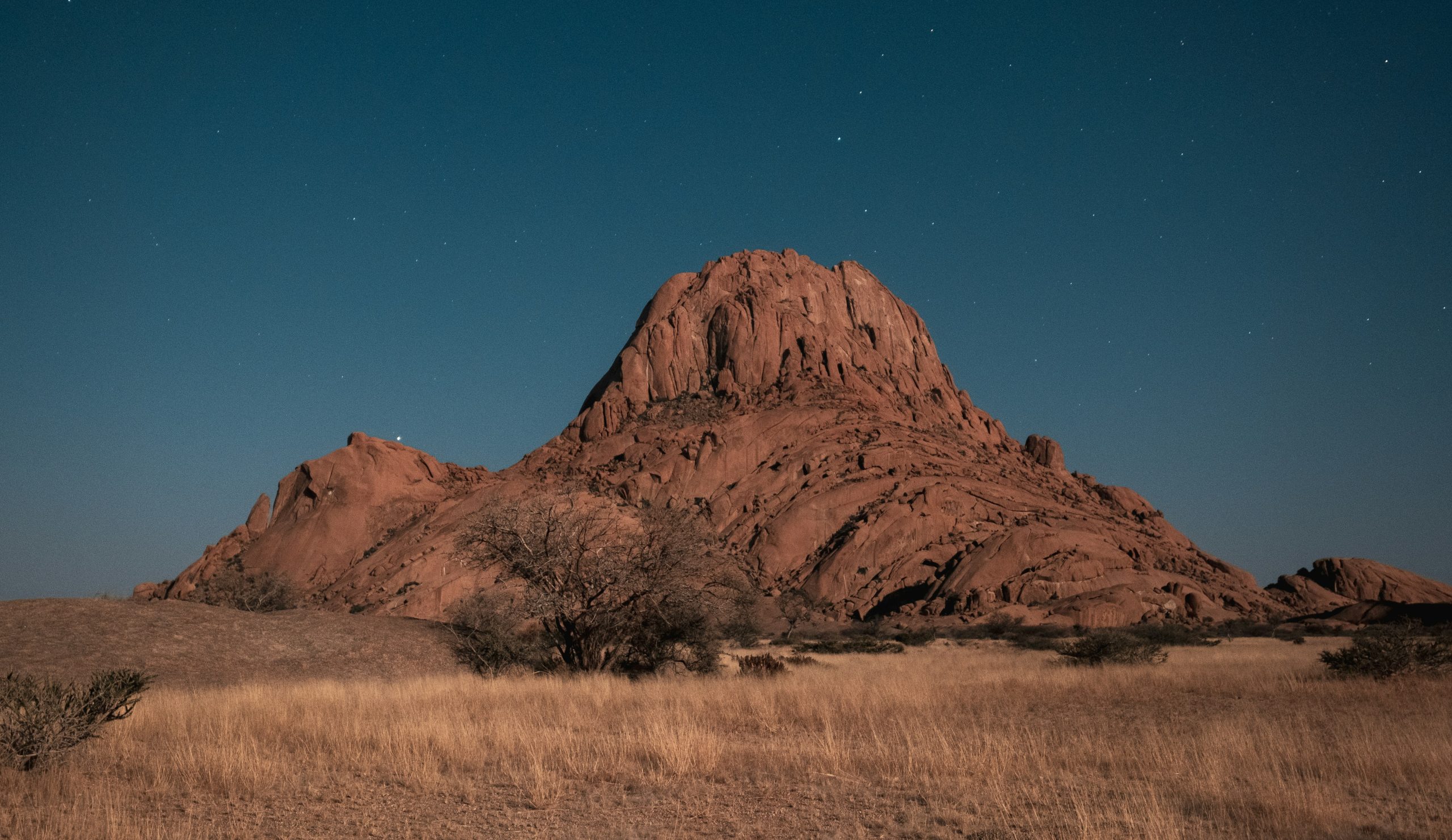
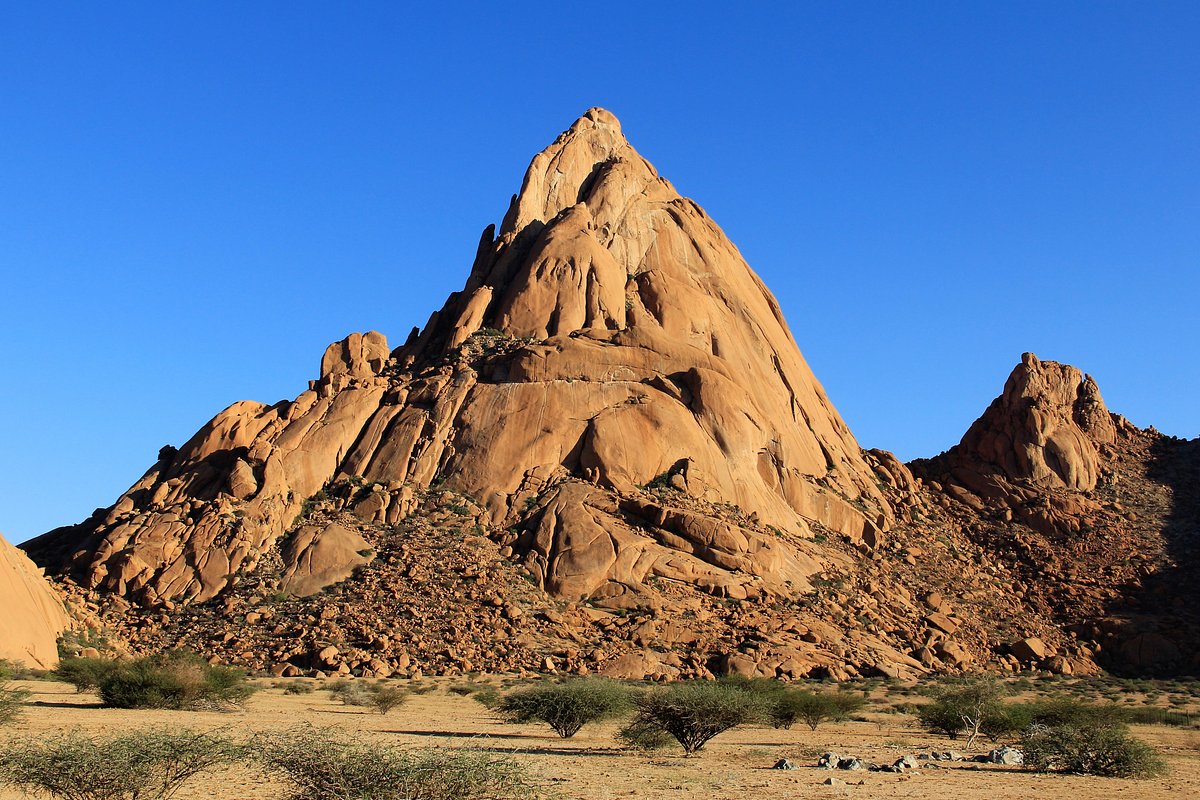
Standing out in sharp contrast against the surrounding flat gravel plains of the Erongo region north-east of Swakopmund are Mount Spitzkoppe and the Pontok Mountain range, two of Namibia’s most outstanding geological treasures. The stark and sheer Spitzkoppe (German for “pointed dome or mountain”) is the highest peak in the range at 1728m above sea level, and can be seen for many kilometres in this very level part of the country. Impressive as Spitzkoppe appears from the road, there is little hint of the treasures that await those who take the time to get a little nearer to this extraordinary geological marvel – come closer and see it for yourself.
A Little Geological Background
The impressive scenery that lies before your eyes has been created over a massive 130 million years – a very humbling thought in this age of space travel and instant gratification. When the ancient continent of Gondwana was in the process of separating into Africa and South America, there was significant volcanic activity in this area, and a massive upsurge of magma made its way to the surface to form these mountains. At that point, Spitzkoppe and the Pontok range would have been below the level of the ground, but after millions of years of erosion, the softer soils have all disappeared to the existing ground level, leaving only the harder granite mountains standing tall.
Rock Formations, Rock Art, and other Highlights
Rock Formations
Dotted all around the granite hulk of Spitzkoppe are many intriguing rock formations produced by erosion over the millennia. Some resemble fingers, toes, or even whales, while others form amazing bridges of stone and “frames” through which you can view the surrounding landscape. Needless to say, the entire area is a wonderful place for photography, and the best time to get the perfect photo is just after dawn when the mountains are bathed in a pale saffron glow in early morning light.
Rock Art
There are 37 different sites in these mountains where you can come across ancient rock art, the living legacy of the Bushmen tribes who used to live here. One cave in particular is rich in examples of this art and is called Bushman Paradise Cave, which was proclaimed a national monument in 1954. The interesting thing about these paintings is that they span a period exceeding four thousand years. At the highest levels of the cave, just below the overhang, are the oldest drawings – dating from before 2000 BC, while the relatively “new” artwork is much lower down – this is due to the floor of the cave being progressively lowered over the years by erosion. Unfortunately, many of these precious works have been damaged by vandalism and thousands of inquisitive sticky fingers!
Mineral Magic
The whole of the Spitzkoppe area is extremely rich in minerals like topaz, aquamarine, tourmaline, and smoky quartz. Gems from this region are considered superior. You may be lucky to find some yourself, or you can purchase them from the locals who sell them alongside the road. (Be advised that you will need to get a permit to remove any gemstones from the country.) Of course, the minerals are also mined on a commercial basis and can be bought all over Namibia.
Big Skies, Solitude and Stargazing
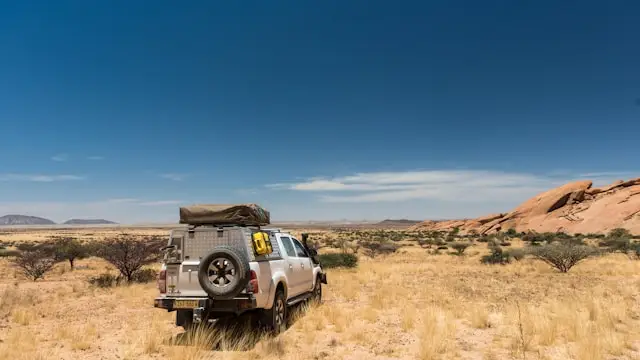
Many visitors to Namibia consider a night spent camping at Spitzkoppe a highlight of their trip. The camp sites are positioned so that everyone can enjoy the solitude of this true African wilderness. The sunsets and sunrises here in the desert are absolutely amazing, and when the sun has set, the stars come out to take its place! Because there is no light pollution of any kind here, you will have the most amazing star-gazing experience and be able to see so much more than you can closer to civilization. Bring your barbecue and a great bottle of wine and enjoy a romantic night under the African sky.
Other Activities
Walking and hiking are the main activities at Spitzkoppe. The hikes range from easy to formidable, and you will need to hire a guide. Along the way, you should see plenty of birdlife, rock rabbits (Dassies) and possibly some small buck as well as some of the amazingly adapted plants that appear to grow straight out of the rock face!
Climbing and bouldering are also very popular, and there are several routes to the summit, which is considered a grade three climb. Freestyle and rope climbers will love it! It can only be attempted in winter (around June to September) as the rock face is far too hot to climb in summer, from November to March.
Birding in the area is good, and there are many raptors to be spotted.
Accommodation at Spitzkoppe
Spending a night here under the stars is a magical experience, but do not expect luxury! The Campsite is run by the local women in a cooperative venture and is very well maintained, but rather rustic. The great thing about the accommodation is that it is so well positioned that you are never aware of other guests intruding upon you, and it feels as though you are alone in the wilderness. There are campsites with basic facilities and three thatched-roof rustic rooms with single beds are tucked between huge granite boulders; here, linen, towels, and barbecue facilities are provided, but there are no en-suite facilities. There are hot showers and simple “long drop” toilets.
If you want to experience the ultimate magic of a sleep-over in the Campsite, get your Tour Company to arrange it for you – they will drive you there and provide all you need for a brilliant night under the stars, including camping and barbecue equipment and your food and drinks; all you need to bring is a hat and some sunscreen!
If you prefer a little more comfort, there is a very pleasant lodge about 30km outside the Spitzkoppe Campsites, on the banks of the Haub River, for an overnight stay.
How to Get There
There are several day-trips to Spitzkoppe from Swakopmund, or you can visit the site as part of a more extensive tour of Namibia. It takes about two and a half hours to drive there from Swakopmund.
Best Time to Go
Definitely the cooler winter months from June to September; summer (November to March/April) temperatures often reach 40C and make walking, hiking, and climbing next to impossible. September/October is the start of the rainy season (although this area receives very little rainfall,) and if you visit after the first rains, the entire region is transformed into a stunning oasis. Contact us for more details
Frequently Asked Questions
What is Spitzkoppe and why is it famous?
Spitzkoppe is one of the most iconic natural landmarks in Namibia. Often called the “Matterhorn of Namibia,” this dramatic granite mountain rises sharply from the flat desert landscape. Its highest peak stands about 1,728 meters above sea level, creating a stunning view that attracts photographers and adventurers. The area is known for its unique rock formations, natural arches, and beautiful desert scenery. Because of its remote location and breathtaking views, Spitzkoppe is a favorite stop for travelers exploring Namibia.
Where is Mount Spitzkoppe located?
Spitzkoppe is located in the Namib Desert between the towns of Swakopmund and Usakos. The mountain stands out clearly from the surrounding desert, making it easy to recognize from a distance. This isolated granite peak is surrounded by smaller rock formations often called the “Pontok Mountains.” The area is quiet and remote, offering visitors a peaceful escape into nature. Its location also makes it a convenient stop for travelers heading along Namibia’s western route.
What activities can visitors enjoy at Spitzkoppe?
Visitors to Spitzkoppe can enjoy several outdoor activities in this beautiful desert environment. Hiking and rock climbing are very popular because the granite peaks provide exciting challenges and incredible views. Travelers also love exploring the natural rock arches and ancient rock paintings created by the San people. Camping under the stars is another unforgettable experience, as the night sky in this area is extremely clear. Many photographers visit Spitzkoppe specifically to capture sunrise, sunset, and the stunning desert landscapes.
When is the best time to visit Spitzkoppe?
The best time to visit Spitzkoppe is during the cooler months from May to September. During this time, daytime temperatures are comfortable for hiking and exploring the rocky terrain. The skies are usually clear, which makes the scenery and night sky even more impressive. The summer months can be very hot in the desert, especially during the middle of the day. Visiting early in the morning or late in the afternoon allows travelers to enjoy the area at its most beautiful.
Why should travelers visit Spitzkoppe during a Namibia trip?
Spitzkoppe offers a unique experience that is very different from traditional safari destinations. The dramatic granite peaks rising from the desert create a landscape that feels almost otherworldly. Visitors can enjoy quiet nature, incredible photography opportunities, and cultural history through ancient rock art. The peaceful atmosphere makes it a perfect place to relax and connect with nature. For many travelers exploring Namibia, Spitzkoppe becomes one of the most memorable highlights of their journey.
Still have questions?
Our local safari experts are happy to help you plan the perfect African safari.