Table of Contents
The Tranquil Bale Mountains National Park
Emerging out of the forest and juniper woodlands into an afro alpine landscape reveals a spectacular mountain range home to the world’s highest incidences of animal endemism, which exists against majestic backdrops. Ethiopian wolves hunt in the alpine highlands while herds of Mountain Nyala look on. The park is home to 78 species of mammals more broadly, many of which are seen on a short hike. Rich birdlife, including several endemic and endangered species, swoop through the skies overhead, launching down in search of prey.
If you are a hiker who values both wilderness and local culture, these mountains are sure to impress. Home to the Oromo people, a number of pastoralist communities continue to reside in and around the park. Pause on hiking trails to sample local cuisine and freshly harvested coffee beans. Be sure to hike to some of the local religious sites, where you can learn about the long history the Oromo people share with the land. Whether you choose to explore the park from the comfort of a lodge or the tranquility of a remote campsite, the Bale Mountains provide a wonderful escape from urban life.
Exploring the Bale Mountains: The Treks, The Wildlife and the Culture
Hiking the Bale Mountains
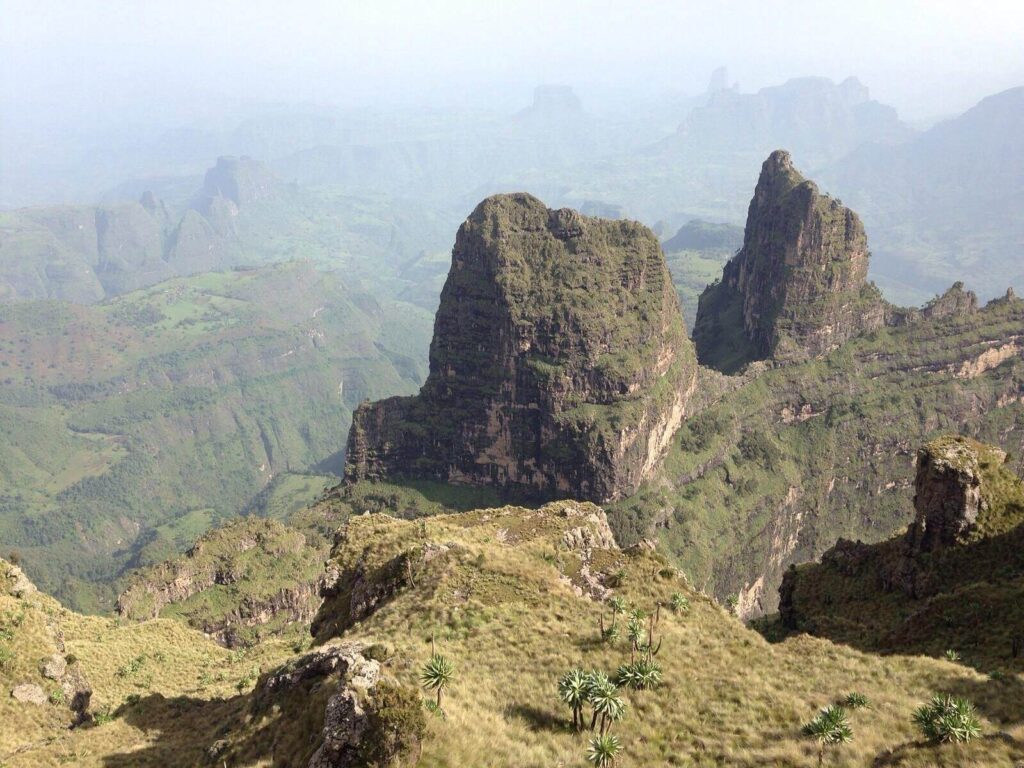
Intimately explore the moorland and afro alpine mountains on foot, following trails that weave past rock pinnacles, waterfalls, alpine lakes and expansive plateaus. Bale Mountains National Park is a tentative contender to become a UNESCO World Heritage Site, given its variety in unique landscapes, eco-systems and endemic species. The 2200km2 park is home to the largest afro alpine habitat on the continent, and the world’s greatest number of endemic species. Single and multi-day trails weave and wander through the stunning biomes and habitats of the Bale Mountains.
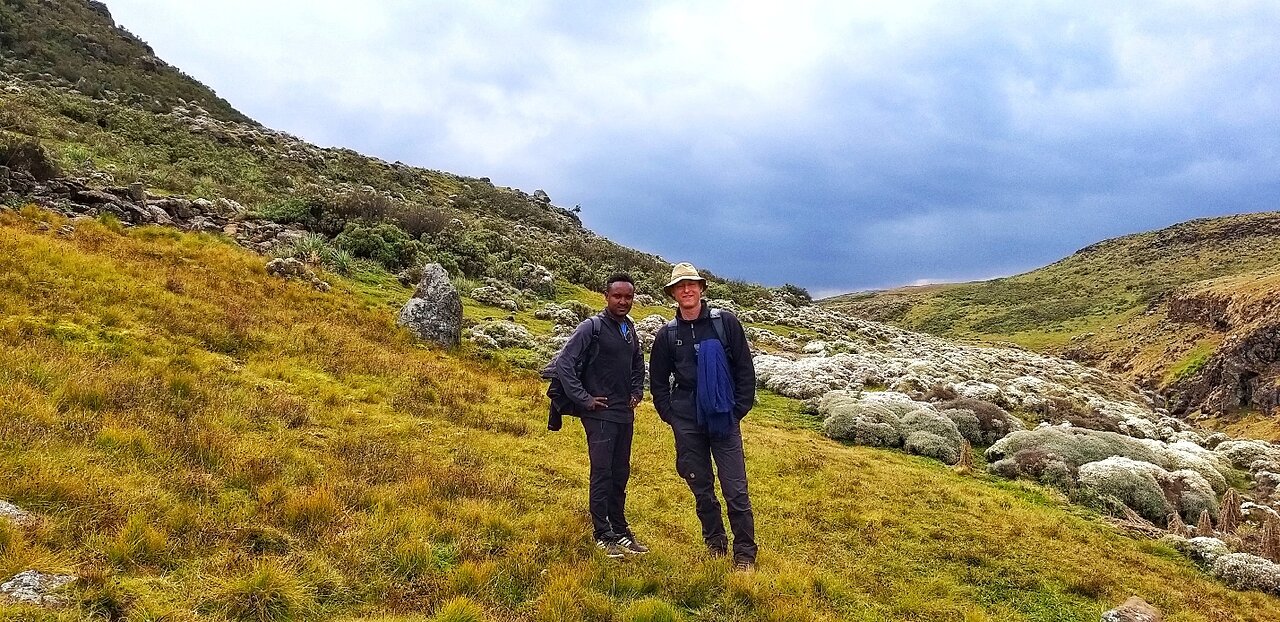
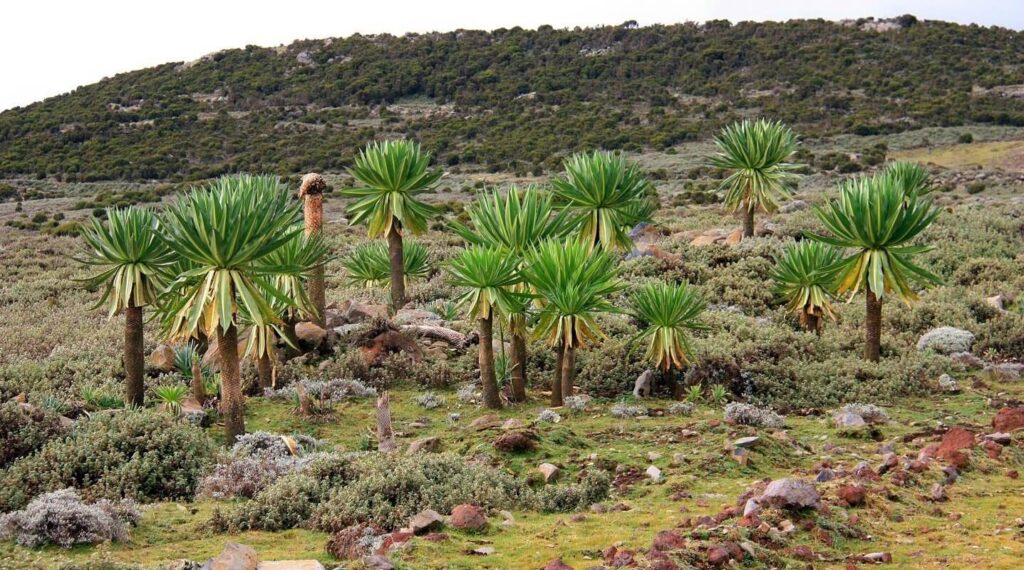
Numerous trails begin in the Harenna cloud forest, the second largest forest in the country. Gentle moss covered trees create a mystical air beneath the canopy before opening up into bamboo forests. As you travel through juniper woodlands and out of the woods, you will eventually emerge onto the afro alpine meadows. Here, the landscape is dotted with giant lobelias, which grow to an impressive six meters. The Sanetti Plateau is a favourite home for the rare Ethiopian Wolf, which you will hopefully catch a glimpse of. Otherwise, molerats and rock hyraxes poke their heads out of this barren rocky landscape, looking up towards a sky filled with raptors, buzzards and the peak of Mount Tulu Dimtu. Climbing higher above the meadows leads hikers into the magical Erica Forest of lichen, heather and moss covered trees. For those of you who enjoy hiking and expansive wilderness, the Bale Mountains are an absolute must-see.
While traveling on foot is the most common means of exploring the park, it is also possible to set out on horseback through the wilderness. A few gravel roads also intersect the park, allowing guests to incorporate driving into the adventure to cover a greater terrain.
Birding
The African Birding Club ranks the Bale Mountains as the single best place for birding on the continent. Moving slowly through two tropical biomes and six different vegetation types, the designated Birding Route in the Bale Mountains gives ornithologists phenomenal opportunities to observe the 320 resident bird species. With over half of the country’s endemic bird population flying through the area, moments in the Highland and Somali-Masai biomes will be truly unforgettable. Along the trails there are several opportunities to explore cultural and historic sites as well.
As you wander through the trails, keep an eye out for the colourful yellow-fronted parrot, the elegant Abyssinian longclaw, the Abyssinian catbird, the black-headed siskin and the spot-breasted plover. As you pass near waterways, keep an eye out for the Blue winged good, also endemic to the region. The Abyssinian ground hornbill is one of the region’s most impressive sightings. This huge turkey-like bird reaches a height of nearly a meter tall, and weighs up to three kilograms. In flight, their wingspan is two meters long. Often seen in groups of two to four, these impressive birds are also an omen of good luck for the local Oromo people.
Wildlife Viewing
A moment with the rare Ethiopian wolf is one of the most coveted and sought after wildlife sightings within this park. This wolf is the continent’s most threatened carnivore, and is the rarest canid worldwide. This elegant creature hunts independently in the early mornings and late afternoons along the high alpine grasslands. With less than 500 wolves worldwide, a glimpse of these endangered animals is a highlight on a hike.
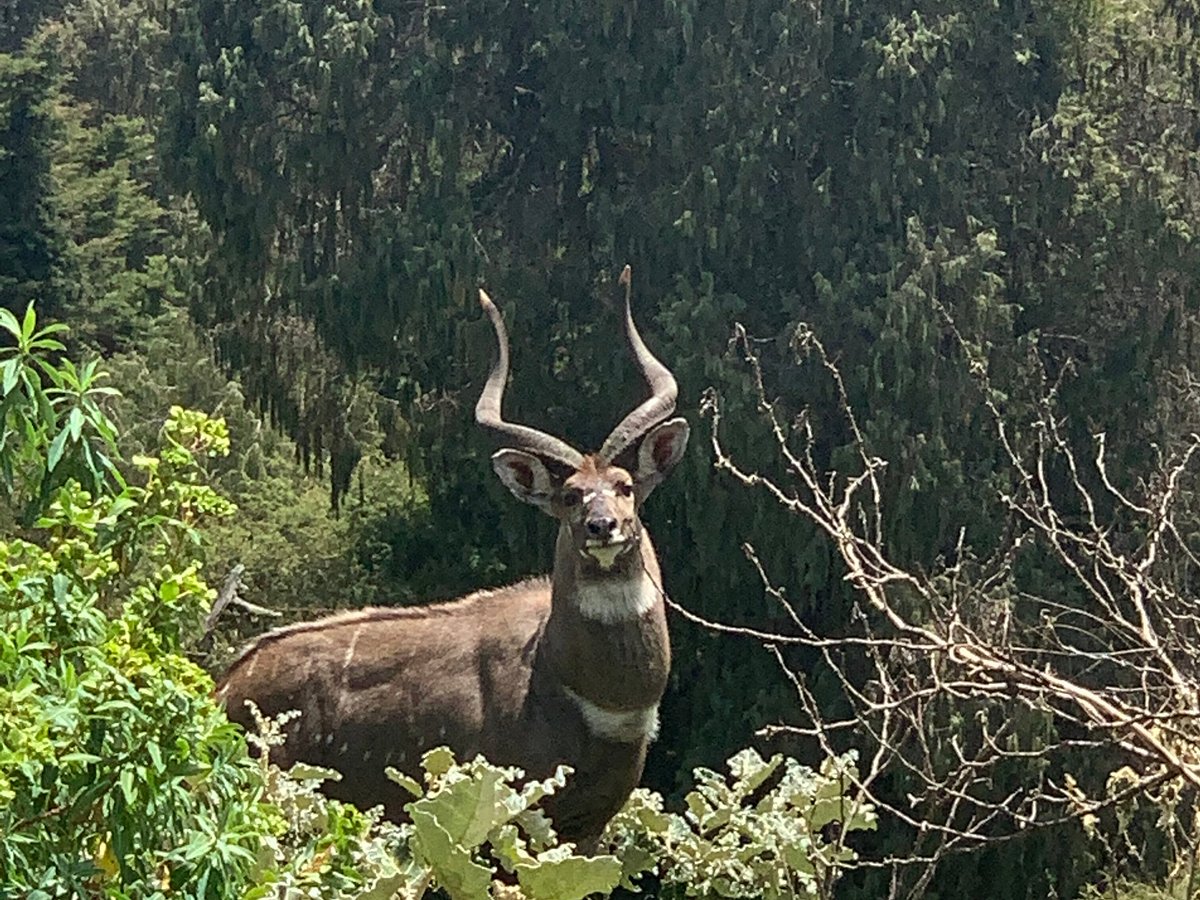
Families of Mountain Nyala are another wonderful sighting in the highlands. These beauties are the largest ungulates on the continent, and are found exclusively in this region of Ethiopia. With less than 4000 left in the country, 40% of which reside in the Bale Mountains, these too are a rare and treasured sighting.
A number of other species thrive in the varied climates of the Bale Mountains. Hikers often encounter a number of Menelik’s bushbuck, warthog, duiker, jackal and the occasional hyena. Keep an eye out for agile rock hyraxes scampering in and out of rocks in the afro alpine meadows, and for the endemic, mysterious, and fairly hilarious looking Bale monkeys.
Birding
Cultural Experiences: Food, Coffee, Honey
The Bale mountain range is the ancestral home of the Oromo people. Today, they are a predominantly agriculturally-based tribe who largely follow Islam. They live throughout the mountains, graciously opening villages up to hikers passing through.
Sampling Ethiopian meals is a staple to any tour of the country, and in the Bale Mountains, you will have the chance to sample a local speciality: Ambesha and Gomen. Unlike the flavours of injeera and stew that dominates the broader country, cuisine in the town of Rira revolves around a flatbread and steamed local kale. In the village of Manyete, life revolves around the coffee trees. Try a freshly roasted cup of coffee here, or indulge in a buna bowetet- a specialty coffee made with layers of milk and coffee.
Between May and July, and again in November, local beekeepers scramble up trees in the Harenna forest to harvest their honey. Ethiopia is the largest producer of honey on the continent, and the tenth largest producer worldwide. Near the village of Rira, it is possible to spend time with these traditional beekeepers, learning the tricks of their trade and sampling the fresh organic product. Watching as men quickly climb up their coveted trees at night with the aid of a single rope to lull their bees to sleep with smoke is a truly impressive sight, which fosters a completely new appreciation for honey.
Other Activities
There are some great fishing spots located throughout the park, with conditions ranging from narrow streams to deep lakes to impressive waterfalls. Having been artificially stocked in the 1970s, these waterways continue to contain large populations of Rainbow and Brown Trout. Laze on the banks with a rod for an afternoon, catching and releasing whatever comes your way.
If visiting between December and May, it is possible to take an adventurous 3-4 hour walk through the Sof-Omar caves. This collection of cathedral openings and narrow passageways forms one of the longest systems of caves on the continent. Keep an eye out for the hundreds of bats that sleep overhead – and for the eels that live in the shallow waters below! The water in the caves is shallow enough to enter during this period. While near the caves, it is also worth going by Dire Sheik Hussein, a shrine with over 11 mosques built in honour of a famed Muslim Sheik.
Accommodation
Visitors in Bale have the choice of staying on a campsite or at one of two lodges located within the park boundaries.
Four primary campsites are located throughout the different climactic zones in stunning locations. While basic, these unobtrusive campsites provide unprecedented intimacy with the surrounding environment. Fire cooked meals and nights under a starry night sky further enhances the entire Bale Mountain experience.
Both lodges are pleasant places in beautiful locations. They are equipped with a restaurant, bar and kitchen. The lodge near the park headquarters has a sauna! Resident naturalists at lodges assist guests in organizing day hikes and other activities throughout the duration of their stay.
How to Get There
The park is most easily accessed by car from Addis Ababa. It is approximately 400km southeast of Addis Ababa, and the drive takes roughly 5 hours. It is 150km east of Shashamene.
Best Time to Visit
It is best to visit the Bale Mountains during the drier months between November and April. The dry days during this period makes for idyllic hiking conditions. It is however possible to hike during the wetter months between May and July. During this period, flowers bloom and the landscape is at its most lush. Hikers will likely experience afternoon showers that are not long lasting.
Note that temperatures in the mountains fluctuate greatly depending on location, but remain consistent throughout the year. Daytime temperatures on the windy plateaus tend to hover around 5-10°C, and evening frost is common. In the valleys, 20°C is the annual average, and the forested areas are typically the warmest, with temperatures around 25°C. The weather does change quickly in this region, and hikers should always be prepared for a variety of temperatures.
Frequently Asked Questions
Where is Bale Mountains National Park located?
Bale Mountains National Park is located in southeastern Ethiopia, about 400 kilometers from the capital city of Addis Ababa. The park covers a vast area of mountains, forests, and high, altitude plateaus within the Bale Mountain range. One of the most famous areas inside the park is the Sanetti Plateau, which is one of the highest road, accessible plateaus in Africa. The park also includes the dense Harenna Forest, which contrasts beautifully with the open alpine landscapes above. Because of its dramatic scenery and rich biodiversity, Bale Mountains National Park is considered one of Ethiopia’s most important natural treasures.
What wildlife can be seen in Bale Mountains National Park?
Bale Mountains National Park is famous for its rare and unique wildlife, many of which cannot be found anywhere else in the world. The park is one of the best places to see the Ethiopian wolf, which is Africa’s rarest carnivore. Another special animal found here is the mountain nyala, a large antelope that lives in the forests and mountain slopes. The park is also home to the giant mole rat, an unusual rodent that plays an important role in the ecosystem. Because of these rare species, Bale Mountains National Park attracts wildlife researchers, photographers, and nature lovers from around the world.
What activities can visitors enjoy in Bale Mountains National Park?
Visitors to Bale Mountains National Park can enjoy a wide range of outdoor activities. Hiking and trekking are among the most popular, allowing travelers to explore the park’s dramatic mountain scenery and wildlife. The Sanetti Plateau is perfect for scenic drives and wildlife viewing, especially for spotting Ethiopian wolves. Birdwatching is also very rewarding because the park is home to many rare and endemic bird species. Some travelers choose to camp or stay in lodges nearby to fully experience the peaceful atmosphere of the mountains.
Why is Bale Mountains National Park important for conservation?
Bale Mountains National Park is extremely important for conservation because it protects one of Africa’s largest alpine ecosystems. The park contains a wide variety of habitats, including high, altitude plateaus, forests, wetlands, and grasslands. These different environments support many rare plants and animals that exist only in Ethiopia. Scientists consider the park a biodiversity hotspot because of its large number of endemic species. Protecting this area helps preserve Ethiopia’s unique wildlife and natural heritage for future generations.
When is the best time to visit Bale Mountains National Park?
The best time to visit Bale Mountains National Park is usually during the dry season from November to April. During these months the weather is generally clearer, which makes hiking and wildlife viewing much easier. The high, altitude landscapes are also more accessible because the roads are in better condition. However, the rainy season brings lush green scenery and beautiful waterfalls, which some travelers enjoy as well. Regardless of the season, the park offers breathtaking landscapes and a truly unique mountain safari experience.
Still have questions?
Our local safari experts are happy to help you plan the perfect African safari.