
If you’re like most travellers, your passport probably has a little yellow vaccination card tucked inside that lists all of the immunizations that you’ve received to help ward off the threat of illness while traveling.
Over the years, travellers take shots for Yellow Fever, Hepatitis, Typhoid, and numerous others, while also taking their fair share of Malaria pills along the way as well. Those are all common illnesses that travelers can face when visiting certain destinations in Africa, Asia, and South America, and while the thought of contracting any of them is scary, they all pale in comparison to the current disease, Ebola.
Unless you’ve been completely oblivious to the news lately, you probably already know that there has been a major epidemic of Ebola in the Democratic Republic of Congo. The countries that have been hardest hit include DR Congo, Uganda, and South Sudan, which is where the current outbreak is believed to have first started. As of this writing, more than 900 cases have been reported, resulting in 220 deaths.
This latest epidemic has left a lot of travelers wondering just how likely they are to pick up the disease the next time they visit a foreign destination. For the most part, the chances of contracting Ebola while traveling abroad are practically nonexistent – provided you are not visiting one of the countries mentioned above.
The disease is not airborne and doesn’t spread through casual, incidental contact, even with someone who is infected. Ebola is only transmitted through exposure to blood, sweat, or other bodily fluids of someone who is infected with the disease, and since there have been very few reports of Ebola occurring outside of the Democratic Republic of the Congo, it isn’t likely to be an issue for the vast majority of travelers.
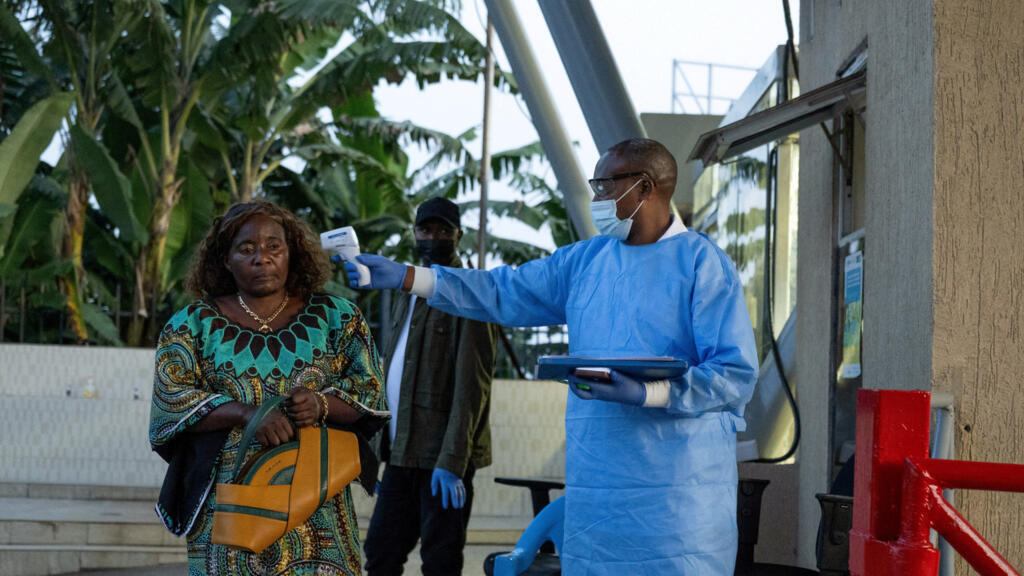
If your travel plans are taking you to Africa in the near future, then some caution should be exercised. While the outbreak has been mostly contained to the Democratic Republic of the Congo, Uganda has also reported several cases of Ebola recently as well. There is a growing fear that infected individuals may have already carried the disease to other countries, and it is only a matter of time before similar outbreaks begin to occur elsewhere as well.
In response to these fears, several nations have already begun to institute travel restrictions to and from the four countries the epidemic has hit hardest. For instance, Rwanda, which sits just to the east of Congo, closed the border between the two countries as the number of infected began to rise.
At the moment, travelers are discouraged from visiting Congo and Uganda altogether, unless it is an absolute necessity. Exposure to the Ebola virus is far more likely to take place there than anywhere else on the planet, with the chances of contraction elsewhere so infinitesimally small that they might as well be zero.
If you are heading to that region of the world, be sure to check with your airline to make sure that flights are still operating in and out of the country you intend to visit. Also, watch the website for the Centers for Disease Control for updates on the outbreak. The CDC is monitoring the situation closely and will issue travel alerts should the need arise.
It is important to understand that the Ebola outbreak is not impacting travel across most of Africa, and those planning to visit countries such as Kenya, Tanzania, and numerous others should not alter their itineraries in any way. While the standard health risks of visiting those places still need to be respected, Ebola is not an issue for visitors to those countries.
As a precaution, it is also a good idea for those heading to Africa (or just about anywhere else, for that matter) to purchase travel insurance ahead of their trip. Not only will it protect against any unexpected cancellations, but it’ll also provide medical attention should the need arise. Insurance costs are generally quite affordable (about 5% of the cost of your trip), and it could potentially save lives.
While the Ebola outbreak is certainly tragic, it is important to keep it in perspective as well. Travel throughout most of Africa is safe, and for the most part, completely unaffected by the disease. Travelers are encouraged to be cautious when visiting the continent, but don’t let fear and misinformation ruin your plans or cause unnecessary anxiety. For the most part, the chances of contracting the disease are next to nothing.





