West of Arusha, the terrain quickly changes to dry and dusty savanna, indicating the beginning of traditional Maasai pastureland and the route to paradise for hundreds of thousands of safari-goers each year — accounting for 80% of Tanzania’s tourism. The Tanzania Northern Circuit Safari, a group of four wildlife parks located between Arusha and Lake Victoria, is the pride of Tanzania’s booming tourist industry.
Serengeti National Park is the park’s most well-known sight, having appeared in countless wildlife documentaries. The eastern half of the nation is dominated by the Serengeti Plains, which are regarded as typical African grassland. With approximately 2.5 million wildebeest, zebra, and other species moving from the Serengeti Plains north into Kenya’s Maasai Mara Game Reserve and back down, they provide one of the most spectacular animal shows in the world. Even if you can’t travel during the migration, the plains are a fantastic place to see lions, often in large pride, and hyena packs.
The Culture/ Village Tour:
When you visit the Maasai, one of East Africa’s most famous tribes, who live near the Ngorongoro Conservation Area, you will encounter the Ancient of Days. The Maasai, along with the Zulu of South Africa, is considered prototypical Africans, and as a result, little we know about their distant history is little more than supposition given by romantically inclined Western historians. Some claim they are a lost Israelite tribe from Ethiopia (Zion), while others claim they migrated from North Africa. Others think they are the last surviving members of Egyptian society, primarily due to their warriors’ braided hairstyle.
Ol Doinyo Lengai Mountain:
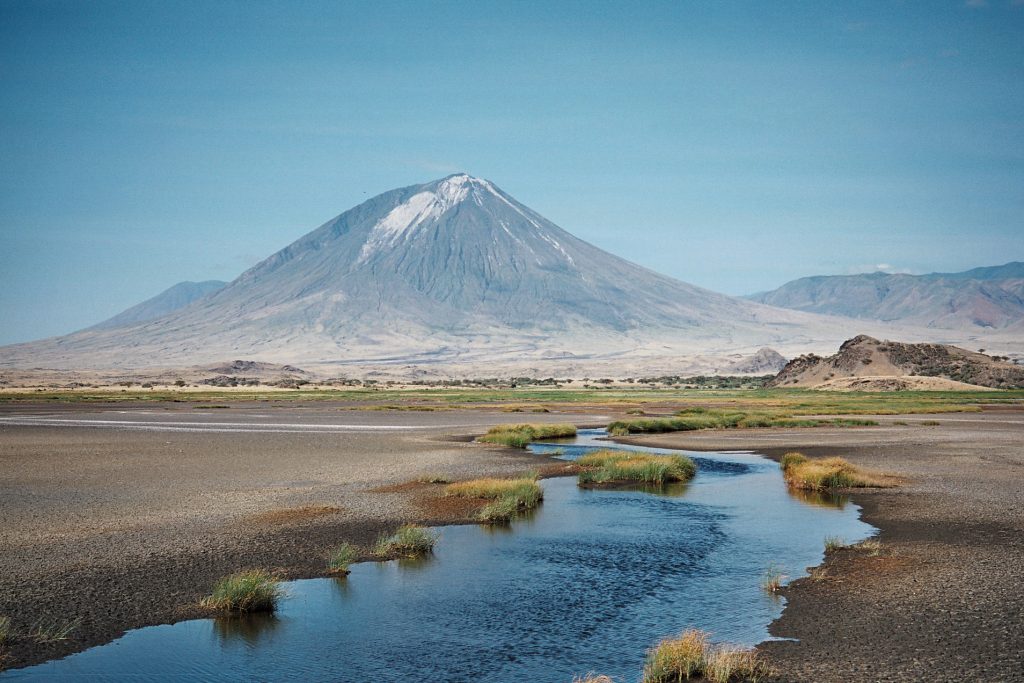
Ol Doinyo Lengai, East Africa’s sole active volcano, rises from the south end of Lake Natron. Its Maasai name means “The Mountain of God.” Despite its active condition, nothing is known about the mountain except that it erupts violently every twenty to forty years, with lesser eruptions every decade or so. The last major eruption occurred in 2007 and lasted until 2008, so you should be safe for the next few years.
The unique feature of Ol Doinyo Lengai for geologists is that it is one of the few volcanoes in the world that emit sodium carbonate and potassium, which accounts for the extremely alkaline and acidic swill of nearby Lake Natron.
Ol Doinyo Lengai’s perfectly conical shape is a photographer’s dream, and the lava flowing on the summit may be dangerous and awe-inspiring in equal measure. Climbers will be in for a treat as well, despite the fact that the volcano’s summit (2889m) pales in comparison to the magnificence of its huge but dormant brethren to the east, Meru and Kilimanjaro.
Lake Natron:
The terrain around Lake Natron, a large, shallow soda lake in Tanzania’s extreme north that orders Kenya, is a desert rodents’ dream: scorching hot, lonely, and weirdly gorgeous, especially with the magnificent mountain of Ol Doinyo Lengai rising at its southern end. The lake’s unusual alkalinity is caused by this volcano, which creates a pinkish-white crust of soda crystals across much of its surface in the dry season, cracking into a polygonal patchwork.
Lake Natron isn’t particularly friendly to life, with the exception of a thriving population of several hundred thousand lesser flamingos, who feed on the lake’s microscopic diatom algae and have made it the world’s most important flamingo breeding ground.
Ngorongoro Crater:
The magma reservoir beneath a gigantic volcano that towered above the western edge of the Great Rift Valley emptied itself in a massive explosion 2.5 million years ago, leaving a vacuum that caused the mountain to implode under its own weight. It left a massive 600-meter-deep crater (caldera) in its aftermath, with a 19-kilometer diameter that makes it the world’s largest unbroken and unflooded caldera.
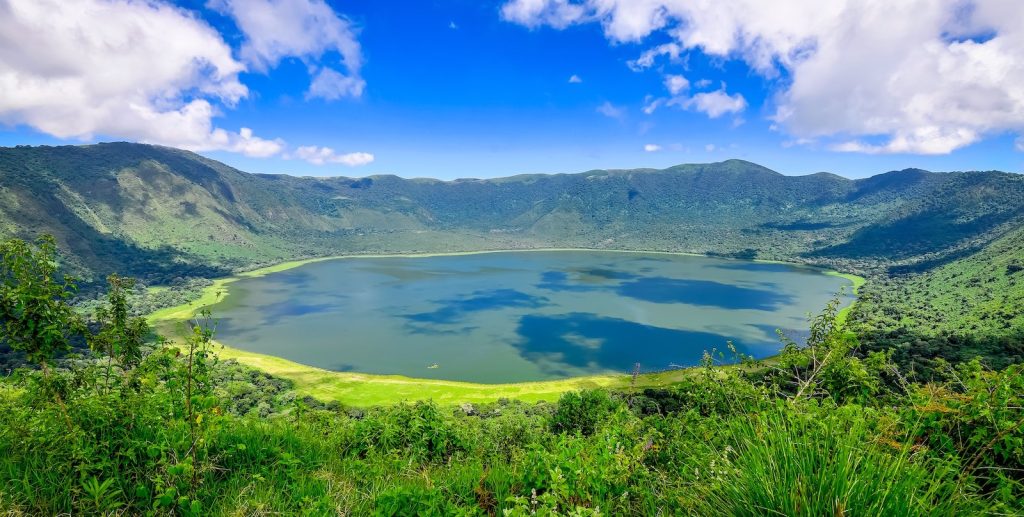
This is the Ngorongoro Crater, one of Tanzania’s natural wonders that span 300 square kilometers and serves as a natural amphitheater for the wildlife display that takes place on its floor. The crater holds 25,000 to 30,000 huge mammals, which seem like a blur of pulsating specks grouped in fluid shapes when observed from the rim, while eagles, buzzards, hawks, and vultures circle above the crater.
Oldupai (Olduvai) Gorge:
Oldupai (or Olduvai) Gorge is a steep-sided, 48-kilometer-long canyon with depths of up to 150 meters. It was carved out of the edge of the Salei Plains. The eroded rock strata on either side of the gorge, furrowed out of the volcanic land by the capricious Oldupai River, have exposed the fossilized remains of animals and over fifty hominids dating back almost two million years — an archeological trove of incalculable importance for understanding the origins of humankind.
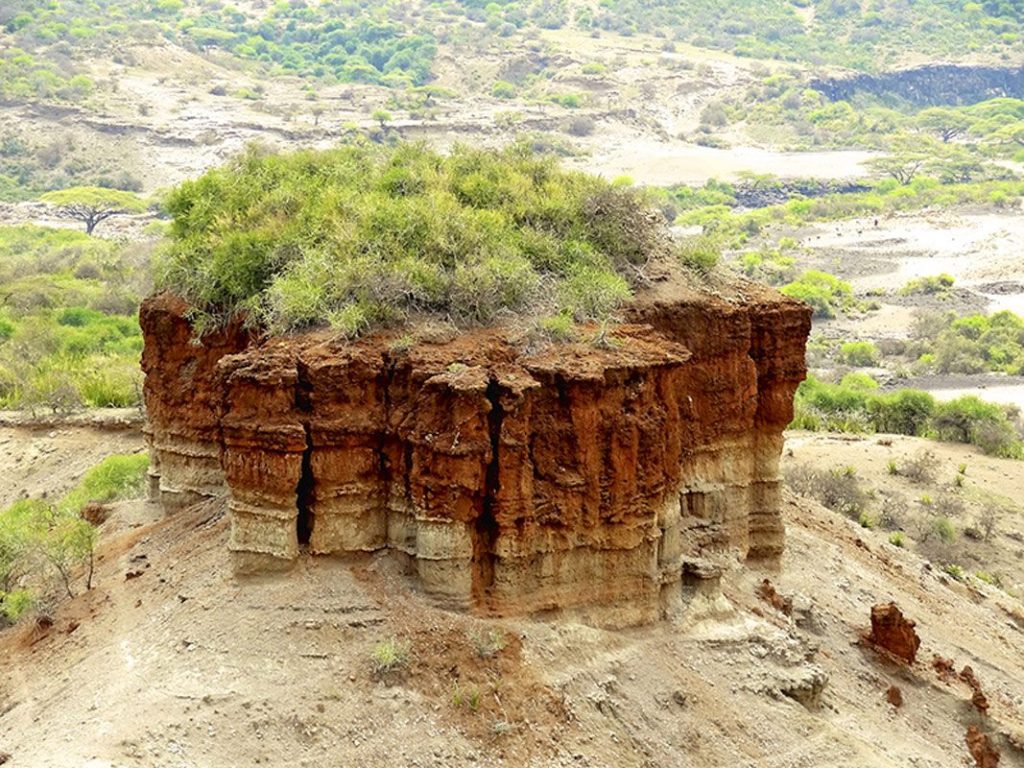
Professor Kattwinkel, a German butterfly collector, discovered the fossils by coincidence in 1911 and returned the fossilized bones of a three-toed horse to Berlin’s Museum für Naturkunde. Two decades later, Kattwinkel’s findings piqued the interest of Louis Leakey, a Kenyan-born British anthropologist who began excavating at Oldupai in 1931. For nearly three decades, Leakey and his wife Mary discovered only stone tools, the oldest of which belonged to the Oldowan tools (1.2 to 1.8 million years ago).
The Serengeti Plains:
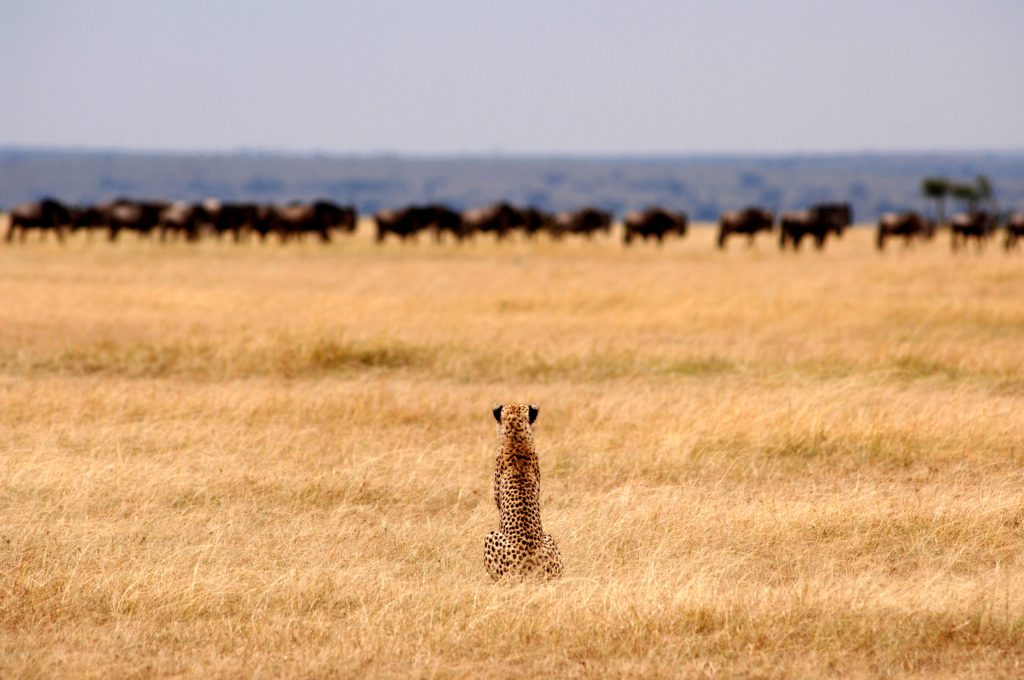
The Serengeti is famous for its yearly 800-kilometer migration of around 2.5 million animals, which is the world’s greatest mammalian migration. The migration, which includes nearly two million wildebeest and close to a million other animals in a continuous, milling, and unsettled mass, provides visitors with one of nature’s most breathtaking displays, one in which the ever-vigilant predators – lions, cheetahs, African hunting dogs, and spotted hyenas – play a vital role.
The migration’s constant movement is motivated by the rains’ seasonal search for new water and pasture. It migrates in a nearly clockwise orientation, concentrating in the national park from April to June, near the conclusion of the lengthy rains, before leaving the withering plains of the Serengeti and traveling northward to Kenya’s Maasai Mara Game Reserve, where it reaches in August.
The Tarangire and Lake Manyara National Parks are the other unmistakable jewels of the Tanzania Northern Circuit Safari. Despite being one of Tanzania’s smallest national parks, Lake Manyara, at the foot of the valley’s western escarpment, attracts a disproportionately dense wildlife population due to its vast variety of habitats. While the bushy landscape does not provide the same immediate gratification as the Serengeti and Ngorongoro’s stunning wide-open areas, it can nonetheless provide unexpected, heart-stopping animal encounters.
The lake, which has a number of attractive hot springs on its coast, is a famous feeding area for enormous flocks of flamingos. Tarangire National Park, located southeast of the lake and only two hours by car from Arusha is a charmingly run-down location where millenarian baobab trees dwarf even the park’s large elephant population; in the dry season, this is perhaps the greatest place in Africa to watch pachyderms. Tarangire Conservation Area, a vast conglomeration of community-managed wildlife habitats adjacent to the park’s northeastern edge, offers guided bush walks, night game drives illuminated by spotlights and some very romantic accommodation. Contact us today if you wish to visit the Tanzania Northern Circuit Safari with best Guides and Drivers.