
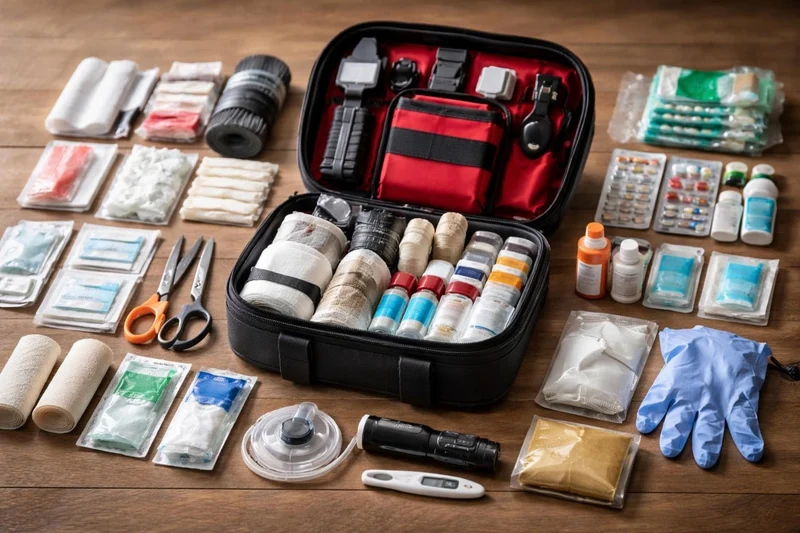
A small, straightforward medical kit is a wise thing to carry. A possible kit list includes:
- Aspirin or Panadol – for pain or fever
- Antihistamine (such as Benadryl) – useful as a decongestant for colds, allergies, to ease the itch from insects bites or stings or to help prevent motion sickness
- Antibiotics – useful if you are travelling well off the beaten track, but they must be prescribed and you should carry the prescription with you.
- Kaolin preparation (Pepto-Bismol), Imodium or Lomotil — for stomach upsets
- Dehydration mixture — for treatment of severe diarrhoea, this is particularly important if travelling with children
- Antiseptic, mercurochrome and antibiotic powder or similar ‘dry’ spray — for cuts and grazes
- Calamine lotion — to ease irritation from bites or stings
- Bandages and Band-aids — for minor injuries
- Scissors, tweezers and a thermometer (note that mercury thermometers are prohibited by airlines)
- Insect repellent, sunscreen, suntan lotion, chapstick and water-purification tablets
Ideally, antibiotics should be administered only under medical supervision and should never be taken indiscriminately. Overuse of antibiotics can weaken your body’s ability to deal with infections naturally and can reduce the drug’s efficacy on a future occasion.
Take only the recommended dose at the prescribed intervals and continue using the antibiotic for the prescribed period, even if the illness seems to be cured earlier. Antibiotics are quite specific to the infections they can treat; stop immediately if there are any serious reactions and don’t use it at all if you are unsure if you have the correct one.