BEFORE DEPARTURE
TRAVEL TERMS
Our travel terms form the basis of the agreement you make with Safari ASAP when you book a trip. Read our travel conditions.
PAYMENT FOR THE TRIP
Upon receipt of the order, we start booking your program. When the program is 100% confirmed, we send out a booking confirmation.
Together with the booking confirmation, an initial deposit invoice will be sent. Safari ASAP is NOT responsible for international flight tickets.
The amount is due for payment 14 days after the invoice date, unless the need to pay for plane tickets requires a shorter deadline.
The remaining amount is invoiced 60 days before departure and is due for payment 14 days after the invoice date. If the trip is booked 60 days or closer to departure, the full amount will be invoiced to the customer with due date within 14 days and sent together with the booking confirmation.
PASSPORT
It is the customer’s responsibility to ensure that the passport is valid, undamaged and meets the criteria for the journey. The passport must have a validity date of at least 6 months on the last day of travel. There must be at least 2 free pages in the passport. Check that there is no damage to the passport.
VACCINATION AND TRAVEL ADVICE
Contact your local vaccination clinic, health nurse or GP for vaccines.
TRAVEL INSURANCE
The customer is responsible for taking out travel insurance before departure. If you are going to stay at altitudes above 4,000 meters above sea level, you must check whether your insurance covers it. Take your insurance certificate with you on your trip.
CURRENCY
Access to ATMs in the country is very good. In the ATMs, you can withdraw the local currency Birr.
DURING THE JOURNEY
BAGGAGE ON AIRPLANE
International flights
Baggage rules vary from company to company. Familiarize yourself with your airline’s baggage rules before departure.
Domestic flights
Baggage weight on domestic flights is usually 23 kg. Familiarize yourself with your airline’s baggage rules before departure.
Make sure you have essential items in your hand luggage; passport, int. vaccination card, plane ticket, insurances, credit cards, money, prescriptions, medicines, camera, binoculars and other items of high value.
VISAS
Safari ASAP recommends buying a visa before departure, e-visa. Buy a visa here: Visa to Ethiopia. Visa can also buy firewood on arrival at the airport. The cost of a visa is US$ 52 (as of 01 January 2017). The customer is responsible for familiarizing himself with the country’s visa rules and visa costs before departure.
TRANSPORT
Your private guide who is also a driver will be standing with a name plate in the arrivals hall. It can often seem confusing and difficult to find your driver as there are many people with different nameplates, take your time and find your driver.
We do not put other travelers in the same car as you, the safari is best when you travel with your family and friends. All cars are equipped with safety belts and drinking water and you have a skilled driver during your stay. Several of our cars have sockets and charging options.
SAFETY
Safari ASAP, partners, our tour leaders and local guides will use their experience and knowledge to avoid accidents. Safari ASAP cannot guarantee that unfortunate situations cannot occur. You are visiting a country with a foreign culture and as a participant on our tours you must show respect and not behave reprehensibly or rudely. A journey to a country in Africa means that the traveler must accept a different reality than in our Western world.
During the trip, you are obliged to comply with the rules and regulations issued by the public authority, the organizer or the organizer’s representatives, including the rules and regulations that may have been issued by the individual hotel, lodge, transporter, etc. Rule changes may occur without Safari ASAP having received opportunity to inform you as a traveller.
FOOD AND DRINK
The days you are on safari always include breakfast, lunch and dinner. The food at the accommodation is of a high standard, but it is still good to take precautions. The food we eat locally is well cooked and or fried, and thus safe to eat. Wash your hands before meals. Drinking water must be boiled or bought bottled.
In most accommodation it is customary to serve buffet meals. The buffets tend to contain both gluten-free and vegetarian options.
If you require a special diet during your stay, please inform us of this when booking. All beverages are paid for by the customer directly on the spot unless otherwise agreed.
TIPS
Tips are part of the culture in Ethiopia. Although tipping is voluntary, it is expected that you tip in various situations to thank for good service and a job well done. We recommend that you tip your guide on the last day when you leave him at the airport. Remember that tips should reflect the work done.
Most hotels/lodges/campers have a “tip box” at the reception. Tips are then distributed to everyone who works on site.
The usual tip is 100 birr per person per day.
Payment locally:
The currency in Ethiopia is called birr (ETB). As of 1 January 2018, 1 Norwegian krone is worth 3.5 birr. Click here for the updated exchange rate. Credit cards are accepted at the big hotels, some restaurants and some banks. ATMs can be found at hotels, shopping centres, banks and some other central locations in cities.
LANGUAGE
The official language in Ethiopia is Amharic. At hotels and tourist attractions, English is used. There are a total of over 85 tribal languages in Ethiopia
LOCAL CUSTOMS AND DRESS
The smooth Ethiopian is perceived as positive, helpful and outgoing. When you meet an Ethiopian, it is customary to shake hands or to put shoulder to shoulder with the person you are greeting. and then follows a small greeting ritual “How are you, your family” etc. It is not usual to introduce yourself until after you have exchanged greetings. Brash behaviour, visible drunkenness, swearing/bad language and disrespectful accusations can be taken very seriously – especially by the older generation. When moving in public places, women should always wear clothes that cover their shoulders, knees and navel.
CLIMATE
The high plains have a temperate climate, with temperatures down to 10 degrees at night and even lower the higher you go above sea level. Low-lying plain areas inland have a hot and dry climate. The warmest time is November to March with variations from approx. 25 to 35 degrees. It is a rainy season in Ethiopia; from July to the end of September. The daytime temperature in Addis Ababa is rarely above 28 degrees C, but due to the altitude, the heat of the sun can be experienced as intense. At night, the temperature can drop to below 10 degrees. In the desert areas, the daytime temperature can reach close to 50 degrees.
ELECTRICITY
Ethiopia has a mains voltage of 220 volts, 50 hz. Plug sockets are as in Norway. Power outages are common.
MOBILE COVERAGE
GSM coverage is relatively good, it is expensive to call. WI-FI coverage is generally good with widely varying quality, great slowness. Free internet connection in most hotels.
GEOGRAPHY AND ENVIRONMENT
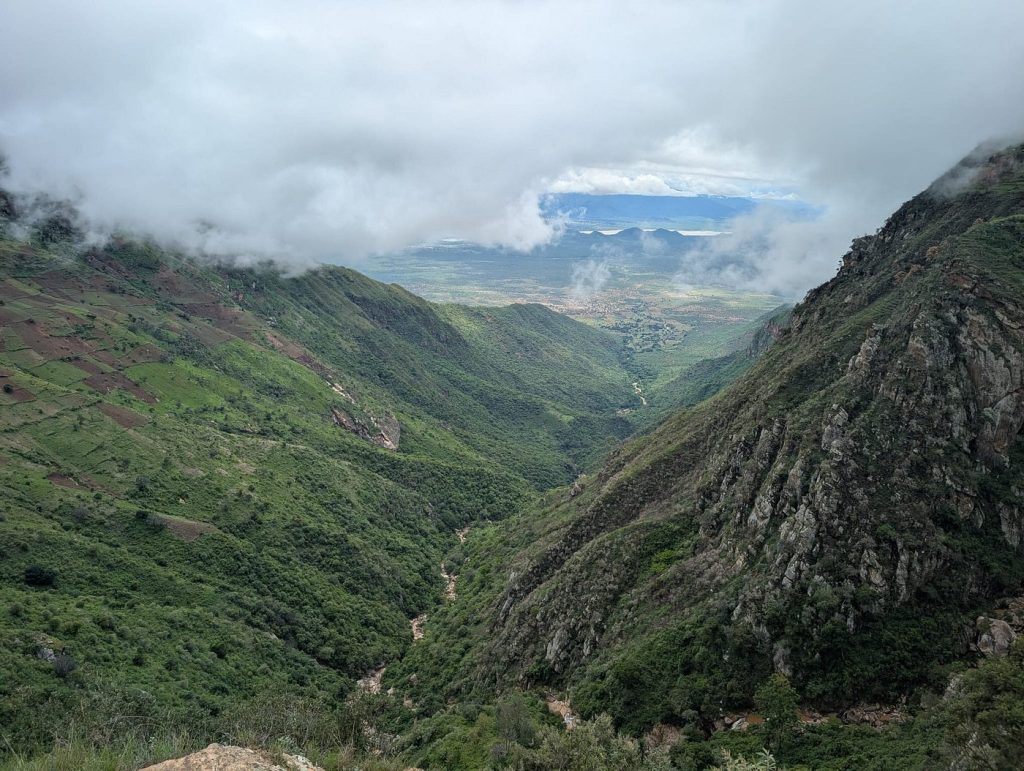
Ethiopia is an agricultural country with high mountain plateaus and deep valleys. The country is located on what is often called the Horn of Africa, and is approximately three times larger than Norway in area. Ethiopia no longer has a coast, after neighboring Eritrea became independent in 1993. There has been a great deal of volcanic activity in the area, and some of the volcanoes are still active. The highlands, which dominate the landscape, are mainly built up of lava mass from previous volcanic eruptions. In the mountains there are cool temperatures, but otherwise it is hot in Ethiopia, and the climate is subtropical. The country has a rich wildlife, with several species found nowhere else.
The amount of rainfall varies greatly from year to year, and some areas of the country are extremely vulnerable to drought. Ethiopia is regularly hit by drought, which in turn leads to famine when crops are destroyed. Overgrazing and felling of forests have made soil erosion a major problem for the country. In addition, agriculture lacks irrigation systems.
HISTORY
Some of the oldest traces of humans are found on the Horn of Africa and are around 200,000 years old. Around 5000 years BC the Kingdom of Aksum emerged as a major power in today’s Ethiopia. This became a Christian kingdom in the fourth century, and since then an independent state has existed in the area.
Ethiopia was never colonized. The neighboring countries, Eritrea and Somalia, were Italian colonies, and the Italians tried several times to subjugate Ethiopia. In 1936 they managed to conquer the country, but after the outbreak of the Second World War, the country was liberated with the help of British forces in 1941. After the war, Eritrea entered, as an independent state, a federation with Ethiopia. For Ethiopia this was not enough, and they annexed Eritrea in 1962. This was the start of a long liberation struggle for the Eritreans.
Corruption and lack of development contributed to the overthrow of the autocratic emperor, Haile Selassie, in 1974. A military junta, supported by the Soviet Union and Cuba, took power. They declared Ethiopia a socialist republic. The political situation in the country eventually became very tense, and famine meant that resistance groups eventually took up arms.
In 1991, Eritrean and Ethiopian liberation movements succeeded in overthrowing the dictatorial communist regime. Eritrea was declared independent in 1993, as part of the agreement between the rebels. However, it was not possible to determine the border between the two countries. This would prove to be fatal. The dispute over the border between Ethiopia and Eritrea claimed 100,000 lives between 1998 and 2000. The situation is still deadlocked, because both countries claim a small mountain area, and Ethiopia is trying to regain access to the sea.
SOCIETY AND POLITICS
Ethiopia is a federal republic consisting of nine states, divided along ethnic and linguistic lines. The federal states have a large degree of internal self-government. The president is the head of state, but has almost only ceremonial duties. The Prime Minister has the political power, and is appointed and approved by the majority in the National Assembly.
Ethiopian politics is dominated by the party alliance the Ethiopian People’s Revolutionary Democratic Front (EPRDF), which emerged from the liberation movement. The party alliance has been in power since 1991, and although the country is formally a liberal democracy, in practice it is a one-party state. The EPRDF controls all formal institutions in the republic, and has not had competition in any elections, except in 2005, when the opposition managed to rally and took a third of the seats in parliament. Since then, the political climate has become harsher. This is largely due to the EPRDF’s persecution of political opponents and control of the media. Ethiopian authorities have received harsh criticism for human rights violations and abuses against protesters, human rights activists and journalists. The military is constantly accused of war crimes against rebel groups.
In foreign policy, Ethiopia has an important strategic position as a major power in a troubled region. This has made it an important ally for the West. Since the country was never colonized, Ethiopia has a special status among African countries. Relations with Eritrea are still tense after the border war.
ECONOMY AND TRADE
Ethiopia has long been one of the world’s poorest and least developed countries, although economic growth in recent years has improved the situation somewhat. The vast majority of Ethiopians live in the countryside, and subsist on agriculture, which accounts for almost half of the country’s gross domestic product (GDP). Coffee is the most important export. As agriculture is so important to Ethiopia’s economy, the country is particularly vulnerable to droughts. The country has been exposed to famine disasters several times. Even in periods of normal weather, many people do not have enough food.
Hydropower is Ethiopia’s most important natural resource. The country is in the process of building out dams and power plants. The development faces protests for environmental reasons, because the dam destroys ecosystems and dries up areas and puts food production at risk. Hydropower development also creates conflicts with neighboring countries, which are concerned that the damming of rivers will damage their own water supply, especially Egypt.
The rapid economic growth of recent years has made it possible to invest in education, poverty alleviation and infrastructure. Nevertheless, Ethiopia is one of the most aid-dependent countries in the world. The largest donors are the EU, the USA and Canada. Ethiopia has a great need to import goods, mainly oil, electronics and machinery. This means that the country always has a trade deficit. China is the most important trading partner.