If Kilwa were in Europe or North America, it would be a major tourist attraction. Kilwa’s World Heritage Site status recognises its ruins as the best-preserved ancient Swahili buildings in Africa. There are, in effect three ‘Kilwas’: Kilwa Kisiwani (Island Kilwa), Kilwa Masoko (Kilwa Market) and Kilwa Kivinje, the 19th century slaving port. History During the 12th to 15th centuries, Kilwa developed as the greatest trading port on the coast of East Africa. Legend tells us that Kilwa was established in 975 AD by Hassan bi Ali, a Shirazi trader. During the next 500 years, it developed as a pivotal point in Indian Ocean trade.
By the time Vasco da Gama arrived at the town in 1498, Kilwa had enjoyed more than three centuries as the pre-eminent trading port on the east coast of Africa. Its buildings were magnificent and among the largest in Africa south of the Sahara. In 1332, the eminent visitor Ibn Battuta from Morocco said ‘Kilwa is among the most beautiful of cities, and elegantly built’. Already, at that time the wealthy lived in stone houses equipped with indoor plumbing. Prior to the arrival of the Portuguese in 1498, Kilwa had controlled a trade along the coast of East Africa and in the Indian Ocean based on gold, silver, slaves, ivory and myrrh. On his return in 1502, Da Gama demanded and received payment of a tribute from the Sultan. Kilwa had effectively become a Portuguese possession, and the Portuguese rapidly began the destruction of Kilwa’s trading traditions.
By 1513, the centuries-old trading links had been destroyed, and the Portuguese left Kilwa, by now a town in terminal decline. Worse was to come later in the century, when the cannibalistic Zimba people arrived from the vicinity of the Zambezi, and in 1587 massacred 40 per cent of the population. After the Portuguese era ended in 1698, Kilwa became a semi-autonomous sultanate and was involved in slave trading thanks to a treaty with the French slaver Jean-Vincent Morice. However, Kilwa’s autonomy ended in 1942, the Sultan was exiled, and the once-famous city-state was finally abandoned. Kilwa saw a brief revival of its fortunes at the end of the 19th century, when a mainland port, Kilwa Kivinje, was developed by the ruling Omanis as the terminus for a slave trade. from the Lake Nyasa area. Today Kilwa Kivinje is a dilapidated town, rather like Bagamoyo, and little more than a fishing village.
VISITING KILWA
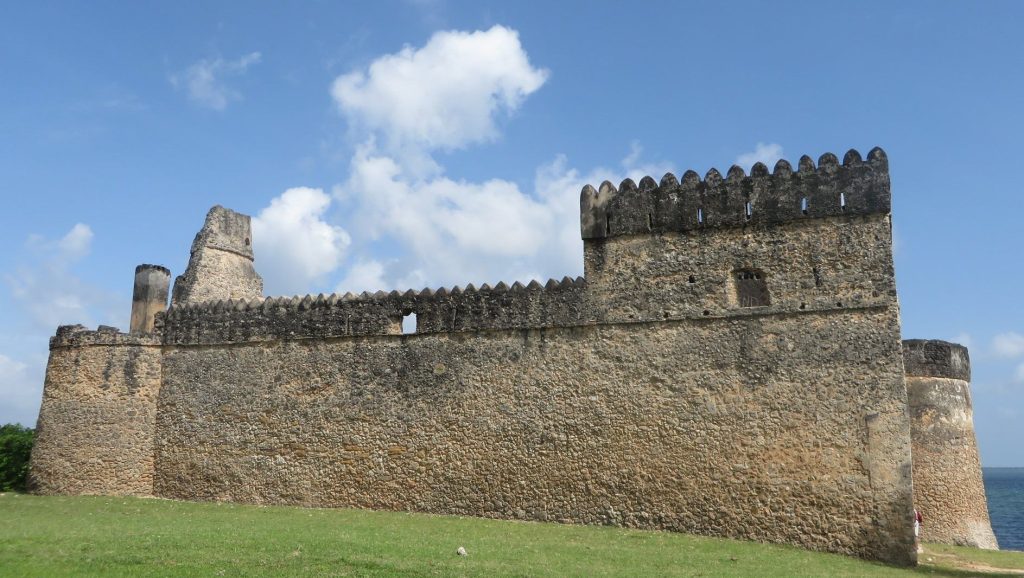
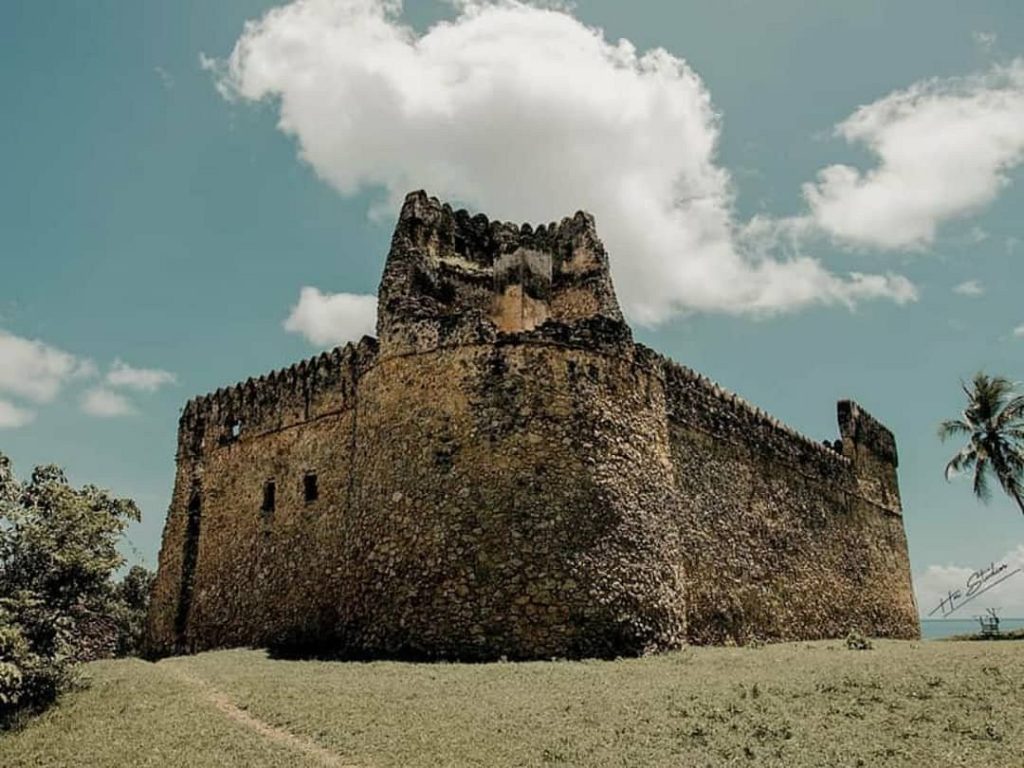
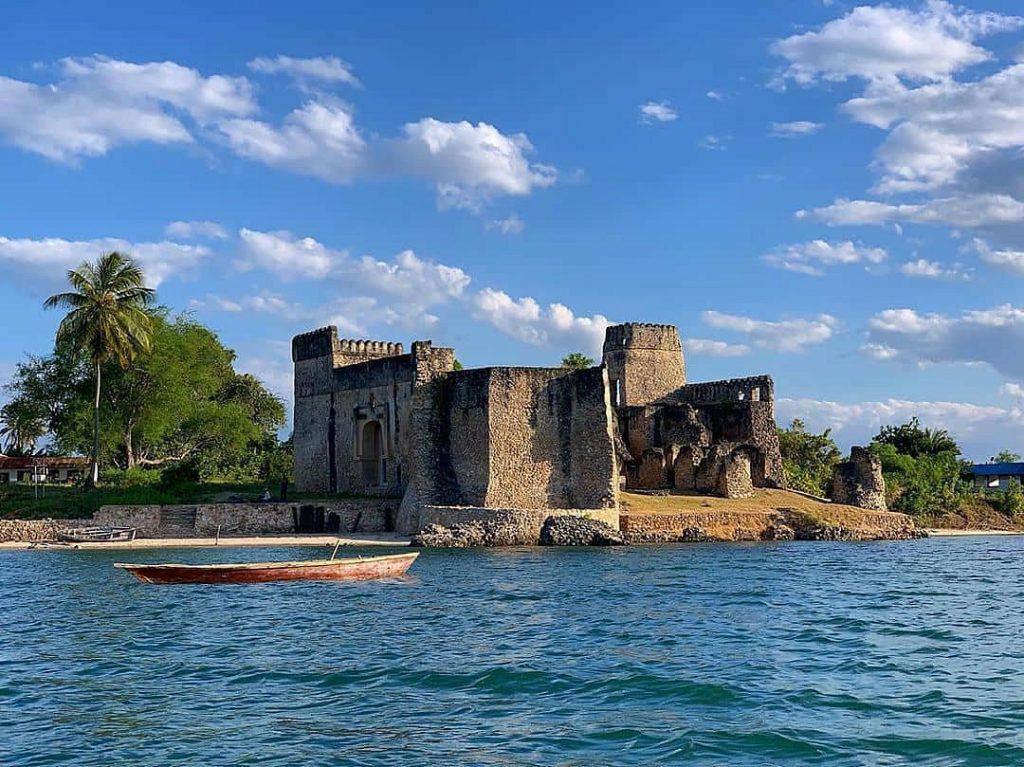
The ruins of Kilwa are on an island (Kilwa Kisiwani), about 220km (137 miles) south of Dar. A special permit is required to visit the ruins, and one can cross over the channel either by leisurely dhow, or by faster motorboat. You arrive at the fort, which is called the Gezira and which was originally built by the Portuguese, reputedly in only three weeks in 1505. The fort was then more or less rebuilt by the Omanis in the 19th century. Apart from some damage caused by the sea, the ruins of the fort are still in good condition. Nearby is the Great Mosque, hailed as one of the greatest Swahili buildings of the medieval period, and certainly one of the finest mosques in East Africa. Its different phases indicate the changes in the fortunes of Kilwa, with the oldest part built in the 12th century, and the prosperity of the 15th-century gold trade resulting in the first major extension. The small domed mosque is the best-preserved building, and it comes from the late 15th century period immediately before the arrival of the Portuguese.
Two kilometres to the east is the Sultan’s Palace, Husuni Kubwa, dating from the 14th century, and at one time the largest building in southern Africa. The palace, built mainly in the early 14th century, was three storeys high but was never totally completed, and was lived in for only a few decades. The wealth from the gold trade allowed the palace to be amazingly ornate, and finds of porcelain, pottery and coins show links with the whole of the rest of the known world of that time. As with Gedi, in Kenya, no one really knows why such a magnificent building was abandoned, especially considering its magnificent position on a cliff-top. Perhaps it was caused by a crash in the 14th-century version of the stock market. One can only surmise.
Kilwa is well worth a visit, and a little planning and ingenuity will be greatly rewarded. One would have to stay in Kilwa Masoko, which has a few decent budget Hotels.