
If you’re looking for an eco safari holiday then the Serengeti National Park in Tanzania is undoubtedly one of the best wildlife reserves in the world.
It has one of the largest migration circuits for its wildlife in the world. Visiting the Serengeti can be done throughout the year and you will come away having seen some of the most incredible wildlife that inhabit this earth.
The Serengeti which comes from the Maasai word Serengit, means “endless plains” which stretch north to Kenya and borders Lake Victoria in the west. Its vast landscape is 5,700 square miles and the rolling plains stretch as far as the eye can see.
During the year you will find the Serengeti is a mass migration for Grant’s gazelles, Thompson gazelles, impala, eland, 2 million wildebeest, and 200,00 zebras all racing across the vast plains in search of vegetation and water to survive. The volcanic soil across the Serengeti has created such nutritious grass that the herds continue to thrive off this land year after year.
The actual timing of the migration of the Serengeti really depends on the rainfall patterns each year. The wildlife’s inbuilt survival skills allow them to know when the time is right to make their move.
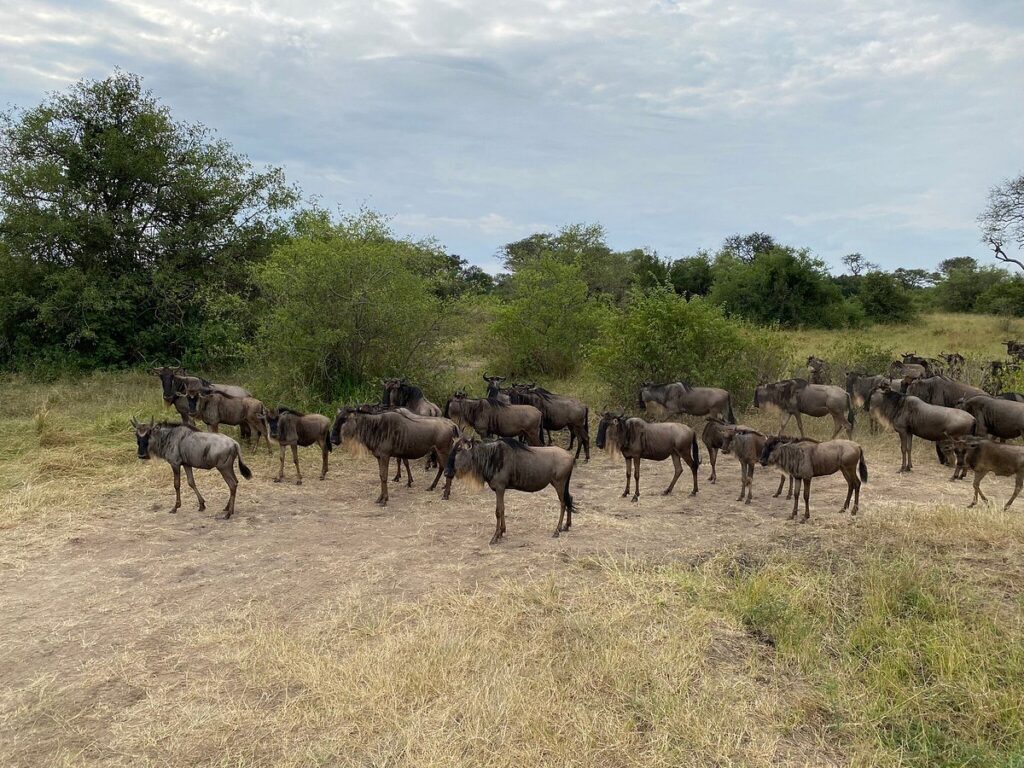
As the migration begins you will see lion prides, cheetah and leopards. Elephant herds are also visible. There really isn’t anywhere else in the world where you will see such vast quantities of wildlife.
This wildlife spectacle moves between Tanzania’s Serengeti National Park and Kenya’s Masai Mara, and is definitely one of the most amazing wildlife guided tours you will ever experience.
The rains begin in the Serengeti in November and that’s when you will see the vast herds of wildebeest migration arrive to feast on the nutritious vegetation along with the many other wildlife.
They generally stay here until March, and you may be lucky enough to see the many wildebeest calves that are born in February if you visit at this time of year.
Around April they start their migration North to find fresh feeding areas. West of Seronera and around Moru Kopjes you’ll see an amazing site consisting of hundreds of thousands of different animals on their journey North.
Within the acacia trees that line the Seronera River lone cheetahs can be seen lazing in the sun. You may be lucky enough to see an African jackal or perhaps a spotted hyena, an aardwolf or even a beautiful serval cat.
The Serengeti is also home to gaudy agama lizards and rock hyraxes which can be found around the isolated granite koppies. It’s also home to over 500 species of birds including secretary birds, ostriches and black eagles.
A game drive is definitely a must in the Serengeti but as with the whole of Tanzania night drives are not permitted. There are a number of areas where you can go walking in the North of the park Kogatende or if you have a head for heights a magical balloon ride over the Serengeti will be a lifetime experience you won’t want to miss.
Not visit to Tanzania is complete without a safari trip in the Serengeti. Contact us today to book your eco safari expedition.
Frequently Asked Questions
What is the Serengeti to Masai Mara migration?
The migration between the Serengeti National Park and the Masai Mara National Reserve is one of the most incredible wildlife events on Earth. It involves millions of wildebeest, zebras, and gazelles moving in search of fresh grass and water. This journey follows seasonal rains and is driven by survival instincts rather than a fixed schedule. The animals travel in massive herds, creating dramatic scenes across the plains. It’s often called the “Great Migration” and is a true natural wonder.
Why do animals migrate from Serengeti to Masai Mara?
The migration is all about food and survival, as animals move to find greener pastures. During certain times of the year, the southern plains of the Serengeti National Park dry out, pushing herds north toward the Masai Mara National Reserve. The rains bring fresh grass, which is essential for grazing animals like wildebeest. This constant movement helps maintain the balance of the ecosystem. It’s a natural cycle that has been happening for thousands of years.
When does the migration reach the Masai Mara?
The herds usually arrive in the Masai Mara National Reserve between July and October, although exact timing can vary each year. One of the most famous moments is when animals cross the Mara River, often facing strong currents and predators. These crossings are dramatic and attract visitors from all over the world. However, since the migration depends on rainfall, it’s never perfectly predictable. Planning with flexibility gives you the best chance to witness it.
What animals are involved in the migration?
The stars of the migration are over a million wildebeest, joined by hundreds of thousands of zebras and gazelles. As they move between the Serengeti National Park and the Masai Mara National Reserve, they attract predators like lions, cheetahs, and crocodiles. This creates intense moments of survival that are both thrilling and emotional to witness. Birds and smaller animals also follow the herds, benefiting from the movement. It’s a complete ecosystem in motion.
Is it worth seeing the migration in person?
Seeing the migration in person is a once, in, a, lifetime experience for many travelers. Watching thousands of animals move together across the plains of the Serengeti National Park or gather at river crossings in the Masai Mara National Reserve is unforgettable. It’s not just about the numbers, but the raw beauty and drama of nature. Every day brings something different, from calm grazing scenes to high, action predator encounters. If you love wildlife and nature, it’s absolutely worth it.
Still have questions?
Our local safari experts are happy to help you plan the perfect African safari.





