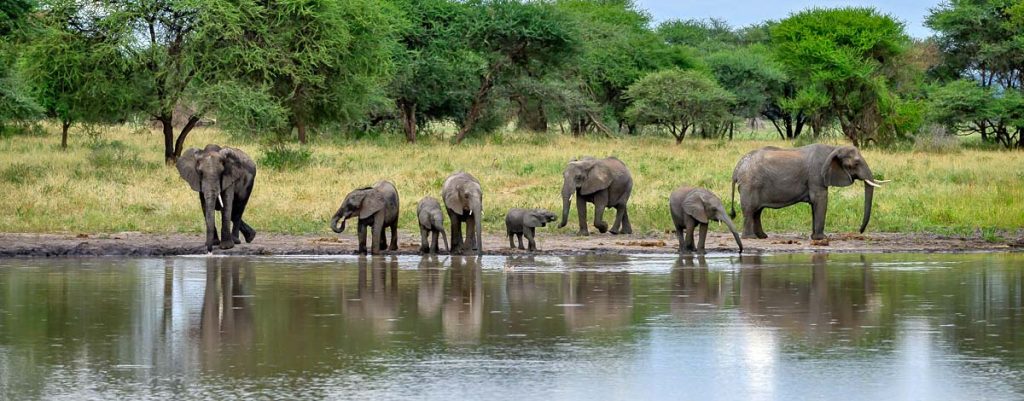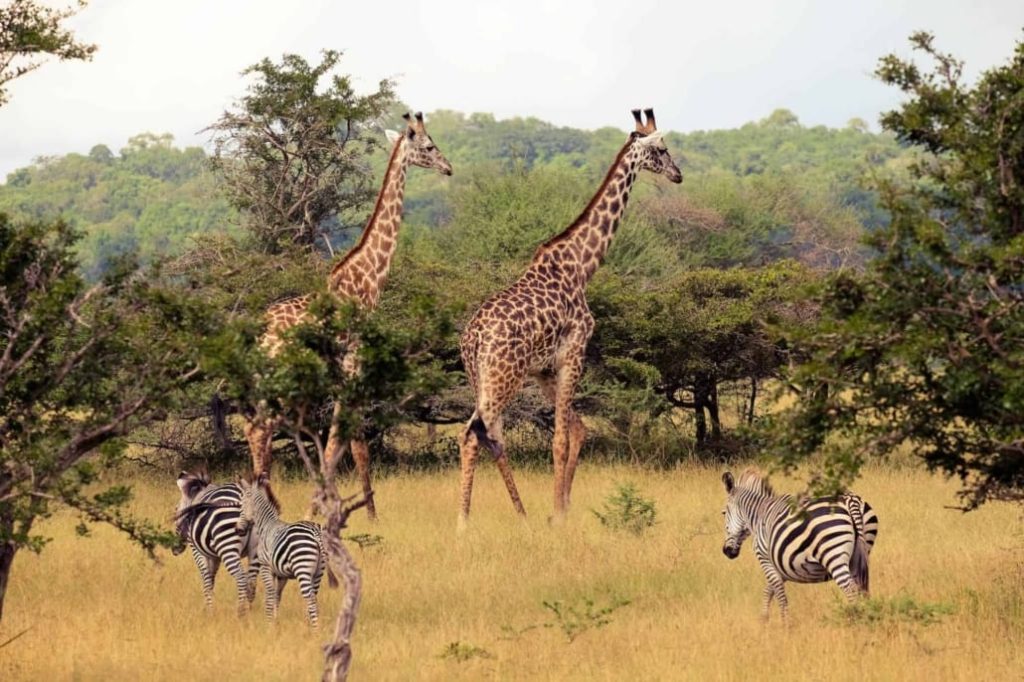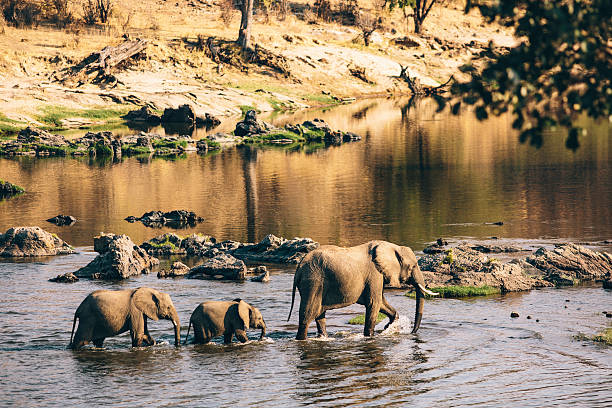
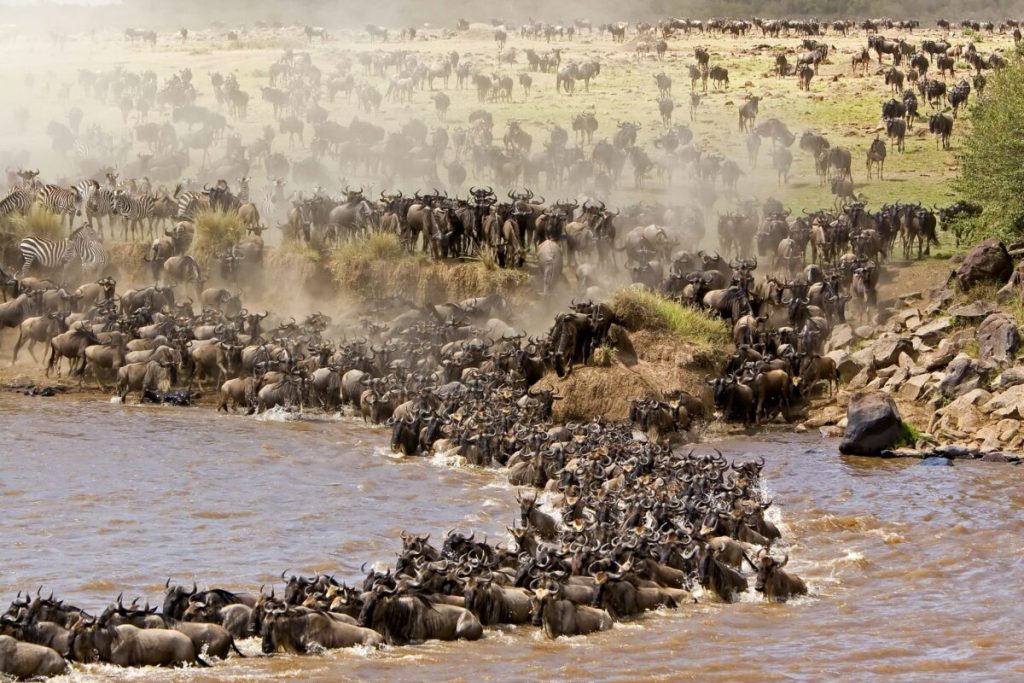
Serengeti National Park : Serengeti is quite simply one of the world’s most famous and important wildlife locations. First brought to the world’s attention by German zoologists Bernard Grzimek and his son Michael, the Serengeti National Park is at the core of a 30,000 sq km ecosystem that sees more than two million animals migrating through it annually.
Unless you fly, you will most likely approach Serengeti via Ngorongoro and probably Olduvai. Even if you miss out Ngorongoro Crater on the way there, you will still most likely travel through the Ngorongoro Highlands and down towards Olduvai Gorge. A series of braided tracks heads off from Olduvai and rejoin the road to Serengeti near the Kiloki Cultural Boma. Once you reach the main road, turn right, and after about 20km you pass into the park through a ‘Welcome to Serengeti’ gate, and you have arrived in a protected wildlife area bigger than many countries.
If you are an independent traveller, do take navigation seriously; if you take a wrong turn, it may be 30-50km before you see anything that tells you so. Serengeti is huge, so you will not find lodges and campsites everywhere. However, many visitors concentrate on the main ‘hotspots’ of Seronera, the Western Corridor and Lobo. Wherever you do your game viewing. pay special attention to the numerous kopjes. Kopjes are the archetypal landscape feature of Serengeti.
They are made of low hills of weathered granite boulders and occur in clusters around the national park. As you approach from the south, the first major ones are the Simba Kopjes about 20km (12.4 miles) north of the Naabi Hill Gate. Where there are continuous plains, any change in the landscape offers shade, a viewpoint (as in the movie Lion King) and for females, a place to have their young. So the Kopjes are among the main game-viewing sites. Linger there and spend some time. Even if you do not see something immediately, there will be animal eyes looking out at you. You may see lions resting up there, and if you are lucky, a leopard.