
Zanzibar Holiday Activities Guide
Zanzibar’s historical sites that are worth visiting include Maruhubi Palace, built by Sultan Barghash in 1882 to house his harem; the Persian Baths near Kidichi, built by Sultan Seyyid Said for his Persian wife at the highest point on the island (153 metres); and the Mangapwani slave caves, which were used for illegal slave trading after the legal trade was abolished by the British in the late 1800s. They are located about 16 km north of Zanzibar Town
Stone Town is one of the most fascinating places on the east coast. Much larger than Lamu or the old town of Mombasa, it is a fascinating labyrinth of narrow, winding streets lined with whitewashed coral-rag houses, many featuring overhanging balconies and magnificently carved, brass-studded doors.
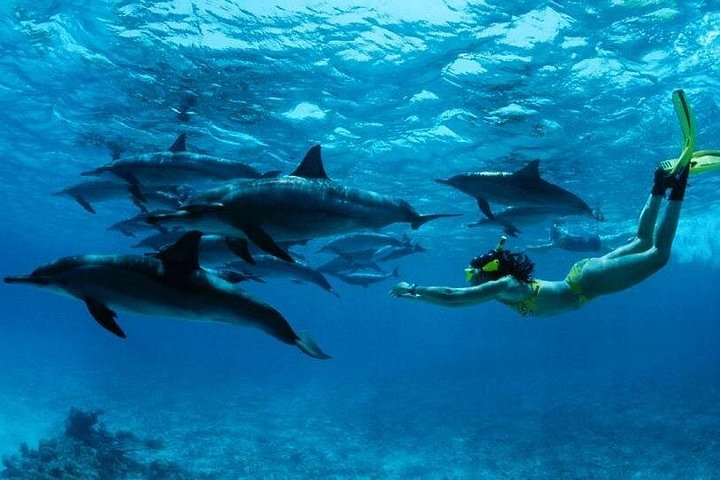
There are endless quaint little shops, bazaars, mosques, courtyards and squares, a fortress, two former sultans’ palaces, two huge cathedrals, former colonial missions, a Persian-style public bathhouse, and a bizarre collection of foreign consulates. Outside town, there are more ruined palaces, other Shirazi remains, the famous Persian Baths, and that other perennial attraction—magnificent, palm-fringed beaches with warm, clear water, ideal for swimming and snorkelling.
The Old Stone Town
The old stone town of Zanzibar is a fascinating place to wander around and get lost in, though you can’t really get lost for too long because, sooner or later, you will end up either on the seafront or on Creek Road.
Nevertheless, every twist and turn of the narrow alleyways will present you with something of interest—be it a school full of children chanting verses from the Koran, a beautiful old mansion with overhanging verandahs, a shady square studded with huge old trees, a collection of quaint little hole-in-the-wall shops selling everything from Panadol to pawpaws, or a gaggle of women in bui bui (veils) sharing a joke and some salacious local gossip.
You will see many crumbled and crumbling buildings as you walk around Stone Town. As a World Heritage Site, it is not really possible to suggest any sort of itinerary or route, since it takes at least a week for a newcomer to come to grips with the town’s layout, even with a map (though a map does help). Still, it is worth putting in the effort to see more of the town’s major features.
House of Wonders (Beit-el-Ajaib)
One of the most prominent buildings in the old Stone Town is the Beit-el-Ajaib, or House of Wonders, formerly the Sultan’s palace and one of the largest structures in Zanzibar. Built in 1883 by Sultan Barghash (1870–88), it is an elegant four-storey structure surrounded by wide verandahs.
In 1896, it was the target of a British naval bombardment, the aim of which was to force Khalid bin Barghash (son of Sultan Barghash) to abdicate in favour of a British nominee. Besides, it was the more modest palace to which Barghash’s successor moved after vacating the Beit-el-Ajaib in 1911.
Old Arab Fort
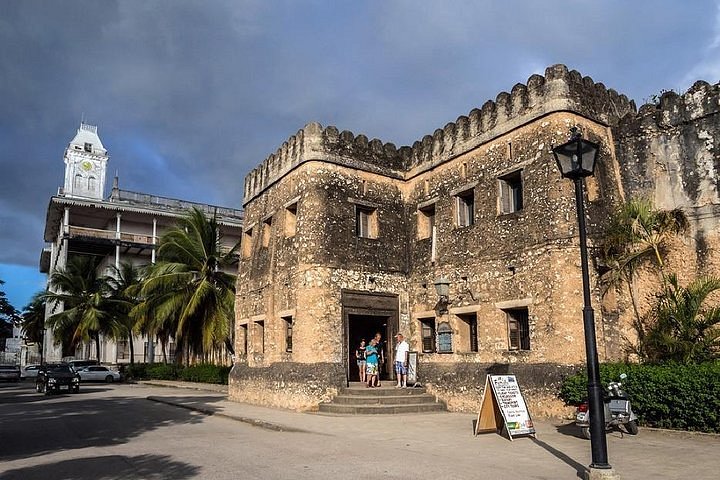
On the other side of Beit-el-Ajaib is the “Arab” Fort, a typical massive, crenellated and bastioned structure. Originally built by the Portuguese in 1699, there is a craft gallery inside that you can visit. The craft gallery has an excellent selection of first-rate batiks, worth a look even if you don’t want to buy any. This fort is one of the great attractions you can visit while in Stone Town.
Old Slave Market and UMCA Cathedral
Another prominent landmark is the UMCA Anglican Cathedral. Completed in 1877 by the United Mission to Central Africa (UMCA), it was the first Anglican cathedral to be built in East Africa. It stands on the site of the Old Slave Market, alongside Creek Road.
St Joseph’s Cathedral
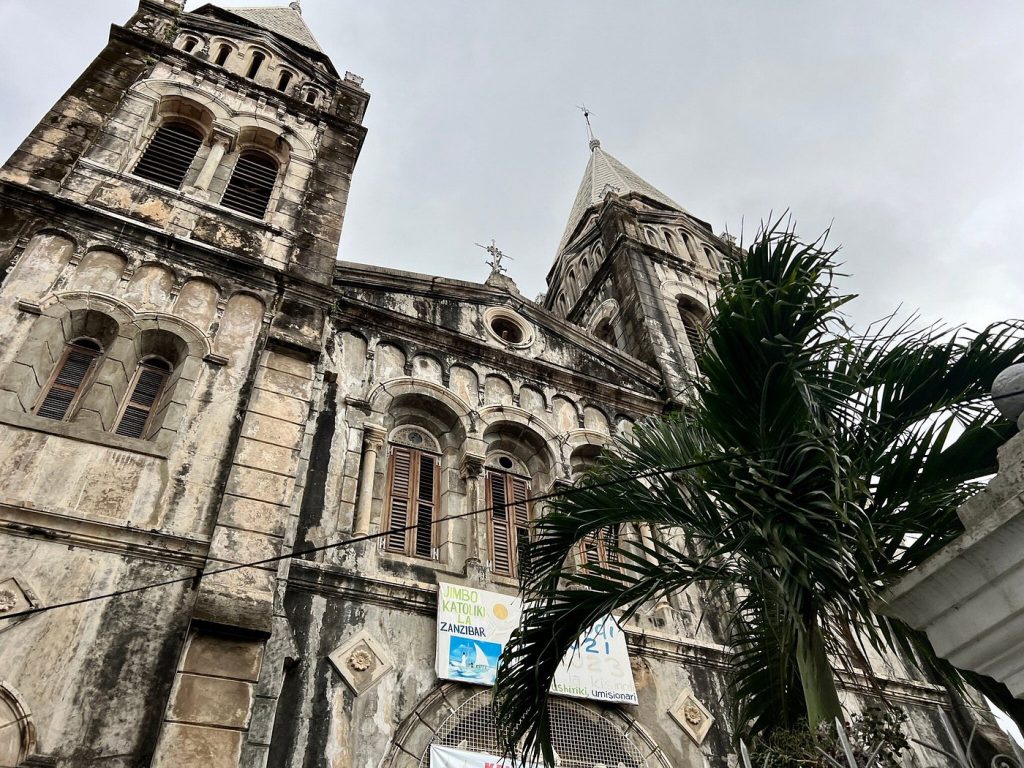
The towers of this Roman Catholic cathedral, set back from the fort, are easily spotted upon arrival at the island by boat. However, it is deceptively hard to find within the narrow confines of the adjacent streets. Designed by the French architect Beranger, it was completed in 1896.
Hamamni Persian Baths
Perhaps worth a visit are these baths, built by Sultan Barghash as public baths. They are a protected monument and are locked. There is no water inside anymore, so they are not that interesting, especially if you have ever been inside a functional Persian/Turkish bath. They were built between 1870 and 1888 but ceased to be used in 1920.
Mosques
As Zanzibar is a strongly Muslim society, there are quite a few mosques—50 in all—scattered around Stone Town. Perhaps the most famous one is the Msikiti wa Balnara (Malindi Minaret Mosque), originally built in 1831, enlarged in 1841, and extended again by Seyyid Ali bin Said in 1890. Others include the Agha Khan Mosque and the Ijumaa Mosque, which was also rehabilitated and extended. It is unlikely that you will be able to enter any of these, as they are all functional mosques.
Livingstone House
Outside Stone Town, to the north-east along Malawi Road, this was the base for the European missionary and explorer Dr David Livingstone’s last expedition before he died. The house was built by the famous Sultan Majid in 1880.
Spice Tours
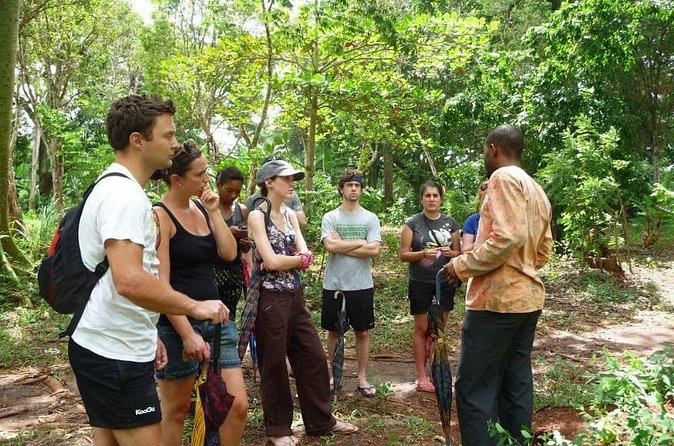
It is popular to take one of the popular spice tours while in Zanzibar, and the major components of the tour are visits to various spice and fruit plantations around the island. Along the way, you will be invited to taste all the spices, herbs and fruits that the island produces. Later, there will be some demonstrations by the locals on how they climb a coconut tree, and the tour will finish with the opportunity to buy a few spices from them.
Mbweni Ruins
Just south of Zanzibar Town, off the airport road, are the Mbeweni Palace ruins, which might interest you if you have a yen for Arab architecture. They are also a great place to experience the sunset while wandering around the ruins.
Mvuleni Ruins
Close to the northern tip of the island, north of Mkokotoni, are the ruins of Mvuleni, which date back to an abortive Portuguese attempt to colonise the island.
Kazimkazi Mosque
Near Kazimkazi in the south are the ruins of the Shirazi Dimbani Mosque. An inscription around the mihrab is dated 1107, making it the oldest inscription found in East Africa. Excavations have indicated the existence of an earlier mosque on the same site. Kazimkazi was the island’s capital until the 17th century, and there are remnants of a wall that used to surround the settlement.
Jozani Forest
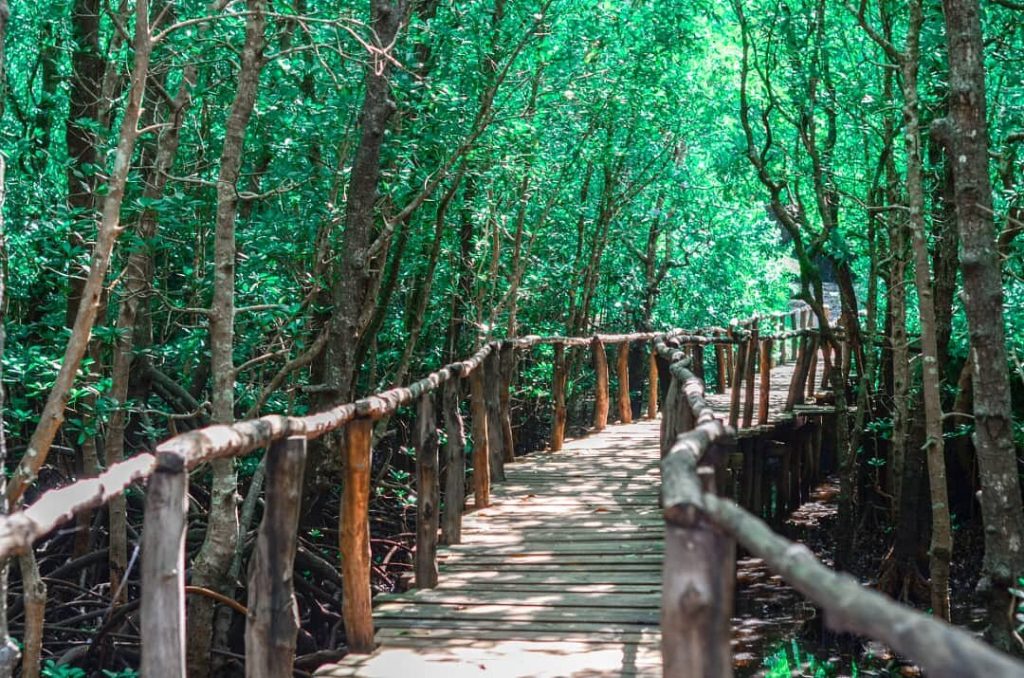
Some 10 km south-east of Zanzibar Town, between Chwaka and Uzi bays, is the Jozani Forest, a nature reserve for the rare red colobus monkey, the Zanzibar leopard, two antelope species, and the Zanzibar duiker and Sunni. To get there, you need to organise your own transport or get a group together and hire a taxi. At Safari ASAP, we also organise tours to Jozani Forest.
Prison Island
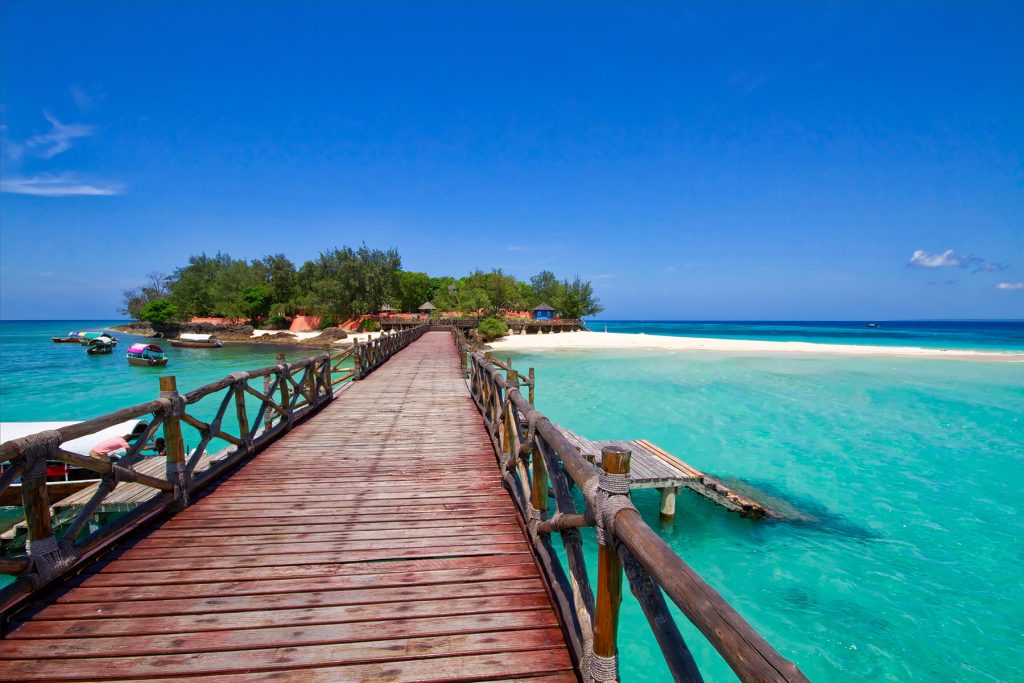
The island that everyone seems to visit is Changuu Private Island, also known as Prison Island. It is the most famous of the offshore islands and, in the 19th century, was owned by an Arab who used it, as the sign says, for housing “recalcitrant slaves.”
It was later bought by a Briton who constructed a prison (which apparently was never used, though the ruins remain). Now, it is used by day-trippers from Zanzibar as a pleasant day out.
The beach is superb, the sea is crystal clear, and there is a whole family of (frequently copulating) giant land tortoises that roam around the main landing spot. It is thought that they were brought to the island from Aldabra in the Seychelles around the turn of the century. Activities here include windsurfing, sailing, scuba diving, and snorkelling, but you have to pay for the equipment. Departure and return times are entirely up to you.
Chumbe Island
This island takes about 40 minutes by boat to reach and is one of the best and most amazing eco-friendly islands in Zanzibar. It is one of the best places for snorkelling and also provides education to people about conserving the environment and beaches. Spend one night here to have the best experience of this island, located just on top of fossil corals.
Zanzibar Beaches
The main beaches on the east coast, from the northern tip of the island, are Nungwi, Matemwe, Pwani Mchangani, Uroa, Chakwa, Bwejuu, Paje, Jambiani and Makunduchi, while the main beaches on the west coast, from the northern tip of the island, are Fumba, Kazimkazi and Mkokotoni. Everyone has their favourite, but there is actually not too much to choose between them.
All are protected by coral reefs offshore and have white coral-sand beaches and, depending on the season, a soup of seaweed to swim in. Don’t knock the seaweed—the local people harvest it for export, and you will see it drying in the sun in all the villages.
Zanzibar Diving Guide
Zanzibar is also one of the best places for diving, but this will depend on when you visit due to the low visibility of the water. The shallow waters of the west coast (seldom more than 20 metres deep) are moved twice a day by the coming and going tides, with few barriers to prevent turbulence.
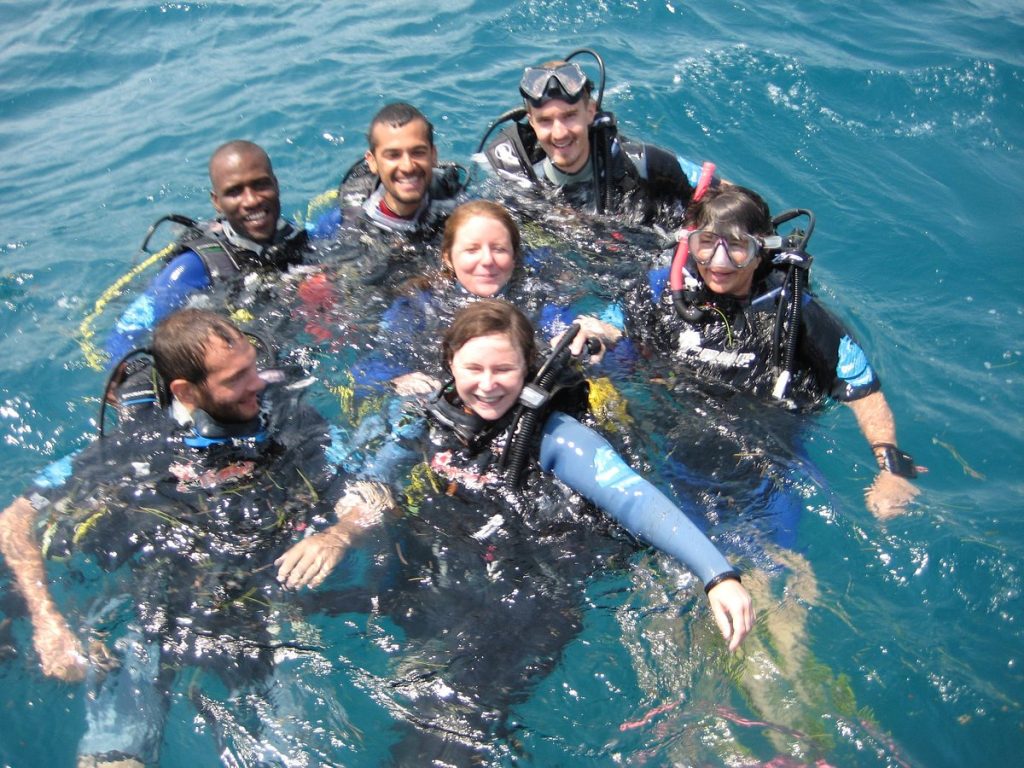
On the other hand, it is not that bad either, but diving is also expensive. Possibly the best place to dive is the Mnemba Island reef, in front of Matemwe Beach. The west side of Kwake Island is also good, and you should get there from Fumba, south of Zanzibar Town.
Until 1991, accommodation in both Zanzibar Town and on the beaches was limited, but since then, with tourism development now one of the island’s priorities, many new hotels and bungalows have opened their doors, ranging from budget to expensive. There are very nice accommodations that will give you an authentic Zanzibarian character and atmosphere. The majority of budget travellers come to Zanzibar by boat from Dar es Salaam, while others take a flight either from Dar es Salaam or Arusha after a safari tour or after a Kilimanjaro climb. Both accommodation and flights to Zanzibar can be arranged by us. Contact us for more details.





