
Table of Contents
Lake Eyasi is a soda lake located at the bottom of the Great Rift Valley. Lake Eyasi has no outlet and any water that flows into this shallow lake evaporates. During certain periods, Lake Eyasi may be close to drying up, only to fill up during the rainy season. Lake Eyasi is visited seasonally by flamingos and in years of high rainfall, hippos from nearby Serengeti National Park occasionally migrate down.
The soda lake, Lake Eyasi (1050 km²) is about 50 km or about 1 hour jeep ride from Karatu. In this region live the tribal people Hadzabe and Datoga respectively. It is possible to visit these tribes together with a local guide.
Hadzabe
The tribal people Hadzabae (commonly referred to as “Bushmen”) are a nomadic people who have lived in the region for approximately 10,000 years. They live on small game hunting and still hunt today with bows and arrows – which are handmade. The diet also includes fruit and honey, as well as some root vegetables that the women grow.
Today, the Hadzabe population is about 800, and they face significant challenges due to inbreeding, as the tribe does not intermingle with other groups. This has led to issues such as children being born with deformities and difficulties with fertility among women. Favorite prey and favorite food is baboon meat. People also dress in baboon skins/skins with the hair left as open waistcoats.
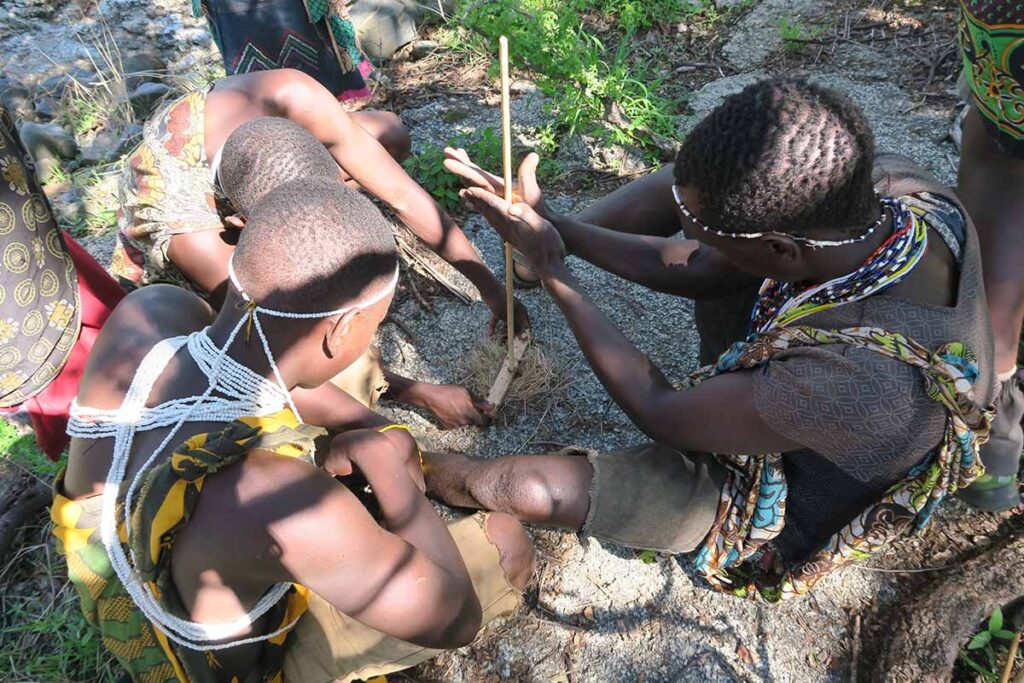
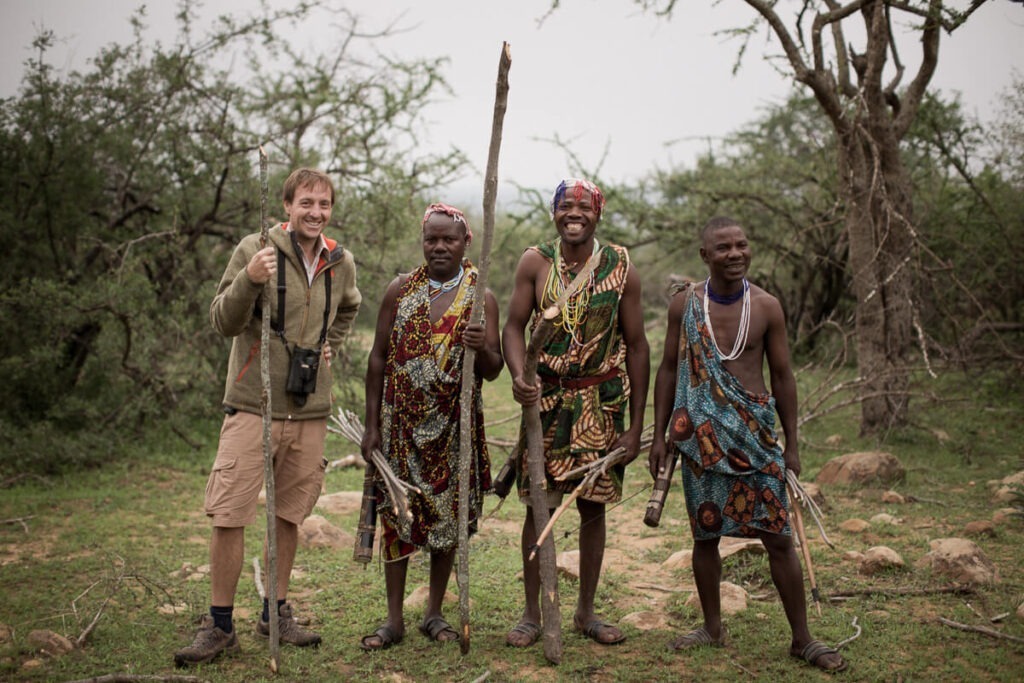
After introductory information and photography of the women’s jewelry making, it’s off into the “bush” with some younger “bushmen”. They quickly move away out of sight, but the communication in the form of varying whistles with different meanings makes itself heard in the forest. And after a while they often come running back after having managed to shoot some game or bird. Then, a fire is made in the ancient way through friction technology, where a freshly cut stick is spun until it becomes red-hot and the dry leaves catch fire. The meat is grilled and eaten with delight on the spot. The visit to Hadzabe ends with you getting to experience for yourself how it feels to handle a bow and arrow.
Datoga
The Datoga tribal people originally come from southern Ethiopia, but have lived in certain areas of Tanzania for about 350 years and, like the Hadzabe, they have managed to retain most of their ancient lifestyle. The Datoga are permanent residents and have domestic animals (mainly goats and cows) as well as small farms and make a living through bartering. However, there are major conflicts with the Maasai because they often steal their livestock. However, Datoga cooperates with the Hadzabe, as the former receive meat in exchange for metal arrowheads. The Datoga have, over the centuries, acquired enormous skill in forging metals (a skill that the Hadzabe lack).
Visit Lake Eyasi
It is possible to visit Lake Eyasi as a pleasant day trip from nearby Karatu and soak up cultural encounters with the indigenous people. Alternatively, you can spend the night at the fantastically beautifully located lodge; Kisima Ngeda Tented Camp (which only has 7 lodges). The forest around the lodge consists of acacia and palm trees. Here there is also the opportunity to take a short walk and enjoy the view down to the lake and the glimpse of the Ngorongoro Reserve on the other side of the lake where the mountain ridge along the Great Rift Valley rises majestically over 600 meters up.
Frequently Asked Questions
Who are the Hadzabe and Datoga tribes at Lake Eyasi?
The Hadzabe people and Datoga people are two traditional communities living around Lake Eyasi in northern Tanzania. The Hadzabe are among the last true hunter, gatherer tribes in Africa and live much as their ancestors did thousands of years ago. The Datoga, on the other hand, are pastoralists known for cattle keeping and skilled metalwork. Despite living close to each other, their lifestyles and traditions are quite different. Visiting these communities offers travelers a rare opportunity to learn about ancient ways of life.
What can visitors experience when meeting the Hadzabe tribe?
When visiting the Hadzabe people, travelers often have the chance to join a short morning hunt or observe their traditional hunting techniques. The Hadzabe use bows and poison, tipped arrows to hunt small animals and birds. Visitors can also learn how they gather wild fruits, roots, and honey from the forest. The experience is simple, authentic, and very educational. It gives insight into one of the oldest surviving cultures in Africa.
What makes the Datoga tribe unique?
The Datoga people are well known for their cattle herding culture and impressive blacksmith skills. Many Datoga men create tools, knives, and jewelry using traditional metalworking techniques. Women often wear decorative beads and facial markings that reflect their cultural identity. Their lifestyle is centered around livestock, family, and strong community traditions. Visiting a Datoga village helps travelers understand their daily life and cultural practices.
Where is Lake Eyasi and why is it important for cultural tourism?
Lake Eyasi is a seasonal salt lake located southwest of the famous Ngorongoro Crater. The area is known for its quiet landscapes and strong cultural heritage. It is one of the best places in Tanzania to experience authentic tribal life. Unlike busy wildlife parks, Lake Eyasi offers a more personal and cultural travel experience. Many safari itineraries include a visit here to combine wildlife adventures with cultural learning.
When is the best time to visit the Hadzabe and Datoga communities?
The Hadzabe and Datoga communities can be visited throughout the year around Lake Eyasi. Early morning visits are usually the best time to observe daily activities, especially when the Hadzabe go hunting. The dry season from June to October often provides easier travel conditions. However, the green season from November to May brings beautiful scenery and a quieter atmosphere. No matter the season, cultural visits here are always fascinating and memorable.
Still have questions?
Our local safari experts are happy to help you plan the perfect African safari.





