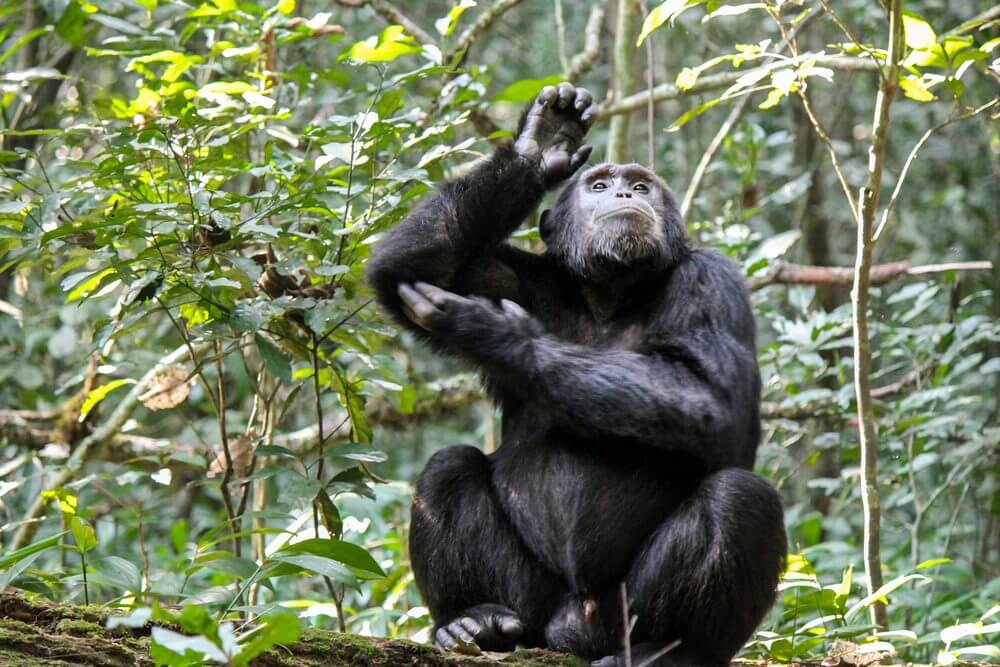
Gombe Stream National Park is located amid mountains and deep valleys with thirteen characteristic rivers, each flowing through a strip of very old forests to Lake Tanganyika. Gombe Stream National Park was the location where Dr. Jane Goodall conducted her internationally acclaimed research on chimpanzees.
Gombe Stream National Park is located about 16 kilometers north of Kigoma and stretches along Lake Tanganyika. With 52km², Gombe Stream National Park is the smallest national park in Tanzania. There are currently approximately 100 chimpanzees living in Gombe Stream National Park. Most visitors to Gombe Stream National Park come for the chimpanzees and to see how the chimpanzees live in a natural environment. A unique experience.
In addition to the chimpanzees, other monkeys also live in Gombe Stream National Park, such as baboons, vervet monkeys, blue monkeys and the red-tailed and red colobus monkeys. Besides the very shy leopard, no other predators live here. This makes Gombe Stream National Park ideal for adventurous walks and cooling off in one of the thirteen rivers. Furthermore, more than 200 bird species live in the park, including the osprey and Palm Nut vulture. Many species you will only hear because of the dense forest. Gombe Stream National Park is best visited in the dry periods from May to October and the months of January and February. Gombe Stream National Park is very remote and is best reached by flight from Dar es Salaam to Kigoma. After an overnight stay in Kigoma, you will travel by boat to Gombe. Visit Gombe Stream National Park with Safari ASAP.
Frequently Asked Questions
Where is Gombe Stream National Park and what makes it unique?
Gombe Stream National Park is located on the western shore of Lake Tanganyika in western Tanzania. It is one of the smallest national parks in the country, but what it lacks in size, it makes up for in uniqueness. The park is famous for its chimpanzee population and the groundbreaking research conducted there. Unlike the typical savannah safari, Gombe offers a forested, mountainous environment. Its remote location and peaceful atmosphere make it feel very intimate and special.
What animals can you see in Gombe Stream National Park?
The main highlight of Gombe is its wild chimpanzees, which visitors can track through the forest. These chimpanzees are well, studied and somewhat habituated, making sightings more likely and meaningful. Besides chimps, you may also see olive baboons, red colobus monkeys, and other primates. The park is also home to a variety of birds and small forest animals. While it doesn’t have the “Big Five,” the experience here is all about close, up wildlife encounters in a different setting.
What activities can visitors do in Gombe?
Chimpanzee trekking is the top activity in Gombe and the main reason people visit the park. You hike through the forest with guides, following trails and listening for the calls of chimps. It can be physically demanding, but the reward of seeing chimpanzees in the wild is unforgettable. Visitors can also enjoy forest walks, birdwatching, and relaxing by the shores of Lake Tanganyika. Swimming in the lake after a trek is a refreshing way to end the day.
When is the best time to visit Gombe Stream National Park?
The best time to visit Gombe is during the dry season, from June to October. During this period, the trails are easier to navigate and chimpanzee tracking is more comfortable. However, chimp sightings are possible year, round, as they live in the park permanently. The wet season offers lush scenery and fewer visitors, but the trails can be slippery and more challenging. Your choice depends on whether you prefer easier trekking or greener landscapes.
How do you get to Gombe Stream National Park?
Reaching Gombe requires a bit of effort, which adds to its remote charm. Most travelers fly into Kigoma, the nearest town, and then take a boat along Lake Tanganyika to the park. The boat journey can take a few hours but offers beautiful views of the lake and surrounding hills. There are no roads leading directly into the park, which helps preserve its untouched feel. This journey makes visiting Gombe feel like a true adventure.
Still have questions?
Our local safari experts are happy to help you plan the perfect African safari.