Since 1981, the Serengeti national park has been one of the four Tanzanian natural sites which have had the honor of being classified as UNESCO World Heritage sites, with Ngorongoro, Selous and Kilimanjaro.
The Serengeti, the largest of Tanzania’s national parks with 14,763 km², can be divided into several regions with their particularities, the south (Kusini), in junction with the Ngorongoro conservation area, the center with the Seronera river, the The West with the western corridor which leads to Lake Victoria, the north with the Lobo region, whose Kenyan extension is the Masai Mara park. The Serengeti is traversed by the great wildebeest migration , over more than 1000 km. The migration involves more than a million wildebeest (and a large number of their zebra companions) in January, February in the south, and June-July in the north. Wildebeest columns can be more than 40 km long!
There are also rhinos (in the Moru Kopjes, still closed to tourism), jackals, hyenas, hippos, crocodiles, giraffes, elephants, almost every possible antelope and a rich avifauna where birds of prey, small and large , and the different species of vultures are well represented.
The Serengeti is one of the best places to see the three big predatory cats, lion, cheetah and leopard. And with a little luck their little cousin serval. And with great luck their little caracal cousin, a photo of which with no less than three specimens lying on the track has long adorned a wall of Ndutu Lodge! There would even be a few wild dogs left.
The wildlife of the Serengeti is rich in number and variety. Some figures gleaned here and there: 3000 lions, 1000 leopards, 500 cheetahs, 8000 hyenas. The wildebeest population, after a fall due to rinderpest at the beginning of the last century, has risen since the 1970s to more than a million heads, zebras number between 300 and 500,000 according to estimates, gazelles are also numbered in hundreds of thousands. Add to this more than 400 species of birds and you have a unique ecosystem in the world spread over 25,000 km² (i.e. the Serengeti plus Masai Mara plus a good part of the N.CA. and neighboring reserves).
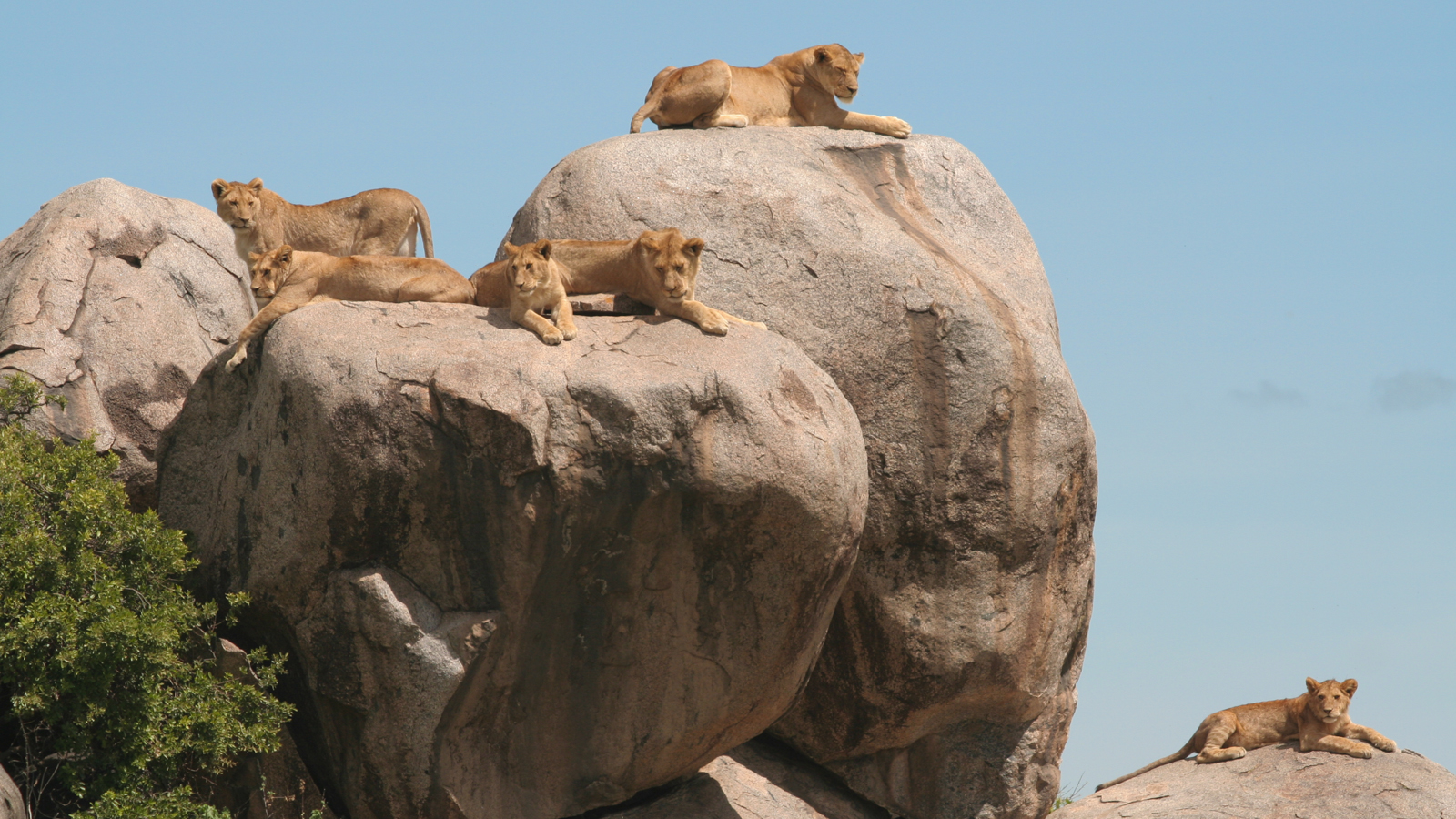
The Serengeti is a plateau with an altitude of 1000 to 1500 m and more, a flat and grassy expanse , as its name in Masai indicates (Siringet = endless plain). The savannah is the queen, most often with a little shrubby savannah (“bush”) with acacias and rare expanses of wooded savannah. The rivers are bordered by “gallery forests”. The reliefs are essentially made up of large rock blocks, the kopjes, which should not be neglected because they often serve as a base for lions.
Frequently Asked Questions
Why is Serengeti National Park so famous?
Serengeti National Park is one of the most famous safari destinations in the world, and for good reason. It is best known for the Great Migration, where millions of wildebeest and zebras move across the plains in search of fresh grass. The endless savannah landscapes make it feel like a true African wilderness. It’s also home to a high concentration of predators like lions, cheetahs, and leopards. The combination of dramatic wildlife and stunning scenery makes it unforgettable.
What animals can you see in the Serengeti?
The Serengeti is packed with wildlife, offering some of the best game viewing in Africa. You can easily spot lions, elephants, buffalo, giraffes, and large herds of wildebeest and zebras. Predators are very active here, so it’s common to witness hunting or tracking behavior. The park is also rich in birdlife, making it great for birdwatchers. Every game drive feels different because there is always something happening.
When is the best time to visit Serengeti National Park?
The best time to visit depends on what you want to see, especially if you’re interested in the Great Migration. From June to October, the dry season offers excellent wildlife viewing as animals gather around water sources. If you want to see the calving season, January to March is ideal in the southern Serengeti. The park is beautiful year, round, with each season offering a unique experience. Even in the rainy season, the scenery is lush and fewer tourists are around.
What safari activities can you do in the Serengeti?
Game drives are the main activity in the Serengeti, usually done in the early morning and late afternoon. You can also experience a hot air balloon safari, which gives you a breathtaking view of the plains from above. Some lodges offer guided walking safaris in certain areas. Cultural visits to nearby communities can also be arranged. These activities allow you to experience the park in different and exciting ways.
How do you get to Serengeti National Park?
Most travelers start their journey from Arusha, which is the main gateway to the northern safari circuit. From there, you can either drive, which takes several hours, or take a domestic flight to one of the park’s airstrips. Flying is faster and offers incredible views from above. Many safari packages include transport, making the journey smooth and well, organized. Whichever option you choose, getting there is part of the adventure.
Still have questions?
Our local safari experts are happy to help you plan the perfect African safari.