Table of Contents
- Day 1: Kilimanjaro International Airport – Tarangire National Park
- Day 2: Tarangire NP
- Day 3: Ngorongoro Crater – Maasai Tribe – Ndutu
- Day 4-5: Serengeti National Park
- Day 6: Serengeti National Park – Lake Manyara
- Day 7: A day with the Tribes
- Day 8: Lake Manyara – Arusha National Park – Kilimanjaro International Airport
- INCLUDED
- NOT INCLUDED
- Frequently Asked Questions
Tanzania offers a magical natural setting for all ages, from climbing Mount Kilimanjaro to game drives in national parks. In the beautiful northern circuit, you can see the massive herds of elephants in Tarangire National Park; flocks of water birds in Manyara National Park; the beautiful black-maned lions of Ngorongoro, and the huge herds of wildebeest in Serengeti.
Zanzibar, the beautiful island in the Indian Ocean, is the perfect place to end an exciting safari – whether you choose to relax on the white sand, swim in the clear blue water, or tour the island.
- AREA OF TOURING: The northern cirque of Tanzania, Zanzibar Island
- BEST TIME TO VISIT: All year
- MAIN ATTRACTIONS: Serengeti, visiting the tribes, relaxing in Zanzibar
- WEAR: Shorts and T-shirts during the day, light long sleeves during the night, swimsuit
Day 1: Kilimanjaro International Airport – Tarangire National Park
You will start your safari in a park that is known for its elephants and Baobab trees – Tarangire National Park. The park runs along the line of the Tarangire River and is mainly made up of low-lying hills on the Great Rift Valley floor.
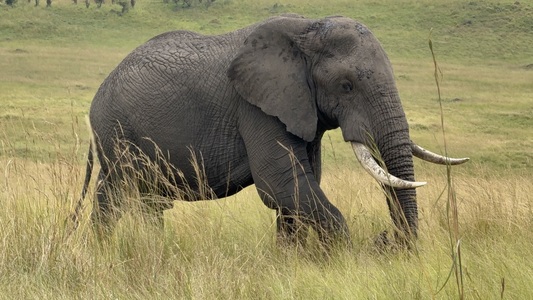
Tarangire– This National Park enables you to experience an unrivalled landscape of open plains, dotted with thousands of baobabs. Not only does the meandering Tarangire River attract a vast number of wildlife, but the Park is also especially renowned for its huge elephant herds, enabling its visitors to spot entire thick-skinned families!
Tarangire National Park has some of the highest population densities of elephants as compared to anywhere in Tanzania, and its sparse vegetation, strewn with baobab and acacia trees, makes it a beautiful and distinctive location to visit. Before the rains, droves of gazelles, wildebeests, zebras, and giraffes migrate to Tarangire National Park’s scrub plains, where the last grazing land remains.
Herds of up to 300 elephants scratch the dry river bed for underground streams, while migratory wildebeest, zebra, buffalo, impala, gazelle, hartebeest, and eland crowd the shrinking lagoons.
The swamps, tinged green year-round, are the focus for 550 bird varieties, the most breeding species in one habitat anywhere in the world.
Disused termite mounds are often frequented by colonies of the endearing dwarf mongoose, and pairs of red-and-yellow barbet, which draw attention to themselves by their loud, clockwork-like duetting.
Overnight – dinner and breakfast at Lake Tarangire Sopa Lodge
Day 2: Tarangire NP
After breakfast, you will continue exploring Tarangire NP, looking for the elephants, lions, and colorful birds that have Tarangire NP as home. In the afternoon, we will exit the park and head to a lodge next to the Lake Manyara area, where we will spend the night.
Overnight – dinner and breakfast at Lake Manyara Escarpment Luxury Lodge
Day 3: Ngorongoro Crater – Maasai Tribe – Ndutu
After breakfast, we will make our way to the gate of Ngorongoro. You then enter the conservation area of Ngorongoro and descend 600m into this magnificent crater for a morning, half-day game drive.
The Ngorongoro Crater is the largest unbroken ancient volcanic caldera in the world. In 1979, this nearly three million year old area was designated a UNESCO World Heritage Site. The former volcano crater is also considered to be “Africa’s Garden of Eden”, as it is a haven for thousands of wild game, including lions, elephants, wildebeests, zebras, rhinos, Thomson’s gazelles and buffaloes. The crater is among the 8 Natural Wonders of the World. The crater is one of the most densely crowded African wildlife areas in the world and is home to an estimated 30,000 animals, including some of Tanzania’s last remaining black rhino. Supported by a year-round water supply and fodder, the Ngorongoro Crater supports a wide variety of animals, which include herds of wildebeest, zebra, buffalo, eland, warthog, hippo, and giant African elephants.
You will enjoy a picnic lunch in the crater, after which you will climb out of the crater and travel to Ndutu, where you will spend the night.
Going through Ngorongoro Conservation Area, you will have the opportunity to visit Manyata, a village of the Maasai Tribe, and get an insight into their unique customs and their everyday life.
The Maasai tribe lives in southern Kenya and northern Tanzania. They are known for their welcome dance, where the men sing and jump as high as possible with straight legs, to show how fit they are. The women stand at the side, singing with the men and doing a special dance for women only.
The Maasai believe that all the cows in the world belong to them and were given to them by god. The wealth of a family is measured by the number of cows they own.
The Maasai tribe lives in villages (Manyata), and each woman builds a small house (Boma) for her family. The Boma’s structure is made of wood, and it is covered by a mixture of mud, wood, sticks, grass, cow dung, human urine, and ash. Traditionally, men wear sheets that are wrapped around the body. Usually, the main color is red, but you can see some blue color and a pattern. Men and women are wearing ornaments made of colorful beads.
Overnight – dinner and breakfast at Lake Ndutu Tented Lodge
Day 4-5: Serengeti National Park
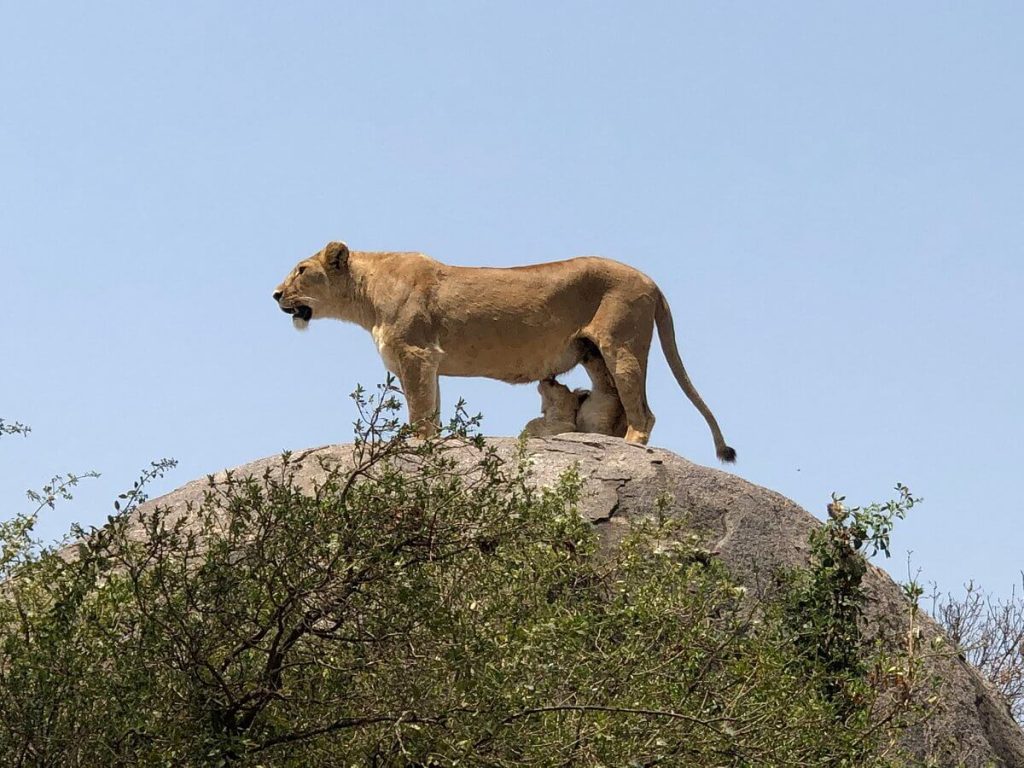
Serengeti National Park is the star of many nature documentary films. The great migration of the wildebeest brings thousands of tourists.
Serengeti National Park is undoubtedly the best-known wildlife sanctuary in the world, and it has the greatest concentration of plains game in Africa.
Established in 1952, it is home to the great migration of wildebeest and zebra. The resident population of lions, cheetahs, elephants, giraffes, and birds is also impressive. The Park can be divided into 3 sections:
- The southern/central part (Seronera Valley) has its classic savannah, dotted with acacias and filled with wildlife.
- The western corridor is marked by the Grumeti River and has more forests and dense bush.
- The north, which meets up with Kenya’s Maasai Mara Reserve, is the least visited section.
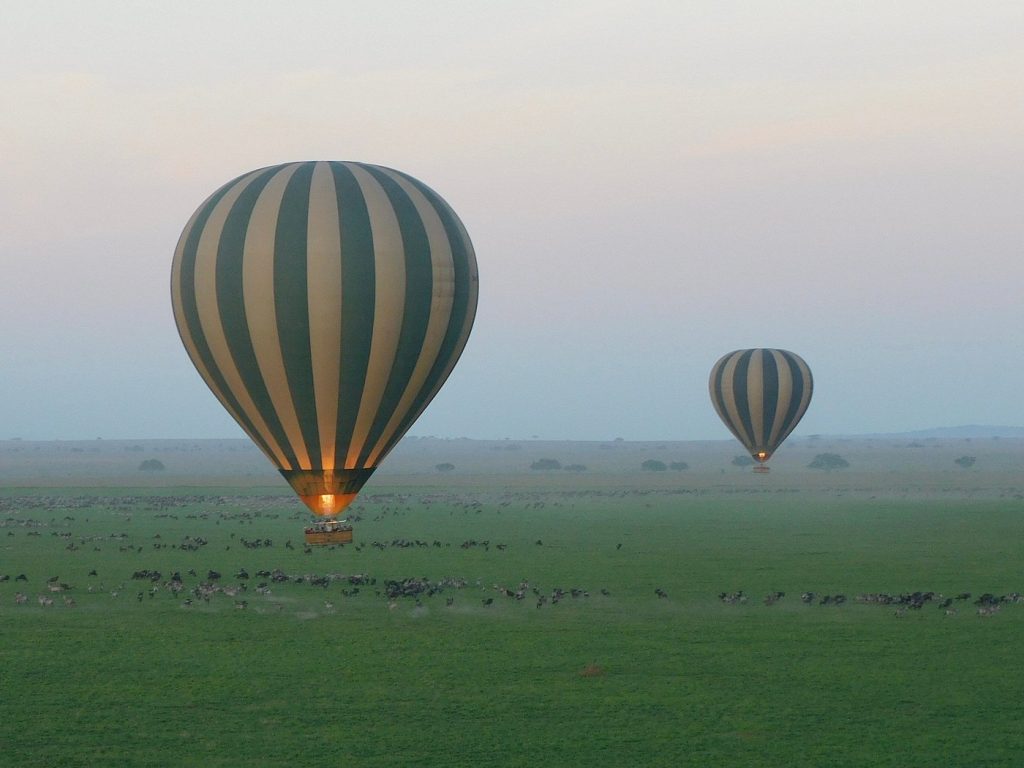
It is the migration for which Serengeti is perhaps most famous – over a million wildebeest and about 200,000 zebras flow south from the northern hills to the Ndutu plains for the short rains every October and November, and then swirl west and north after the long rains in April, May, and June.
During the months of July-September, the herds will cross the Mara River again and again in search of fresh grass. They will have to face the mighty crocodiles in the river, which are waiting quietly in the water for their opportunity.
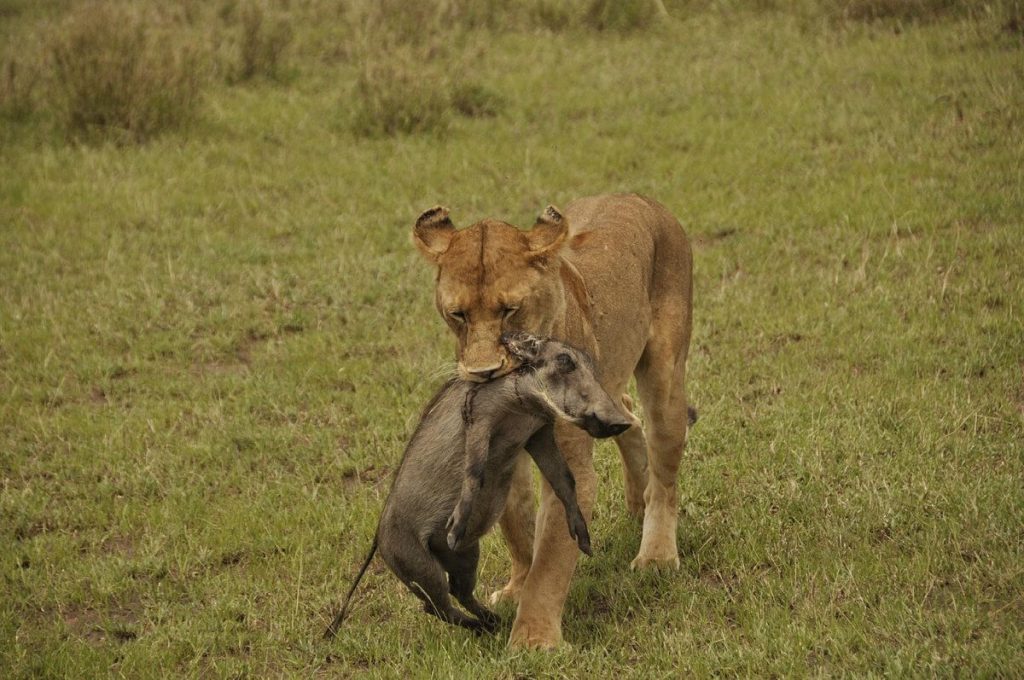
Serengeti is also known as the “endless plains” in the Maasai language. This will be your area of exploration for the following two days. You will have the opportunity to discover this fascinating area and its wild inhabitants, driving through the vast Serengeti Plains.
Overnight – dinner and breakfast (2 nights) at Kenzan Ndutu (Serengeti)
Day 6: Serengeti National Park – Lake Manyara
After breakfast, you will go for a last game drive in the savannah of the Serengeti. At around noon, you will start your way back to the lodge next to Lake Manyara.
Overnight – dinner and breakfast at Lake Manyara Escarpment Luxury Lodge
Day 7: A day with the Tribes
After an adventurous one-hour drive on dusty roads, we will arrive at the northern shore of Lake Eyasi: a mildly alkaline lake which stretches some 50km across the south-western area of the Ngorongoro Crater.
The shores of Lake Eyasi are still inhabited by Hadzabe Bushmen: hunter-gatherers, who can perhaps be considered one of the most interesting tribes in Tanzania and eastern Africa. Their language resembles the click languages of other bushmen further south, in the Kalahari, and they are often willing to provide visitors with an insight into their simple bush homes, consisting of no more than a tree canopy or a cave. You will experience their everyday life at close range and be able to witness the tribe’s men skillfully hunt small antelopes and baboons with bows made from giraffe tendons and poison-coated wood arrows. After Lunch we will drive to visit another group of nomadic Bushmen: the Datoga Tribe.
Datoga people are agro-pastoral nomadic, and nowadays they do some small blacksmith work, like jewelry and arrowheads. They live in several areas in Tanzania, and the majority live near Lake Eyasi.
This tribe consider themselves the oldest tribe in Tanzania (the Maasai and Bushmen also claim this fame). The men of the tribe do the pastoral and blacksmith work, while the women care for the children and home duties. The married women are dressed in beautiful leather dresses and have tattoos around their eyes for decoration. At the end of our visit, we will return to our lodge.
Overnight – dinner and breakfast at Lake Manyara Escarpment Luxury Lodge
Day 8: Lake Manyara – Arusha National Park – Kilimanjaro International Airport
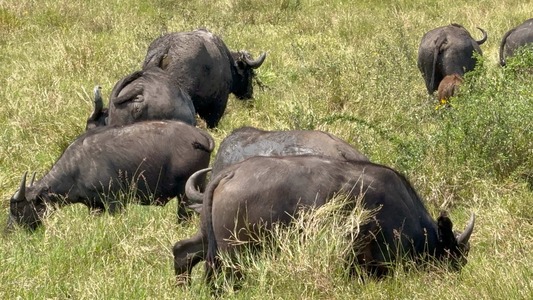
This is our last day in Tanzania. After morning breakfast, you will take a drive for about 3.5 hours to enter Arusha National Park. You will have a memorable moment as you see once more Tanzania’s wildlife with spectacular landscapes, beautiful nature, and the close-ups of Mount Meru from this unique park overlooking the city of Arusha. It is only in this park that you can feel the natural guided walk between herds of buffalo, giraffes, and other wild animals. You will eat your lunch in the beautiful scenery and shores of Momela lakes within the park. In the late afternoon, you will say goodbye to the guide who was with you for the last 8 days and take a drive to Arusha International Park, to start your journey back home .
The Arusha National Park is a relatively small area, but it offers stunning scenery with a wide range of habitats, from the imposing peaks of Mount Meru, afromontane forests, the Ngurdoto Crater to the Momela lakes. The shadowy montane forest is the only place in the northern safari circuit where the acrobatic black-and-white colobus monkey can be easily seen, as well as some of its other inhabitants: blue monkeys and the colorful turquoise and trogons.
Further north, rolling grassy hills enclose the tranquil beauty of the Momela Lakes, each one of the seven lakes featuring a unique green-blue hue. Their shallows are the habitat of a rich selection of resident and migrant waterfowl, especially thousands of flamingos, which let the lakes tinged with pink. Shaggy waterbucks complete the scenic landscape when displaying their large lyre-shaped horns on the watery fringes. Observe the long-necked giraffes as they glide across the grassy hills, between grazing zebra herds, and discover wide-eyed dik-dik darting into scrubby bushes like overgrown hares on spindly legs.
~ End of Tour ~

INCLUDED
- Full board (breakfast, lunch & dinner) accommodation while on safari
- Transfers to and from the airport
- All game drives are conducted in a custom-built 4×4 Safari Land Cruiser
- All parks entrance fees
- Transportation with a 4×4 vehicle with a viewing roofs
- Professional English/ Spanish/ Germany/ French speaking driver-guide during the safari
- Bottled safe drinking water in safari vehicles
- Ngorongoro Crater car supplement fee (if any), Current Government taxes and levies
- 24-Hour support during the safari from our office in Arusha
NOT INCLUDED
- Internal or International flights
- Balloon and/or additional excursions while you are in Tanzania
- Out-of-full board service at the hotel, including body massage, hotel excursions, bar & laundry services
- All-Terrain-Vehicle (Quad-bike) adventure
- Entry visa to Tanzania
- Travel and health insurance
- TIPS to your guide, hotel staff, and porters
- Meals, drinks, and excursions not described in the itinerary
- Items of a personal nature, laundry, telephone, and postage
OPTIONAL
Flight links are available between Arusha/ Manyara and Serengeti. A holiday/ relaxation in the Zanzibar Islands/ Mafia can be arranged. A flight from Arusha after your safari or Mt. Kilimanjaro climb to Zanzibar is recommended
Frequently Asked Questions
What is the focus of the 8 Days Serengeti Big Cats Safari?
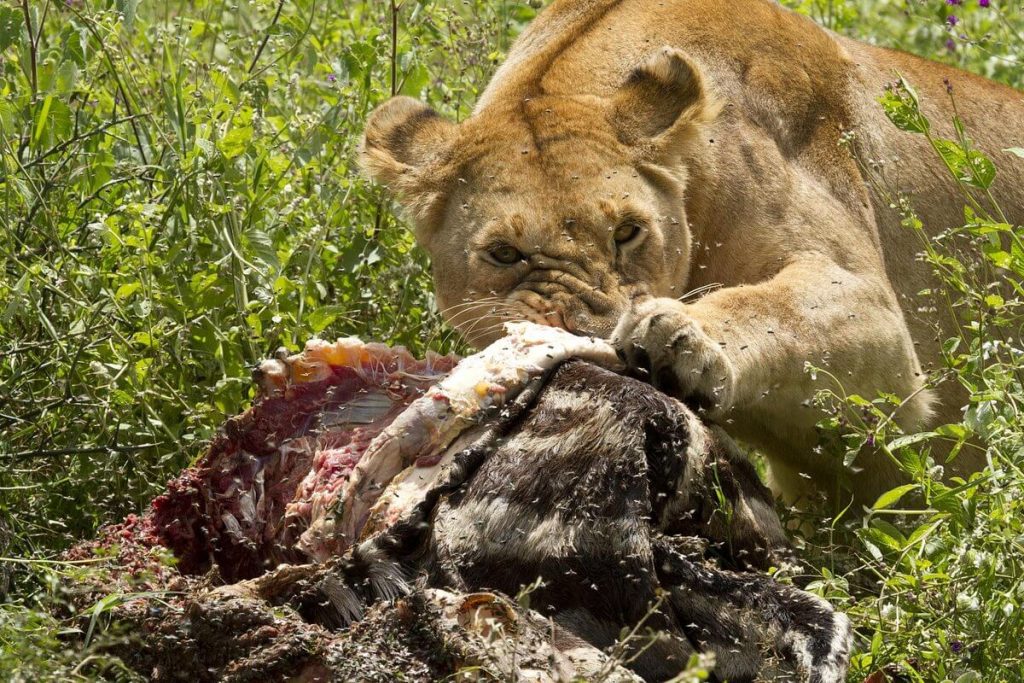
The 8 Days Serengeti Big Cats Safari in Tanzania focuses on tracking and observing the region’s most iconic predators. Lions, leopards, and cheetahs are the main highlight, with guides helping you locate them in their natural habitats. You’ll spend multiple days in different parts of the Serengeti National Park to increase your chances of sightings. Along the way, you may also spot other wildlife like elephants, giraffes, and zebras. It’s an immersive experience for anyone fascinated by big cats and predator behavior.
Which areas of the Serengeti are visited on this safari?
The safari typically explores several zones of the Serengeti, including the southern plains, central region, and northern corridors. Each area has unique wildlife patterns and big cat concentrations. The southern plains are ideal for calving season and lion prides, while the central region offers excellent leopard sightings. The northern areas often feature cheetah families and dramatic river crossings. Visiting multiple zones ensures a diverse and rewarding safari experience.
How are the game drives structured?
Game drives are scheduled early in the morning and late in the afternoon, when predators are most active. Drives usually last between 3 and 6 hours, allowing ample time for wildlife observation and photography. Guides adjust the route based on recent sightings and animal movements. Between drives, you can relax at lodges or camps, enjoy meals, and prepare for the next adventure. The combination of structured and flexible drives maximizes the chances of seeing big cats.
What type of accommodation is included?
The safari includes stays at a mix of luxury lodges and tented camps within or near the Serengeti. Lodges provide comfort with amenities such as hot showers, dining areas, and views of the savannah. Tented camps offer a more authentic safari experience while keeping you safe and close to nature. Some camps even provide special sunset dinners or early morning coffee in the bush. The accommodations are carefully chosen to enhance both comfort and the wildlife experience.
Is the safari suitable for photographers and wildlife enthusiasts?
Absolutely, the 8 Days Serengeti Big Cats Safari is perfect for photographers and wildlife enthusiasts alike. The variety of predators, scenic landscapes, and golden light during mornings and evenings create ideal photo conditions. Guides often position vehicles for optimal viewing and photography angles. You’ll also learn about animal behavior, making each sighting more meaningful. By the end of the safari, you’ll have both unforgettable memories and incredible photographs.
Still have questions?
Our local safari experts are happy to help you plan the perfect African safari.