Kenya – East Turkana
There are two main routes here. The first is the highway from Nairobi to Marsabit, via Isiolo and Laisamis, and north from there to Moyale on the Ethiopian border. The other is from Nairobi to Maralal, via Gilgil and Nyahururu or via Nakuru and Lake Baringo, and north from there to Loyangalani on Lake Turkana, via Baragoi and South Horr. It’s also possible to cross from Isiolo to Maralal. From Loyangalani you can make a loop all the way around the top of the Chalbi Desert to Marsabit via North Horr and Maikona
Samburu, Buffalo Springs and Shaba National Reserve
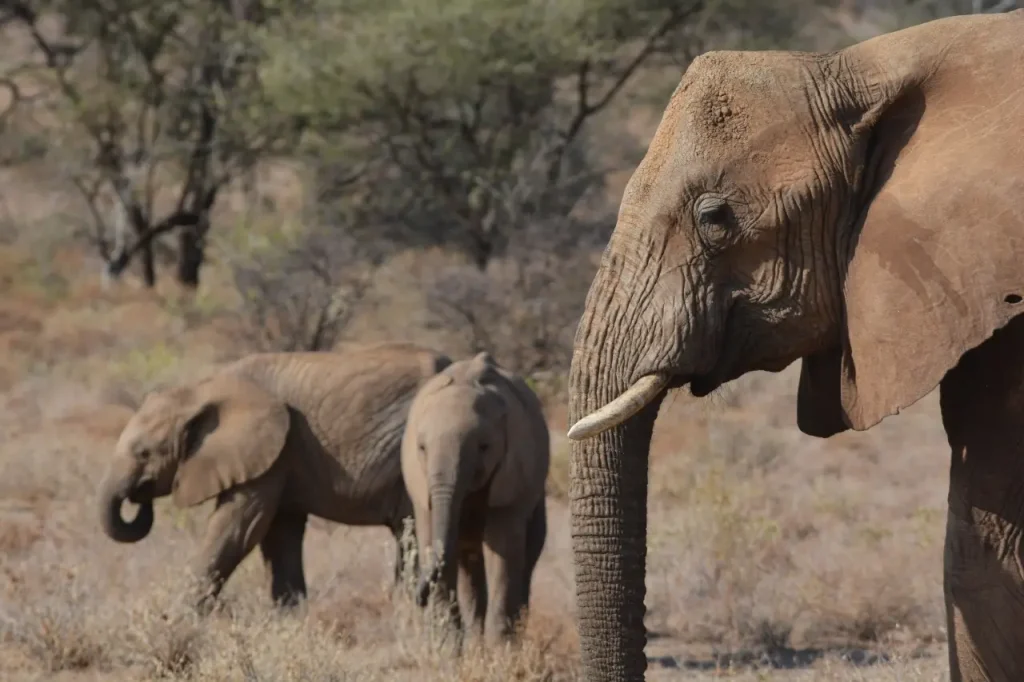
Just north of Isiolo are three national reserves, Samburu, Buffalo Springs and Shaba, all of them along the banks of the Ewaso Nyiro River and covering an area of some 300 sq km. They are mainly scrub desert and open savannah plain, broken here and there by small rugged hills. The river, however, which is permanent, supports a wide variety of game and you can see elephants, buffaloes, cheetahs, leopards and lions as well as dik-dik, warthogs, Grevy’s zebra and the reticulated giraffe. Crocodiles can also be seen on certain sandy stretches of the river bank. You are guaranteed closeup sightings of elephants, reticulated giraffe and various species of smaller gazelle in both Samburu and Buffalo Springs but other game is remarkably thin on the ground, particularly on the route into Samburu from Archer’s Post. The rhinos were wiped out years ago by poachers. The roads inside Buffalo Springs and Samburu are well maintained and it’s easy to get around, even in 2WD, though you might need a 4WD on some of the minor tracks.
Entry to all three parks or game reserves is applied. Even though they’re contiguous, if you drive from Buffalo Springs to Samburu (or vice versa) in one day then you’ll have to pay two lots of park entry fees. However, if it’s very late in the afternoon when you cross the boundary, the guards will generally postdate your ticket for the following day. These parks are much less touristed than Amboseli or Masai Mara so, once you’re out of the immediate vicinity of the lodges and campsites, you’ll frequently have the place to yourself.
Mathew Range
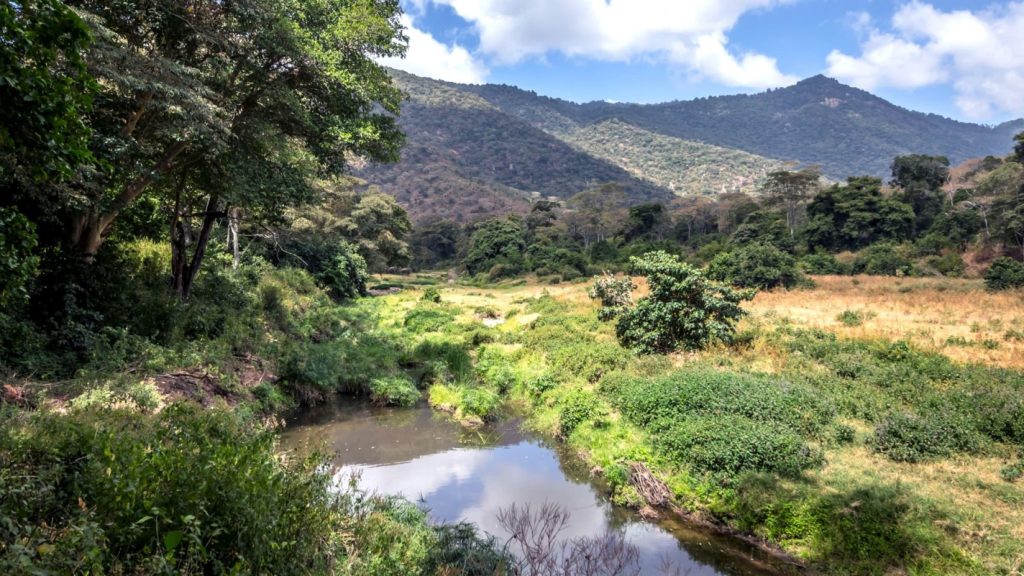
North of Wamba, off the link road between the Isiolo to Märsabit road and the Maralal to Loyangalani road via Parsaloi, is the Mathews Range. Much of this area is thickly forested and supports rhinos, elephants, lions, buffaloes and many other animal species. The highest peak here rises to 2285 metres. The whole area is very undeveloped and populated by Samburu tribespeople but the government is in the process of making it into a game sanctuary especially for the rhino. Some of the tribespeople are already employed to protect the rhino from poachers and there’s a game warden’s centre.
A few km from this centre is a campsite with facilities. It’s a superb site and a genuine African bush experience. You are miles from the nearest village and elephants are quite likely to trundle through your camp in the middle of the night. During the day, traditionally dressed Samburu warriors will probably visit you to see if you need a guide (which you will if you want to see the game or climb to the top of the range as we did). Agree on a reasonable price beforehand, and remember you’ll also have to pay for the one who stays behind to guard your vehicle.
Also, don’t forget that the rules of hospitality will oblige you to tip them when you get back to camp. They’re extremely friendly people. One or two will be able to speak English (the nearest school is in Wamba) but most can converse in Swahili as well as Samburu.
Lake Turkana
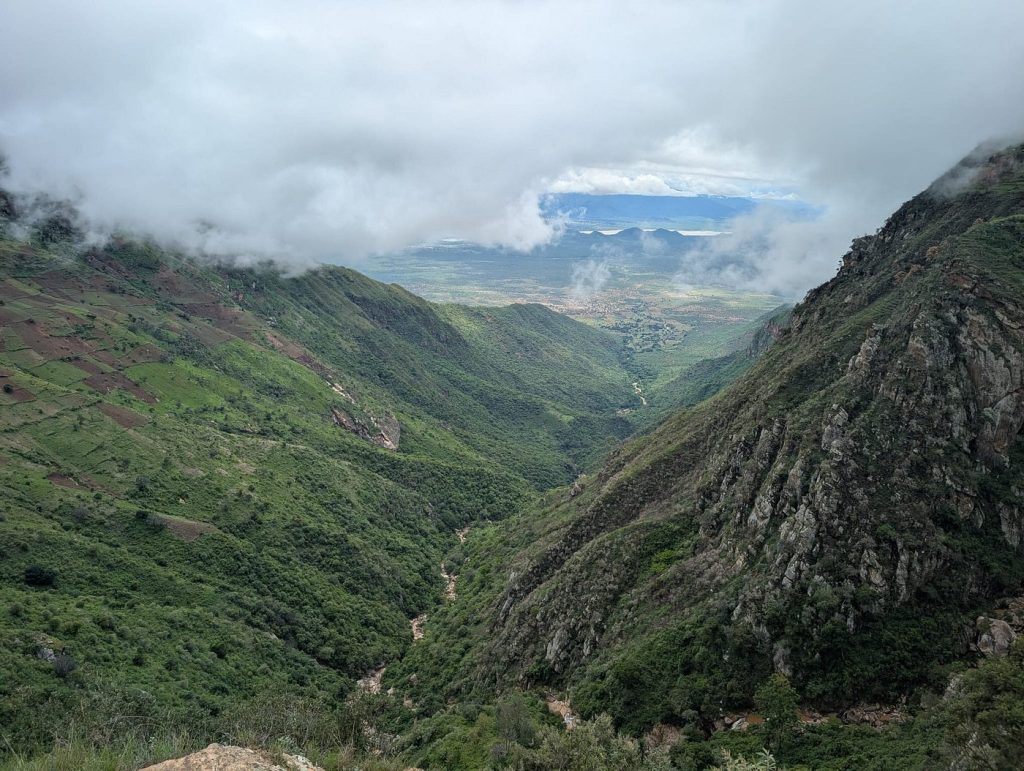
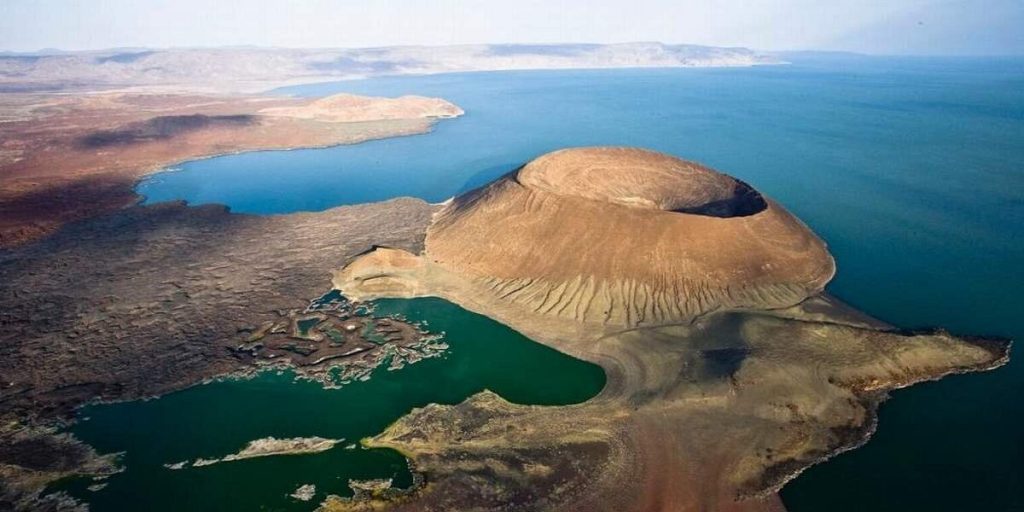
Further north, the lushness of the Horr Valley gradually peters out until, finally, you reach the totally barren, shattered lava beds at the southern end of Lake Turkana. Top the ridge here and there it is in front of you — the Jade Sea. It’s a breathtaking sight — vast and yet apparently totally barren. You’ll see nothing living here except a few brave, stunted thorn trees. When you reach the lake shore, you’ll know why — it’s a soda lake and, at this end, highly saline. The northern end of the lake isn’t anywhere near as saline because it’s fed by the Omo River from Ethiopia (is that where the name of the washing powder came from!?). At this point, most people abandon whatever vehicle they’re in and plunge into the lake. If you do this, watch out for crocodiles. They’re quite partial to a meal of red meat as a change from Nile perch.
Marsabit National Reserve
South of Maikona is Marsabit, where you are back in relative civilisation. The main attraction here though is the Marsabit National Park & Reserve centred around Mt Marsabit (1702 metres).
The hills here are thickly forested and in stark contrast to the desert on all sides. Mist often envelopes them in the early morning and mosses hang from tree branches. The views from the telecommunications tower on the summit above town are magnificent in all directions. In fact, they’re probably as spectacular as any of the views from Mt Kenya or Kilimanjaro. The whole area is peppered with extinct volcanoes and volcanic craters (called gofs), some of which have a lake on the crater floor.
One of the most memorable sights in Marsabit is the tribespeople thronging the streets and roads into town. Most noticeable are the Rendille with their elaborate braided hairstyles and dressed in skins, fantastic multicoloured beaded necklaces and bracelets. These people graze camels and, like the Samburu and Maasai, show little interest in adopting a more sedentary lifestyle, preferring to roam the deserts and only visiting the towns when necessary for trade. They are the major non-Muslim people in what is otherwise a largely Muslim area.
The other major tribes are the Boran and the Gabra, both pastoralists who graze cattle rather than camels. They’re allied to the Galla peoples of Ethiopia from where they originated several hundred years ago. Many have abandoned their former transient lifestyle and settled down to more sedentary activities. In the process, many have adopted Islam and the modes of dress of the Somalis with whom they trade and who have also migrated into the area. There are also quite a few Ethiopians in town as a result of that country’s tragic and turbulent recent past.
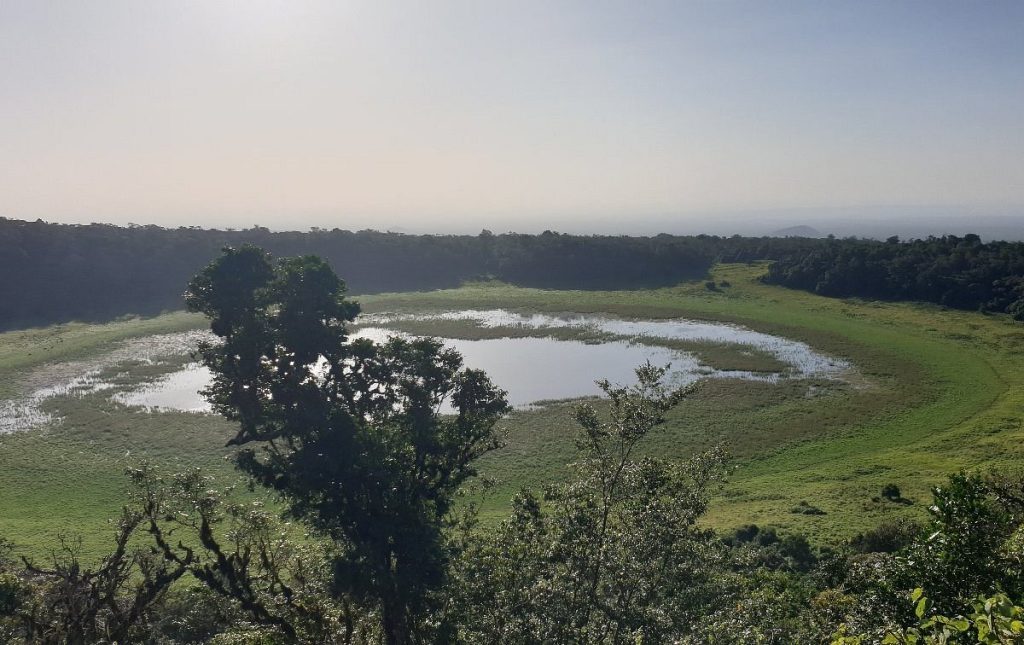
Marsabit National Park & Reserve The Marsabit National Park & Reserve is home to a wide variety of the larger mammals including lions, leopards, cheetahs, elephants, rhinos, buffaloes, warthogs, Grevy’s zebra, the reticulated giraffe, hyena, Grant’s gazelle, Oryx, dik-dik and greater kudu among others. Because the area is thickly forested, however, you won’t see too much game unless you spend quite some time here and, preferably, camp at Lake Paradise. The lake, which occupies much of the crater floor of Golf Sokorte Guda, is appropriately named. It’s an enchanting place and right out in the bush. Entry to the park, which is open from 6 am to 7.15 pm, costs are compulsory.