Uganda Introduction
Uganda has an area of 236,580 sq km, of which about 25% is fertile arable land capable of providing a surplus of food. Lake Victoria and the Victoria Nile, which flows through much of the country, together create one of the best-watered areas in Africa.
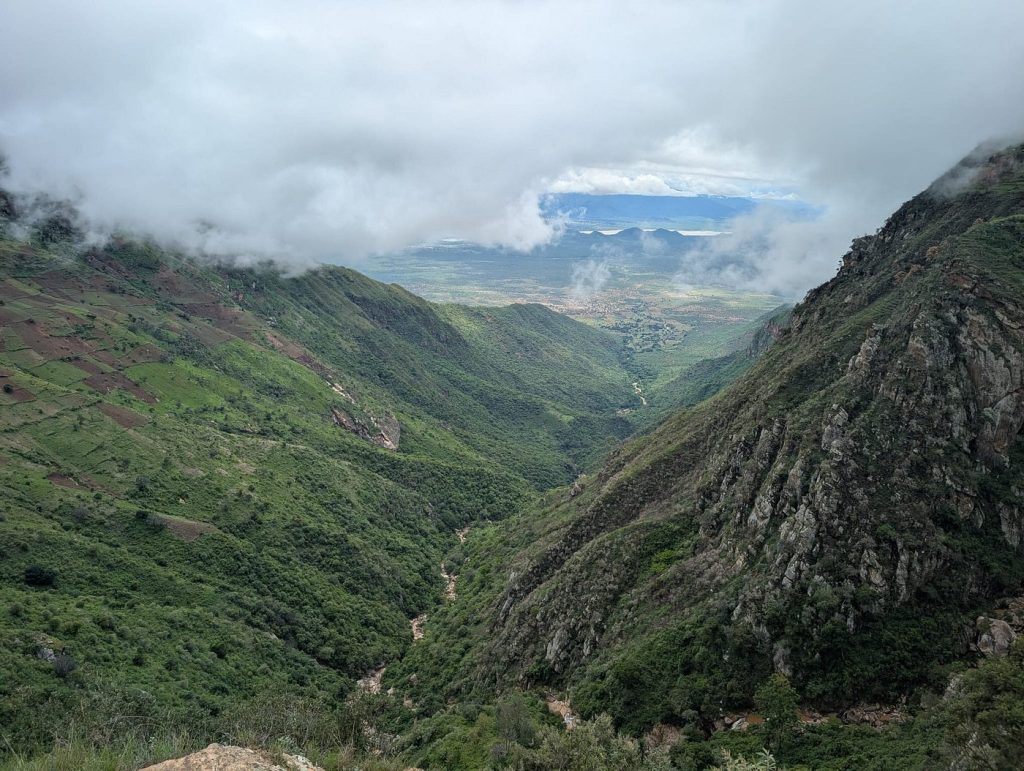
The land varies from semi-desert in the north-east to the lush and fertile shores of the lake, the Ruwenzori Mountains in the west, and the beautiful, mountainous south-west. The tropical heat is tempered by the altitude, which averages over 1,000 metres. As most of Uganda is fairly flat, with mountains only in the extreme east (Mt Elgon), extreme west (Ruwenzori), and close to the Rwanda border, the bulk of the country enjoys the same tropical climate, with temperatures averaging about 26°C during the day and 16°C at night. The hottest months are from December to February, when the daytime temperature ranges from 27°C to 29°C. The rainy seasons in the south are from April to May and October to November, with April being the wettest month. In the north, the wet season is from April to October, and the dry season is from November to March. During the wet seasons, the average rainfall is 175 mm per month. Humidity is generally low outside the wet seasons.
The official language is English, which most people can speak. The other major languages are Luganda and Swahili, although the latter is not spoken much east of Kampala or in the capital. While about two-thirds of the population are Christian, the remaining one-third still practise animism, with a small percentage following Islam. There were sizeable numbers of Sikhs and Hindus in the country until Asians were expelled in 1972. Asians are gradually returning following a presidential invitation.
Murchison Fall National Park
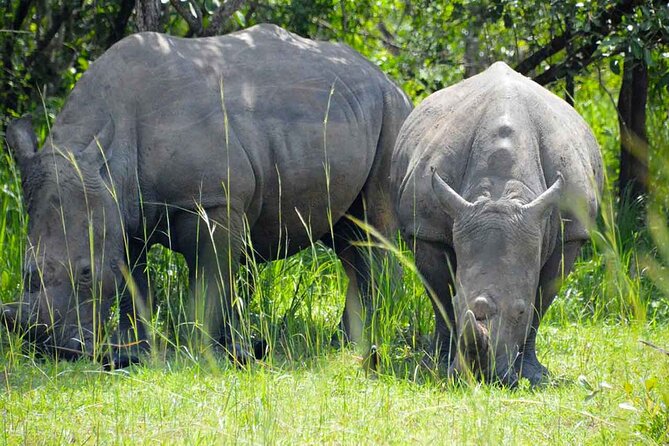
The largest park in Uganda, at 3,900 sq km, is Murchison Falls National Park, through which the Victoria Nile flows on its way to Lake Mobutu Sese Seko (formerly Lake Albert). Murchison Falls National Park used to contain some of the largest concentrations of game in Uganda. There are numerous lions, only a few rhinos, and herds of elephants, as well as plenty of Ugandan kob, buffaloes, hippos, and crocodiles. Despite this, it is still worth visiting Murchison Falls National Park, if only for the animals that remain and for the Murchison and Karuma Falls on the Victoria Nile within the park boundaries. The falls were once described as the most spectacular thing to happen to the Nile along its 6,700-km length.
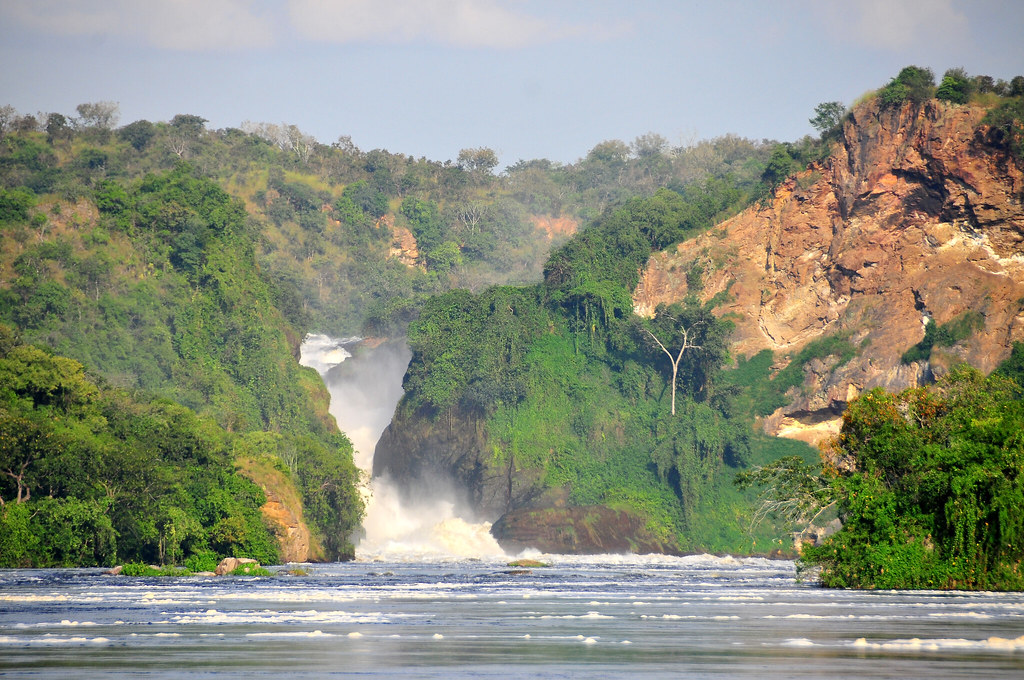
The Nile bisects the park, and the area south of the river is safe for travel. Also safe is the three-hour launch trip upriver to a point from which you can opt to walk for a couple of hours to the falls. En route, you can see crocodiles and hippos, thousands of birds, and usually elephants. Game drives north of the Nile are also incredible, where you can spot numerous wildlife species as well as birds.
This area of the country gets quite hot. The best remedy is a dip in the Nile at Paraa. Bilharzia is a possibility, but the fast-flowing river and the absence of settlements upstream reduce the likelihood considerably. You are far more likely to get chewed up by a hippo, so inspect the bathing site carefully before plunging in, and also listen to your guide’s instructions. You will inevitably attract a crowd of curious locals, who will probably laugh at you. If you are at all self-conscious, this may be more of a deterrent than the bilharzia. They will also warn you about man-eating crocodiles, but the last incident occurred more than 20 years ago.
Queen Elizabeth National Park
Formerly known as Ruwenzori National Park (until the mountains of the same name were recently made a national park), this park covers 2,000 sq km and is bordered to the north by the Ruwenzori Mountains and to the west by Lake Rwitanzige (Lake Edward).
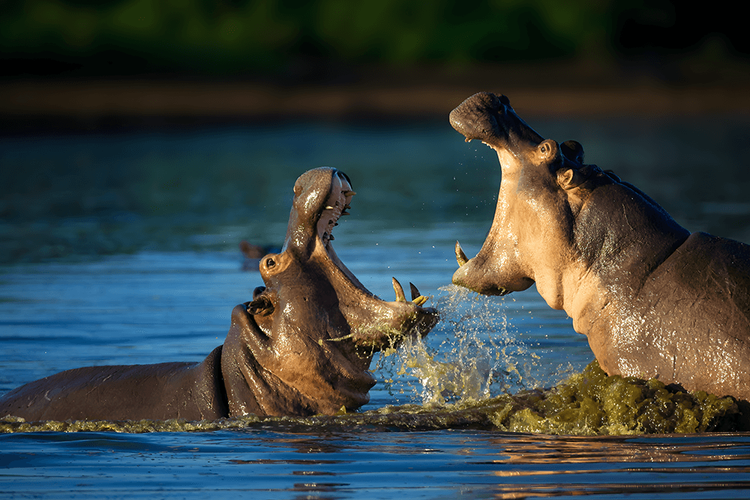
Queen Elizabeth National Park is a magnificent place to visit, with its great herds of elephants, buffaloes, kob, waterbuck, hippos, and topi, as well as gazelles, a couple of small herds of elephants, and the occasional lion. However, it is also worth a visit to see the hippos and the birds. There are few places in Africa where you will be able to see so many hippos.
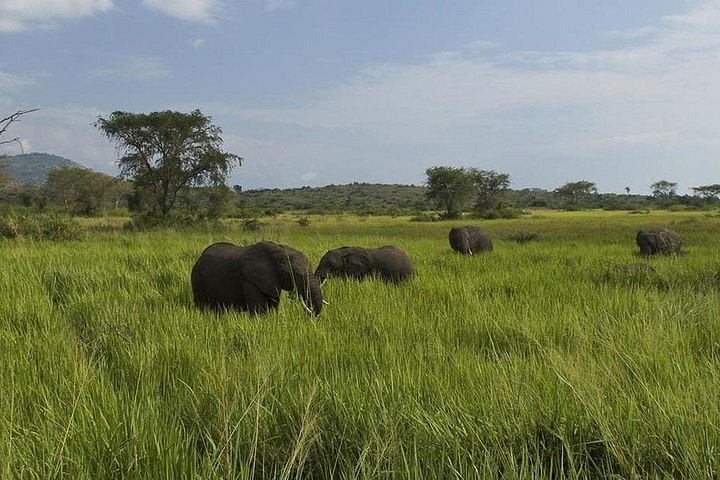
Every visitor takes a launch trip up the Kazinga Channel to see the thousands of hippos and the pelicans. If you are lucky, you will also catch sight of one of the elephant herds and, very occasionally, see a lion or leopard. Game drives covering around 80 km are also available through different tour operators in Uganda, in the company of a ranger/guide. A much less visited area of the park is the area around Ishasha, on the border with Zaire.
The lions in this area were once famous for their habit of climbing trees, but it seems they have given it up. The attraction now is the beautiful setting. You can bathe in the river (watch out for hippos) and walk in the forest, where the only danger is the buffaloes — make lots of noise as you walk.
Lake Mburo National Park
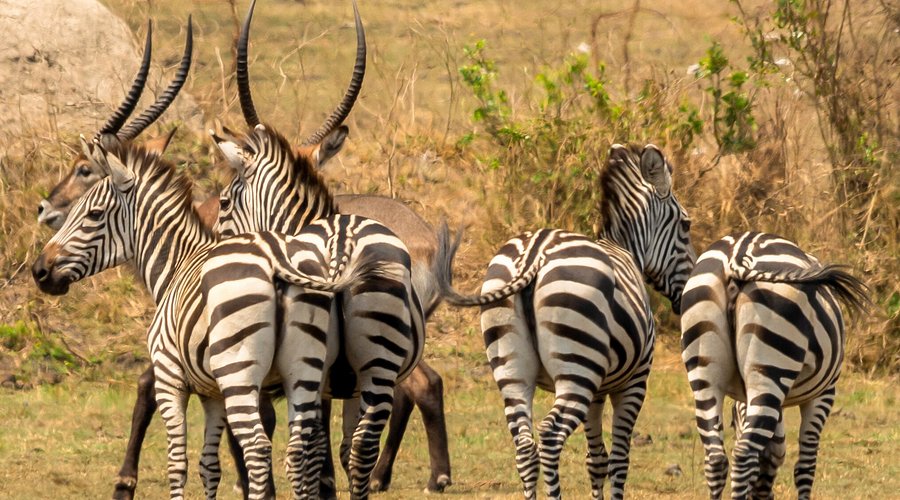
Between Mbarara and Masaka and covering an area of 290 sq km, this national park is mainly savannah with scattered acacia trees. There are five lakes, the largest of which is Lake Mburo. Created in 1983, the park features some of the rarer animals, such as impala, eland, roan antelope, reedbuck, klipspringer and topi, as well as zebras, buffaloes and hippos. Adjacent to the park are the ranches of the Bahima tribe, who herd the famed long-horned Ankole cattle which are a common sight. This is one of the parks you’re allowed to walk through (accompanied by a ranger), or you can go on game drives. Canoes (either paddled or outboard driven) are available on Lake Mburo.
Kidepo Valley National Park
Surrounded by mountains and notable for ostriches, cheetahs and giraffes, this park covers an area of 1450 sq km in the extreme north-east of Uganda, along the border with Sudan. It is an awe-inspiring area to visit because of being unspoilt at the same time offer the extraordinary game viewing. The park is also famous for camping and self-drive safari trip from Kampala. One of the best places to stay is Uwa campsite located close to the park which offers wild experience and uniques adventures.
Ruwenzori National Park
The fabled, mist-covered Ruwenzori Mountains on Uganda’s western border with Zaire are almost as popular with travellers as Kilimanjaro and Mt Kenya but definitely harder to climb. They have a well-deserved reputation for being very wet at times. This was best summed up by a comment on the wall of Bujuku hut: ‘Jesus came here to learn how to walk on water. After five days, anyone could do it.’ Be prepared and take warm, waterproof clothing.
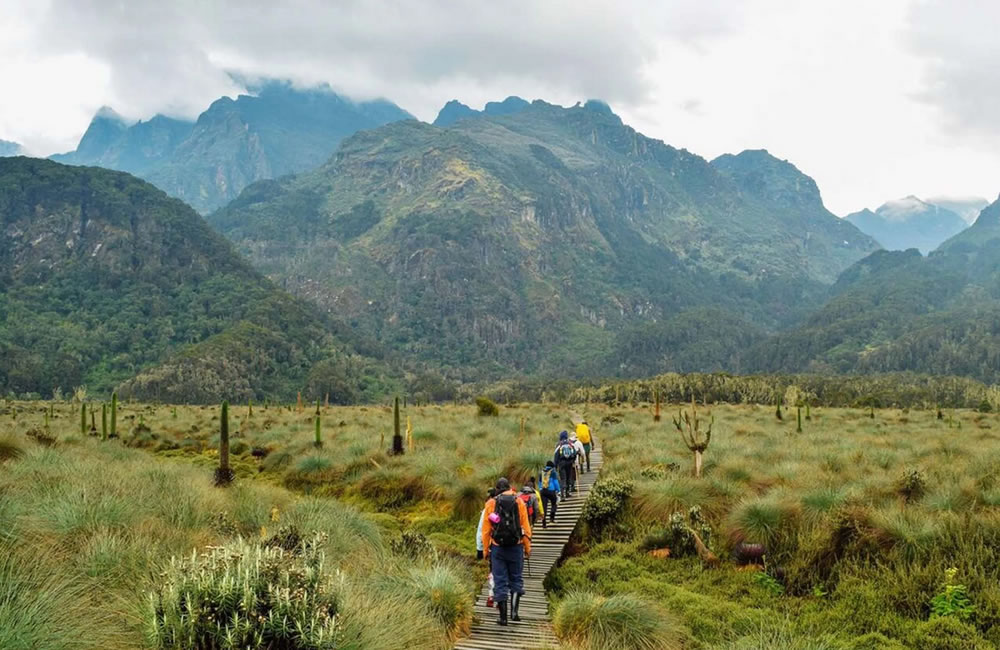
The mountain range, which is not volcanic, stretches for about 100 km. At its centre are several mountains which are permanently snow and glacier-covered: Mt Speke (Vittorio Emmanuele is its highest peak at 4890 metres); Mt Baker (Edward is its highest peak at 4843 metres); Mt Gessi (Iolanda, 4715 metres); Mt Emin (4791 metres) and Mt Luigi di Savoia (4627 metres). The three highest peaks in the range are Margherita (5109 metres), Alexandra (5091 metres) and Albert (5087), all on Mt Stanley.
Trekking on the Ruwenzori
The climbing varies from the easy ascent of Mt Speke, which requires only limited mountain experience, to the harder routes on Stanley and Baker, which should not be attempted unless you are of alpine standard. Climb to the top only if you want to otherwise, the guides will be happy to take you around the lower reaches.
Five days is the absolute minimum for a visit to the range, but seven or eight days is better, with one or two days at the top huts. The best times to climb are from late December to the end of February and mid-June to mid-August, when there’s little rain. Even at these times, the higher reaches are often enveloped in mist, though this generally clears for a short time each day.
Bwindi & MgahingaNational Park
These are two of Uganda’s most recently created national parks. They are in the southwestern corner of the country, Bwindi (formerly known as the Impenetrable Forest) being north of Kisoro and Mgahinga south Together the parks encompass two of the last remaining habitats of the mountain gorilla, where half of the surviving mountain gorillas in the world live — an estimated 320 individuals.
A major conservation effort has been going on here for the last three years to protect the gorillas’ habitat, under the auspices of the German Animal Protection Society and Uganda National Parks. As a result, encroachment on the montane forest by cultivators has been stopped, poaching has ceased and the gorilla families have been gradually habituated to human contact. As of 1 April 1993, the gorillas can be visited (casual visitors were prohibited from visiting them for a number of years whilst the project got underway).
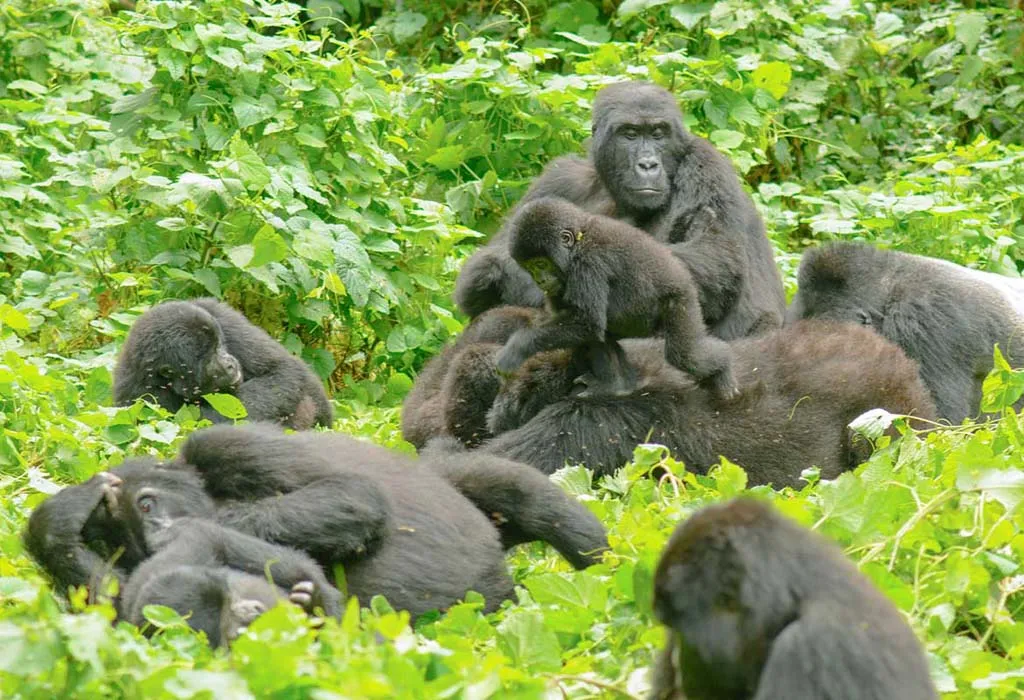
Gorillas are not the only animals to have benefitted from this project. Both parks contain elephants, at least 10 species of primates, including chimpanzees, colobus monkeys and baboons, duiker and bushbuck and the rare giant forest hog, as well as a host of bird and insect species. They encompass one of the richest areas in Africa for flora & fauna.
The gorillas in these parks are nowhere near as habituated to human contact as the ones in Zaire, so you need to be patient and prepared to scramble through more bush than would be necessary at Djomba, but it’s well worth it. There’s are different tour companies in Kisoro as well as Uganda which can give you all the latest information. Otherwise, contact us for more details.
Mt Elgon National Park
This is the most recently created of Uganda’s national parks and encompasses the upper regions of Mt Elgon up to the Kenyan border.
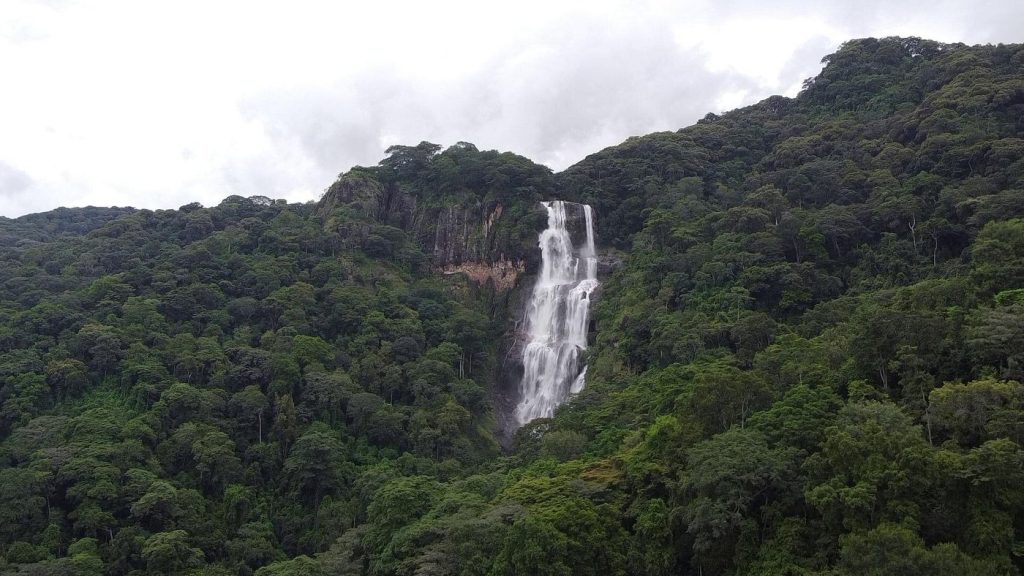
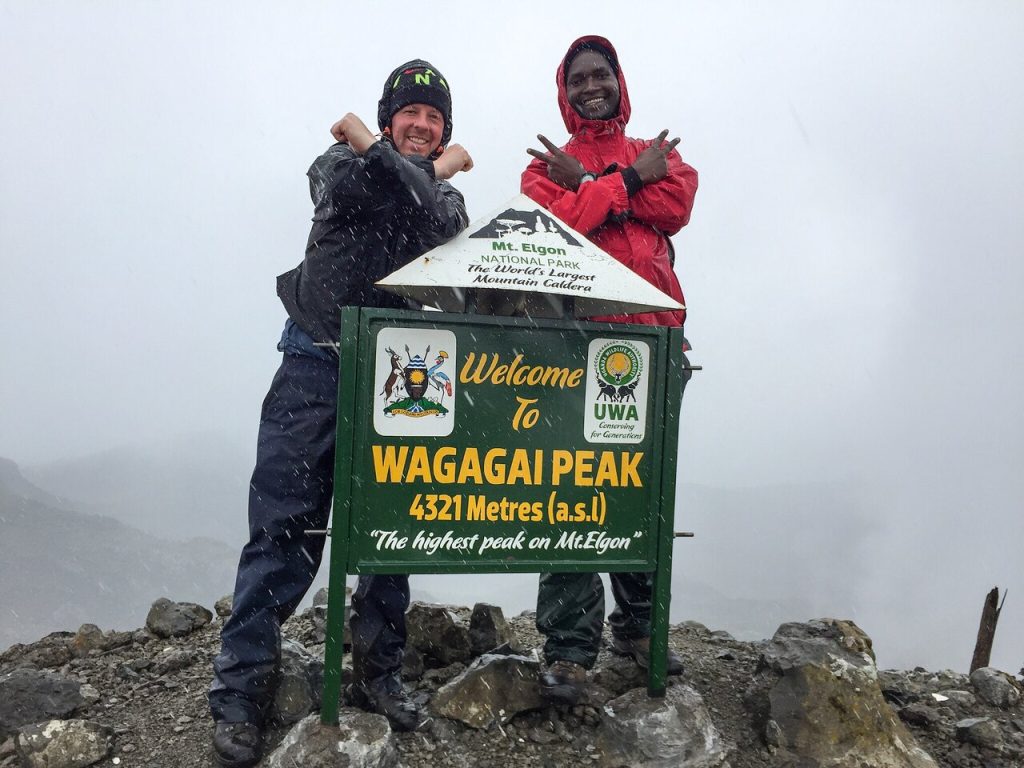
The mountain (Wagagai is the highest peak at 4321 metres) is said to have one of the largest surface areas of any extinct volcano in the world and is peppered with cliffs, caves, gorges and waterfalls. The views from the higher reaches across the wide plains are some of the most spectacular in Uganda. The upper slopes are clothed in tropical montane forest, while above this lies a vast tract of alpine moorland which extends over the caldera, the collapsed crater which covers some 40 sq km at the top of the mountain. Sipi Falls, north of Mbale in the foothills of the mountain, has to be the most beautiful and romantic waterfall in the whole of Uganda, regardless of what you might think about Murchison Falls. Don’t miss it, even if you don’t trek up the mountain.
The best time to climb the mountain is from December to March, but the seasons are unpredictable and it can rain at any time.
The national park is being supervised by a very enthusiastic and dedicated bunch of people under the umbrella of the Mt Elgon Conservation & Development Project,
The idea is to promote conservation and rehabilitation of the flora & fauna of Mt Elgon, encourage sustainable development in the communities surrounding the park, maintain the quality and quantity of the water flow to all areas affected by the forest, and develop the long-term tourism potential of the mountain. In terms of overseas visitors, this comes down to trekking up the mountain, and to this end, they’ve already produced a leaflet which describes the possibilities.
Trekking on Mt Elgon
The Mt Elgon Conservation & Development Project is still in its infancy as far as tourism is concerned, so you need to be resourceful, patient, self-sufficient and not expect well-worn paths such as those you find on Mt Kenya and Kilimanjaro. You obviously need your own camping and cooking equipment, your own food, appropriate clothing and a guide. Don’t attempt the trek without a guide — you’ll get lost. So far, there are three established campsites along the Sasa River Trail, the usual route to the summit. Give yourself a minimum of three days to do this trek and five if you want to reach Jackson’s Point, Wagagai and Suam Gorge. Guides and porters can be found at different tour organizers from Kampala. Contact us for more details.
Almost as soon as you enter the forest, you reach Mudangi cliffs, which are scaled by means of ‘ladders’ (piles of branches). From the top, the trail is less steep and the path well defined. Half an hour’s walk down this path is the bamboo forest and a further half hour’s walk across the other side of the Sasa River brings you to the first campsite. Getting across the river involves boulder-hopping or wading knee-deep in fast-flowing water, depending on the season.
The campsite is marked by a well-used fireplace, and there are enclosed toilets and a rubbish pit. If it is still early in the day when you reach here, you have the option of continuing another two hours further up the trail to stay at the next campsite.
The next part of the trail goes up to the top of the forest and into the heathland, where there is another possible campsite close to a small cave (about three hours beyond the first campsite). The moorland is studded with giant Senecio (groundsel), and you will often see duikers bounding through the long grass and Lammergeier vultures overhead.
A further three hours’ walk brings you to the caldera, after which the path splits. The left fork leads directly into the caldera and to the hot springs at the head of the Suam Gorge, while the right fork goes to Jackson’s Summit via Jackson’s Pool. The latter path crosses a permanent stream and is a possible campsite if you wish to stay up here.
Jackson’s Summit and Wagagai can be reached in one day, allowing for a comfortable return to the second campsite in good light. The return journey from the second campsite to the roadhead can be completed in five to six hours.