Kampala City
Kampala is said to be built on seven hills, though you’ll probably spend most of your time on just one of them — Nakasero, in the city centre. The top half of this hill is a type of garden city, with its wide, quiet avenues lined by flowering trees and its large, detached houses behind imposing fences and hedges. Here you’ll find many of the embassies, international aid organisations top-class hotels, rich people’s houses, the high court and government buildings. Between Nakasero and the lower part of the city is Kampala’s main thoroughfare
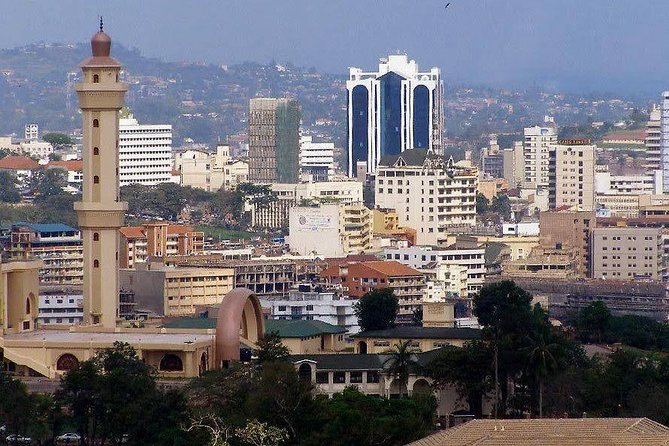
Kampala Rd (which turns into Jinja Rd at one end and Bombo Rd at the other). On this road are the main banks, the post and telecommunications office, the railway station and a few hotels and restaurants.
Below Kampala Rd, towards the bottom of the valley, are heaps of different shops and small businesses, budget hotels and restaurants, the market, the immense gurdwaras (temples) of the very much depleted Sikh community (one temple has been converted into a school), and the bus and matatu stations.
It’s a completely different world to that on the top side of Kampala Rd. Here there are potholed, congested streets thronged with people, battered old cars and minibuses, overflowing garbage skips, impromptu sUeet markets, and pavement stalls offering everything from rubber stamps to radio repairs. There are hawkers, newspaper sellers, hustlers, and one of the most mindboggling and chaotic matatu stands you’re ever likely to see. This is Kampala’s answer to Nairobi’s River Rd.
To the east, across the golf course, is Kololo, which is a fairly exclusive residential area. Many embassies are situated here, as are a few hotels and the Uganda Museum. To the west is Namirembe, on top of which stands the Anglican Cathedral. To the south of the city centre lies Tank Hill, across the railway tracks, where there are a number of mid-range hotels, good restaurants and that famous Kampala landmark the Half London, to which everyone in search of good live music goes.
Uganda Museum
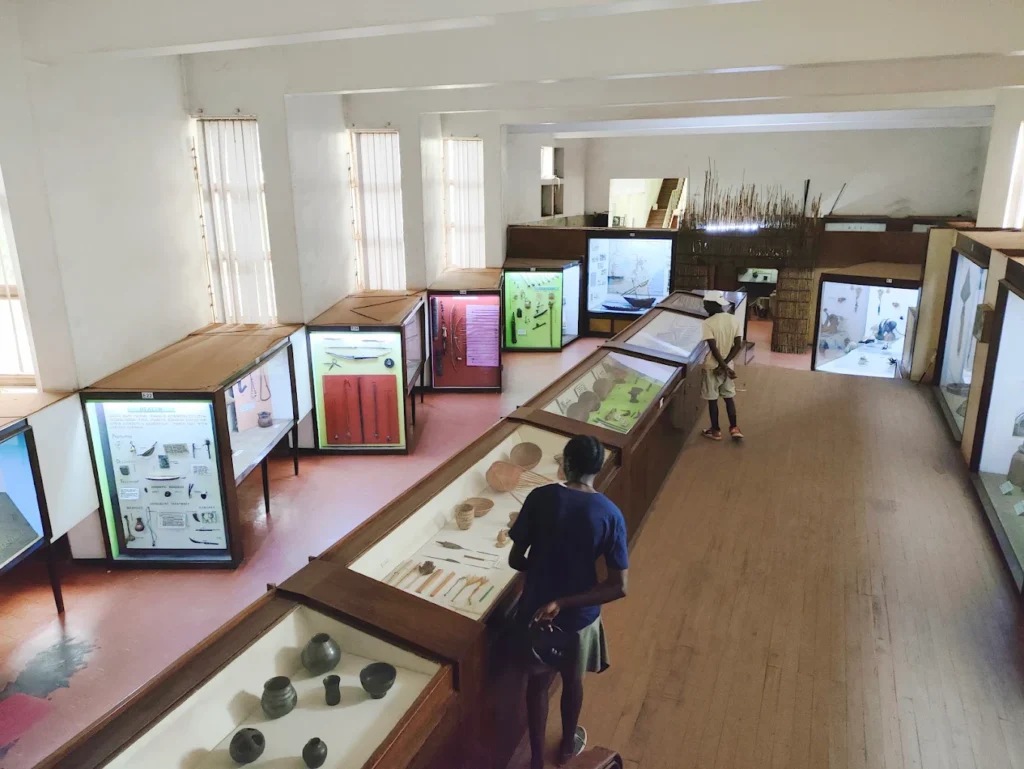
The Uganda Museum on Kira Rd was closed for years but is now open again Monday to Saturday from 10 am to 6 pm and on Sunday from 3 to 6 pm. Entry costs UGX 15,000 (USh 5000 for Ugandan residents). It has good ethnological exhibits covering hunting, agriculture, war, religion and juju, as well as archaeological and natural history displays. Perhaps its most interesting feature is a collection of traditional musical instruments, which you’re allowed to play. There’s also an office of the East African Wildlife Society at the museum, open from 10 am to noon on Monday, Wednesday and Friday.
Kasubi Tombs
Another ‘must see’ are the Kasubi Tombs (also known as the Ssekabaka’s Tombs), on Kasubi Hill just off Masiro Rd, which were first built in 1881. Here you will find the hüge traditional reed and bark cloth buildings of the kabakas (kings) of the Buganda people. The group of buildings contains the tombs of Muteesa I, his son Mwanga, Sir Daudi Chwa Il, and his son Edward Muteesa Il, the last of the kabakas. He died in London in 1969, three Years after being deposed by Obote. As a result of recent political pressure by the Buganda, there are now moves to bring back his young son and reinstate him as kabaka, but it’s a political hot potato and may not be Illite what the NRA has in mind.
The kabaka’s palace is also here, but is to the public. Meanwhile, the palace ind tombs are taken care of by the Ganda :lans.
The Kasubi tombs are open every day, including Sundays and holidays, from 8 am to 6 pm. The entry fee of USh 1000 includes a guide, though a tip is half expected. Remove your shoes before entering the main building. You can get to the tombs by minibus, either from the matatu park in the city centre (msk for Hoima Rd) or from the junction of Bombo and Makerere Hill Rds. The minibuses you want are the ones which terminate at the market at the junction of Hoima and Masiro Rds. The tombs are a few hundred metres’ walk up the hill from here (signposted).
Religious Buildings
Also worth a visit are the four main religious buildings in Kampala — the gleaming white Kibuli mosque dominating Kibuli Hill on the other side of the railway station from Nakasero Hill, the huge Roman Catholic Rubaga Cathedral on Rubaga Hill, the Namirembe Anglican Cathedral (where the congregation is called to worship by the beating of drums) and the enormous Sikh temple in the city centre.
Botanical Gardens & Zoo At Entebbe
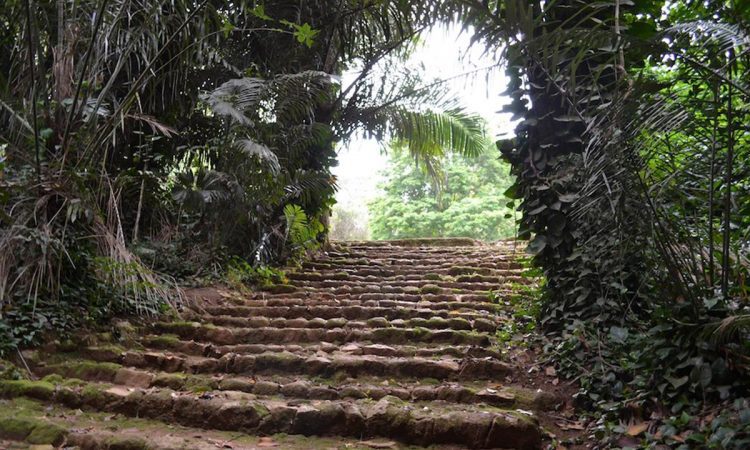
Outside Kampala, the Botanical Gardens are worth visiting if you have half a day available. Laid out in 1898 by A Whyte, the first curator, they’re along the lakeside between the sailing club and the centre of Entebbe. Even if you’re not particularly interested in botany, there are some interesting, unusual trees and shrubs and the gardens are fairly well maintained.
The Uganda Wildlife Education Centre is close by. Formerly just a small zoo, it is being completely revamped with a grant from USAID. The plans for the new centre were produced by the New York Zoological Society and it’s being run by Christen Manning, an associate of the Jane Goodall Institute. Entry costs $15 USD
There are frequent minibuses to Entebbe from the central matatu park in Kampala (USh 5000, 35 to 40 minutes). Get off before you reach the end of the line. If you need a meal, snack or drink while you’re in the area, try the Entebbe Club, which has cold beer and reasonably priced meals. Alternatively, try the popular but expensive Lake Victoria Hotel or the Beach Resort Entebbe for cheap barbecued rneat, other snacks and drinks. The Beach Resort is quite a walk from the ‘centre’ of Entebbe.
Sipi Falls
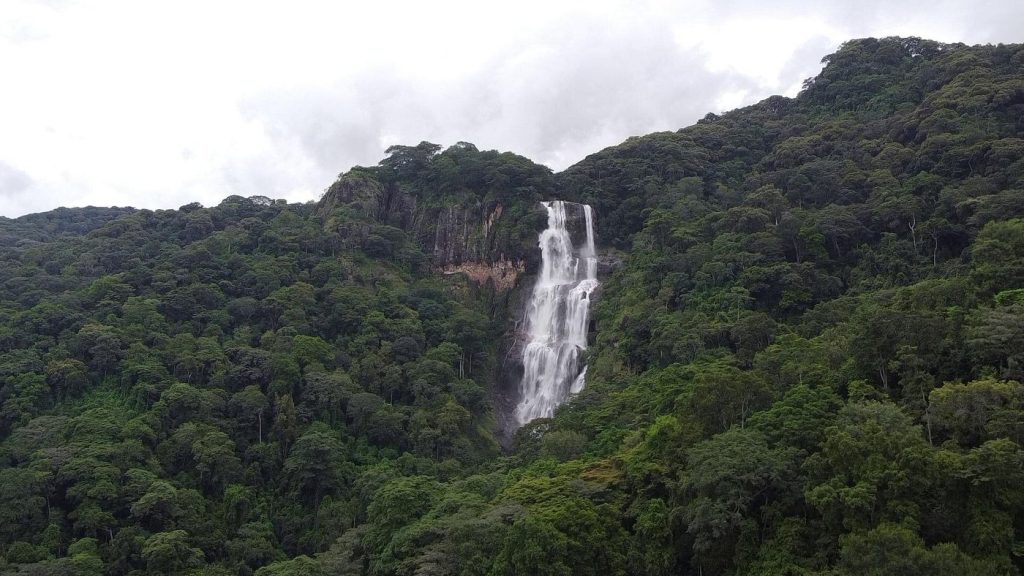
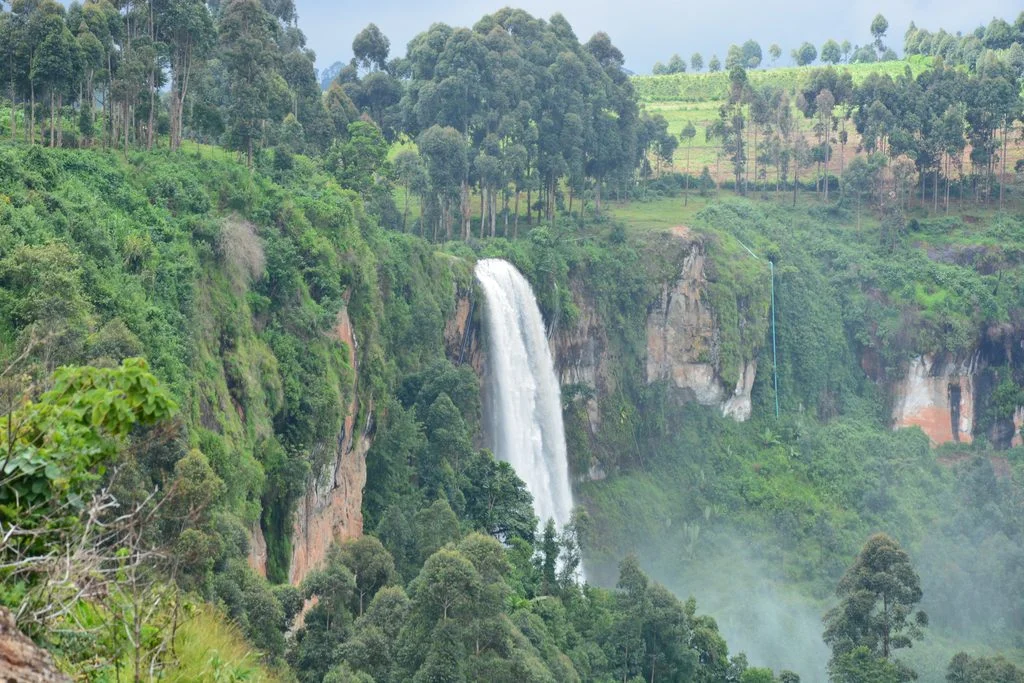
Sipi Falls is a truly beautiful sight, and it’s well worth making the effort to get there. The falls are situated about 35 km north of Mbale, in the foothills of Mt Elgon and not far from the town of Kapchorwe. The cheapest way of getting there is to take a matatu to Kapchorwe and get off close to the falls, but these matatus are not very frequent, so it may be more convenient to put a small group together and hire a taxi for the day. If you’d like to stay here for the night, there’s the Sipi Falls Rest House ranging from $25 to over $200 per night. The rooms in the lower lodge are the best
MBALE
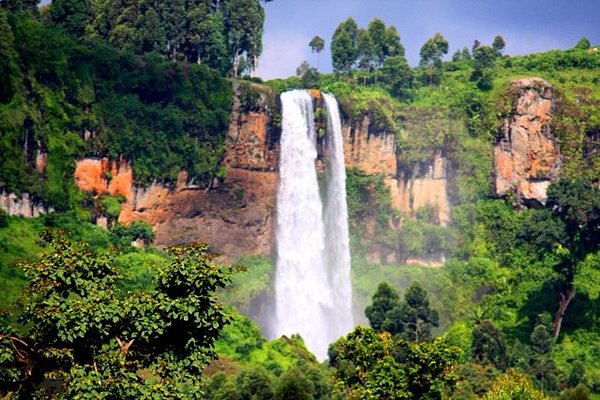
In stark contrast to Tororo, Mbale is a thriving provincial city with plenty of activity and well-maintained facilities. It also enjoys a superb setting at the base of Mt Elgon. It’s here that the Mt Elgon Conservation & Development Project is headquartered. The project, when it’s fully on line, will open up a whole new mountain trekking experience which may come to rival climbing Mt Kenya in the years to come. It’s also the base from which to visit Sipi Falls, the country’s most frequently see featured on posters promoting Uganda
JINJA
Jinja lies on the shores of Lake Victoria and is a major marketing centre for southern Uganda. It’s an interesting little place with many old Asian-style buildings, reflecting the days when the town had a sizeable Asian community. There are also a lot of spacious mansions in various states of repair, surrounded by expansive lawns overlooking the lake along Nile Crescent adjacent to the golf club and the agricultural showground. The town didn’t suffer as badly as many others during the last civil war and so does not wear the same air of dereliction. According to local residents, Okello’s retreating troops were told in no uncertain terms that they wouldn’t be welcome.
Jinja is also close to the Owen Falls Dam, a hydroelectric station which supplies Uganda with the bulk of its electricity. The main Kampala to Jinja road runs across the top of the dam. Just below the golf course is the ‘Source of the Nile’, formerly Ripon Falls
Source du Nil
The Source du Nil (Source of the Nile) is billed as one of Jinja’s premier attractions, and tourists are bussed in to see from Kampala, but there’s actually very little to see. Before the building of the Owen Falls Dam, this was the site of Ripon Falls, where the Nile left Lake Victoria on its way the Mediterranean. The actual falls were inundated by the waters of the dam but you can still make out from the turbulence where they used to be. A walkway and observation deck has been constructed down to the edge of the falls, with the inevitable brass plaque commemorating Speke and Grant’s discovery of the source of the Nile in 1862.
Bujugali Falls
Ripon Falls (the Source of the Nile) may have been inundated and the Owen Falls dammed but the Bujugali Falls, some 11 km from Jinja, still survive. If you have the time and organized transport, it’s worth visiting them. There are a well laid-out picnic area and good signposts. To get there, take Nalufenya Rd out of the centre down to the roundabout on the main Kampala to Tororo road and go straight across. About 10 km further on, you’ll see a prominent signpost on the left-hand side for the falls. They’re about one km from here.