
Table of Contents
When researching the best time to go on safari in Africa, you may have come across the term “green season“. Safari companies and tour operators will also refer to it as the “emerald season”, or the less colorful “low season”. What is this season in Africa, when is it, and is it worth booking a safari during that time?
1. When is the Green Season
In East Africa (for safaris in Kenya, Tanzania, Uganda, and Rwanda), the “green season” generally falls from December to May. In southern Africa (for safaris in Botswana, South Africa, Namibia, Zambia, and Zimbabwe), the “green season” typically runs from mid-November through April.
2. Why is it called the Green Season
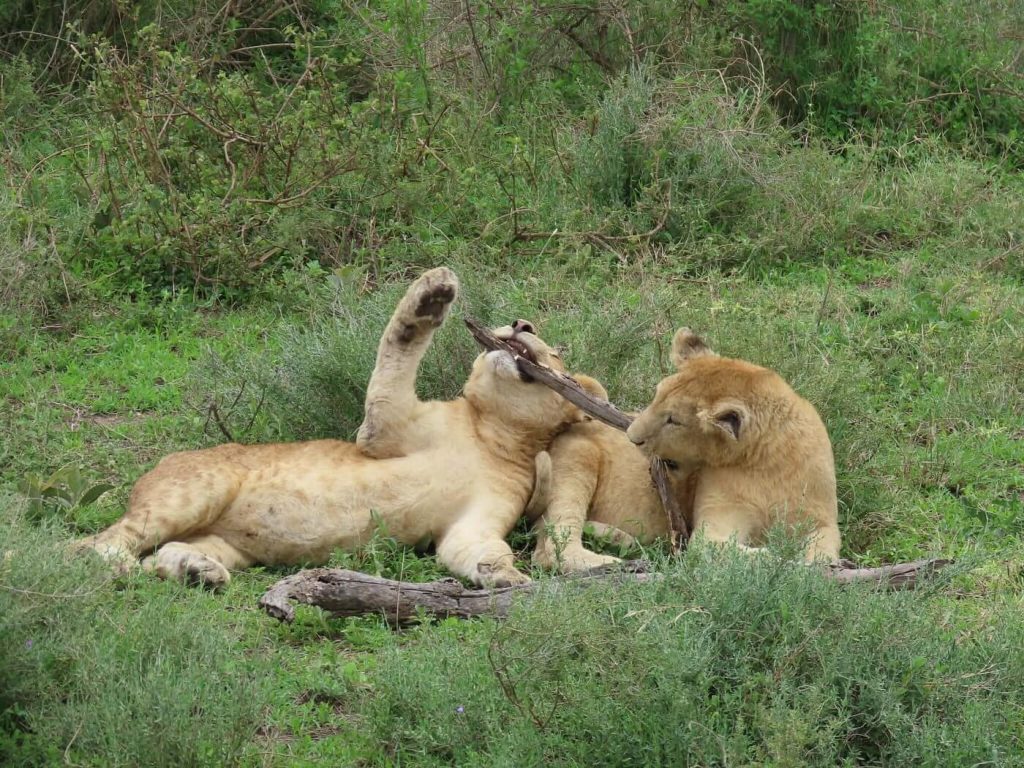
The “green season” coincides with the rainy season, when brown landscapes turn a million shades of green. It rarely rains all day; you’re likely to get showers and maybe some extra clouds, but you’ll still see plenty of sun. Lots of baby animals are born at this time, hundreds of thousands of them on the Serengeti plains alone. It’s also the perfect time to see birds.
3. Benefits of Going on safari During the Green Season
The “green season” is an excellent time to go on safari for the reasons listed below:
Exciting and Unpredictable – Safari veterans often prefer the “green season” because spotting animals in dense foliage, with plenty of water to go around, is more challenging, and so the rewards seem greater.
The dry season is traditionally the “high season” for safaris because, among other factors, animals congregate around waterholes and are easier to spot (more about the “best time to go on safari”). During the green season, the animals are more spread out, the grass is tall, and the bushes are bushy. A safari is therefore more of an adventure; you never know what you’ll get to see, so it can be more exciting. The green season is therefore good for repeat safari clients who are not necessarily ticking off lists of animals they want to see for the first time.
Save Money – The best deals on safari lodging are always during the “green season”. Some camps use this time to close down entirely and refurbish. Other camps may not be open due to poor road conditions during the rain. But the camps that stay open cut their rates, and you can benefit greatly from reduced prices.
Less Crowded – As with any off-season, the crowds are fewer, and this is really a wonderful benefit to a safari at this time. No queues of mini-buses or land cruisers around a lion kill, or a race with other vehicles to spot a leopard. If you want to go gorilla tracking, it’s easier to get permits during the rainy season.
More water-based safaris on offer – One of my favorite ways to enjoy a safari is by cruising down a river and watching them come to the banks for a drink. It’s cooler than a 4×4, and the sunsets are spectacular. Although the flooded Okavango Delta in Botswana is drier during the “wet season,” there are still plenty of camps surrounded by water. Waterfalls are very impressive during the green season, especially the grandaddy of them all, the Victoria Falls.
Birds and Babies – The best time for bird watching in both East and Southern Africa is during the wet season as flowers bloom and insects abound. It’s also baby season, since water and food are in much higher supply, many animals give birth at the beginning of the rainy season. Baby animals attract predators, so there’s lots of opportunity to witness nature at its most exciting.
The Great Migration – The great annual migration of millions of wildebeest and zebra is in full swing in the middle and western end of the Serengeti during the “green season”. It’s best to time your visit as early in this season as possible, because the lodges and camps are in the center of the park, so usually an easy drive to see the huge herds. By the end of the “green season,” the migration tends to head west and north towards Kenya.
4. Drawbacks of Going on Safari During the Green Season
There’s a reason why fewer people go on safari during the “green season” and why you can get some great discounts on your safari.
It’s harder to spot wildlife – With dense foliage, plenty of water, and muddy roads, a safari can be less rewarding during the green season. If you only have a few days on safari, or it’s your first time and your expectations of seeing a huge amount of animals are high, then it may be best to avoid booking a safari during the green season.
It can be lonely – You may be the only guests at a smaller camp, for some, this can feel a little isolating. Having a full staff on hand to serve you dinner, tend the bar, and perform a traditional dance can be a little awkward. Sharing what you’ve just seen with other excited guests is always a highlight of a safari dinner, so you could miss out on the camaraderie.
Humid and buggy – The rains bring humidity and more bugs, so if you are afraid of flying and/or crawling beasties, it may be best to plan your safari during the dry season. It’s not fun pulling insects out of your teeth when you poke your head out of the sunroof of your safari vehicle. The rainy season also tends to coincide with the hottest time of the year in southern Africa, so be prepared to wear light clothing and book a few nights at a camp or lodge with a pool to cool off in.
Muddy Roads and Closed Camps – Safaris are in remote locations, and you get around on dirt roads. If the rains have been good and strong, many smaller roads or even entire parks can shut down, which limits your safari experience.
5. Would I go on safari during the Green Season?
I prefer to go on safari during the green season. Not just because it’s cheaper and less crowded, but I like a lush landscape. I really enjoy the birds and beautiful blooming trees and flowers. I’ve been on safari dozens of times, so I am not looking to spot the “Big Five” or a lion kill necessarily. I just love being out in the African bush and being surprised and excited by the little dramas that are played out. But to truly appreciate a green season safari, you need a good guide, and the best guides often work for the high-end safaris. So I’d also recommend a luxury safari during this time of year.
If you have questions about planning your safari, you can also always e-mail me.
Frequently Asked Questions
What is the “Green Season” in Africa?
The “Green Season” refers to the rainy season in Tanzania and other safari destinations in Africa. It usually occurs from March to May and sometimes includes short rains in November. During this time, the landscape turns lush and green, which gives the scenery a fresh, vibrant look. Rainfall is often intermittent, with mornings and evenings being cooler and wetter. This season is different from the busy dry season, offering a quieter, more peaceful safari experience.
How does the Green Season affect wildlife sightings?
During the Green Season, animals are more spread out because water sources are abundant. This can make wildlife sightings a bit more challenging compared to the dry season. However, it’s also a time of unique wildlife behavior, such as calving season in some areas. Birds and other small animals are often more active, making it ideal for birdwatching. Guides know the best locations, so wildlife can still be spotted with patience and expert knowledge.
Is the Green Season a good time for photography?
Yes, the Green Season can be excellent for photography. The lush landscapes, blooming flowers, and flowing rivers create beautiful backgrounds. Dramatic skies and soft light during or after rain can also enhance your photos. While wildlife might be harder to spot in dense vegetation, close, ups of animals and birds can be especially striking. Overall, it offers unique photo opportunities that differ from the dry season.
Are there advantages to visiting during the Green Season?
Visiting during the Green Season has several advantages. Fewer tourists mean a more peaceful and private safari experience. Accommodation prices are often lower, and some lodges offer special deals. The scenery is at its most vibrant, with green plains, full rivers, and active wildlife. It’s a great time for travelers who enjoy nature in its lushest form.
What should travelers prepare for during the Green Season?
Travelers should be ready for occasional rain and muddy roads in some parks. Packing waterproof clothing, rain covers for cameras, and sturdy shoes is important. Light layers can help with fluctuating temperatures during the day. It’s also wise to have insect repellent, as mosquitoes can be more active. With the right preparation, the Green Season can be a beautiful and rewarding time to experience Africa.
Still have questions?
Our local safari experts are happy to help you plan the perfect African safari.





