
Table of Contents
An exciting “3 in 1” safari across a trio of contrasting national reserves takes you off the beaten track to a peaceful semi-desert in Kenya’s remote northern frontier. The reserves all share the Ewaso Nyiro River, with its long strips of lush riverine forest that are teeming with wild animals in the dry season. There’s a stark kind of beauty to this arid wilderness, and it’s incredibly tranquil.
One Memorable Safari Across 3 Striking Reserves
The 3 game reserves are considered a unit and you can game drive across the whole “Samburu” region, although each reserve has its own boundary. All 3 are quite small; Samburu is the most visited because the 3 big cats live here. Buffalo Springs is next to Samburu and Shaba is a further 9km. You’ll find the entire Samburu region very hot and dry – many animals would perish here without their life-source, the Ewaso Nyiro River, which flows through all 3 reserves sustaining an astonishing amount of wildlife in the shady, lush riverine forest. You might wonder why cattle and goats are roaming the area – these belong to the pastoralist Samburu people who live around the reserves, cousins of the Maasai.
Have you been to Samburu National Reserve?
Write A Comment Below
The 3 Big Cats, the Northern 5 and Other Highlights
Where to Find the 3 Big Cats
Samburu National Reserve is a wilderness of rugged savannah set against the jagged purple Kalama mountains. Buffalo Springs is named after a natural spring that creates a swampy wetland oasis in the east of the park, and Shaba is known for its natural springs, streams and Mt Shaba – an extinct volcano. You’ll find Samburu the most arid of the 3 reserves, the only water-source here is the river.
It is in Samburu that you could spot all 3 of the big cats – lions, leopards and cheetahs. For the best chance of seeing leopards, go to the northern area where the river flows through rocky hills (it’s the leopards’ favourite haunt). Samburu is the second home of Elsa the lioness, as shown in Joy Adamson’s film “Born Free”. It is also the home of Kamunyak, a lioness famous for adopting oryx calves.
A Unique Mix of Northern and Southern Species
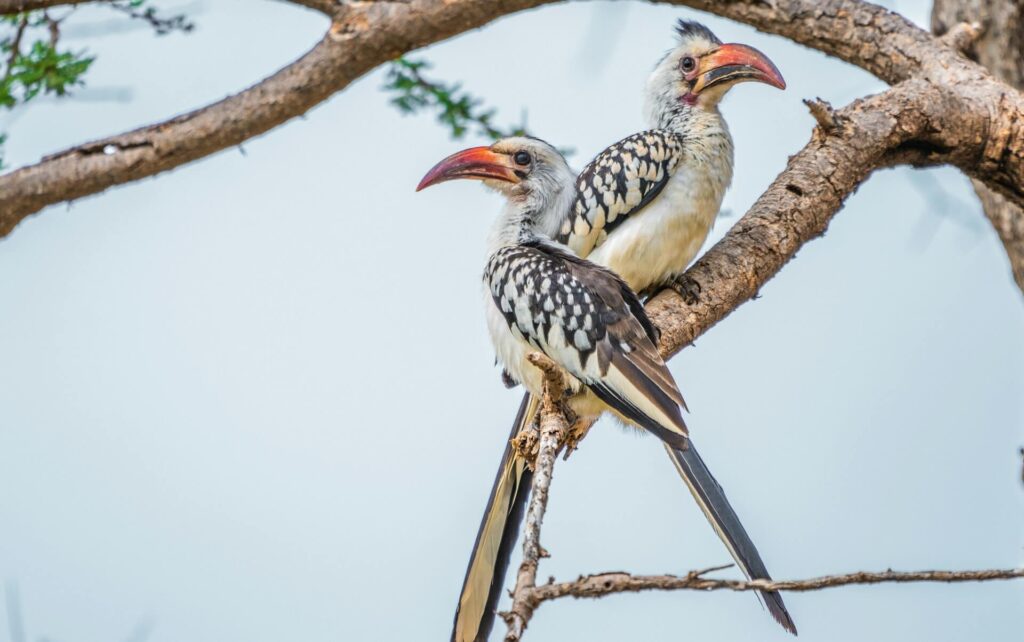
Samburu, Buffalo Springs and Shaba are on the equator, so you can encounter a very special mix of northern and southern species. For example, the northern Grevy’s zebra meets the southern common zebra and the northern Maasai ostrich crosses paths with the Somali ostrich. Sadly, you won’t see any rhinos as they were hunted before the reserves were founded. But you can see up to 320 bird species in the riverine forest and especially at the lush, marshy springs of Buffalo Springs and Shaba. The lesser kestrel and the taita falcon are two endangered species that have made this area their home.
The Northern 5
In all 3 reserves, keep your eyes peeled for the “Northern 5” in the riverine forest – Grevy’s zebra, reticulated giraffe, beisa oryx, Somali ostrich with its blue legs and the rare gerenuk. You won’t find these 5 anywhere in southern Kenya, so it’s exciting to encounter them here in one relatively small area. Animals flock to the riverine forest to shelter from the blazing sun and quench their thirst. You’ll see plenty of elephant families bathing and playing together. An unusual creature to look out for is the threatened pancake tortoise. Not so unusual are the crocodiles, some of Africa’s largest and there are plenty of them.
Activities
Game Drive or River Safari
A guided game drive or a river safari are the best ways to experience all 3 reserves and you only have to pay one fee. You will be accompanied by a highly trained guide who knows the area like the back of his hand and he will take you to the best places to spot the wildlife. Other ways to see the animals include short nature walks, river rafting, camel safaris and bird watching tours.
Sundowners
One of the most memorable moments in the Samburu region is sunset, from the comfort of your private veranda, sundowner in hand. The coming of dusk is a vision like nothing you have seen before – a huge, deep red, sinking sun that flows across the savannah like a sea of fire and everything in sight becomes a silhouette.
Samburu Cultural Tour
The Samburu region is rich in local culture and the Samburu people welcome you to their villages. You can take a village tour to learn about how they live and watch them dance.
Accommodation
There is something for every budget in Samburu and Buffalo Springs. Choose from exclusive, luxury lodges and tented camps, mid-range lodges, special campsites, and more basic public campsites. In Samburu Reserve, you can stay in lovely villas high in the Kalama mountains with an infinity pool and incredible views right across to Mt Kenya. In Buffalo Springs, there are some very nice mid-range chalets overlooking the river, surrounded by lush tropical gardens and streams. Accommodation in Shaba is more limited, but there is a great camp overlooking a natural spring that attracts lots of elephants and even the occasional lion. They do excellent bush breakfasts.
Best Time to Visit
The dry season is from June to early October. These are the months when the largest concentration of wildlife collects at the Ewaso Nyiro River and the riverine forest. Days are very hot, nights are cool. It’s best to avoid April and May when the rains might be heavy and flood the bridges.
How to Get There
The 3 reserves are about a 6 hour drive north of Nairobi. From Nairobi, Samburu is 347km, Buffalo Springs is 300km and Shaba is 343km. If you prefer to fly, you can catch a twice daily flight or private charter to several internal airstrips. The parks all have a good road network. Access is difficult without private transport.
Frequently Asked Questions
Where is Samburu National Reserve located?
Samburu National Reserve is located in northern Kenya along the banks of the Ewaso Ng’iro River. The reserve lies in a semi, arid region known for its dramatic landscapes and unique wildlife. Despite the dry surroundings, the river attracts many animals, making it a great place for wildlife viewing. The reserve is less crowded than many other parks, offering a peaceful safari experience. Its remote setting gives travelers a chance to explore a more authentic side of Kenya.
What makes Samburu National Reserve unique for wildlife viewing?
Samburu National Reserve is famous for animals that are rarely seen in other parts of Kenya. Visitors can spot special species known as the “Samburu Special Five,” which include the Grevy’s zebra, reticulated giraffe, Somali ostrich, gerenuk, and Beisa oryx. These animals are specially adapted to survive in the dry northern environment. The reserve is also home to elephants, lions, leopards, and cheetahs. Because of this diversity, wildlife lovers often consider Samburu a must, visit safari destination.
What activities can travelers enjoy in Samburu National Reserve?
Visitors to Samburu National Reserve can enjoy exciting game drives through its open plains and riverine forests. Guided safaris provide opportunities to see wildlife while learning about the ecosystem. Many travelers also visit nearby communities to learn about the traditions of the Samburu people. Birdwatching is another popular activity, as the area is home to many colorful bird species. These experiences allow travelers to connect with both nature and culture.
When is the best time to visit Samburu National Reserve?
The best time to visit Samburu National Reserve is during the dry seasons, usually from June to October and from December to March. During these months, animals gather around the Ewaso Ng’iro River, making them easier to spot. The weather is also warm and sunny, which is perfect for game drives. Because the region is generally dry throughout the year, wildlife viewing is often good even outside these months. This makes Samburu a reliable safari destination.
Why should Samburu be on your safari bucket list?
Samburu National Reserve offers a safari experience that feels different from more famous parks in Kenya. Its rugged landscapes, rare wildlife species, and rich cultural heritage create a unique adventure. Travelers often enjoy the quieter atmosphere compared to busy safari destinations. The chance to see unusual animals and learn about local communities makes the visit even more special. For many safari enthusiasts, Samburu is truly a hidden gem worth discovering.
Still have questions?
Our local safari experts are happy to help you plan the perfect African safari.





