
Table of Contents
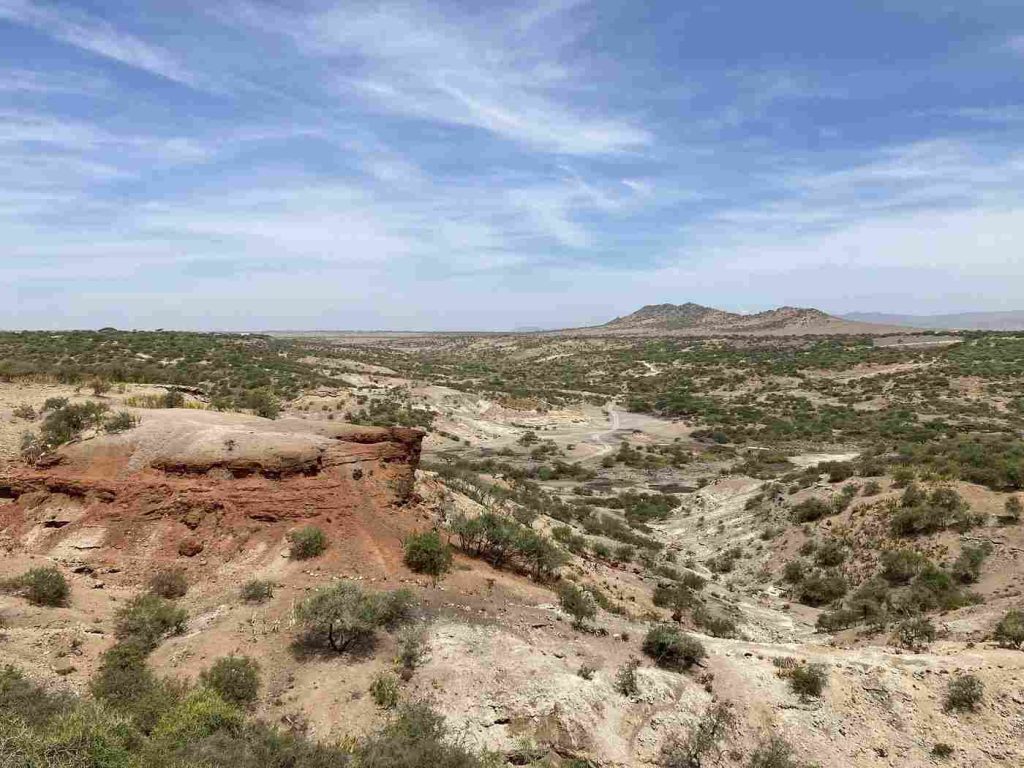
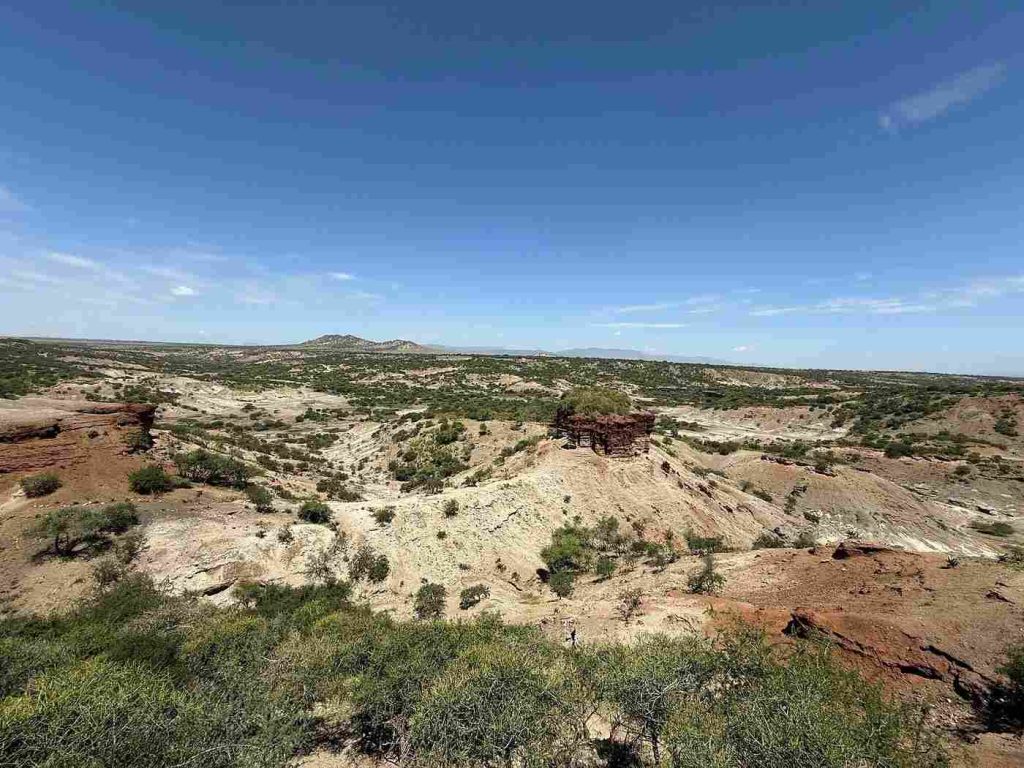
Located in a lost corner of East Africa. In the southeast of the Serengeti National Park, on the edge of the pristine Ngorongoro region, this semi-arid gorge and depression forms a striking break in the landscape. 40 km long, 90 m deep on average, it suddenly breaks with the dreary of the arid steppes.
Olduvai Gorge, a desolate canyon, inspires respect and envy among archaeologists around the world. Numerous fossils dating back more than 2 million years have been excavated in these rocky flanks. Over the years, the discoveries have been so important, so essential to history, that the site is considered by many to be one of the “cradles of mankind”.
1. History of Olduvai Gorge
Olduvai or Oldupai in the Maasai language means “wild sisal place”. It all started in 1911, by a funny coincidence. At that time, Tanzania, which was called Tanganyika before its independence, was still under the German colony. A German entomologist, Professor Kattwinkel, has ventured to find butterflies there.
Luckily, he discovered (by chance) fossilized bones. Its discovery caused a lot of noise in Europe and attracted the attention of scientists. In 1913, an expedition led by Professor Hans Reck came to the region to search the bowels of the Olduvai canyon. In the process, several other expeditions were carried out.
2. The Leakeys, pioneers of Olduvai
In 1931, Reck returned to Olduvai, accompanied by two archaeologists, Louis Leakey (English archaeologist born in Kenya) and his future wife, Mary. The Leakeys became attached to Olduvai.
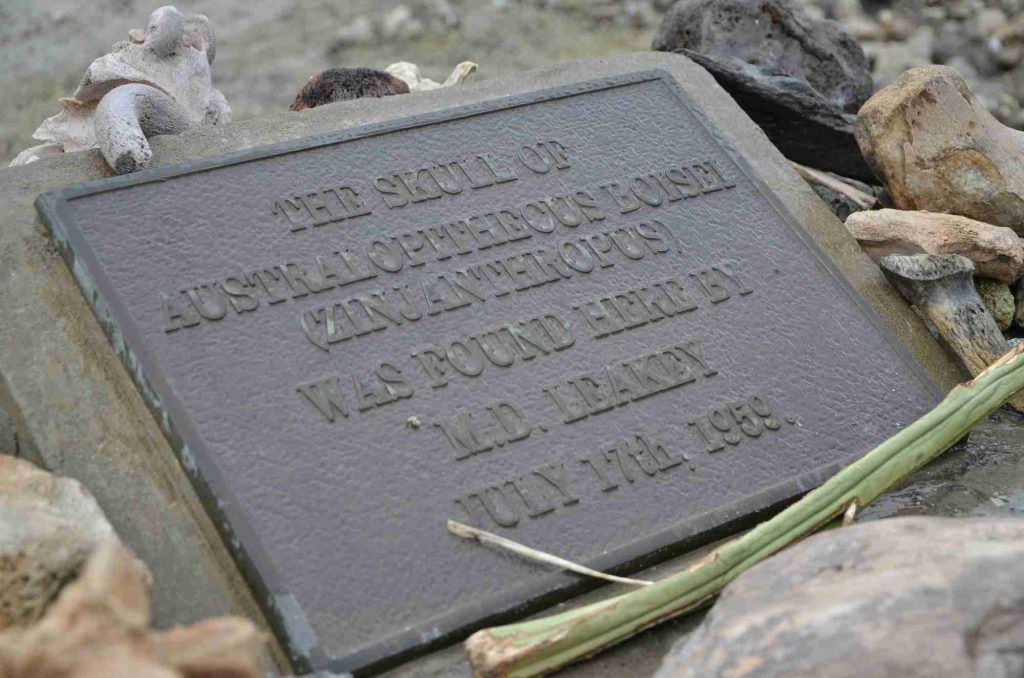
They continued their excavations. On July 17, 1959, while Louis Leakey was bedridden with a good flu, his wife Mary was clearing the ground and discovered 400 fragments of the skeleton of Australopithecus-Zinjanthropus boisei.
This distinguished individual lived in the region about 1.75 million years ago. One of these fragments, a stuffed and compressed skull, is in the Dar es Salaam museum. This discovery caused a lot of ink to flow and enabled the Leakey’s to obtain financial support from the American magazine National Geographic.
In 1960, the Leakey discovered the remains of a young Homo habilis. In human evolution, Homo habilis is a biped which is located after Zinjanthropus boisei and before Homo erectus. An ancestor of modern man, Homo habilis presents a skull of 600 cc, larger than that of its predecessor. In terms of image, it looks quite like a primate with long hanging arms. He would have used rudimentary stone tools.
Similar tools, but more sophisticated than those used by Homo habilis, were also unearthed: they would have been those of Homo erectus, an individual who lived 1.2 million years ago. At Homo erectus, known that this is located in the evolution just before Homo sapiens (the current human being).
He has a cranial capacity of around 950 cc, and his forehead is more raised; his jaws are much less prominent. In addition, Homo erectus stands straighter than Homo habilis, hence its name: Erectus, erect (standing tall).
3. Research continues
Nothing is ever final in Olduvai, or in East Africa. The results of discovery can confirm or, on the contrary, contradict those of previous discoveries. And so on. There is even a certain emulation between the teams to discover new and mysterious fossils, even older, and thus be able to complete, while revising it, the history of the origins of humanity.
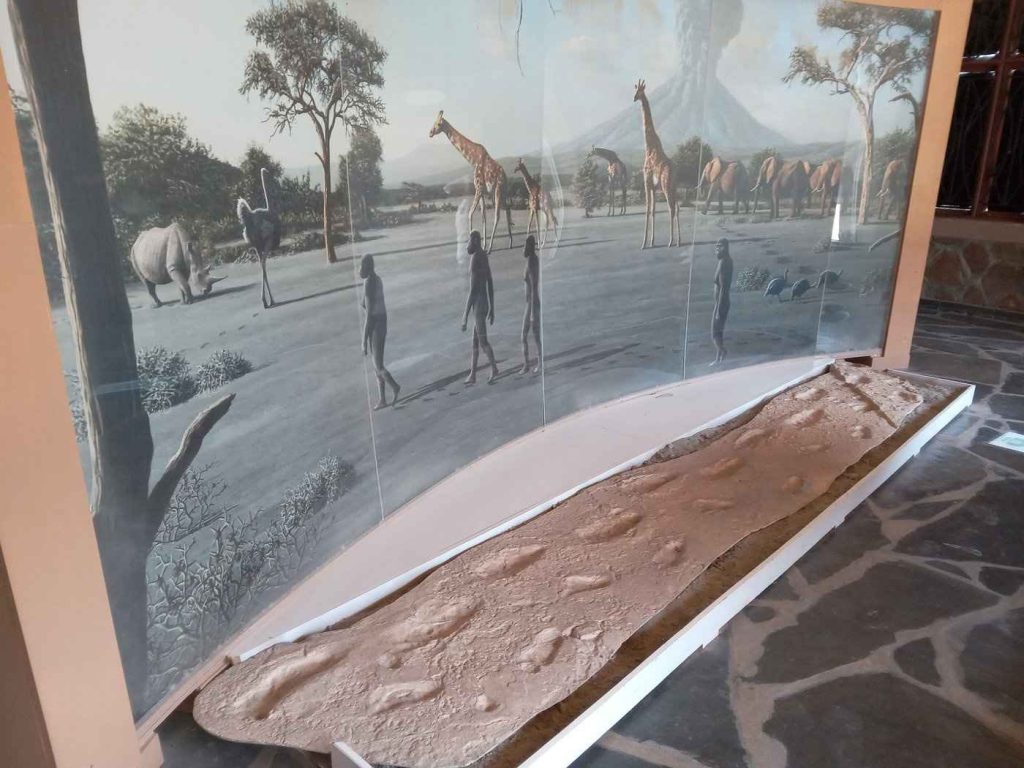
Exciting! In 1979, in Laetoli (a site near Olduvai), archaeologists uncovered footprints of hominids dating back more than 3.5 million years. And Wham! We go back in time again. Suddenly, this discovery pushed even further in the centuries the date of the probable appearance of the human race on earth.
In 1995, a team of American (New Jersey) and Tanzanian researchers exhumed a complete skeleton of Homo habilis from the ground. A sacred discovery! The quest for the archaeological Grail of Olduvai in Tanzania may not be over.
Far from there. She keeps. Something as fascinating as a passion for science fiction seems to animate the minds of researchers. Richard Leakey, son of the famous Louis, underlined it well: the context of one of our ancestors from 2 or 3 million years ago, we would share our environment with at least two or three hominized cousins, Australopithecus boisei, Australopithecus africanus, and perhaps some surviving specimens of the late Ramapithecus. If a time machine put us back in time.
4. Where is Olduvai Gorge, and how to get there
The Olduvai Gorge is 25 km as the crow flies from the Ngorongoro Crater. To get there, take a single track that crosses the protected area of Ngorongoro while going towards the park of Serengeti National Park. The altitude is between 1,000 and 1,200 m.
At approximately km 225, a 5 km track leads to the Olduvai site (museum and picnic hut), located away from the main track. Most safaris stop at Olduvai for a short time. Time to picnic under one of the two huts (resting huts) built on the edge of a cliff overlooking the gorges (superb view), and to visit the small museum. – Usually, the stopover in Olduvai does not last more than 2 hours. Arrange your safari to Tanzania with a visit to Olduvai Gorge with Safari ASAP.
Safari ASAP, a local Tanzanian travel company that is committed to providing you with the best safari experience while considering your value for money. Contact us today for a sample safari itinerary.
Frequently Asked Questions
What is Olduvai Gorge and why is it famous?
Olduvai Gorge is one of the most important archaeological sites in the world and is often called the “Cradle of Humankind.” It is located within the Ngorongoro Conservation Area between the plains of the Serengeti National Park and the Ngorongoro highlands. Scientists discovered some of the earliest evidence of human ancestors here, including fossils and ancient stone tools. These discoveries helped researchers better understand how early humans lived and evolved. Visiting the gorge allows travelers to see where some of the most important chapters of human history were uncovered.
Who made the important discoveries at Olduvai Gorge?
The most famous discoveries at Olduvai Gorge were made by the archaeologists Louis Leakey and Mary Leakey. In the 1950s and 1960s, their research revealed fossil remains of early human ancestors that were millions of years old. Their work helped confirm that early humans lived in East Africa long before spreading to other parts of the world. The Leakeys spent many years carefully excavating the area and studying its layers of ancient soil. Today, their discoveries remain some of the most important findings in human evolution research.
What can visitors see when they visit Olduvai Gorge?
When visiting Olduvai Gorge, travelers can explore a small museum that displays fossils, tools, and information about early human life. The museum helps explain how scientists study the site and what they have learned from the discoveries. Visitors can also walk to a viewpoint overlooking the deep gorge, where guides explain the different layers of earth that hold millions of years of history. On some guided tours, you may even see ongoing research areas where scientists continue to study the land. The visit is both educational and fascinating, especially for anyone interested in human origins.
How do you visit Olduvai Gorge during a safari?
Olduvai Gorge is usually visited as part of a safari itinerary through northern Tanzania. Many travelers stop here while traveling between the Serengeti National Park and the Ngorongoro Crater. The site is easy to access by road, and most safari guides include a short educational stop at the museum and viewpoint. The visit normally takes about one to two hours depending on your interest level. It’s a great way to add history and culture to your wildlife safari experience.
When is the best time to visit Olduvai Gorge?
Olduvai Gorge can be visited throughout the year because it lies along the main safari route in northern Tanzania. The dry season, from June to October, is especially popular since road conditions are usually better and wildlife viewing nearby is excellent. However, the site remains accessible even during the green season when the landscape becomes lush and beautiful. Because it is not a crowded attraction, visitors can often explore the museum and viewpoint comfortably. No matter when you visit, it offers a unique chance to connect with the deep history of humanity.
Still have questions?
Our local safari experts are happy to help you plan the perfect African safari.





