
Table of Contents
Walking in the highlands of the Ngorongoro Conservation Area
The Ngorongoro Crater is rightly known for its exceptional natural beauty and abundance of wildlife. Most people have high expectations of the Ngorongoro Crater because of the many beautiful documentaries on TV. And rightly so. However, a game drive of 5 to 6 hours is often sufficient to explore the crater properly. However, there is much more to discover. You will also avoid the crowds in the crater and especially the crowds at high seasons.
Have you ever thought about taking a walking safari in the Ngorongoro area? Get off the beaten track and discover more of this fantastic area. We offer you various walking safaris in the Ngorongoro Crater area. There are walking safaris of various lengths and in various levels of difficulty. The surrounding rainforest and the Ngorongoro highlands have far fewer secrets after your walking safari. The surrounding highlands consist of seven extinct volcanoes full of extraordinary beauty and spectacular landscapes. The best way to enjoy this is to walk through it on a walking safari. Even a short walk of just an hour or two can be very worthwhile. But there are also long walks to take. We often hear that after a few days in a car, some travelers like to stretch their legs. We would like to give you this opportunity and include a walking safari in your tailor-made safari program. Below we have listed the possibilities.
The walking safaris are guided by an armed ranger from the Ngorongoro Conservation Area Authority. There are not many rangers who can be deployed for this. Early booking is therefore necessary. Furthermore, it is possible that local circumstances do not make it possible to actually do the walking safari. Unfavorable weather conditions (low cloud cover and a lot of rain) and safety play a role in this.
Do you also think about good walking shoes, a hat or cap and possibly a waterproof jacket? During the walking safari it is possible that you will encounter wild animals. However, the walks are mainly about discovering the area and seeing the beauty of the landscape that often remains hidden from visitors.
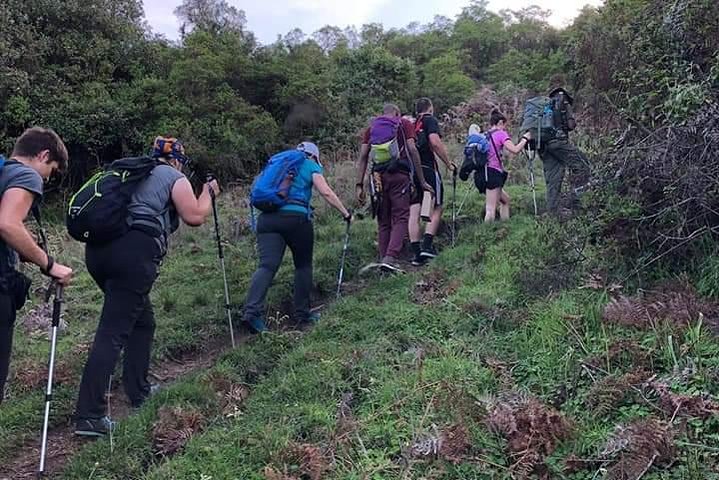
Crater Rim Walking Safari
We drive to the starting point on the crater rim. The walk is along the western rim of the crater past Oloirobi viewpoint. You first walk through parts of forest. Later the forest opens up and you reach scrub and open grassland. This offers beautiful views in various places into the crater and later also on Olduvai Gorge, the Serengeti and the Gol mountains. This walking safari is at an easy pace and has no heavy climbs except for a few short slopes. The duration of this walking safari is approximately 2 hours and can start at any time of the day. However, a good time would be either early morning or late afternoon. Taking into account the rest of your program.
Eyasi Viewpoint walking safari
You drive to the starting point of the walking safari on the way to the Maasai village of Endulen. The starting point is located in an open grassland and offers beautiful views of the Oldeani and Makarot mountains. Several Maasai villages are spread across the valley and an encounter with the Masai herders who herd their cattle and goats is a good possibility. Via an easy climb of about 45 minutes along the flank of the Oldeani mountain you reach a spectacular view of Lake Eyasi, the western wall of the Rift Valley and the plain of the Serengeti. This walking safari can also start at any time of the day and has a total duration of about 2 hours.
Mount Oldeani walking safari
From the Eyasi Viewpoint you walk directly uphill. This is a steep climb and takes about 2 hours. You climb about 900 meters to a height of 3,200 meters at the top. As you climb higher, there is a difference in the vegetation, plants and birdlife. It is all open grassland with no dense forest or scrub. At certain times of the year, there is an abundance of colorful wild flowers. Finally, all your hard work is rewarded with a spectacular panorama from the top with magnificent views in all directions. The crater to the north, the Serengeti and Lake Eyasi to the west, Lake Manyara to the south, and the highlands of the crater to the east. This walking safari can be done in about 4 hours without stopping at a steady pace. However, it can all be done at a more leisurely pace and relaxed as a half day excursion with a picnic lunch.
Empakaai Crater walking safari
You drive northwest along the rim of the Ngorongoro Crater and then past the village of Nainokanoka and the Embulbul Depression. Here you already have a good view of Mt. Loolmalasin. Mt. Loolmalasin is with 3,648 meters the third highest mountain in Tanzania. You see a lot of cattle, and a few wild animals such as the zebra. After about an hour and a half you reach the eastern rim of the Empakaai Crater. With a diameter of only 6 km, the Empakaai Crater is much smaller than Ngorongoro. But the Empakaai Crater is also very beautiful. This area is very little visited and the only way to access the crater is on foot. The walls are steep and have a thick forest. The walk down takes about 30 minutes with a descent of about 300 meters and goes through parts of forest on a good path. Most of the crater floor is taken up by a soda lake of 85 meters deep.
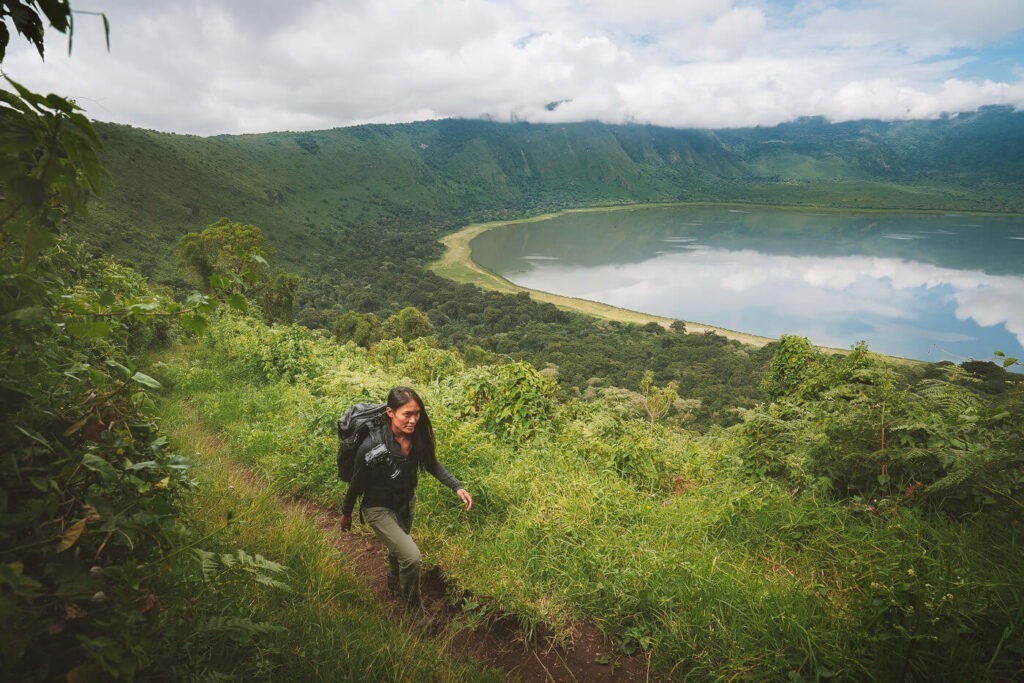
Depending on the season, there are large numbers of flamingos, which gather to feed on the edge of the lake. But there are many more birds around the lake. You may not see many mammals, but for those who pay close attention, the tracks of leopards, hyenas, baboons and buffalo will betray their presence. For the more energetic walker, there is also a walk along the edge of the lake over the entire crater floor. This walk takes 2-3 hours and is the perfect opportunity to enjoy the silence and beauty of this magical place. After all this comes the hardest part – the climb back to the rim! It is up to you to have your picnic lunch before or after this climb. On the rim of the crater, you of course have a beautiful view to the north of Oldoinyo Lengai. The Oldoinyo Lengai, is still an active volcano and of great religious importance to the Maasai. This walking safari can be done in half a day, excluding the walk around the lake. Including this walk, the walking safari takes approximately 7 to 8 hours.
Mount Makarot (3130 meters) walking safari
Also shown on some maps as Mt. Lemagarut. After breakfast you will leave for the village of Endulen until you reach the village of Misigiyo. Here the walk starts in a valley full of acacia bushes and trees. It is a steep climb of about 2 hours to the top, which offers good views of Lake Eyasi and Endulen. From there you walk for about half an hour through some beautiful, high altitude forests. Then it is another 200 meters to the top of Makarot itself. You are rewarded with a beautiful view and the feeling of standing on the roof of the world. It is as if the ground has fallen away for you when you look towards Lake Eyasi.
Furthermore the western wall of the Rift Valley, Lake Ndutu, Olduvai Gorge and the plains of the Serengeti are visible. While enjoying this spectacular view you will enjoy your packed lunch before descending again. The Ngorongoro Conservation Area offers many opportunities for walking, but we believe this is the best walk in terms of natural beauty. The total walk takes 5 to 6 hours.
Please note:
1. This walk is quite challenging and you will cover a considerable amount of altitude during the walk.
2. There are stinging nettles in some areas. It is advisable to wear long trousers and a long-sleeved shirt.
Endoro River Nature Trail
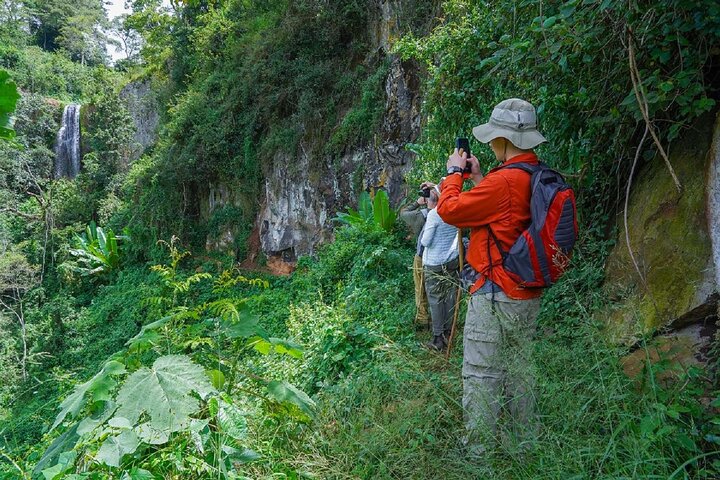
This is a total of five kilometres long trail. The start and finish are just north of the town of Karatu. This walk goes gently uphill in the Northern Highland Forest Reserve. The main attractions during this walk are the elephant caves and a waterfall. The caves are regularly visited by elephants. They dig up the earth in search of the vitamins and minerals in the soil. The waterfall is 150 metres high and from the top there is a beautiful view over the agricultural land around Karatu. The forest is home to the buffalo, leopard, waterbuck, bushbuck and vervet monkeys and has a large variety of birds. This walk can be done on arrival or after leaving the Ngorongoro Conservation Area on the way to or from Manyara.
Frequently Asked Questions
Can visitors really explore the Ngorongoro Conservation Area on foot?
Yes, visitors can explore parts of the Ngorongoro Conservation Area on guided walking safaris. These walks are usually led by experienced guides and sometimes accompanied by park rangers for safety. Walking through the highlands allows travelers to experience nature in a slower and more intimate way. You can observe plants, smaller wildlife, and stunning landscapes that are often missed during vehicle safaris. It’s a unique way to connect with the environment and appreciate the beauty of the area.
What can I see during a walking safari in the Ngorongoro Conservation Area?
During a walking safari in Ngorongoro Conservation Area, visitors can see a variety of landscapes including forests, open plains, and volcanic hills. You might encounter animals such as zebras, antelopes, and sometimes giraffes from a safe distance. The walks also provide excellent opportunities for birdwatching and photography. Guides often share knowledge about animal tracks, plants, and local ecosystems. Every walk offers a different and memorable experience in nature.
Is it safe to explore Ngorongoro on foot?
Yes, walking safaris in the Ngorongoro Conservation Area are carefully organized to ensure visitor safety. All walks are guided by trained professionals who understand animal behavior and the local environment. Certain areas, especially inside Ngorongoro Crater, are not open for walking due to wildlife activity. Instead, walking tours usually take place in the highlands and designated safe zones. By following the guide’s instructions, visitors can enjoy a safe and exciting adventure.
What should I bring for a walking safari in Ngorongoro?
For a walking safari in the Ngorongoro Conservation Area, it’s important to dress comfortably and practically. Wear sturdy walking shoes and lightweight clothing in neutral colors. A hat, sunscreen, and a refillable water bottle are also recommended. Many visitors also bring binoculars and a camera to capture the scenery and wildlife. Being well prepared helps you fully enjoy the outdoor experience.
When is the best time to do a walking safari in Ngorongoro?
Walking safaris in the Ngorongoro Conservation Area can be enjoyed throughout the year. The dry season from June to October is usually the most comfortable for walking because trails are easier to navigate. The green season from November to May offers lush landscapes and excellent birdwatching opportunities. Early mornings are often the best time for walking safaris because the weather is cooler. No matter the season, exploring Ngorongoro on foot is a truly memorable experience.
Still have questions?
Our local safari experts are happy to help you plan the perfect African safari.





