The Ngorongoro is the diamond or rather the emerald of Tanzania. It is one of the three busiest tourist destinations in the country, the other two being Serengeti and Kilimanjaro. The Ngorongoro Conservation Area (NCA) covers 8,288 km², its jewel, the crater, has been classified as a UNESCO world heritage site since 1979.
Previously incorporated into the Serengeti, it was created in 1959 to preserve both the wildlife (and flora) and the interests of the indigenous people, all activities and even the presence of which are usually prohibited in national parks. Conflicts arose as a result between the park administration and the Masai who did not accept being excluded from their traditional territories of transhumance and habitation. The Ngorongoro Conservation Area Ordinance of 1975 states that the objectives of the conservation area are: conservation and development of the natural resources of the area, promotion of tourism and safeguarding and promotion of the interests of the Maasai. Agriculture was banned in 1976 as incompatible with the protection of wildlife. The agreements make about three-quarters of the total area accessible to the Maasai and their large herds of cattle and sheep.
The conservation area includes in the northeast a volcanic chain including the well-known Ngorongoro crater, but also, at more than 3000 m altitude, the Olmoti and Empakai craters and the sacred Masai volcano, Ol Doinyo Lengai. The heights are covered with a high altitude humid forest, the north west of the park towards Ndutu is made up of a savannah similar to that of the Serengeti. The gorges of Olduvai and Laetoli have yielded fossils of hominids and prehominians, they were excavated by Louis Leakey and his wife Mary, the museum on site is worth visiting and has incredible information.
The Ngorongoro crater is surrounded by the conservation area of the same name, in which pastoral activities and Masai habitation are therefore authorized. This area has other craters and to the northwest, it is the perfect continuation of the Serengeti.
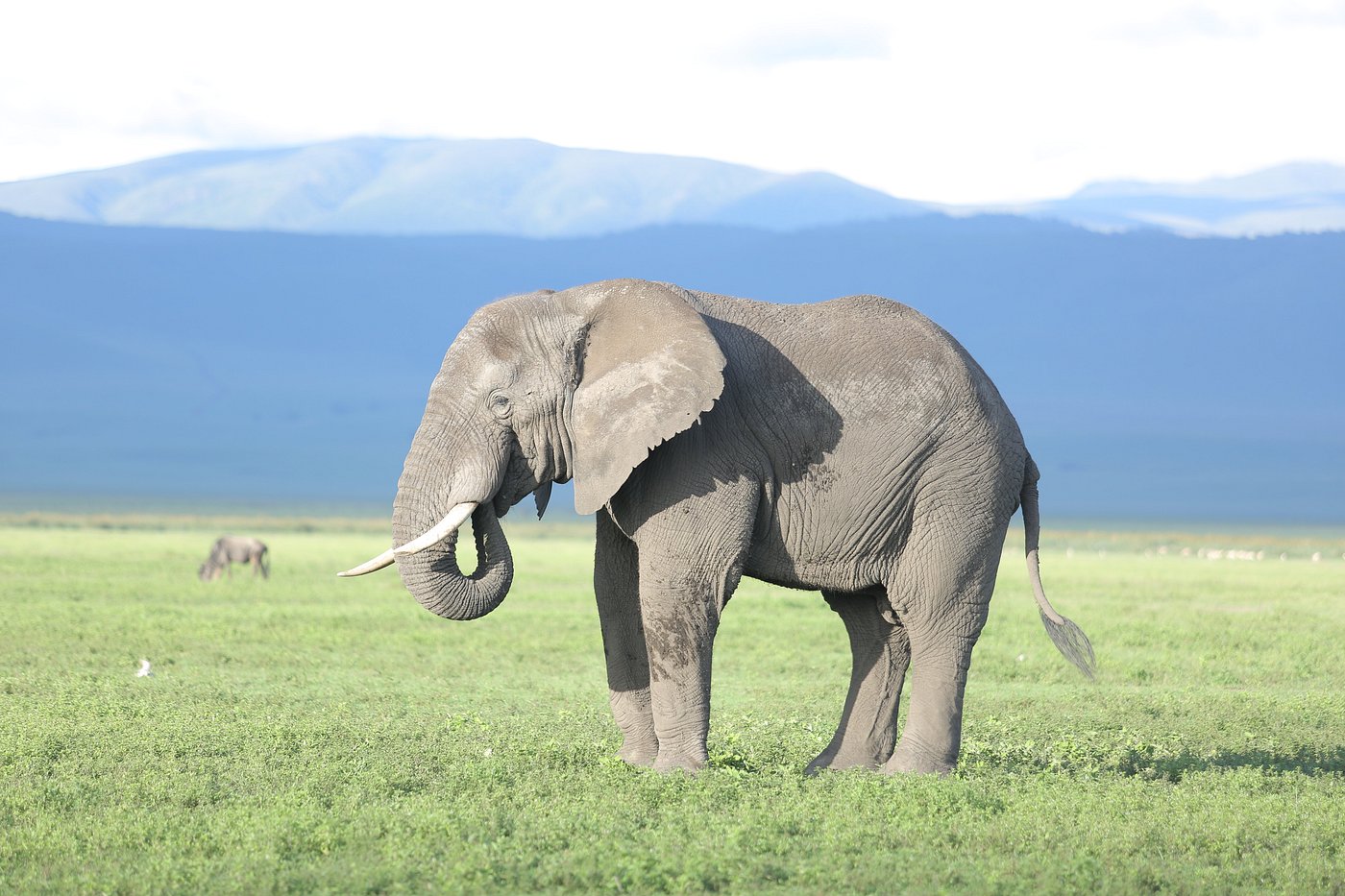
It is the Garden of Eden, an animal paradise where it is hoped that the tempting serpent will fail. The car density can be quite disturbing but over the 270 km², there are always neglected corners of the (relative) crowd. These are not necessarily the least interesting, you can see total isolation five cheetahs frolicking for a long time, a jackal being chased by a Grant’s gazelle, another taking on a goose (not white), a serval lurking around cranes or in a very small group, a group of hyenas gorge themselves on a wildebeest in the Munge river. There are no female or non-adult crocodiles or elephants found in the crater, probably for reasons of accessibility, nor are there phyllophagous species such as giraffes and impalas. In all seasons, you can see vast herds of wildebeest and zebra which are settled there, as well as Cape elands . And we would be much further north). Finally, it is the only place in Tanzania where you are sure to see rhinos (black rhino, the only one present in Tanzania), from afar or more rarely up close.
Frequently Asked Questions
What is the Ngorongoro Conservation Area and why is it famous?
The Ngorongoro Conservation Area is one of Tanzania’s most iconic destinations, known for its breathtaking landscapes and rich wildlife. It is home to the famous Ngorongoro Crater, a massive volcanic caldera filled with animals. What makes it unique is the balance between wildlife conservation and human presence, as local Maasai communities live within the area. The scenery ranges from highland forests to open plains, creating a diverse ecosystem. It’s a place where nature, culture, and history come together beautifully.
What animals can you see in the Ngorongoro Crater?
The Ngorongoro Crater is often described as a natural wildlife sanctuary because of its dense animal population. You can spot lions, elephants, buffalo, zebras, and wildebeest all within a relatively small area. It’s also one of the best places in Tanzania to see the endangered black rhino. The crater floor has lakes and grasslands that attract animals year, round. Because wildlife doesn’t migrate out of the crater easily, sightings are usually excellent.
Can people live inside the Ngorongoro Conservation Area?
Yes, one of the most unique aspects of the Ngorongoro Conservation Area is that people are allowed to live there. The Maasai people have grazed their cattle in this region for generations. They maintain their traditional lifestyle while coexisting with wildlife. Visitors often have the chance to learn about Maasai culture through village visits. This combination of human life and conservation makes the area very different from a typical national park.
When is the best time to visit the Ngorongoro Conservation Area?
You can visit Ngorongoro at any time of the year, as wildlife viewing is good throughout. The dry season from June to October offers clearer skies and easier travel conditions. However, the green season from November to May brings lush scenery and fewer tourists. This period is also great for photography, especially when the landscape is vibrant. Each season has its own charm, so it depends on your travel preferences.
How do you get to the Ngorongoro Conservation Area?
Most travelers reach the Ngorongoro Conservation Area from Arusha, which is the main safari hub in northern Tanzania. The drive takes about 3 to 4 hours and passes through scenic countryside and small towns. Many safari itineraries combine Ngorongoro with nearby parks like the Serengeti. You can travel by road in a safari vehicle or arrange a guided tour. The journey itself is part of the adventure and offers beautiful views along the way.
Still have questions?
Our local safari experts are happy to help you plan the perfect African safari.