Tour Code: SA-EN-012
| Number of Pax | 2 Adults | 4 Adults | 6 Adults |
|---|---|---|---|
| Price PP in USD $ | $ 4,750 | $ 4,070 | $ 3,795 |
The tour price includes everything except international flights, visas, and travel insurance. Accommodation is based on standard/midrange options, with flexibility to upgrade or downgrade to match your budget and style. Click the button below to book or customize this tour. Our experts will be ready to help you tailor your perfect journey.
Tour Highlights
- DAY BY DAY ITINERARY
- Day 1: Moshi
- Day 2: Planting Trees with Kilimanjaro Environment Preservation Project
- Day 3: Cleaning Day
- Day 4: Rehabilitation Center Visit and Local Dance Experience
- Day 5: Tarangire National Park
- Day 6: Mto wa Mbu School Visit
- Day 7: Eileen’s Trees Inn to Serengeti National Park
- Day 8: Explore Serengeti National Park
- Day 9: Serengeti National Park to Ngorongoro Crater
- Day 10: Onion Farm Visit and Boat Trip
- Day 11: Hadzabe and Datoga Tribe Visit
- Day 12: Departure
- Tour Include
- Tour Exclude
- Frequently Asked Questions
All safari trips can be combined according to your preferences. You may choose one of our suggested itineraries or allow us to design a tailor-made safari in Tanzania that matches your interests and travel budget.
Our safari journeys in Tanzania can also be extended with additional nights in Arusha and combined with a relaxing beach holiday on the paradise island of Zanzibar, located in the Indian Ocean off the east coast of the country, or combined with Kenya’s Masai Mara and other national parks. For added convenience, we also arrange domestic flights for travelers who prefer to fly between Nairobi and Arusha, and Serengeti to Zanzibar.
All safari packages are organized into four accommodation categories to suit different budgets and travel styles. You can also mix accommodation levels throughout your itinerary, allowing you to customize your experience until it perfectly matches your budget and personal preferences. Below is our accommodation categories:
-
Luxury
This category includes only the very best hotels and lodges, designed for travelers who wish to indulge in premium comfort and experience the highest standards of accommodation available in Tanzania. It is ideal for those who want exceptional service, exclusive locations, and a truly luxurious safari experience.
-
Standard (Mid-range)
This is our most common safari option, featuring comfortable hotels and well-selected lodges at affordable prices. It is ideal for travelers who do not wish to pay for luxury but still want good-quality accommodation and a pleasant, comfortable stay during their safari experience.
-
Budget
This option is designed for travelers whose budget does not extend to the “Standard” category, but who still want to experience as many national parks as possible at an affordable price. Budget travelers place less emphasis on hotel quality and are comfortable staying in simple, clean, and basic accommodations with fewer facilities. This option is often ideal for young travelers or experienced adventurers, such as former backpackers, who prioritize experiences over luxury and comfort.
Day 1: Moshi
Intercontinental flight to Kilimanjaro International Airport. Upon arrival at Kilimanjaro International Airport, you will be welcomed by your guide and driver who will assist you with luggage. You will be taken to the More than a Drop hotel in Moshi where you will stay overnight on a bed-and-breakfast basis.
Accommodations:
🥈 Budget: Panama Garden Resort
🥇 Mid-Range: More tha a Drop Lodge
💎 Luxury: Kilimanjaro Wonders Hotel
Day 2: Planting Trees with Kilimanjaro Environment Preservation Project
Today, you will collaborate with our local expert Nestory Mushi who will lead us in tree planting around Moshi town. Nestory is a Tanzanian environmentalist who works as an ambassador for the environment in the Kilimanjaro region. Nestory will provide a short briefing and theory training before we start involved with community or school kids to plant trees either around the water sources or along the slope of Mount Kilimanjaro. We will also work together when preparing our lunch. In the evening we will stay with the community around the area who have already trained on how to host a guest.
Accommodations:
🥈 Budget: Panama Garden Resort
🥇 Mid-Range: Home Stay
💎 Luxury: Kilimanjaro Wonders Hotel
Day 3: Cleaning Day
Today after breakfast, we will continue with our community program and we will clean the market area or hospital with the help of our local community. After, we will proceed to the assisted living home or elderly home where we will proceed with the cleaning and have lunch together with them. Later in the evening we will go back to our homestay where you will be involved in different home activities like cow milking and cooking.
Accommodations:
🥈 Budget: Panama Garden Resort
🥇 Mid-Range: Home Stay
💎 Luxury: Kilimanjaro Wonders Hotel
Day 4: Rehabilitation Center Visit and Local Dance Experience
Today, you will get a chance to interact with youth in Arusha by visiting a place where young people can find security, and stability, and collaborate with each other to achieve their goals. Engaging in creative musical activities with local youth from Arusha can be a source of fulfilment and personal growth on multiple levels. You will also participate in dancing which is a form of expression to convey emotions, stories, or ideas. It is a universal language that transcends cultural and linguistic barriers, allowing people from different backgrounds to communicate and connect with each other.
Later, you will have time to visit a rehabilitation center in Arusha which can provide valuable insight into the healthcare system and social services available in the country. You will have a unique opportunity to learn about the challenges faced by youth recovering from various health conditions or addictions. Depending on our group size, some will participate in making the food while others will do some cleaning and later we will share the food and interact with individuals at the centre. Visitors gain a deeper understanding of the impact of these issues on Tanzanian society and potentially contribute to efforts aimed at improving rehabilitation services in the region. Additionally, witnessing the resilience and determination of those undergoing rehabilitation can be both inspiring and humbling, serving as a reminder of the importance of compassion and support for those in need.
Accommodations:
🥈 Budget: Moivaro Lodge
🥇 Mid-Range: Green Mountain Lodge
💎 Luxury: Gran Melia Hotel
Day 5: Tarangire National Park
In the morning and afternoon, you will explore the Tarangire National Park. In the dry season, large herds of elephants can churn up the sandy riverbed in search of water. The area around the river is then a gathering place for all kinds of animals. It is one of the few places where gerenuk (giraffe antelope) and eland can be found. The landscape of Tarangire is impressive because of the amount of enormous baobab trees.
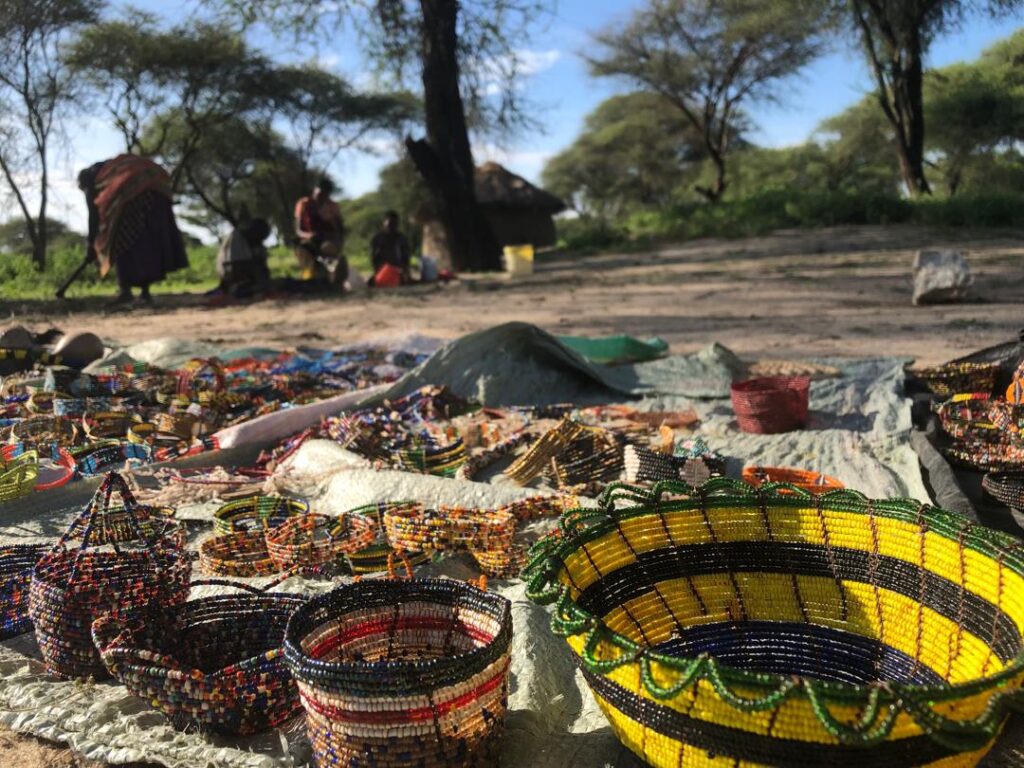
After reaching the park gate we will meet the Enot women group who will teach us how to make beads and other handmade products, this activity will not only allow us to learn a new skill and create beautiful handmade souvenirs, but it will also give us the opportunity to connect with local women and gain insight into their culture and way of life. By engaging in this hands-on experience, we can support these women economically and contribute to the preservation of traditional crafts in the community.
Later in the evening, you drive to your lodge for the overnight.
Accommodations:
🥈 Budget: Eliens Tree Lodge
🥇 Mid-Range: Marera Valley Lodge
💎 Luxury: Accacia Farm House Lodge
Day 6: Mto wa Mbu School Visit
Today, you will have time to visit the Bandari Project which is a not-for-profit organisation helping to break the cycle of poverty by providing educational opportunities to underprivileged children and women in Mto wa Mbu, Tanzania.
At the school, they offer a safe and engaging learning experience to children who normally wouldn’t have access to schooling. They also work with women living in difficult circumstances, giving them opportunities in education and agriculture. You will have a chance to participate in their classroom to see how they learn, play and dance with them, help with cleaning and participate in different activities in the school. Later in the evening you will have time to escort the children to their homes and see what kind of environment they are living in, talk to their parents and have a local dinner together where you will participate during the making of the meal.
Accommodations:
🥈 Budget: Eliens Tree Lodge
🥇 Mid-Range: Marera Valley Lodge
💎 Luxury: Accacia Farm House Lodge
Day 7: Eileen’s Trees Inn to Serengeti National Park
Today you head towards Serengeti National Park. Along the way, you will take a game drive and have a picnic lunch. In the afternoon, we will do a game drive in the Serengeti. Together with the Ngorongoro Conservation Area and the Masai Mara in Kenya, the Serengeti National Park forms a contiguous ecosystem in which animals can move freely. In the middle of the Serengeti National Park lies the Seronera Valley. This area has an important water source and also marks the border between the vast plains and the forested hills in the north. You will spend two nights at the Into the Wild Serengeti on a full-board basis.
Accommodations:
🥈 Budget: Serengeti Sound of Silence
🥇 Mid-Range: Land of Nature Camp
💎 Luxury: Serengeti Explorer Lodge
Day 8: Explore Serengeti National Park
Today, you will take an early morning game drive in the Serengeti. You will have lunch at the Tented Camp, where you can enjoy the beautiful view. In the afternoon you will take a game drive in Serengeti National Park. During your game drives you will see the enormous variety of game. Serengeti is the largest game reserve in the world and of great scientific importance. The landscape is characterized by vast savannahs and rocky ‘kopjes’. These ‘kopjes’ are often used as a lookout place by predators. The lion population is large, so you have a reasonable chance of encountering a group. If you are lucky, you may also see a hunting cheetah or a leopard.
You will also visit a real Masai Village participate in their dance and learn how to dance the famous Maasai jump. Of course, you can buy their local products for souvenirs to support their families. And we will donate solar lights to the families that can use them during the night since there is no electricity in the area. You will stay overnight at Serengeti Sound of Silence.
Accommodations:
🥈 Budget: Serengeti Sound of Silence
🥇 Mid-Range: Land of Nature Camp
💎 Luxury: Serengeti Explorer Lodge
Day 9: Serengeti National Park to Ngorongoro Crater
Wake up early and travel 2 to 3 hours to Ngorongoro Crater. You can have a game drive within the crater, and it is the only site where you can view black rhinos and all big game creatures including buffalo, elephants, lions, and so many other animals. Lunch will be served at the picnic location on the crater floor. In the afternoon, drive to your campsite for supper and overnight.
Accommodations:
🥈 Budget: Eliens Tree Lodge
🥇 Mid-Range: Marera Valley Lodge
💎 Luxury: Accacia Farm House Lodge
Day 10: Onion Farm Visit and Boat Trip
Today you will drive to the junction site where we will meet with a local guide and start walking to the Cold Spring which will be like 1km. We will see natural vegetation, some wild animals like monkeys and baboons as well as the habitat of various species of birds. It’s like 1 hour to do the nature walk, from that point we will continue with walking from the springs to the onion farm ( 6km) to reach the field. Here we will participate with local people to see how they work in the onion farms, and help with weeding, harvesting of onion, sorting onion, planting onion, etc.
After our farm visit, we will be picked up by car and drive to the lake to see local people who do fishing activities using local boats. If you wish, you can go on a boat ride for 1hour on the lake. After, we will drive to the hot springs and painting rocks, then drive to the hotel for overnight.
Accommodations:
🥈 Budget: Eliens Tree Lodge
🥇 Mid-Range: Marera Valley Lodge
💎 Luxury: Accacia Farm House Lodge
Day 11: Hadzabe and Datoga Tribe Visit
If you wish to learn about the Hadzabe tribe’s way of life, visit Eyasi. The existence of these traditional bushmen has enormous significance for the region. Walking is the primary activity here. Spend the day with the Hadzabe tribe and go hunting with them. The Bushmen dwell here, hunting with bows and arrows and harvesting wild berries and fruits. Once you find the animal together, you make a traditional fire with your hosts and BBQ the hunted animal.
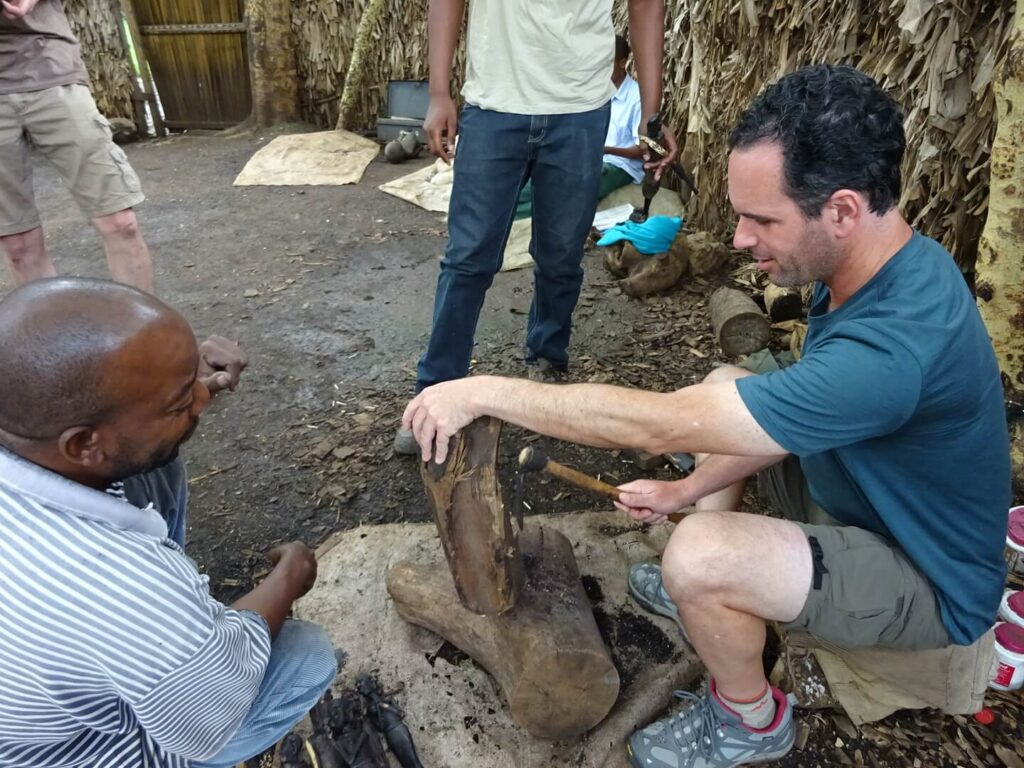
Later you will visit the Datoga tribe. This tribe forges copper and aluminium into bracelets, knives, and other implements. You will participate and learn how they make them and if you wish, you can buy some souvenirs to take home with you and support their lives. They also exchange these items with the Hadzabe.
You will also visit villagers and learn, help and participate in making local alcohol and also experience the lifestyle of the people in villages. Later in the evening, we drive back to Arusha and on the way visit curio shops to buy souvenirs which the owners use the money to help support their families.
Accommodations:
🥈 Budget: Moivaro Lodge
🥇 Mid-Range: Green Mountain Lodge
💎 Luxury: Gran Melia Hotel
Day 12: Departure
After breakfast in the hotel depending on your flight time, you can have time to explore or relax and wait for your transfer to Kilimanjaro Airport for your departure flight back home.
“This experience is co-designed with Positive Impact Tourism”.
TOUR RATES
Tour Code: SA-EN-012
| Number of Pax | 2 Adults | 4 Adults | 6 Adults |
|---|---|---|---|
| Price PP in USD $ | $ 4,750 | $ 4,070 | $ 3,795 |
The tour price includes everything except international flights, visas, and travel insurance. Accommodation is based on standard/midrange options, with flexibility to upgrade or downgrade to match your budget and style. Click the button below to book or customize this tour. Our experts will be ready to help you tailor your perfect journey.
Payment:
- 30% is paid in advance, and the remaining 70% is due no later than 14 days before the safari starts.
- It typically takes up to 5 banking days for the payment to reach our bank in Tanzania.
- Please email contact@safariasap.com as soon as the payment has been made.
- Use your name as the reference for the payment/bank transfer.
Travel Condition:
- Follow the link to our website for more information.
TOUR INCLUDES
- 1 Pickup and 1 Drop off at Kilimanjaro International Airport (JRO)
- Accommodation as seen in the itinerary
- All national park and gate fees
- All Activities as indicated on the itinerary
- Visit Rehabilitation Centre
- Culture Tour
- Village Walk
- Government Taxes and conservation fees.
- Transport as indicated on the itinerary
- Local and Friendly English-speaking safari guides
- Meals as indicated on the itinerary (B, L, D – Breakfast, Lunch & Dinner)
- Drinking water while on safari
- 4×4 safari vehicle with a pop-up roof for the best wildlife viewing
- Accommodation on safari as indicated on the itinerary
- Emergency First Aid Kit
- Electricity sockets and refrigerator on our safari vehicle
- Guides and Crew Fair Wages
TOUR EXCLUDES
- Travel/Medical Insurance
- Meals outside your itinerary
- Accommodation outside your itinerary
- International visa for Tanzania
- International /Domestic Flights
- Anything of a personal nature
Frequently Asked Questions About Safari
What is the best time to go on safari in Tanzania?
The best time to visit Tanzania is during the main dry season, from June to October. During this period, rainfall is minimal, making travel across national parks easier and ensuring excellent wildlife viewing as animals gather around remaining water sources. While the rainy seasons bring lush green landscapes, they can also make some roads and trekking trails more challenging due to mud and slippery conditions, especially in remote areas.
How many days do I need for a safari in Tanzania?
The ideal number of days for a safari in Tanzania depends on the experience you want, but here is a clear guide:
A minimum of 3–4 days is enough for a short safari, usually covering one or two parks such as Tarangire and Ngorongoro Crater. This is suitable for travelers with limited time. However, a more complete and rewarding safari experience is 6–10 days, which allows you to explore Tanzania’s top destinations at a relaxed pace, including Serengeti, Ngorongoro Crater, Tarangire, and sometimes Lake Manyara.
If you want to experience the Great Wildebeest Migration or go deeper into remote areas of the Serengeti, a longer itinerary of 10–12 days or more is highly recommended.
What Animals will I see on safari?
On a Tanzania safari, you can expect to see an incredible variety of wildlife, including the famous Big Five: lion, elephant, leopard, buffalo, and rhinoceros. In addition to these iconic animals, you will often encounter giraffes, zebras, wildebeest, hippos, crocodiles, cheetahs, hyenas, and jackals roaming freely in their natural habitats. Tanzania is also a paradise for bird enthusiasts, with over 1,000 species recorded, including flamingos, eagles, ostriches, and brightly colored kingfishers. The exact sightings depend on the park and season, but destinations such as the Serengeti, Ngorongoro Crater, and Tarangire National Park consistently offer some of the best and most diverse wildlife viewing experiences in Africa.
Is Tanzania safe for safari travel?
Yes, Tanzania is generally very safe for safari travel, especially when you book with a reputable tour operator like Safari ASAP and travel with experienced guides. Tourism is one of the country’s most important industries, and national parks are well managed with trained rangers and regulated visitor access. During game drives and lodge stays, safety standards are high, and guides are always there to ensure you follow park rules and stay safe around wildlife. As with any travel destination, it is always recommended to take normal precautions, but overall Tanzania is considered one of the safest and most rewarding safari destinations in Africa.
What should I pack for a safari?
For a safari in Tanzania, it’s best to pack light, practical, and comfortable clothing suited for changing temperatures. Neutral-colored clothes such as beige, khaki, green, and brown are ideal, as they help you blend into the environment and avoid attracting insects, especially tsetse flies. You should also bring comfortable walking shoes or boots, a wide-brim hat, sunglasses, and sunscreen for protection during game drives. A light jacket or fleece is important for early morning and evening drives, as it can get chilly. Other essentials include insect repellent, binoculars for wildlife viewing, a good camera, and personal medications. It’s also advisable to pack a small backpack for daily safari use and avoid heavy luggage due to vehicle space limitations.
Are Safari Asap safaris private or shared??
All Safari Asap safaris are private. We specialize in personalized experiences with dedicated guides, private vehicles, and itineraries tailored to your interests and pace. We do not offer shared or joining safaris, as they can be difficult to coordinate in Tanzania due to different accommodation choices, budgets, and travel preferences. Shared safaris often involve multiple hotel pick-ups, reducing valuable game-viewing time and affecting the overall experience. With a private safari, you enjoy greater flexibility, comfort, and a smoother, more rewarding wildlife experience.
Do I need a visa to visit Tanzania?
Yes, most international travelers need a visa to visit Tanzania. The visa can be obtained either online through the official e-visa system before arrival or on arrival at major entry points such as airports and border crossings, depending on your nationality. A standard tourist visa usually costs USD$ 50, and it is valid for up to 90 days and is suitable for safari and holiday travel. It is always recommended to check the latest visa requirements based on your nationality before traveling, as rules may change.
Can I see the Great Wildebeest Migration?
Yes, you can see the Great Wildebeest Migration in Tanzania or the Masai Mara in Kenya, and it is one of the most spectacular wildlife experiences in the world. The migration is a continuous movement of over a million wildebeest, along with zebras and gazelles, traveling through the Serengeti ecosystem in search of fresh grazing and water.
The exact location of the herds changes throughout the year, so different regions of the Serengeti offer different highlights depending on the season. For example, the southern Serengeti is famous for the calving season between January and March, while the western and northern Serengeti are known for dramatic river crossings around the Grumeti and Mara Rivers between June and October. Because the migration is year-round and always moving, with the right timing and planning, it is possible to witness this natural wonder in Tanzania at different stages throughout the year.
Is tipping expected on safari in Tanzania?
Yes, tipping is customary and appreciated in Tanzania’s safari industry, as it is a way to show gratitude for good service. While it is not compulsory, it is a widely accepted practice for guides, drivers, and lodge staff who work hard to make your experience enjoyable. As a general guide, many travelers tip their safari guide at the end of the trip, 20 USD per person per day for the guide, and smaller amounts are also often given to lodge or camp staff through a shared tipping box. The exact amount depends on the level of service and your satisfaction, but your tour operator can always advise you on appropriate and fair tipping guidelines.
What are safari vehicles like during a safari in Tanzania?
Our safari vehicles are 4×4 Toyota Land Cruisers equipped with charging sockets for phones and cameras, air conditioning for comfort, and a built-in cool box stocked with free drinking water for guests throughout the safari.
How can I personalize my Tanzania trip with your services?
At Safari Asap, every trip is tailor-made to match your interests, travel style, and budget. Whether you are interested in wildlife safaris, the Great Migration, cultural experiences, hiking, beach relaxation in Zanzibar, or a combination of activities, we can design an itinerary specifically for you. You can choose your preferred accommodation standard, travel pace, activities, and destinations, while our experienced local team takes care of all the logistics to create a seamless and memorable Tanzania experience.
What can I expect from a safari in Tanzania with Safari Asap?
Expect unforgettable wildlife encounters, breathtaking landscapes, and expert guidance throughout your journey. Your safari will include game drives in Tanzania’s famous national parks, opportunities to see the Big Five and other incredible wildlife, comfortable accommodations, and a private guide dedicated to your experience. At Safari Asap, we focus on personalized service, flexible itineraries, and authentic local knowledge to ensure your safari is both seamless and memorable from arrival to departure.
How sustainable is safari travel with Safari Asap?
At Safari Asap, sustainability is at the heart of every safari experience. We are committed to responsible tourism that protects Tanzania’s wildlife, preserves natural habitats, and supports local communities. Our safaris are designed to minimize environmental impact by working with eco-friendly lodges, reducing unnecessary waste, and encouraging respectful wildlife viewing practices. We also actively support community-based projects, cultural experiences, and local employment, ensuring that tourism directly benefits the people living near the parks. By traveling with Safari Asap, guests are not only experiencing the beauty of Tanzania but also contributing to conservation and long-term sustainability efforts.
What is a typical day like on safari?
A typical safari day in Tanzania follows the rhythm of nature. In the morning, you start early with a game drive when animals are most active, and the light is perfect for photography. Around noon, you can return to the lodge or camp for lunch and some rest or continue with a game drive. In the afternoon, you head back into the park for another game drive, exploring different areas and spotting more wildlife. In the evening, you enjoy sunset views over the savannah before returning to camp. At night, you have dinner and relax around the campfire or in your lodge, often listening to the sounds of the African bush under the stars.
Can I combine a Tanzania safari with Kenya’s Maasai Mara?
Yes, you can easily combine a Tanzania safari (Serengeti) with Kenya’s Maasai Mara in one trip. Both parks are part of the same Serengeti–Maasai Mara ecosystem, so wildlife, especially the Great Wildebeest Migration, moves between them depending on the season. Travelers usually connect the two destinations by flight between Serengeti airstrips and the Maasai Mara, or by road through the Isebania border. This combination offers a richer safari experience with diverse landscapes, cultures, and incredible wildlife sightings in both countries.
Which airport should I use to land for a safari in Tanzania?
The main airport to start your safari in Tanzania is Kilimanjaro International Airport (JRO), located between Arusha and Moshi. It is the most convenient gateway for safaris to Serengeti, Ngorongoro Crater, Tarangire, and Lake Manyara.
Alternatively, you can also fly into Julius Nyerere International Airport (DAR) in Dar es Salaam or Abeid Amani Karume International Airport (ZNZ) in Zanzibar, depending on your travel route. From these airports, you can connect to safari destinations via domestic flights or road transfers. For most safari itineraries, Kilimanjaro Airport is the best and most recommended entry point for a smooth and efficient start to your Tanzania adventure.
Let us create your tailor-made trip
Our local safari experts are happy to help you plan the perfect African safari.